
Chef Freja
Andelår med Rødkål
Slow-roasted duck legs with crisp, deeply golden skin, served with braised red cabbage and caramelized potatoes. The weeknight Danish duck that proves the best part of the bird is the one that takes its time.
A cooking platform built around craft, culture, and the stories behind what we eat.
Created by Chef Freja
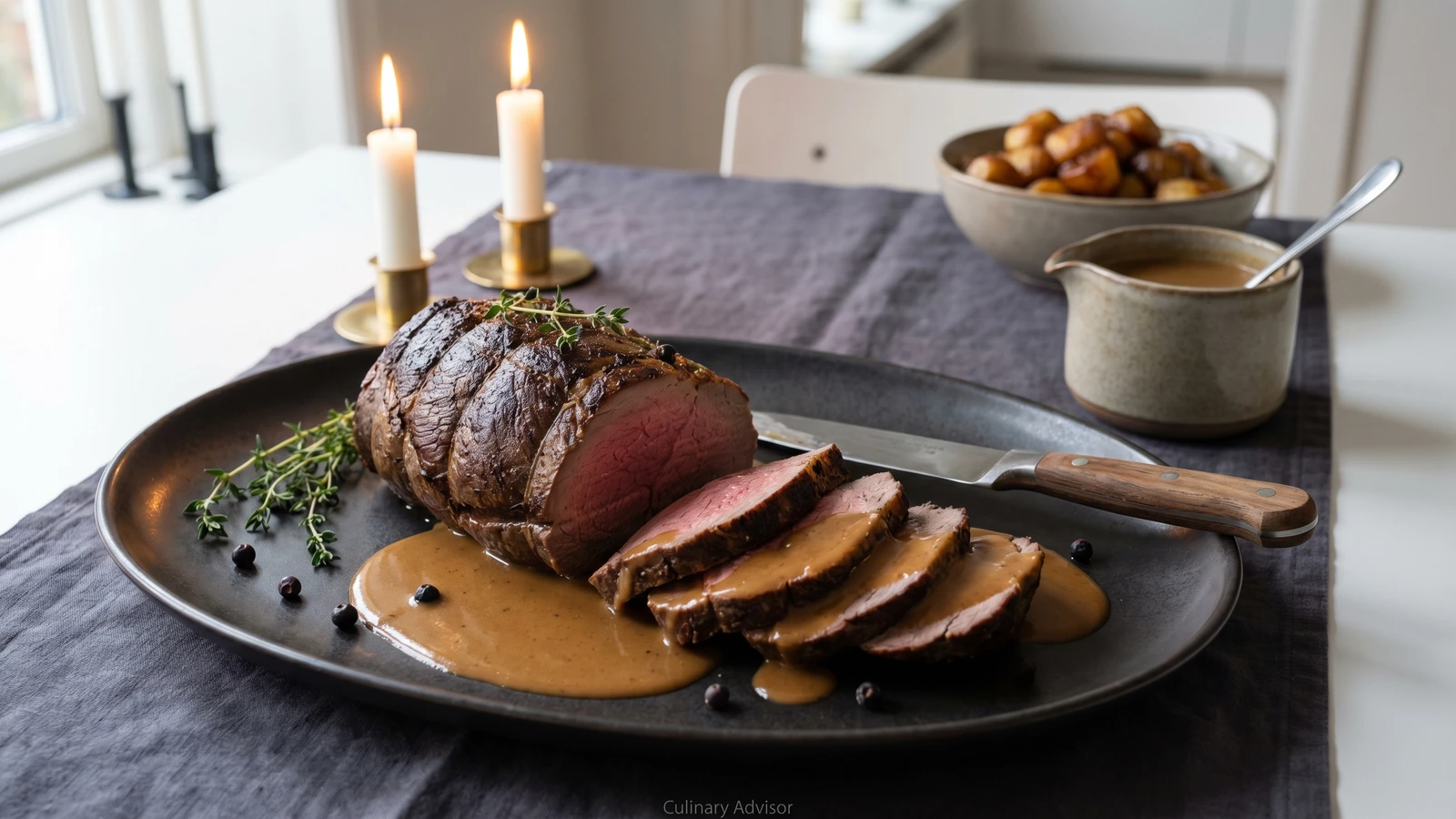
Autumn's centrepiece: venison barded with bacon, roasted slowly to a blushing rosa, and served with a cream sauce darkened with ribsgele that balances richness and tartness in every spoonful.
October in Denmark smells like wet forest floor and cold mornings. The jagtsaeson has opened. In Jutland, on the islands, across the beech forests that run along the coasts, the deer are in season and the kitchens know it. Dyresteg is what happens when one of those animals arrives home.
This is a dish that belongs to autumn the way flaeskesteg belongs to juleaften. It marks a season, and it gathers people around a table. The venison is lean, wild, and unforgiving if you mistreat it, but treat it well and there is no roast in the Danish kitchen that rewards you more. A leg or a saddle, barded with bacon to protect it from its own leanness, roasted slowly until the centre stays rosa, that delicate blush of pink that tells you everything went right.
The sauce is where the cook's attention matters most. Vildtsauce is cream and stock, built from the pan drippings and the fond the roast leaves behind, then darkened and sharpened with ribsgele, real redcurrant jelly that dissolves cleanly and lifts the whole dish out of heaviness. Too much cream and it flatlines. Too much redcurrant and it becomes sweet. The balance is yours to find, and I'll walk you through it so you taste your way there with confidence. Cold-cracked juniper berries pressed into the meat before it goes in the oven, a roasting bed of vegetables that give the sauce its depth, and a rest long enough for the juices to settle back into every fibre. Every step has its reason. You'll know when it's right.
Venison has held a complex place in Danish food history. For centuries, deer hunting was a royal and aristocratic privilege, and game meat rarely reached ordinary tables. The reforms of the late 1700s gradually opened hunting rights, and by the 19th century dyresteg had become the celebratory roast of the Danish autumn, particularly in Jutland where the forests supported large herds of red and roe deer. The tradition of barding with bacon and serving with a cream sauce sharpened by ribsgele appears in Danish cookbooks from the 1890s onward, and the pairing with Waldorf salad, introduced to Denmark from America in the early 1900s, became so fixed that most Danes today consider it inseparable from the dish.
Quantity
1.5kg
trimmed
Quantity
8-10 slices
Quantity
2 tablespoons
Quantity
1 tablespoon
Quantity
2 teaspoons
Quantity
1 teaspoon
freshly ground
Quantity
8
cold-cracked
Quantity
4 sprigs
Quantity
2
Quantity
1 medium
roughly chopped
Quantity
1 medium
quartered
Quantity
1
roughly chopped
Quantity
500ml
Quantity
200ml
Quantity
3 tablespoons
Quantity
2 tablespoons
Quantity
1 tablespoon
Quantity
for the sauce
| Ingredient | Quantity |
|---|---|
| boneless venison leg or saddletrimmed | 1.5kg |
| dry-cured streaky bacon | 8-10 slices |
| unsalted butter | 2 tablespoons |
| neutral oil | 1 tablespoon |
| coarse sea salt | 2 teaspoons |
| black pepperfreshly ground | 1 teaspoon |
| juniper berriescold-cracked | 8 |
| fresh thyme | 4 sprigs |
| bay leaves | 2 |
| carrotroughly chopped | 1 medium |
| onionquartered | 1 medium |
| celery stalkroughly chopped | 1 |
| game or beef stock | 500ml |
| double cream | 200ml |
| ribsgele (redcurrant jelly) | 3 tablespoons |
| red wine or port | 2 tablespoons |
| plain flour | 1 tablespoon |
| fine sea salt | for the sauce |
Take the venison out of the fridge a full hour before you begin. Cold meat in a hot oven seizes. The muscle fibres contract and squeeze out all the juice before the heat can reach the centre. Room temperature meat relaxes into the heat and cooks evenly. While it comes to temperature, rub the surface all over with coarse sea salt and the freshly ground pepper. Press the cold-cracked juniper berries into the meat. To crack them, press the flat of a heavy knife against them until they split. You want them open, not powdered. Whole berries roll off the meat and do nothing. Cracked berries release their resinous, piney oil directly into the surface.
Lay the bacon slices across the top and sides of the venison, overlapping each one slightly so the surface is covered. Tie them in place with kitchen twine at roughly three centimetre intervals. Don't skip this. Venison is one of the leanest meats you'll ever cook, and lean meat dries out in the oven without protection. The bacon does two things: it bastes the roast as its fat renders, and it shields the surface from direct heat so the meat stays rosa, pink and juicy, through to the last slice. Tuck the thyme sprigs and bay leaves under the twine so they sit against the bacon.
Heat the oven to 160°C. While it warms, set a heavy roasting pan or ovenproof frying pan over a high heat on the hob. Add the butter and oil together. Butter alone would burn at this temperature. Oil alone gives no flavour. Together they let you sear at high heat with the richness of browned butter underneath. When the butter foams and the foam begins to subside, lay the venison in bacon-side down. Sear for two minutes, then turn and sear all sides until the bacon is golden and the edges of the meat have coloured. This is not optional. The sear creates the fond, the dark, sticky residue on the bottom of the pan, and the fond is where your sauce begins.
Scatter the chopped carrot, onion, and celery around the venison in the pan. These vegetables aren't for eating. They're for the sauce. As they roast alongside the meat, they caramelise and release their sugars into the pan juices, giving the vildtsauce its depth and sweetness. Pour about 100ml of the stock into the bottom of the pan. This creates steam in the first stage of roasting that keeps the oven moist and prevents the drippings from burning.
Place the pan in the oven and roast at 160°C. For a 1.5kg piece, this will take roughly one hour to one hour and fifteen minutes to reach rosa, the blushing pink centre that venison demands. Use a meat thermometer. Pull the roast at 55°C internal temperature. Not 60, not 65. At 55°C, the carry-over heat during resting will bring it to a perfect 60°C, which is medium-rare. Venison cooked beyond medium loses its character entirely. It becomes dry and livery, and no sauce can rescue it.
When the venison reaches 55°C, lift it out of the pan and set it on a warm board. Cover it loosely with foil and a clean tea towel over the top. Let it rest for at least twenty minutes. This is not idle time. While the meat rests, the muscle fibres relax and reabsorb the juices that were driven to the centre by the heat. If you cut too soon, those juices run out across the board and the meat is dry. If you wait, they stay inside every slice. The resting is where the roast finishes cooking itself. Leave the roasting pan and its contents on the hob. The sauce happens next.
Set the roasting pan over a medium heat. Add the red wine or port and let it bubble, scraping up every bit of fond from the bottom of the pan with a wooden spoon. That dark residue is concentrated flavour. Let the wine reduce by half, about two minutes. Sprinkle the flour over the vegetables in the pan and stir for one minute. The flour cooks into the fat and gives the sauce its body without making it heavy. Pour in the remaining stock, stirring constantly. Let it simmer for five minutes, pressing the vegetables gently to release their juices.
Strain the sauce through a fine sieve into a clean saucepan, pressing the vegetables firmly to extract everything. Discard the solids. Bring the strained sauce back to a gentle simmer and stir in the cream. Let it cook for three minutes until it thickens slightly and turns a warm, tawny brown. Now add the ribsgele, one tablespoon at a time, tasting after each addition. Real ribsgele, not jam. Jam has pectin and too much sugar and it turns the sauce sticky. Ribsgele dissolves cleanly, adding a bright tartness that cuts through the cream and the richness of the game. You'll know when it's right: the sauce should taste deep and savoury first, then sweet-sharp at the finish. Season with fine salt. Add any juices that have collected under the resting venison. They belong in the sauce.
Remove the twine and the bacon from the rested venison. The bacon has done its work. You can serve it alongside if you like, crisped under the grill for a minute, or set it aside. Carve the venison into slices just under a centimetre thick, cutting against the grain. The meat should be rosa through the centre, deeply browned on the outside. Arrange the slices on a warm serving platter and pour a little of the hot vildtsauce over the top, enough to glaze, not to drown. Serve the rest of the sauce in a warm jug alongside. Brunede kartofler and a crisp Waldorf salad are the traditional companions. Tak for mad.
1 serving (about 300g)
Culinary guides, cultural storytelling, and the editorial depth that makes cooking meaningful.
Discover Culinary ExplorerChef Freja
Slow-roasted duck legs with crisp, deeply golden skin, served with braised red cabbage and caramelized potatoes. The weeknight Danish duck that proves the best part of the bird is the one that takes its time.

Chef Freja
The whole roasted duck of juleaften, stuffed with tart apples and dark prunes, slow-roasted for four patient hours until the skin crackles like something earned and the meat underneath gives way without resistance.
Chef Freja
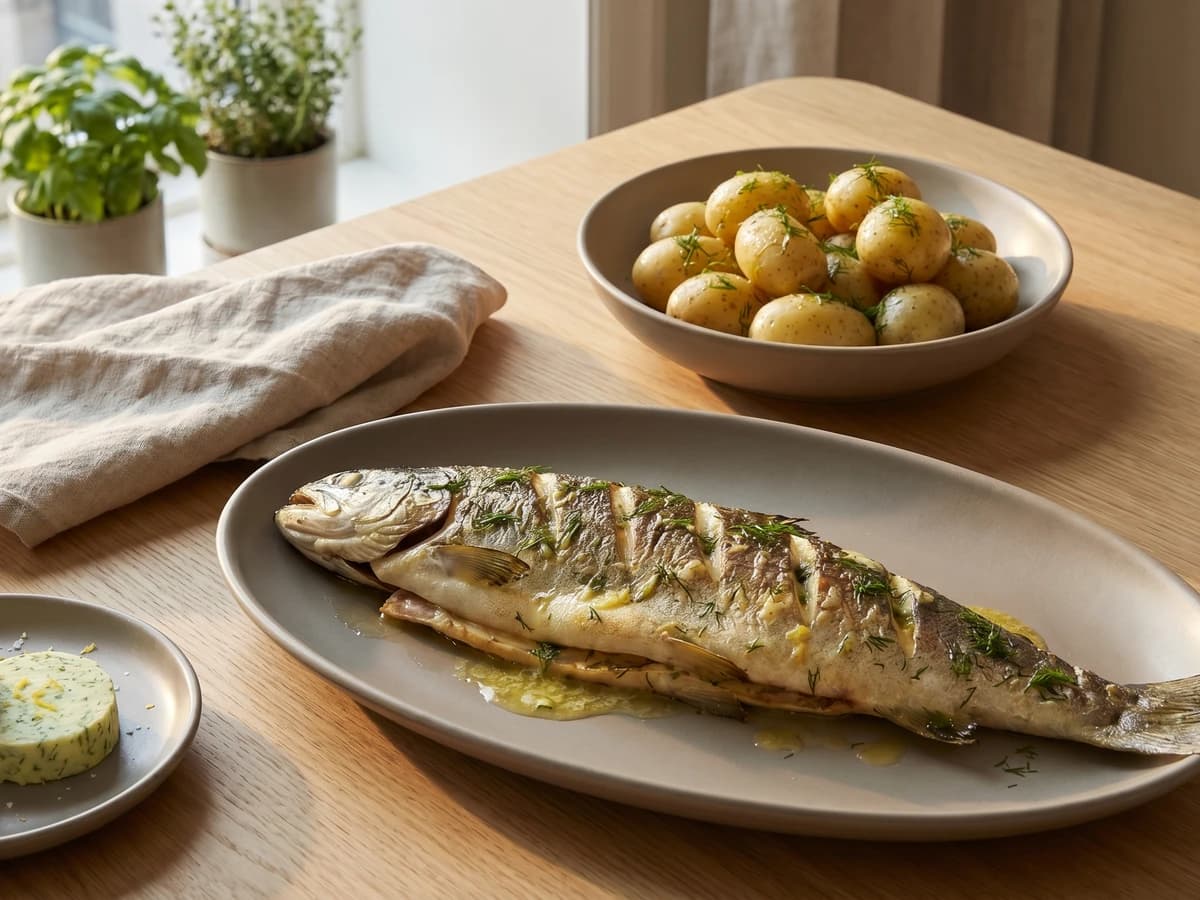
Whole sea trout baked with butter, lemon, and armfuls of dill, served beside the first nye kartofler of the season and a melting slab of dildsmor. The Danish summer table at its most generous.
Chef Freja
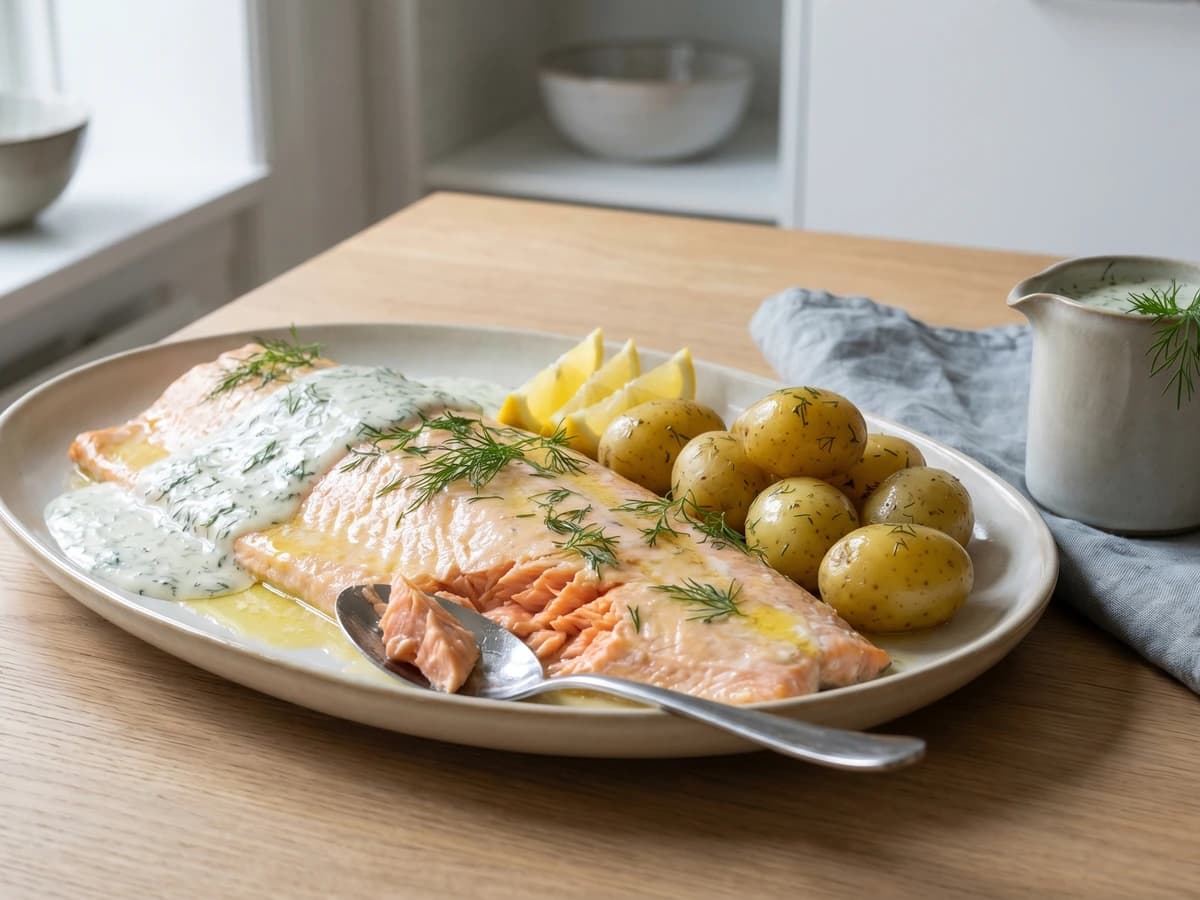
A side of salmon baked gently in butter and white wine, served warm with a bright dill cream sauce and the season's first nye kartofler. Late spring on a Danish table, cooked with love.