
Chef Freja
Andelår med Rødkål
Slow-roasted duck legs with crisp, deeply golden skin, served with braised red cabbage and caramelized potatoes. The weeknight Danish duck that proves the best part of the bird is the one that takes its time.
A cooking platform built around craft, culture, and the stories behind what we eat.
Created by Chef Freja
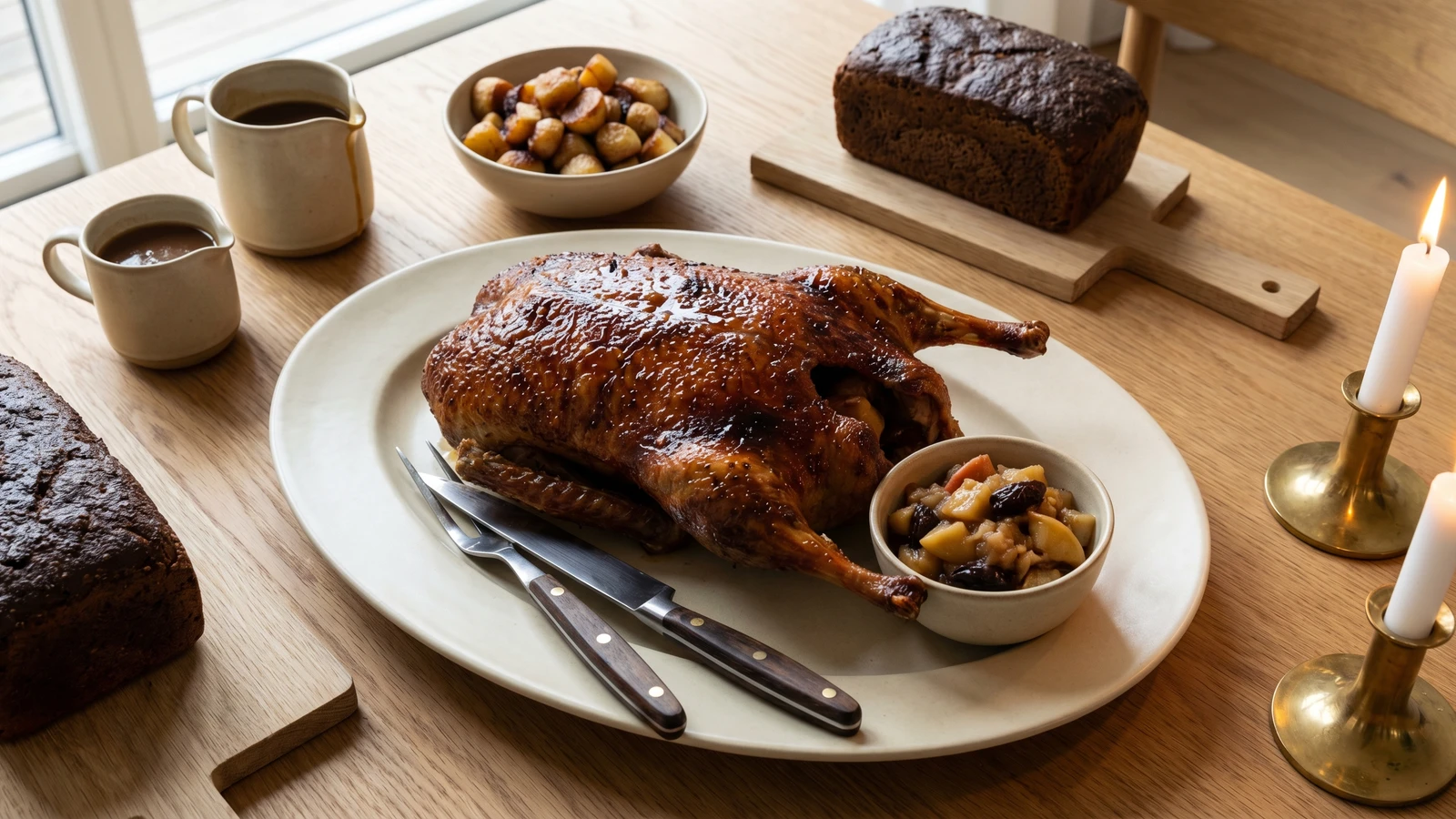
The whole roasted duck of juleaften, stuffed with tart apples and dark prunes, slow-roasted for four patient hours until the skin crackles like something earned and the meat underneath gives way without resistance.
December in Denmark is dark by three in the afternoon. The streets are lit with candles. The windows are fogged. And behind every lit kitchen in the country, something is roasting. On juleaften, Christmas Eve, that something is andesteg.
This is the bird that holds the Danish Christmas table together. A whole duck, its cavity packed with quartered apples and pitted prunes, roasted slowly for four hours until the skin turns deep bronze and crackles when you press it with the flat of a knife. The apples collapse into a tart mush inside the bird. The prunes go dark and jammy. Together they balance the richness of the duck in a way that centuries of Danish cooks have understood without ever needing to write it down. Alongside it: brunede kartofler, the caramelised potatoes rolled in golden sugar and butter, and rodkal, the braised red cabbage that has been simmering on the back burner since morning. This is the meal that December is for.
I want you to understand two things before you start. First, the pricking of the skin. You're creating escape routes for the thick layer of fat beneath the surface, and without those tiny holes, the fat stays trapped and the skin never crisps. Second, the patience. A duck is not a chicken. It doesn't want high heat and speed. It wants four hours of gentle warmth so the fat renders slowly, basting the meat from within, while the skin tightens and dries. The final blast of high heat at the end is what transforms that dried surface into crackling. Every step has its reason. I'll walk you through each one, and by the time this bird comes out of the oven, you'll know exactly why it worked. You'll know when it's right.
Roast duck on Christmas Eve became the dominant juleaften tradition in Danish homes during the late 19th century, gradually displacing the goose that wealthier families had served and the salt pork that sustained the rest. The stuffing of apples and prunes reflects a much older Scandinavian instinct for pairing fatty meats with fruit, a combination found in Danish cookbooks as far back as the 1700s. The custom of serving andesteg specifically on the twenty-fourth of December, rather than Christmas Day, follows the Danish pattern of celebrating the evening before: the tree is lit, the duck is carved, the risalamande follows, and the gifts are opened, all on juleaften itself.
Quantity
1, about 2.2kg
giblets removed
Quantity
2 tablespoons
Quantity
1 teaspoon
freshly ground
Quantity
4
quartered and cored
Quantity
200g
Quantity
500ml
Quantity
150ml
Quantity
2 tablespoons
Quantity
1 tablespoon
Quantity
30g
Quantity
for the gravy, to taste
| Ingredient | Quantity |
|---|---|
| whole duckgiblets removed | 1, about 2.2kg |
| coarse salt | 2 tablespoons |
| black pepperfreshly ground | 1 teaspoon |
| tart applesquartered and cored | 4 |
| pitted prunes | 200g |
| chicken or duck stock | 500ml |
| double cream | 150ml |
| redcurrant jelly (ribsgele) | 2 tablespoons |
| plain flour | 1 tablespoon |
| unsalted butter | 30g |
| fine sea salt | for the gravy, to taste |
Take the duck out of the fridge a full hour before you begin. A cold bird in a hot oven seizes up and the fat underneath the skin never renders properly. While the duck comes to room temperature, heat the oven to 160°C. Pull away any loose fat from inside the cavity, especially around the opening. That fat will melt and pool in the pan, which is useful for basting, but too much inside the bird steams the meat rather than roasting it.
Using a sharp skewer or the tip of a small knife, prick the duck skin all over, concentrating on the breast and the thick fatty areas around the thighs. You want to pierce the skin and the fat layer beneath it, but not the meat. This is important. The tiny holes give the fat an escape route during the long roast. Without them, the fat stays trapped under the skin and you get flabby, pale duck instead of crackling. Rub the coarse salt firmly into the skin, pressing it into every puncture and every fold. Follow with the black pepper. Coarse salt matters here. Fine salt dissolves and vanishes. Coarse salt grips the surface and draws out moisture as it roasts, and dry skin is what crackles.
Season the inside of the cavity with a small pinch of salt. Fill it loosely with the quartered apples and pitted prunes, alternating as you go. Don't pack them tight. The fruit needs room to soften and release its juices, which perfume the meat from the inside as it roasts. The apples break down into a tart mush that cuts through the richness of the duck. The prunes go dark and jammy and sweet. Together they balance the fat in a way that no sauce alone can manage. Close the cavity by threading a skewer through the skin or tying the legs together with kitchen twine. It doesn't need to be perfect. It just needs to hold.
Place the duck breast-side up on a rack set inside a deep roasting tin. The rack keeps the bird out of the fat that collects below, so the heat circulates evenly and the underside doesn't stew. Pour a cup of water into the bottom of the tin. This stops the drippings from burning during the first hours and creates the base for your gravy later. Slide the tin into the oven and leave the duck alone for the first hour. Do not open the door. The oven needs to hold its steady, gentle heat. A duck wants slow cooking, the opposite of a roast chicken. The long, low heat melts the fat layer gradually, basting the meat from within, and the skin tightens and dries as the hours pass.
After the first hour, open the oven and spoon the collected pan juices over the breast and legs. Do this every thirty to forty minutes for the next two and a half hours. Each basting adds a thin glaze that builds flavour on the skin. You'll notice the colour deepening from pale gold to amber to a rich, lacquered brown. If the pan juices reduce too much, add a splash more water to the tin. The roasting tin should never run dry. At the three hour mark, check the fat around the thighs. If it's still thick and pale, the temperature is right and the fat is still rendering. If the skin is browning too fast, tent the breast loosely with foil.
In the final thirty minutes, raise the oven temperature to 220°C. This is the moment the skin transforms. The surface is already dry from hours of slow rendering, and the blast of high heat blisters it into something shattering under a knife and deeply bronzed. Watch it closely. The line between perfect crackling and burnt is about five minutes. When the skin is the colour of dark honey and sounds hollow when you tap the breast with a wooden spoon, the duck is done. A thermometer inserted into the thickest part of the thigh, not touching bone, should read 75°C.
Lift the duck off the rack and onto a warm serving platter or carving board. Tent it loosely with foil and let it rest for twenty minutes. Resting is not optional. During the roast, the heat has driven all the juices toward the centre of the bird. Resting lets them redistribute back through the meat so that when you carve, the slices are moist throughout instead of dry at the edges and flooded at the centre. The skin stays crisp under the loose foil. Tight wrapping traps steam and softens everything you spent four hours building.
While the duck rests, set the roasting tin on the hob over medium heat. Spoon off all but two tablespoons of the fat, leaving the dark, sticky drippings on the bottom. Add the butter and let it foam. Sprinkle in the flour, stir it through, and cook for a minute until it smells toasty and has turned a shade darker. Pour in the stock gradually, stirring and scraping the bottom of the tin to dissolve every caramelised bit. These are where the flavour lives. Bring it to a simmer, stir in the cream and the ribsgele. The redcurrant jelly adds a gentle tartness and a glossy depth that belongs in Danish brun sovs. Use real ribsgele, not jam. Jam is too sweet and muddles the flavour. Simmer for five minutes until the gravy coats the back of a spoon. Taste it. Season with fine sea salt. Strain into a warm jug.
Remove the skewer or twine and spoon the softened fruit stuffing into a warm bowl to serve alongside. Carve the duck at the table if you can. Start with the legs, which should pull away almost on their own after four hours. Then slice the breast against the grain in long, even pieces. Every plate gets dark meat, breast meat, a spoonful of the apple and prune stuffing, and a generous pour of brun sovs. Brunede kartofler and rodkal, the sweet-sour braised red cabbage, belong next to this bird. They always have. Tak for mad.
1 serving (about 380g)
Culinary guides, cultural storytelling, and the editorial depth that makes cooking meaningful.
Discover Culinary ExplorerChef Freja
Slow-roasted duck legs with crisp, deeply golden skin, served with braised red cabbage and caramelized potatoes. The weeknight Danish duck that proves the best part of the bird is the one that takes its time.
Chef Freja
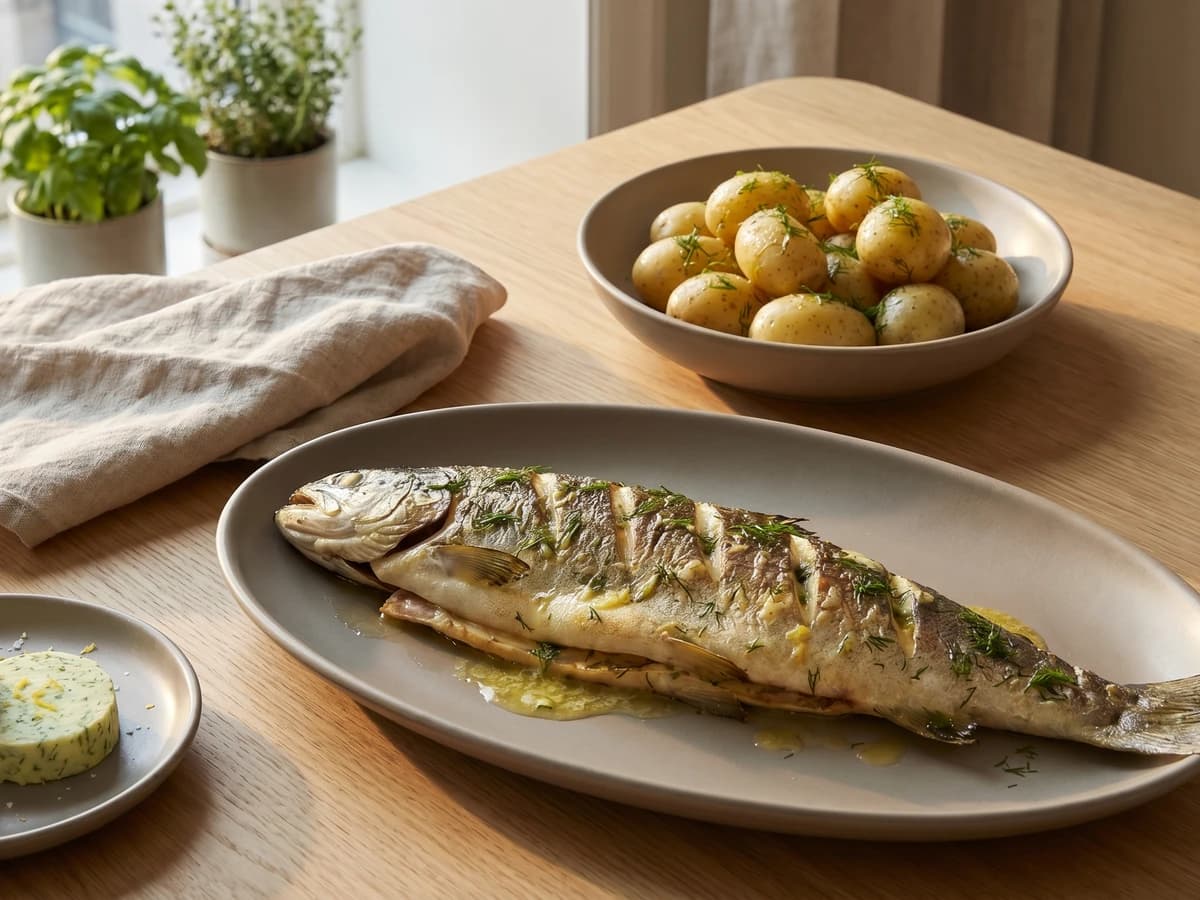
Whole sea trout baked with butter, lemon, and armfuls of dill, served beside the first nye kartofler of the season and a melting slab of dildsmor. The Danish summer table at its most generous.
Chef Freja
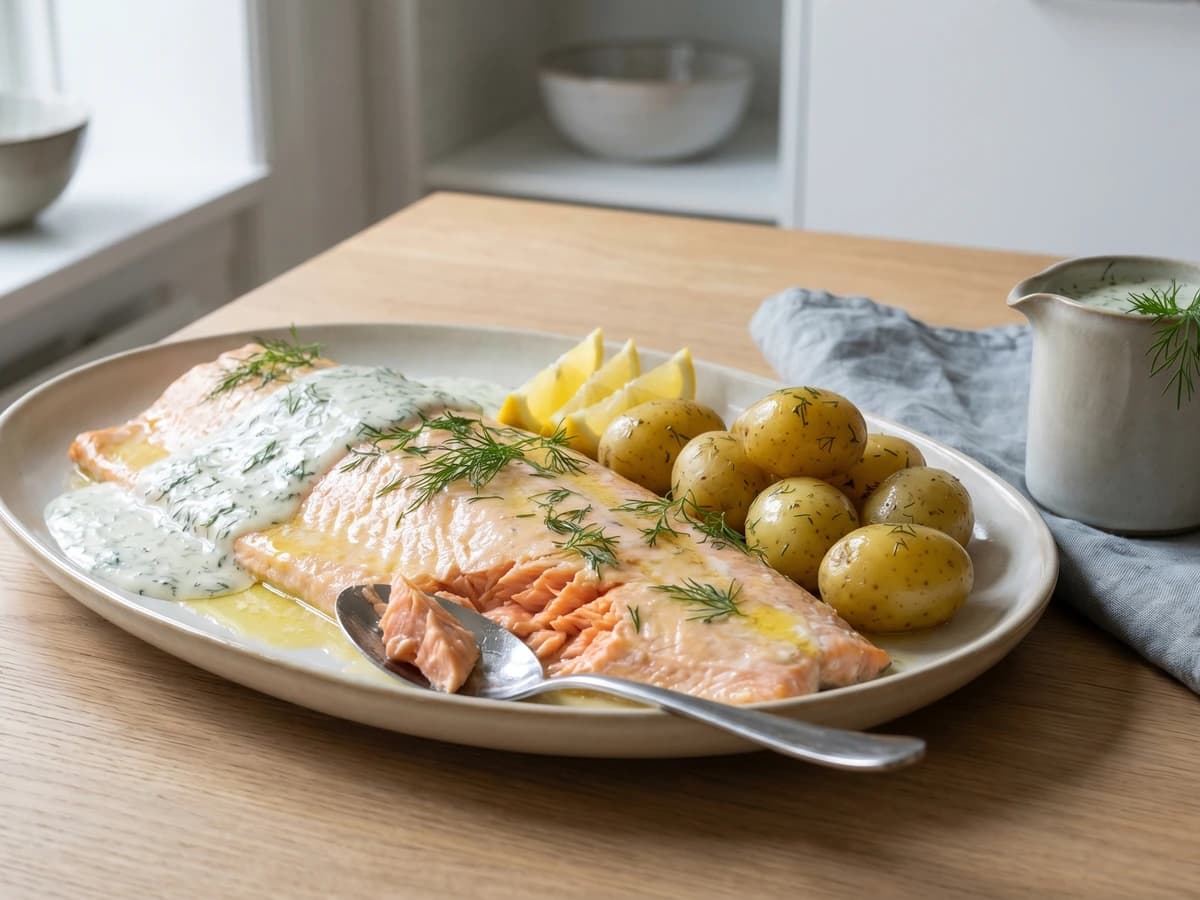
A side of salmon baked gently in butter and white wine, served warm with a bright dill cream sauce and the season's first nye kartofler. Late spring on a Danish table, cooked with love.
Chef Freja
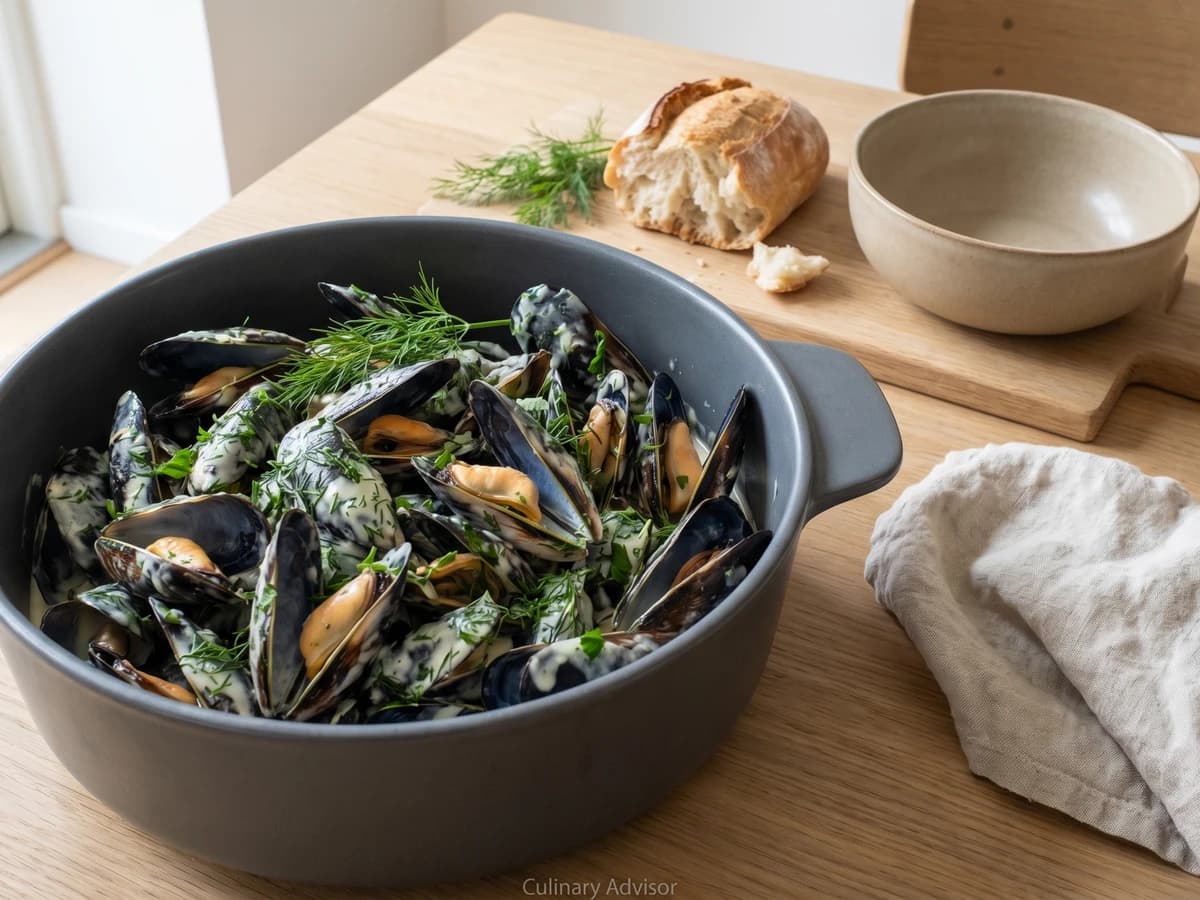
Limfjord blue mussels steamed in white wine and bathed in a roux-thickened cream sauce heavy with dill and parsley. The pot goes straight to the table, the broth pools at the bottom, and the bread is for soaking up every last drop.