
Chef Graziella
Crocchè di Patate Napoletani
From the friggitorie of Naples, where frying is an art and potato croquettes are judged by the crack of the crust and the pull of melted cheese within.
A cooking platform built around craft, culture, and the stories behind what we eat.
Created by
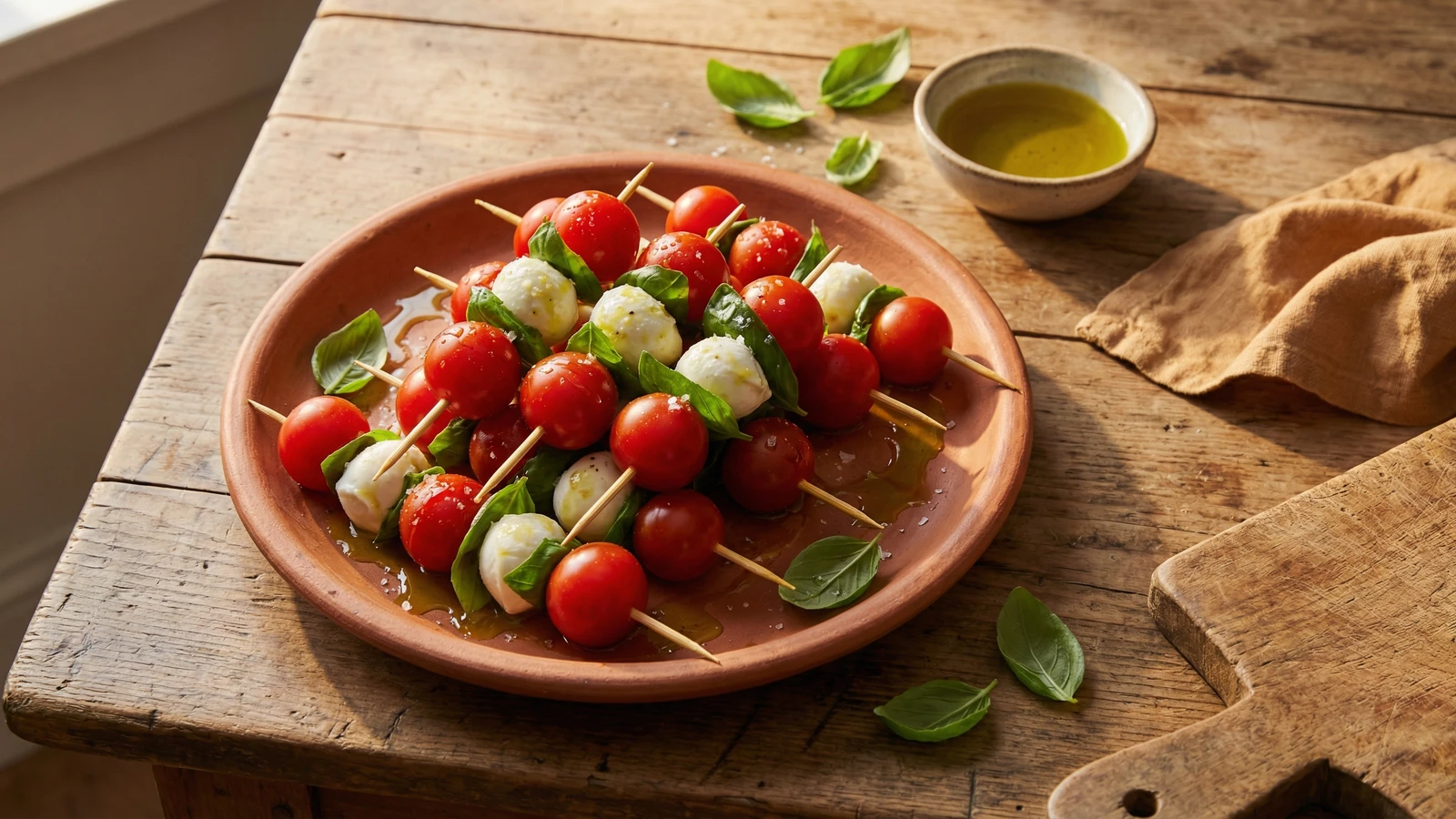
The beloved Caprese combination arranged on skewers for easy eating at gatherings. Three ingredients, no cooking, and a reminder that Italian food is about selection, not complication.
Putting Caprese on a stick is not a revolutionary act. It is practical. Guests at a party do not want to wrestle with a knife and fork while balancing a drink and making conversation. The skewer solves this problem elegantly, and the Italians are nothing if not practical about eating.
What does not change when you thread these ingredients on wood is the fundamental truth of the combination: the quality of each component is exposed completely. There is no sauce, no heat, no technique to compensate for inferior tomatoes or rubbery cheese. You taste exactly what you bought. This is why most versions of this dish disappoint. People think the recipe is the hard part. The recipe is nothing. Finding a ripe tomato in January is hard. Finding fresh mozzarella that was made this morning, that tastes of milk rather than plastic, that is hard.
These are summer skewers. Serve them when tomatoes are in season, when basil grows faster than you can use it, when the sun warms the fruit on the plate. In winter, make something else.
The pairing of tomato, mozzarella, and basil on Capri dates to the early 20th century, though fishermen and farmers along the Campanian coast had combined these ingredients for much longer. Skewering them is a more recent adaptation, born in the 1970s and 1980s when Italian aperitivo culture embraced finger foods that could be eaten while standing at a bar.
Quantity
24 (about 1 pound)
small fresh mozzarella balls
Quantity
24
ripe, at room temperature
Quantity
24 large
Quantity
finest quality
Quantity
to taste
Quantity
to taste
freshly ground
| Ingredient | Quantity |
|---|---|
| bocconcinismall fresh mozzarella balls | 24 (about 1 pound) |
| cherry tomatoesripe, at room temperature | 24 |
| fresh basil leaves | 24 large |
| extra virgin olive oil | finest quality |
| flaky sea salt | to taste |
| black pepperfreshly ground | to taste |
Before you begin, taste a tomato. Is it sweet, acidic, bursting with summer? If it tastes like nothing, these skewers will taste like nothing. The bocconcini should be soft and milky, packed in whey or water, never shrink-wrapped in plastic. The basil should smell peppery and green when you rub a leaf between your fingers. Three ingredients. No hiding places.
Drain the bocconcini and pat them dry with a clean towel. Moisture on the cheese will repel the olive oil. Rinse and dry the cherry tomatoes. Select basil leaves of similar size. If your leaves are very large, you may tear them, but smaller whole leaves look more elegant on the skewer.
Working with one skewer at a time, thread a cherry tomato first, pushing it toward the bottom. Fold a basil leaf in half and thread it next. Follow with a bocconcino. Repeat the sequence: tomato, basil, mozzarella. Each skewer should hold two tomatoes and two bocconcini with basil between. The order matters for how the skewer rests on the plate.
Lay the assembled skewers on a large platter in neat rows or a casual pile, as you prefer. The presentation should look abundant but not chaotic. Drizzle generously with your finest olive oil. The oil should glisten on every surface. Scatter flaky salt over all and grind fresh pepper. This is not the moment for restraint with the oil. It is the dressing, the sauce, the binding element.
These skewers are at their best within 30 minutes of assembly. The tomatoes weep, the basil wilts, the mozzarella begins to dry. Make them, dress them, serve them. If you must wait, keep them covered and cool but not refrigerated, and dress with oil only at the moment of serving.
1 serving (about 75g)
Culinary guides, cultural storytelling, and the editorial depth that makes cooking meaningful.
Discover Culinary ExplorerChef Graziella
From the friggitorie of Naples, where frying is an art and potato croquettes are judged by the crack of the crust and the pull of melted cheese within.

Chef Graziella
Naples' beloved fried mozzarella sandwich, where day-old bread becomes a golden carriage for molten cheese. Four minutes of perfection that cannot wait.

Chef Juliette
Tiny éperlans, lightly floured and fried until their tails stand crisp, arrive in a generous heap on a napkin with fried parsley and grooved lemon, a weeknight lesson in heat and restraint.

Chef Juliette
Brandade de Morue turns salt cod, warm olive oil, and milk into a pale, silky emulsion: keep everything warm and add the oil slowly, then crown the generous dome with butter-fried bread.