Culinary Explorer
A cooking platform built around craft, culture, and the stories behind what we eat.
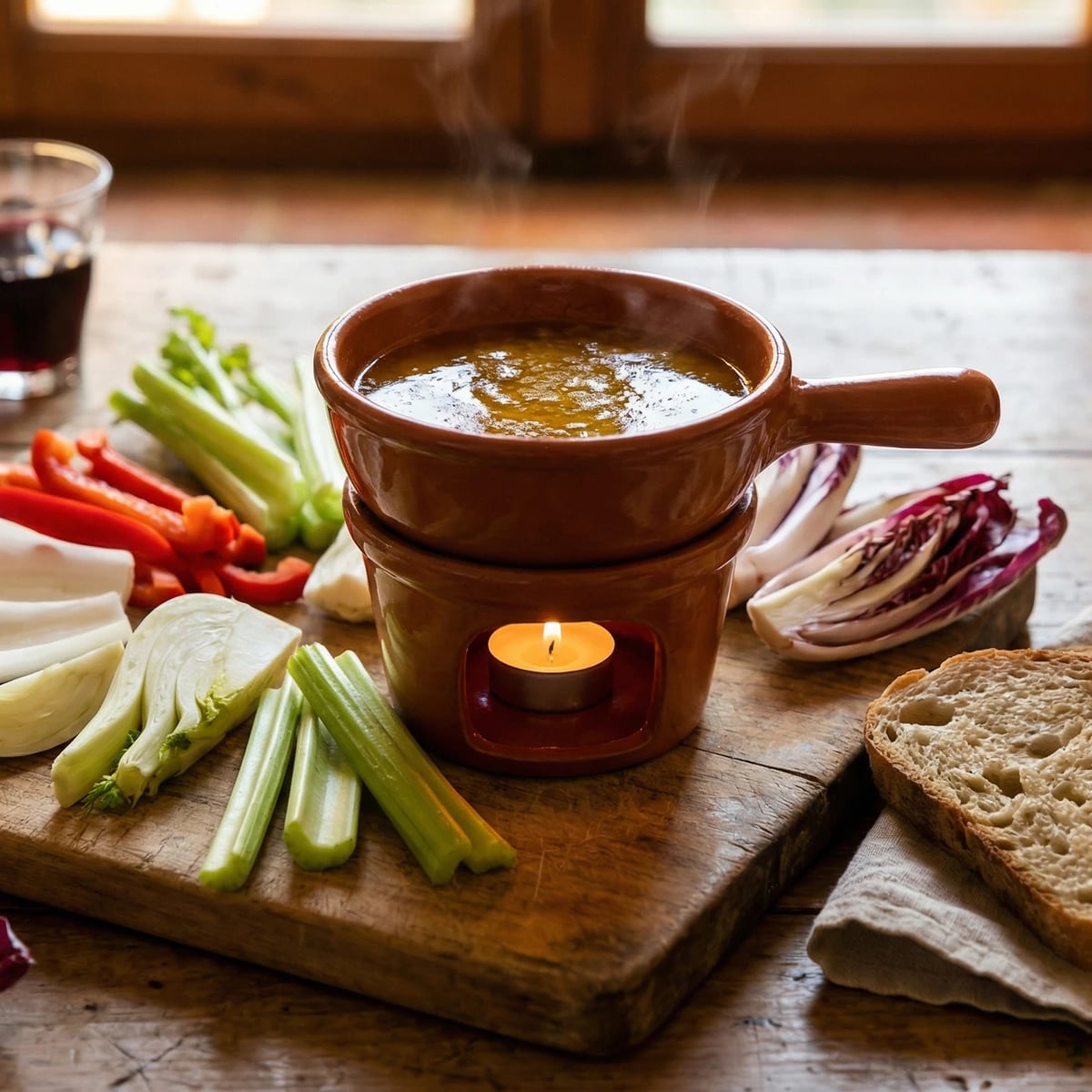
Bagna Cauda Piemontese
Created by Chef Graziella
The warming anchovy bath of Piedmont, where garlic is mellowed to sweetness and anchovies dissolve into something that draws a whole table together around one fragrant pot.
Bagna cauda means 'hot bath,' and this is precisely what you are making: a warm, fragrant bath of anchovy and garlic into which you dip vegetables. It is Piedmont's answer to fondue, though far older and, to my taste, far more interesting. This is not a dish you eat alone. It requires a table of people, good wine, and the willingness to reach across each other.
Now, before you protest about the garlic, understand that bagna cauda contains what appears to be an alarming quantity. This is correct. But the garlic is simmered slowly in milk until it becomes soft, sweet, and utterly transformed. What emerges has none of the harshness that makes raw garlic so difficult. The milk performs a kind of alchemy. Trust it.
The anchovies must be good ones, salt-packed if you can find them, rinsed and filleted with care. They dissolve into the warm fat until you cannot see them, only taste their depth. The vegetables are the vehicle: raw, crisp, cold against the warm sauce. In Piedmont they use cardoons, which are nearly impossible to find elsewhere. Use what you have. The ritual matters more than the specifics.
Ingredients
garlic
Quantity
2 heads (about 20 cloves)
cloves separated and peeled
whole milk
Quantity
2 cups
salt-packed anchovies
Quantity
8 ounces (about 20 fillets)
soaked, rinsed, and filleted
| Ingredient | Quantity |
|---|---|
| garliccloves separated and peeled | 2 heads (about 20 cloves) |
| whole milk | 2 cups |
| salt-packed anchoviessoaked, rinsed, and filleted | 8 ounces (about 20 fillets) |
Where cooking meets culture.
Culinary guides, cultural storytelling, and the editorial depth that makes cooking meaningful.
Discover Culinary Explorer