
Chef Klaus
Apfelschorle
Cloudy apple juice, sharp mineral water, and no sugar bowl: the German Schorle that belongs in school bags, beer gardens, picnic baskets, and the table when supper is quick.
A cooking platform built around craft, culture, and the stories behind what we eat.
Created by
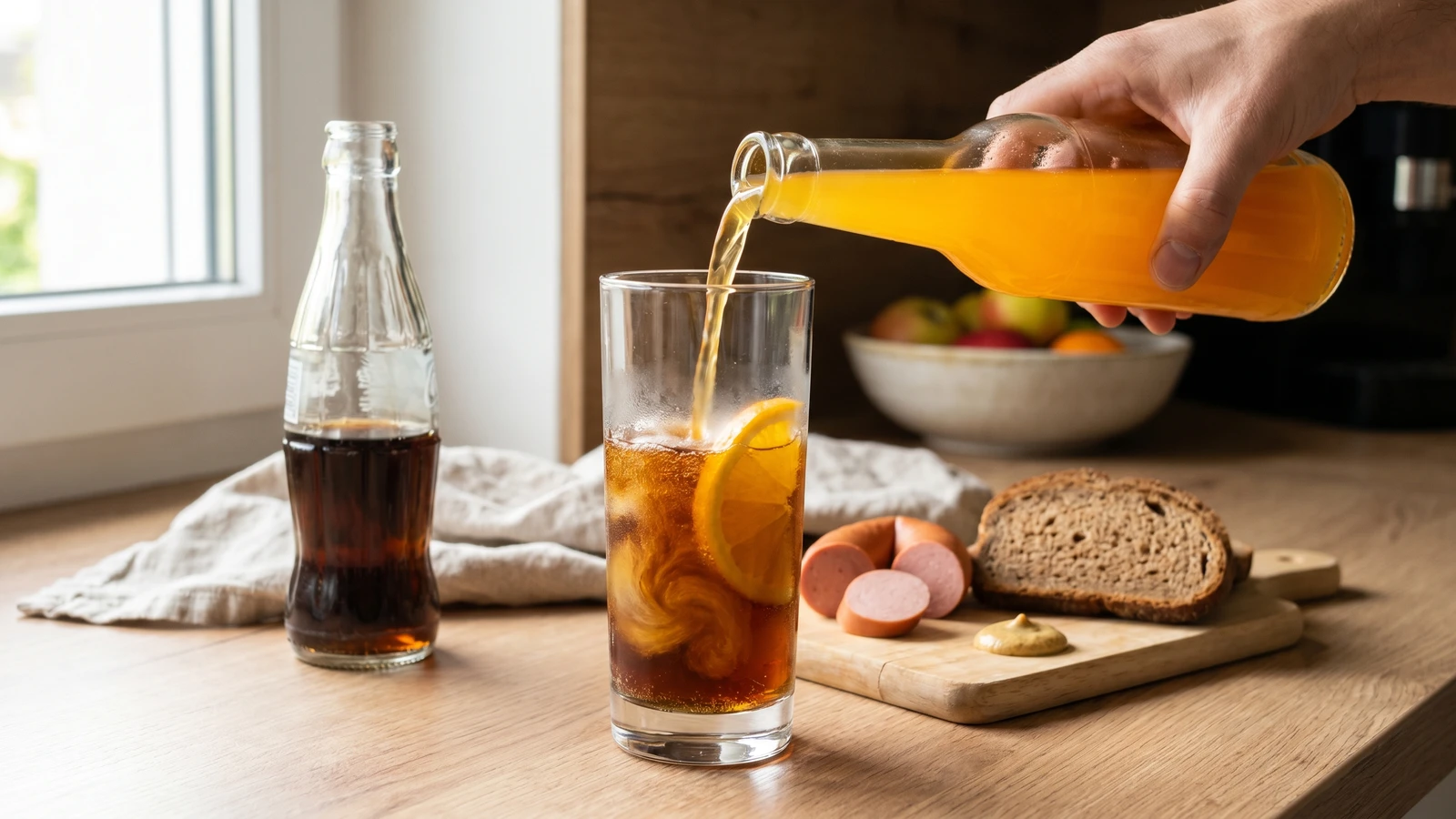
Spezi works when the cola stays in charge: two cold parts cola, one cold part orange soda, poured gently so the bitter edge stays lively and the glass doesn't turn to syrup.
Spezi is a southern German everyday drink, strongest around Augsburg and Bavaria, and it doesn't need a feast day. It sits beside a quick Brotzeit, a bread-and-sausage meal, a picnic lunch, a football plate, or a Sunday table where the roast is gone and people still want something cold in the glass.
Im Norden anders, im Süden anders. In the south many people say Spezi and mean cola mixed with Orangenlimonade, orange soda. Further north you hear Cola-Mix, or people name a bought brand and let the bottle decide the balance. I don't. Nicht aus der Fertigflasche, not from the ready-mixed bottle. The household version is sharper because you hold the ratio yourself.
The rule is simple: two parts cola, one part orange soda, both properly cold. Cold liquid holds its fizz; warm liquid foams high and dies flat. The cola has to stay in front, with its bitter edge, while the orange lifts it. Half and half is sweeter, and then you are drinking orange candy with brown colour. Das ist kein Bierzelt.
Pour gently down the side of the glass and don't beat it with a spoon. One slow stir if the colour sits in layers, no more. Watch the bubbles at the rim and the amber-brown colour in the glass. That's the whole work. Erst verstehen, dann kochen.
Spezi was registered in 1956 by Brauerei S. Riegele in Augsburg as a cola-orange soft drink, and the name comes from Bavarian colloquial speech for a friend or close acquaintance. It belongs to postwar West German soft-drink culture rather than the old preservation larder, but its spread is regional: Bavaria kept the name Spezi, while many producers elsewhere sold the same idea as Cola-Mix or under brand names. Later trademark disputes around the word show how a local product name became everyday table language.
Quantity
500ml
ice-cold
Quantity
250ml
ice-cold
Quantity
3 to 4 thin slices
Quantity
3 to 4
| Ingredient | Quantity |
|---|---|
| full-sugar colaice-cold | 500ml |
| orange soda (Orangenlimonade)ice-cold | 250ml |
| orange half-moons (optional) | 3 to 4 thin slices |
| large ice cubes (optional) | 3 to 4 |
Use cola, orange soda, and glasses from the refrigerator. Cold liquid holds carbonation, so the drink stays lively instead of foaming up and going flat before the first sip. If the bottles are warm, chill them first; speed is no excuse for a dead glass.
Measure two parts cola to one part orange soda. The cola needs to carry the drink with a bitter, dark edge, while the orange soda gives citrus and brightness. Guessing usually makes it too sweet, and then the orange has taken over.
Tilt the glass and pour the cola down the side first, then add the orange soda the same way. The tilted pour keeps the bubbles in the drink instead of building a head of foam that collapses. One slow lift with a spoon is enough if the colour sits in layers.
Add an orange half-moon only if you're serving at once, because citrus peel left sitting too long gives a pithy edge. Use one large ice cube outdoors if you must; small ice melts fast and thins the flavour. Serve immediately, while the glass is cold and the bubbles still climb.
1 serving (about 260g)
Culinary guides, cultural storytelling, and the editorial depth that makes cooking meaningful.
Discover Culinary ExplorerChef Klaus
Cloudy apple juice, sharp mineral water, and no sugar bowl: the German Schorle that belongs in school bags, beer gardens, picnic baskets, and the table when supper is quick.

Chef Klaus
Frankfurt's long drink for a warm table: dry Apfelwein, cold mineral water, and the ribbed Geripptes glass that tells you where you are.

Chef Klaus
Berlin's summer glass: sharp, pale Berliner Weisse softened with a red raspberry or green woodruff Schuss, cold enough to bead the glass and never from bottled syrup.

Chef Klaus
The Easter bottle from yolks, sugar, cream, and good spirit, beaten warm just enough to thicken, then cooled into a yellow liqueur for cake, coffee, and small glasses.