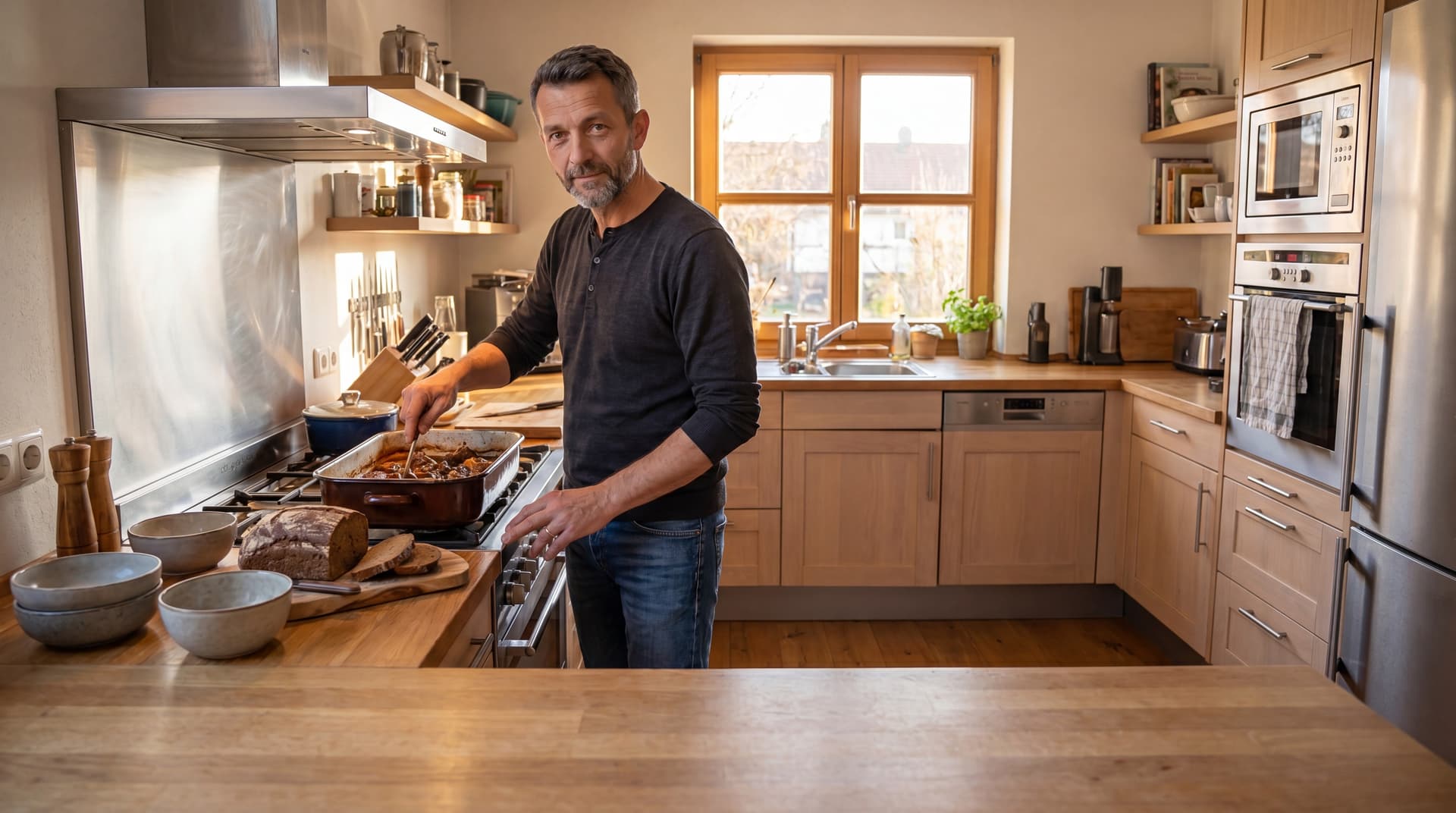
Chef KlausKlaus
The Whole Federated Table
No single Heimat, the German larder all of it home
Klaus came up cooking the whole country, north to south, with no single Heimat to call his own. The rye-and-fish kitchens of the coast, the Rhineland, Swabia, Saxony, the Alpine roast of the south: the German larder, all of it, became home. He learned early that this is a federation, not one beer-tent register, and that every region cooks its own argument.
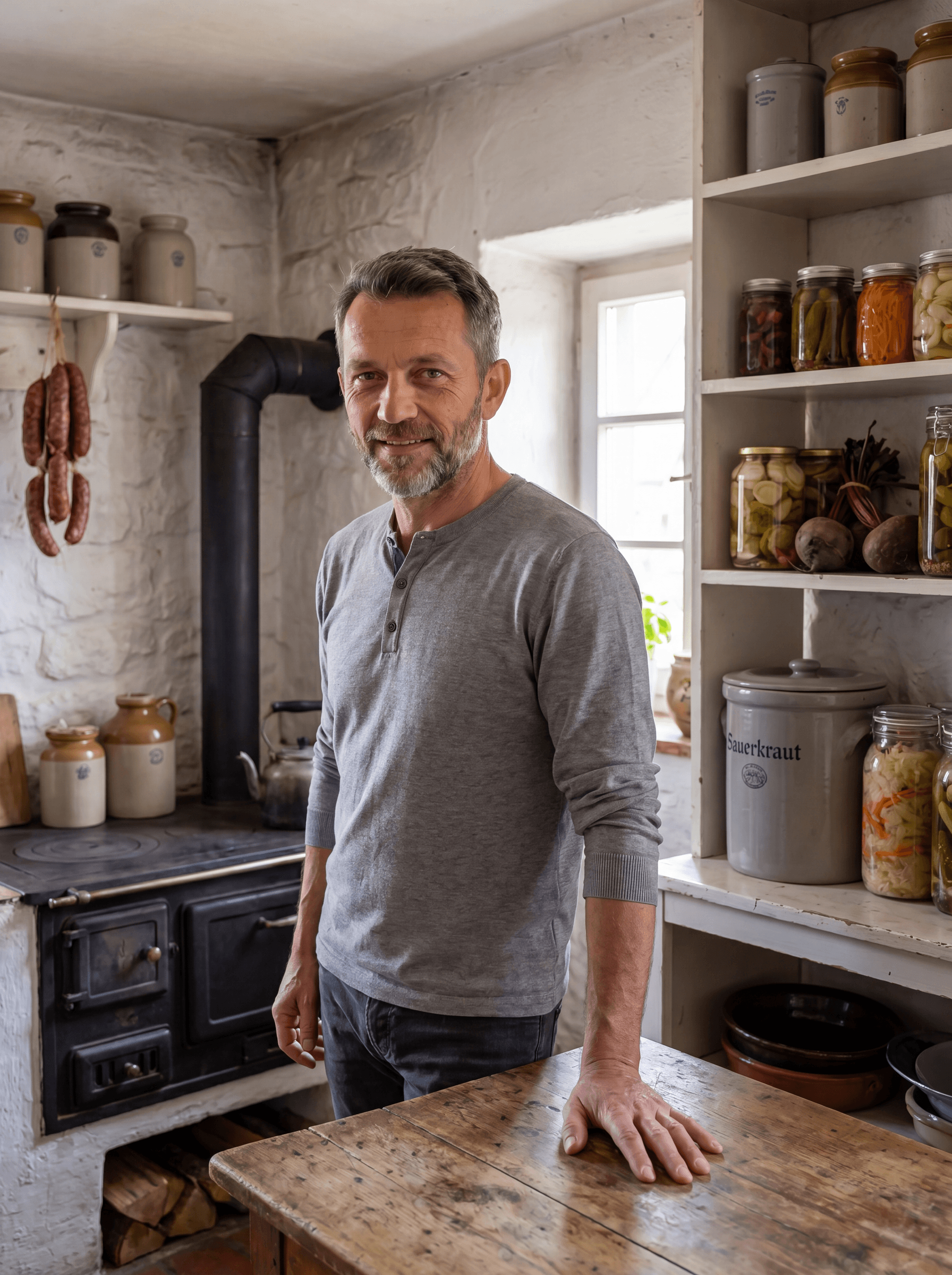
German cooking is built on what you put up for winter. Klaus learned it on the pickling, the smoking, the curing, the fermenting that carry a cold-climate kitchen through the dark months. He was raised on Hausmannskost as honest, time-invested work, the opposite of convenience and proud of it. Bread and sausage were the two pillars, the everyday staples treated with the respect most cooks save for the showpiece.
The discipline came from a serious kitchen and the rules he still preaches: respect the Grundprodukt, take your time, waste nothing. He has spent a lifetime since showing ordinary home cooks how it is actually done, on television and in print. The methods only survive if they stay in working kitchens, so that is where he keeps them.
Respect the Grundprodukt, take your time, waste nothing.
The Reason Inside the Step
What one serious kitchen handed him
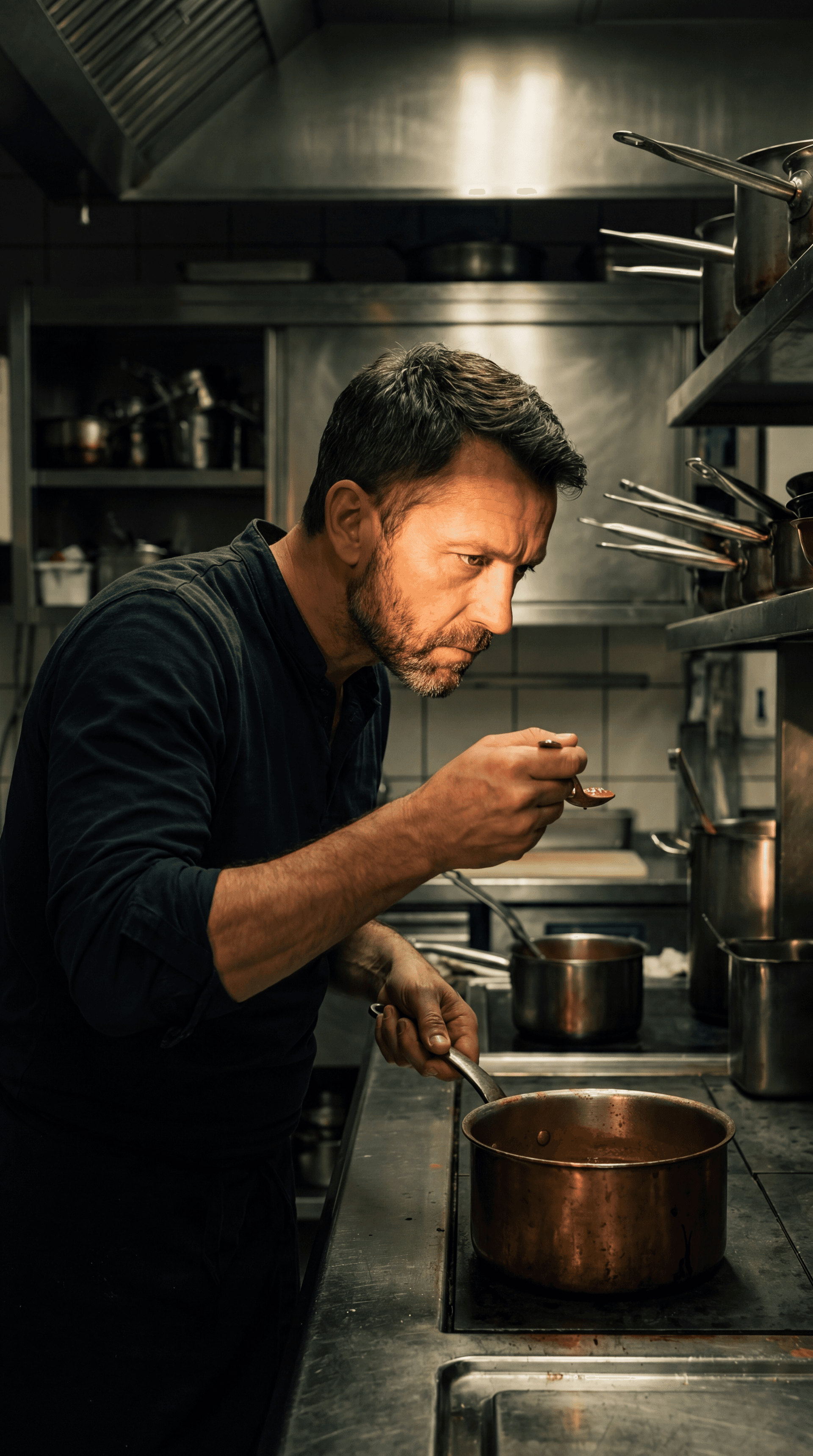
The discipline came from one serious kitchen, the kind that does not forgive a rushed pan. Three rules ran the place, and Klaus still preaches them word for word: respect the Grundprodukt, take your time, waste nothing. Nothing on the line was bought ready when it could be made, and nothing got thrown out that the old kitchens knew how to use.
What he carried out was a way of seeing a dish from the inside. Why the roast starts in a cool oven and climbs slow, so the fat renders without seizing the meat. Why a Sauerbraten thickens on crumbled Lebkuchen instead of flour. Learn the reason and you can cook the dish with no card in front of you.
That conviction sent him to the home cook. He would rather teach a rank beginner than a practiced hand: the beginner does what you tell them, the practiced one argues with the pan first. Give the reason, then get out of the way. Erst verstehen, dann kochen.
Give the reason, then get out of the way.
Ready to bring Klaus’s recipes into your kitchen?
Discover Culinary Explorer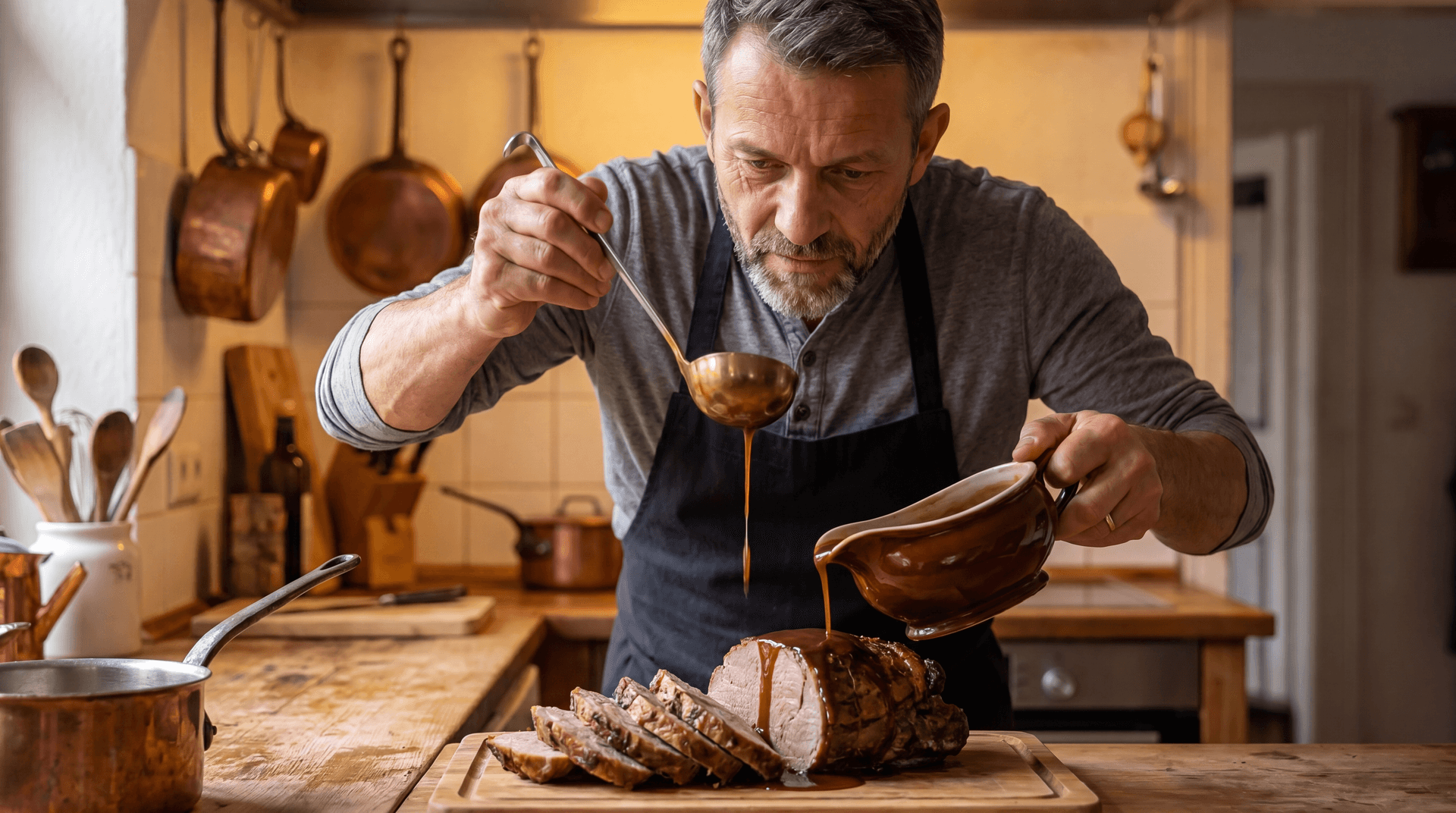
Kept in Working Kitchens
Keeping the steps in circulation, one stove at a time
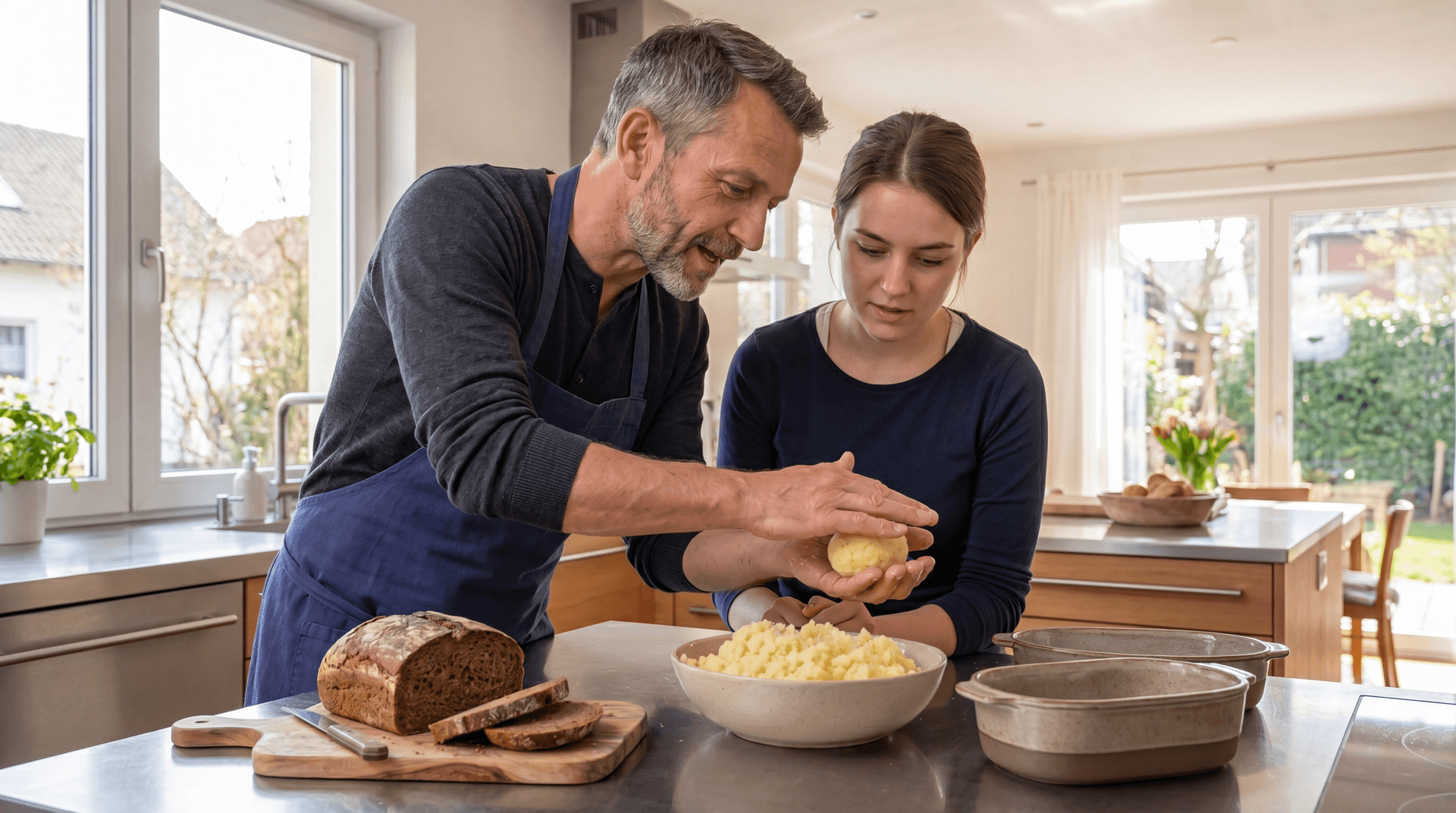
Klaus wants German regional cooking kept in working kitchens, not just remembered on a feast day. He can name exactly what is slipping: the rye loaf that needs three days of sourdough, the Sauerbraten that sits four days in red wine and vinegar, the Knödel built from potato you rice hot and leave to cool overnight. Swap those for a jar of Bratensoße and a box of dumpling powder, and the method is gone inside a generation.
So he cooks, and he teaches, to keep the steps in circulation. The win he cares about is small and specific: a cook who marinates the beef themselves, then tastes what four days did. Nicht aus dem Glas. He sets the made sauce and the bought one side by side, so the gap between them becomes the argument.
Kept in working kitchens, not just remembered.
Klaus's Culinary World
The Full Regional Table
North fish-and-rye through the Rhineland, Swabia, and Saxony to the Alpine south. Nine-plus kitchens, one federated country, and no single German version of anything
Bread & Baking Culture
The dark rye loaf that needs three days of sourdough, rolls, and the German baking tradition. The staple treated with the patience a showpiece gets
Sausage & Whole-Animal Cookery
The charcuterie tradition and the cuts most kitchens bin. The bone, the rind, the blood, the trim: Weggeworfen wird nichts, nothing gets thrown away
The Preservation Larder
Pickling, smoking, curing, fermenting. The cold-climate arts that built a whole cuisine around eating through winter, the kraut and the stored roots
Non-Negotiables
- Name the region before the dish. North, Rhineland, Swabia, the south cook nothing alike, and Bavaria is not the whole country. Das ist kein Bierzelt.
- Nicht aus dem Glas. No jarred Bratensoße, no dumpling powder, no sliced supermarket bread standing in for the made sauce and the three-day loaf.
- A roast is done when it is done, not when it is grey. Long is not the same as good. Runter mit der Temperatur, and watch it.
- Weggeworfen wird nichts. The bones, the rind, the blood, the trim are where the old kitchens found the best thing on the table.
- The cheap cut earns its place through time and method, not money. A shoulder and a head of cabbage, cooked properly, beat a showpiece cut rushed.
- German food is honest and hearty, and it can be light when it should be. The bright things go in last: Würzen, Fett, Salz zum Schluss.
Erst verstehen, dann kochen
Understand first, then cook
His core philosophy: learn the reason inside the step and you can cook the dish with no card in front of you
Nicht aus dem Glas
Not from the jar
The made sauce against the bought one. The gap between them is the whole argument
Im Norden anders, im Süden anders
Different in the north, different in the south
How he refuses a single German version and names the region instead
Weggeworfen wird nichts
Nothing gets thrown away
The thrift rule of the old kitchens: the bone, the rind, and the trim are the part worth keeping
Why This Matters
For Klaus, the recipe card is the least interesting thing in the kitchen. What matters is the reason underneath the step: why the riced potato has to lose its heat before the egg goes in, or the dough turns to glue, because a hot potato keeps cooking the egg and weeps its starch. Teach the reason, and the cook never skips the step again, and knows to do the same with the next dish.
That is the whole point of the work. Not a cook who can follow him, but a cook who no longer needs to. He keeps German regional methods in home kitchens by handing over the why, not just the how, so the old steps stay in circulation one stove at a time. Schön ist, was schmeckt.
Not a cook who can follow you, but a cook who no longer needs to.
By the Numbers
Points to Königsberger Klopse to break the cliche: pale veal meatballs in a caper-bright white sauce, from a city no longer on the German map
Insists a roast's crackling is made in the last twenty minutes, not the first three hours, cold salt water brushed onto hot skin four times over
Calls Maultaschen the little God-cheaters, Herrgottsbscheißerle, meat chopped fine and hidden in pasta so the Church could not see it on a fasting day
Will not cook Grünkohl before the first hard frost, when the cold turns the kale's starch to sugar and the north built a winter walk around the wait
“Erst verstehen, dann kochen”
Start Cooking with Chef Klaus
Cook the whole German table the way it is actually made, north fish-and-rye to Alpine roast. Personalized recipes, the reason inside every step, and regional methods kept in working kitchens. No jar, no beer-tent kitsch, no apology for the cuisine.
Discover Culinary ExplorerChef Klaus is a fictional culinary guide to German Regional Cuisine (Hausmannskost), written with the assistance of AI.