
Chef Takumi
Agar Jelly with Anko and Fruit (あんみつ, Anmitsu)
Anmitsu looks like a tray of small tasks, but the work is calm: dissolve the kanten fully, chill the pieces clean, then let fruit, anko, and kuromitsu do the speaking.
A cooking platform built around craft, culture, and the stories behind what we eat.
Created by
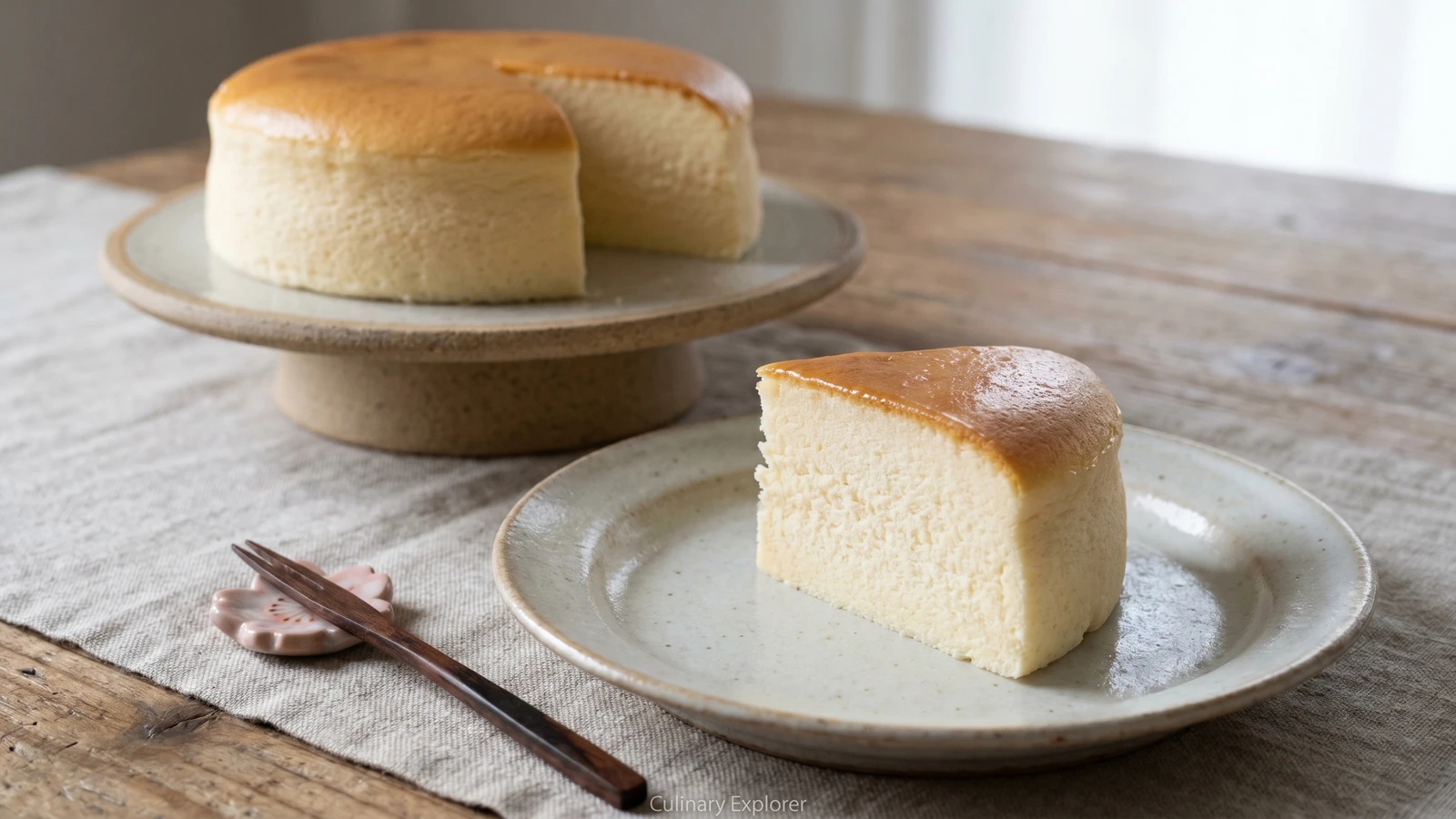
This is the cake that makes grown people hover at the oven door: cream cheese lightened with meringue, baked gently in water, then cooled slowly so the trembling height stays honest.
You think the trembling Japanese cheesecake is the dangerous one. It isn't. The danger has mostly been put there by photographs of cakes wobbling like they know they are being watched. At the bench, it is simpler: a lean cream-cheese batter, a meringue folded in without bullying it, and a bath of hot water to keep the oven's heat gentle.
The one detail that decides it is the meringue. Beat the egg whites to soft, glossy peaks, not dry foam. Soft peaks stretch through the batter and hold tiny pockets of air; dry whites break into lumps, and then you stir harder, which is how a light cake becomes a sulking cake. Fold until no white streaks remain, then stop. This is not courage. It is restraint.
Use cream cheese that tastes clean and faintly tangy, good eggs, and milk that tastes sweet when cold. There is no chocolate, no spice, no heavy sauce to distract from tired dairy. Nothing hidden. Honmono here is plain to see: pale top, fine crumb, gentle wobble, and the clean taste of cheese and egg held in balance.
Soufflé cheesecake is yōgashi, Western-style confection settled into a Japanese appetite for lightness and restrained sweetness. It belongs after a meal as a quiet sweet, good with tea, and it needs space on the plate more than it needs decoration. If you serve fruit beside it, choose what is at its 旬 (shun), at its prime. Strawberries in spring, pear in autumn. Leave it room.
Soufflé cheesecake belongs to yōgashi, the Western-style sweets that Japanese confectioners absorbed and reshaped in the twentieth century. In Osaka, Rikuro Ojisan no Mise began selling its fresh-baked jiggly cheesecake in 1984, helping make the warm, lightly sweet version a public specialty rather than only a home or hotel cake. It sits beside two other Japanese cheesecake families: baked cheesecake, denser and sliceable, and rare cheesecake, the unbaked gelatin-set version popular in cafés.
Quantity
for greasing the pan
Quantity
250g
cut into pieces and softened
Quantity
50g
Quantity
120ml
Quantity
6
separated while cold
Quantity
120g
30g for the batter, 90g for the meringue
Quantity
70g
Quantity
20g
Quantity
1/4 teaspoon
Quantity
2 teaspoons
Quantity
1 teaspoon
Quantity
1/4 teaspoon
Quantity
2 tablespoons jam mixed with 1 teaspoon hot water and strained
| Ingredient | Quantity |
|---|---|
| unsalted butter | for greasing the pan |
| cream cheesecut into pieces and softened | 250g |
| unsalted butter | 50g |
| whole milk | 120ml |
| large eggsseparated while cold | 6 |
| superfine sugar30g for the batter, 90g for the meringue | 120g |
| cake flour | 70g |
| cornstarch | 20g |
| fine sea salt | 1/4 teaspoon |
| fresh lemon juice | 2 teaspoons |
| vanilla extract (optional) | 1 teaspoon |
| cream of tartar (optional) | 1/4 teaspoon |
| apricot jam glaze (optional) | 2 tablespoons jam mixed with 1 teaspoon hot water and strained |
Heat the oven to 160 C / 320 F with a rack in the lower third. Butter an 18 cm / 7 inch tall round cake pan, line the bottom with parchment, and line the sides with a parchment collar standing about 5 cm above the rim. Set the cake pan inside a larger roasting pan and put a kettle of water on. The batter loses air while it waits, so the pan and water bath should be ready before the meringue is made.
Separate the eggs while they are cold, because the yolks are firmer and break less easily. Put the whites in a spotless mixing bowl and let them stand at cool room temperature while you make the batter. A trace of yolk or grease weakens the foam, and this cake asks the whites to carry its height.
Put the cream cheese, 50g butter, and milk in a heatproof bowl set over a pot of water held just below a simmer. Whisk until the mixture is smooth, loose, and warm, then take it off the heat. Gentle warming lets the cheese and butter join the milk without lumps; hard heat can split the fat and make the batter grainy before you've even begun.
When the cheese mixture is just warm, whisk in the egg yolks one at a time, then whisk in 30g sugar, the salt, lemon juice, and vanilla if using. Sift in the cake flour and cornstarch and whisk only until smooth, then pass the batter through a fine sieve. The low-protein flour and starch keep the crumb fine, and the sieve catches the little cheese or flour lumps that would show up as heavy spots in the cake.
Beat the egg whites on medium speed until foamy. Add the cream of tartar if using, then add the remaining 90g sugar in three additions, beating until the whites form soft, glossy peaks that curl at the tip. Stop there. Soft meringue stretches through the batter and holds tiny pockets of air; dry stiff meringue breaks into clumps, and then you stir harder, which is how cotton becomes a mattress.
Fold one third of the meringue into the cheese batter to lighten it, then fold in the rest in two additions, scraping from the bottom of the bowl and turning the batter over itself. Fold until no white streaks remain, then stop. Pour the batter into the prepared pan and tap the pan once on the counter to settle large pockets. The small bubbles are your rise, so don't chase them away.
Set the filled cake pan in the roasting pan and pour hot water into the roasting pan until it comes about 2.5 cm / 1 inch up the cake pan. Bake for 20 minutes at 160 C / 320 F, then lower the oven to 140 C / 285 F without opening the door and bake 45 to 55 minutes more. The top should be pale gold, the center should tremble softly, and a skewer should come out with a few moist crumbs, or the center should read 70 to 72 C / 158 to 162 F. The first heat gives lift; the lower heat sets the egg foam gently before the edges tighten.
Turn the oven off and leave the cake inside for 30 minutes with the door cracked slightly. Remove it from the water bath and let it stand in the pan for 20 minutes more. Sudden cold makes the air inside contract all at once, and the cake collapses more than it should. A little sinking is honest. A cave in the center means it was rushed.
Run a thin knife around the top edge, set a parchment-covered plate over the pan, invert the cake, peel away the bottom parchment, then turn it upright onto a serving plate. Brush with the thin apricot glaze if using. Chill at least 3 hours for the cleanest slices, or serve barely warm after an hour if you want the bakery tremble. Use a hot, dry knife for slicing, wiping it between cuts so the face of each slice stays clean.
1 serving (about 115g)
Culinary guides, cultural storytelling, and the editorial depth that makes cooking meaningful.
Discover Culinary ExplorerChef Takumi
Anmitsu looks like a tray of small tasks, but the work is calm: dissolve the kanten fully, chill the pieces clean, then let fruit, anko, and kuromitsu do the speaking.

Chef Takumi
A cool square of almond-scented milk, set softly and served with mikan in thin syrup, is dinner-party food without theater. The only stern demand is restraint with the fragrance.

Chef Takumi
Azuki bar asks for patience twice: once while the beans soften, and once while the frozen bar yields. That hardness is not a flaw. It is the character of the thing.
Chef Takumi
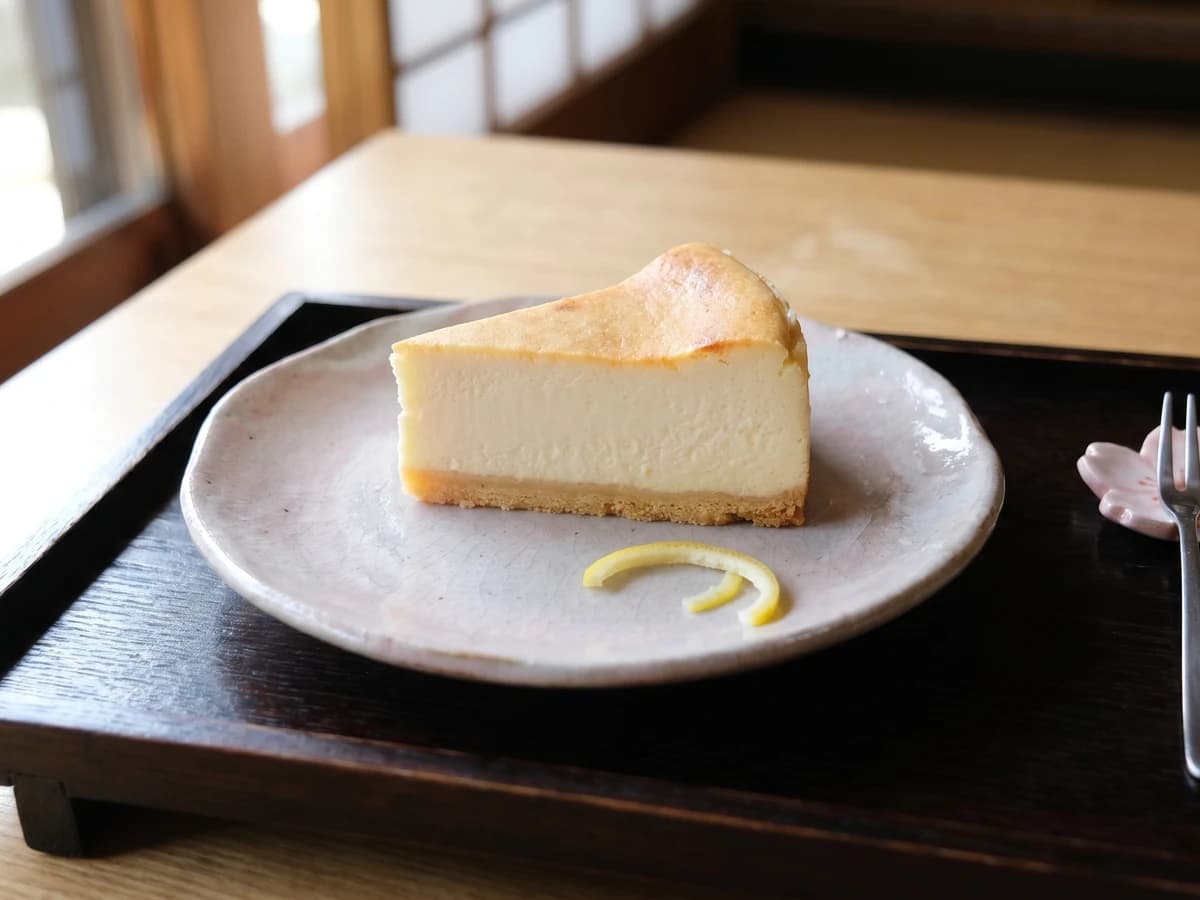
A Japanese baked cheesecake is not trying to float away. It is dense, smooth, and quietly tart, with a clean slice doing the work of decoration.