
Chef Lupita
Arroz a la Oaxaqueña
Oaxaca's red rice, stained with tomato and fried in lard, steamed with carrots, ejotes, black beans, and epazote. The side that anchors a Oaxacan family meal and earns its place beside the main.
A cooking platform built around craft, culture, and the stories behind what we eat.

Created by
Veracruz's Sotavento malanga, peeled, sliced thin, and fried in manteca de cerdo until the edges crisp, the tropical lowland answer to the potato plate.
Veracruz, the Sotavento, the humid southern line from the port down toward Los Tuxtlas: this is where malanga belongs. Not as a novelty. As daily food. The highlands reach for papa. The tropical lowland kitchen reaches for yuca, plátano, camote, and malanga. Así se hace y punto.
Malanga frita is not trying to be a French fry. It is denser, earthier, a little sweet, with a creamy center when you cut it thicker and a crisp edge when you slice it thin. The fat is manteca de cerdo. Don't come to me with neutral oil first. Veracruz kitchens know what lard does for fried roots, refried black beans, and plantains. La manteca es el sabor.
I learned this kind of side in home kitchens where the table already had frijoles negros in a clay bowl, lime halves on a plate, and a little salsa macha made with chile de arbol and chile morita for the person who wanted bite. The women did not explain it like a performance. They peeled, sliced, dried, fried, salted. Work first. Talk later.
This is a 32-state cuisine. Malanga frita carries the Afromestiza vocabulary of the Sotavento and Los Tuxtlas, the same kitchen that understands plantain in every form and does not need a potato to feel complete. Saber cocinar es saber vivir.
Malanga, a tropical aroid related to taro, entered Veracruz's lowland cooking through Caribbean and African Atlantic foodways that met Indigenous Gulf Coast agriculture after the colonial period began. In the Sotavento and Los Tuxtlas, Afromestiza communities made tubers, plantains, and black beans central to everyday cooking, distinct from the wheat and beef patterns of the north and the maize-heavy highland table. The dish also reflects Veracruz's port history: ingredients and techniques moved through the Gulf, but home cooks turned them into practical food for humid coastal kitchens.
Quantity
2 pounds
peeled
Quantity
2 tablespoons
for soaking
Quantity
1 1/2 teaspoons, plus more for finishing
Quantity
3 cups
for frying
Quantity
2
lightly crushed
Quantity
1
split lengthwise
Quantity
for serving
Quantity
for serving
Quantity
for serving
| Ingredient | Quantity |
|---|---|
| fresh malangapeeled | 2 pounds |
| white vinegar or fresh lime juicefor soaking | 2 tablespoons |
| fine sea salt | 1 1/2 teaspoons, plus more for finishing |
| pork lard (manteca de cerdo)for frying | 3 cups |
| garlic cloveslightly crushed | 2 |
| fresh chile serrano (optional)split lengthwise | 1 |
| lime halves (optional) | for serving |
| salsa macha veracruzana with chile de arbol and chile morita (optional) | for serving |
| refried black beans (optional) | for serving |
Peel the malanga with a sharp knife, cutting away the rough brown skin and any fibrous spots. If your hands itch from raw malanga, wear gloves. The tuber has natural crystals that disappear with proper cooking, but raw malanga is not food yet. Slice it into thin rounds, about 1/8 inch thick.
Put the slices in a bowl of cold water with the vinegar or lime juice and 1 teaspoon salt. Soak for 10 minutes, then rinse once. This pulls off extra surface starch so the pieces fry clean instead of sticking together like a bad decision.
Drain the malanga and spread it between clean kitchen towels. Pat it very dry. Water and hot lard do not negotiate. If the slices go in wet, they sputter and soften before they crisp.
Melt the manteca de cerdo in a heavy pot or deep cazuela over medium heat until it reaches 340F. Add the crushed garlic and the split chile serrano if using. Let them perfume the fat for 1 minute, then remove them before they darken. La manteca es el sabor, and in Veracruz it belongs in the frying pot.
Slide in one loose handful of malanga slices. Do not crowd the pot. Fry 4 to 5 minutes, turning once or twice, until the edges curl, the centers turn opaque, and the slices sound crisp when tapped with the spoon. The color should be pale gold with deeper brown edges, not dark like burned tortilla.
Lift the malanga with a slotted spoon or spider and drain on a rack or brown paper. Sprinkle immediately with the remaining salt while the fat is still clinging to the surface. Repeat with the remaining slices, letting the lard return to temperature between batches.
Serve the malanga hot, with lime halves, salsa macha veracruzana, and refried black beans on the table. Black beans, not pinto. This is Veracruz. The malanga should crack at the edge and stay creamy in the middle, like the tropical cousin of a fried potato. Cada estado, su propia cocina.
1 serving (about 250g)
Culinary guides, cultural storytelling, and the editorial depth that makes cooking meaningful.
Discover Culinary ExplorerChef Lupita
Oaxaca's red rice, stained with tomato and fried in lard, steamed with carrots, ejotes, black beans, and epazote. The side that anchors a Oaxacan family meal and earns its place beside the main.
Chef Lupita
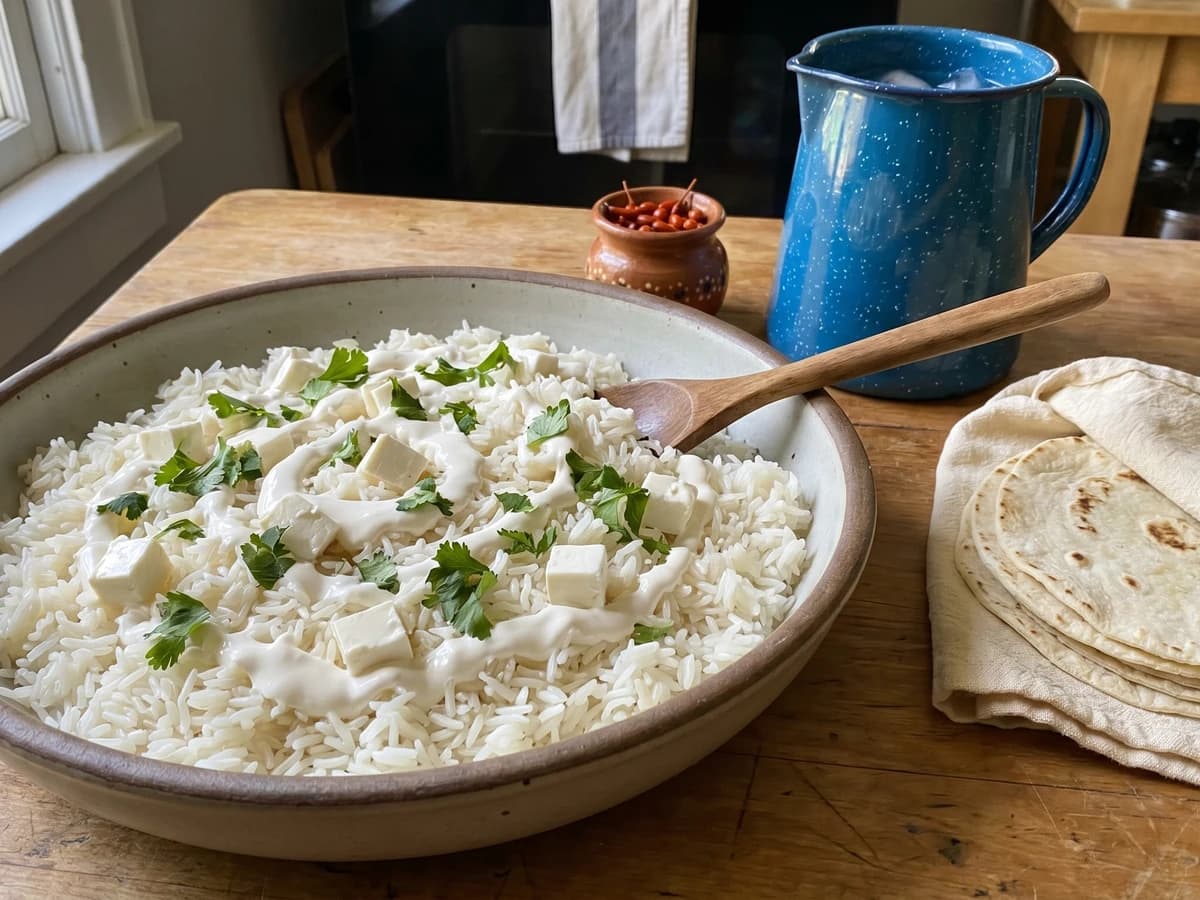
Sinaloa's home-cook white rice topped with cold cubes of cream cheese that soften into the warm grain, finished with crema and a sprinkle of chiltepin at the table. The trick that makes a side dish feel like a small luxury.
Chef Lupita
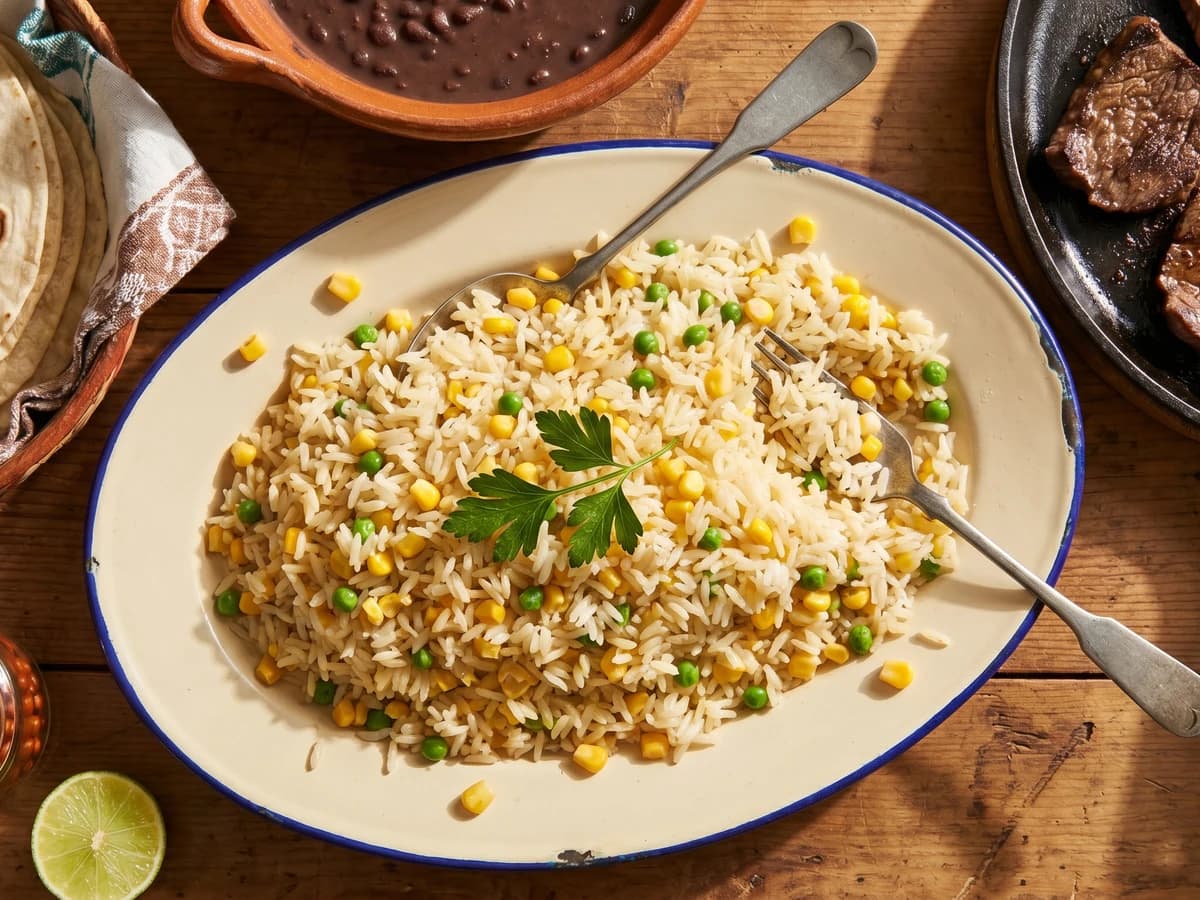
Sonora's white rice, toasted in butter and steamed with sweet corn and tender peas. The clean, quiet partner to a plate of carne asada, not the red rice of central Mexico.

Chef Lupita
Yucatán's white rice with sweet corn kernels, toasted in lard with garlic and onion. The quiet base that holds up against the peninsula's bold achiote-stained stews.