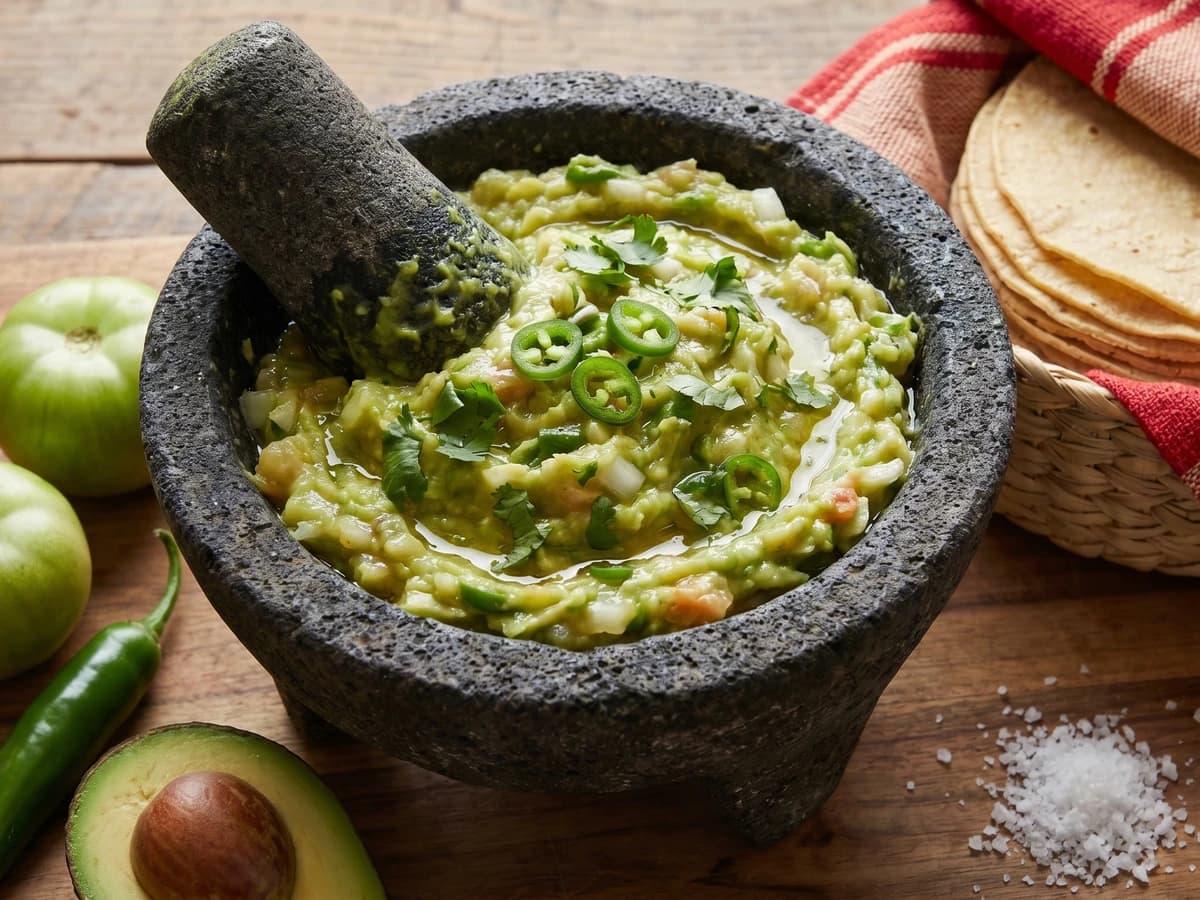
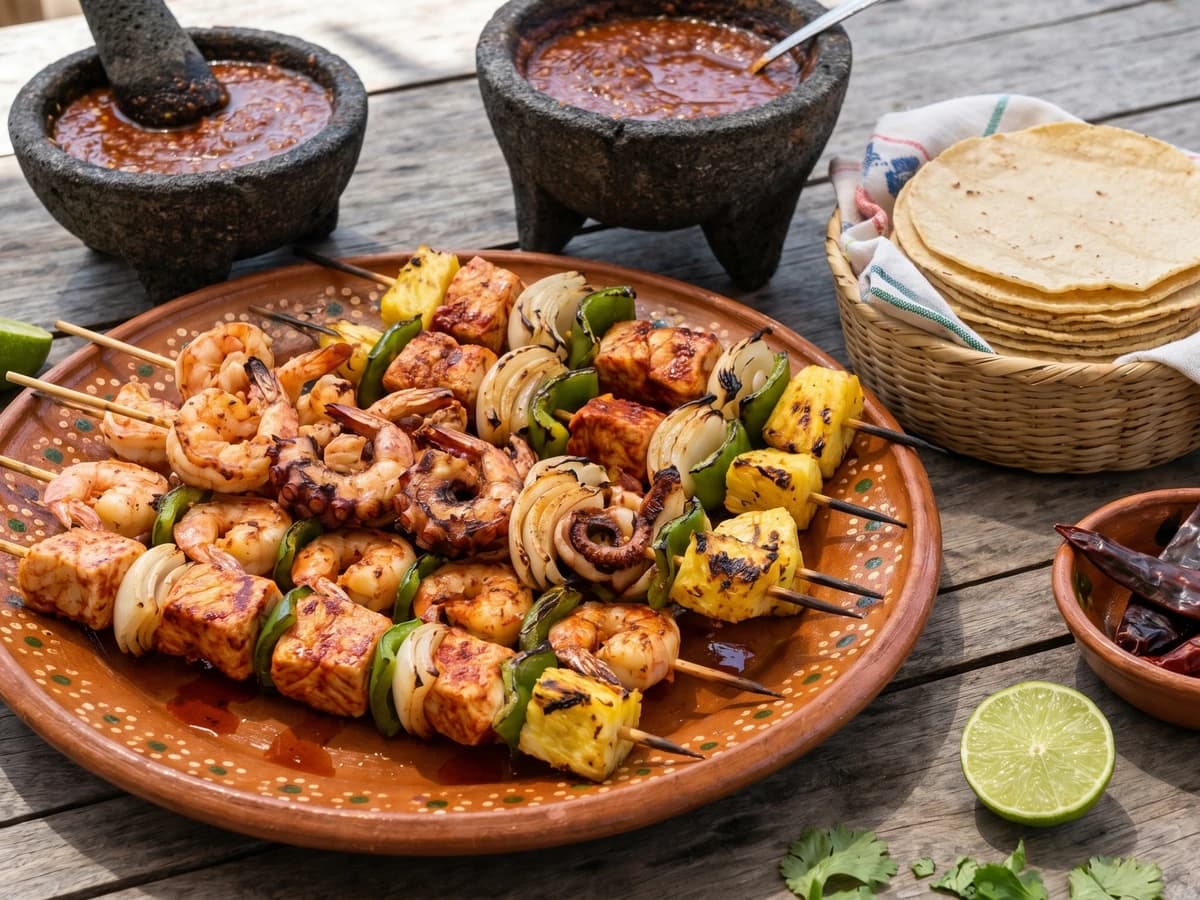
Ciudad de México's antojería classic: thick masa rounds pinched into bordered shells, crisped in lard, then loaded with refried beans, chipotle tinga, crema, queso fresco, and a surtido of salsas.
Appetizers & Snacks
Mexican
Weeknight
Dinner Party
Comfort Food
45 min
Active Time
1 hr 30 min cook•2 hr 15 min total
Yield12 sopes (4 to 6 servings)
This is a Ciudad de México dish. Not in the sense that nobody else makes sopes, the women in Guadalajara, Puebla, Oaxaca, and Sinaloa all have their own versions, but in the sense that the antojería tradition of the capital, the small market stalls and storefront kitchens where the comadres press sopes to order at lunchtime, is where this particular surtido was perfected. You go to Mercado de Medellín or Mercado de Coyoacán and you watch a woman pinch a sope in her bare hand while you stand there deciding which toppings you want, and that is the dish.
Surtido means assorted. The point is not one sope with one topping. The point is a platter of sopes, some with tinga, some with chorizo and papa, some with chicharrón en salsa verde, all sharing the same bordered shell and the same refried beans, the same crema and queso fresco, the same finishing salsa. This recipe gives you the chipotle tinga adapted from Puebla into the CDMX antojería style, because tinga is the topping that taught a whole generation of capital cooks what a sope was supposed to taste like.
The technique is the technique. Press the masa thicker than a tortilla. Cook it on the comal until it is just set. Pinch the rim while it is still hot enough to bend. Crisp the bottom in manteca. Build it the second it comes out of the fat. La manteca es el sabor. Skip the lard step and you have made something else, a thick tortilla with a soggy top, and the women at the mercado would not call it a sope. My mother kept a small clay cazuela of saved lard in the back of the icebox for years. She would scoop it out for the sopes on Sunday afternoons, when my cousins came over and we ate standing up at the kitchen counter because no one wanted to wait long enough to sit down. Saber cocinar es saber vivir.
Sopes belong to a family of pre-Hispanic masa antojitos that includes tlacoyos, huaraches, picadas, and memelas, all variations on the theme of thickened corn dough cooked on a comal and topped with savory garnishes. Each region developed its own shape and name: huaraches in Mexico City take an oval form named for the sandal they resemble, picadas in Veracruz are round with pinched rims like sopes but smaller, and memelas in Oaxaca are flatter and often eaten with asiento, the unrendered settled lard from carnitas pots. The sope as it is sold in the antojerías of Ciudad de México today crystallized as a recognizable street food in the early 20th century, when migration from Puebla, Tlaxcala, and the surrounding states brought regional masa traditions into the capital's market culture and the comerciantes adapted them into the surtido format that lets a single stall serve a dozen toppings from one base.
The technique, the tradition, and the story behind every dish.
masa harina (nixtamalized corn flour)Maseca or Bob's Red Mill
2 cups
warm water
1 1/2 cups, plus more as needed
kosher salt for the masa
1 teaspoon
boneless, skinless chicken thighs
1 pound
white onion for poachingleft whole
1/2
white onion for the tingathinly sliced
1 medium
garlic cloves for poachingsmashed
2
garlic cloves for the tingaminced
2
bay leaves
2
kosher salt for the broth
1 teaspoon
ripe tomatoes
3 medium
chiles chipotles in adoboplus 1 tablespoon of the adobo sauce
2
dried Mexican oregano
1 teaspoon
frijoles de la olla (pinto or black)cooked, with a little of their cooking liquid
1 cup
pork lard (manteca de cerdo)
1/2 cup, plus more for frying the sopes
shredded lettucevery thinly sliced
1 cup
Mexican crema
1/2 cup
queso frescocrumbled
1 cup
salsa verde crudatomatillo, serrano, cilantro, white onion, salt
1 cup
salsa rojaroasted tomato, chile de arbol, garlic, salt
1 cup
white onion for serving (optional)finely diced
1/2
chopped cilantro (optional)
1/4 cup
lime wedges (optional)
for serving
pickled jalapeños en escabeche (optional)
for serving
Equipment Needed
•Cast iron comal or heavy 12-inch skillet
•Tortilla press lined with plastic (a freezer bag cut open works fine)
•Heavy skillet for frying the sopes in lard
•Slotted spatula or kitchen spider
•Wire rack set over a sheet pan
•Wide clay cazuela for serving
Instructions
1
Poach the chicken
Place the chicken thighs in a saucepan with the halved white onion, the smashed garlic, the bay leaves, and the teaspoon of salt. Cover with cold water by an inch. Bring to a gentle simmer over medium heat and cook for 20 to 25 minutes, until the chicken is tender and pulls apart easily. Cold water draws the flavor into the broth and gives you a clean liquid to work with later. A rolling boil tightens the meat and clouds the broth. Lift the chicken out, let it cool until you can handle it, and shred it with two forks. Save the broth.
Thighs, not breasts. Tinga needs the fat and the give. Breast meat turns dry and stringy by the time it sits on a hot sope.
2
Build the tinga base
Char the three tomatoes directly on a comal or under a broiler until the skins blister and blacken in patches, about 8 minutes. Peel off the loose skin, do not be precious about it, the bits left behind add flavor. Transfer the tomatoes to a blender with the chipotles, the spoonful of adobo, the minced garlic, and the oregano. Blend until smooth.
3
Cook the tinga
Heat two tablespoons of lard in a wide skillet over medium-high. Add the sliced onion and cook, stirring, for 6 to 8 minutes until soft and the edges turn golden. Pour in the tomato-chipotle puree. It will sputter. Let it cook hard for 5 minutes, stirring, until the color deepens from bright red to brick. Add the shredded chicken and half a cup of the reserved poaching broth. Simmer for 15 minutes, until the sauce clings to the meat and most of the liquid is gone. Taste for salt. This is tinga poblana as it has been adapted in the antojerías of Ciudad de México. The poblanos will argue and they are not wrong, but this is how the city eats it.
4
Refry the beans
In a small saucepan, melt two tablespoons of lard over medium heat. Add the cooked frijoles with a splash of their cooking liquid. Mash them with a wooden spoon or a potato masher until you have a thick, spreadable paste, not a puree. They should hold a line when you drag a spoon through. La manteca es el sabor. Beans cooked without manteca taste like a diet, not like dinner. Keep warm.
5
Mix the masa
In a wide bowl, combine the masa harina and the teaspoon of salt. Add the warm water gradually, mixing with your hand. Knead for 3 minutes until the masa is smooth, soft, and holds together without cracking when you press a ball flat between your palms. If it cracks at the edges, add a tablespoon of water and knead again. If it sticks to your hand, add a tablespoon of masa harina. Cover with a damp cloth and rest for 10 minutes.
The masa should feel like fresh play-dough. Drier than a tortilla masa. Sopes need to hold their shape and carry weight, so the dough has to be sturdy.
6
Press and cook the sope bases
Divide the masa into 12 equal balls, about the size of a golf ball. Heat a dry comal or heavy skillet over medium. Press each ball into a disc about 4 inches across and 1/4 inch thick, using a tortilla press lined with plastic or simply flattening between your palms. Cook on the comal for about 1 minute per side. The masa should turn from raw white to a matte cream color with a few light brown spots. Do not let them brown deeply yet. You want them barely cooked through, still flexible enough to pinch.
7
Pinch the rim
Pull one sope off the comal at a time. While it is still hot, hold it in a kitchen towel and pinch a raised border around the entire edge with your fingertips, about a quarter inch tall. This rim is the whole point of the sope. It holds the beans and the salsa from sliding off. Work quickly. Once the masa cools, it cracks instead of pinching. The women at the antojerías of Mercado de Coyoacán do this with bare hands at speeds that will embarrass you. Practice. Set the pinched sopes aside on a tray.
If the sope cracks while you pinch, the masa is too dry or it cooked too long. Wet your fingers and press the crack closed. Next batch, pull them sooner and add a little more water to the masa.
8
Crisp in manteca
Heat about 1/4 inch of lard in a heavy skillet over medium until it shimmers. Lay the sopes in, pinched side up, three or four at a time. Cook for about 90 seconds until the bottom is golden and crisp. The edges should sizzle steadily, not bubble violently. If they bubble violently, lower the heat. Lift them out with a slotted spatula and drain briefly on a wire rack. The bottom should be the color of a toasted tortilla and the top should still be pale and pliable. No me vengas con atajos. Sopes that are not crisped in manteca are just thick tortillas with a rim.
9
Build the surtido
Work fast while the sopes are still hot. Spread a generous spoonful of refried beans across the surface of each one, all the way to the inside of the rim. Top with a small mound of the tinga. Scatter shredded lettuce across the top. Drizzle with crema in thin lines. Sprinkle with crumbled queso fresco. Finish with a spoonful of salsa, half the platter with salsa verde, half with salsa roja, so the surtido lives up to its name. A diced onion and a pinch of cilantro on top. Serve immediately with lime and pickled jalapeños on the side. Sopes wait for no one. They go soggy in minutes. Así se hace y punto.
Chef Tips
•If you can find fresh masa from a tortillería, use it. Two pounds of fresh masa replaces the masa harina and water in this recipe and the texture is incomparable. Maseca is a compromise, not an upgrade, but it works when fresh masa is not available.
•The pinched rim is the hardest part. Have a damp kitchen towel ready and pull each sope off the comal as soon as it is set but still hot. If you wait, the masa cools and the rim cracks instead of pinching. The first three will probably fail. By the fourth you will have it.
•Make a surtido properly. Cook the tinga, but also keep a cazuela of refried beans and a bowl of chicharrón en salsa verde on hand. Three toppings across twelve sopes gives the table options and turns dinner into the antojería experience it is supposed to be.
Advance Preparation
•The tinga can be made up to two days ahead and refrigerated. The flavor deepens overnight as the chipotle settles into the chicken.
•The refried beans can be made one day ahead and reheated with a splash of broth or water to loosen them back to spreadable.
•The sope bases can be pressed and cooked on the comal up to four hours ahead, then crisped in manteca right before serving. Do not crisp them ahead. A pre-crisped sope sitting on the counter goes from crunchy to leathery in under an hour.
Frequently Asked Questions
Nutrition Information
1 serving (about 440g)
Calories
745 calories
Total Fat
44 g
Saturated Fat
17 g
Trans Fat
0 g
Unsaturated Fat
25 g
Cholesterol
105 mg
Sodium
810 mg
Total Carbohydrates
57 g
Dietary Fiber
7 g
Sugars
6 g
Protein
32 g
Where cooking meets culture.
Culinary guides, cultural storytelling, and the editorial depth that makes cooking meaningful.