
Chef Isabel
All Cremat de Vilanova
All Cremat de Vilanova is Catalan boat cooking: garlic taken dark in olive oil, then tomato, fish stock, and firm fish, no potato, just a broth with nerve.
A cooking platform built around craft, culture, and the stories behind what we eat.
Created by
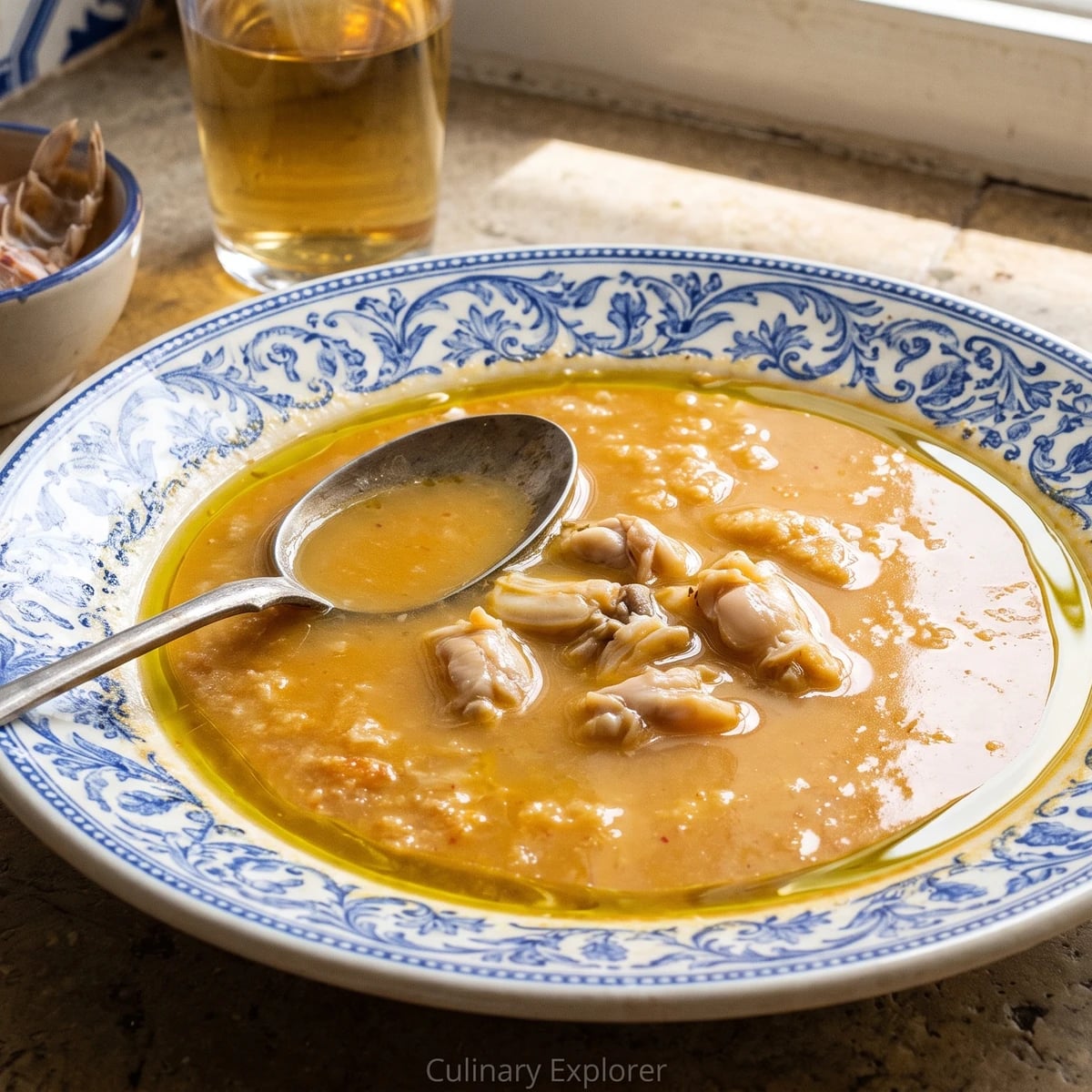
Sopa de galeras belongs to Cádiz and its bay: cheap, bony mantis shrimp give a deep seafood broth when their shells are pounded, strained, and respected.
Sopa de galeras is Gaditana, from Cádiz and the bay that feeds it, and it is not a polite little seafood soup. Galeras, mantis shrimp, are awkward to eat whole because of their sharp shells and little meat, but their heads and shells give a broth with the clean, sweet depth of the sea. That is the dish: not prawns floating in stock, but galeras worked for every bit of flavor they carry.
The method that decides it is the pounding and straining. You simmer the galeras briefly, crush the heads and shells so the juices run into the broth, then strain hard and fine. Skip that and you have a thin seafood water. Do it properly and the soup tastes of Cádiz before the sofrito even starts.
After that, the work is ordinary and exact: a slow sofrito, the onion base cooked until sweet, tomato cooked down until the oil shows again, and bread to give the broth body without making it heavy. If you can't find galeras where you are, use small whole shrimp with the heads on, or Norway lobster shells if your fishmonger has them. The flavor will be sweeter and less briny, but it will still make a proper soup if you pound the shells. Siempre sale, si lo sigues.
Sopa de galeras belongs to the working seafood cooking of Cádiz, where the bay's small, awkward shellfish were turned into broth instead of wasted at the market stall. Galeras are especially valued in cold months, when their flavor is fuller and their price has traditionally stayed within reach of household cooking. The habit of pounding shells and straining them into soup is the same practical wisdom behind many Andalusian coastal caldos: little meat, much flavor, no waste.
Quantity
800g
rinsed
Quantity
1.5 litres
Quantity
60ml
Quantity
180g
finely chopped
Quantity
100g
finely chopped
Quantity
80g
finely chopped
Quantity
3
finely chopped
Quantity
250g
grated, skins discarded
Quantity
80g
crusts removed and torn
Quantity
1
Quantity
1 teaspoon
Quantity
80ml
Quantity
1 teaspoon, plus more to taste
Quantity
1 pinch
Quantity
1 tablespoon
chopped
| Ingredient | Quantity |
|---|---|
| galeras (mantis shrimp)rinsed | 800g |
| cold water | 1.5 litres |
| extra virgin olive oil | 60ml |
| onionfinely chopped | 180g |
| green pepperfinely chopped | 100g |
| leek, white part onlyfinely chopped | 80g |
| garlic clovesfinely chopped | 3 |
| ripe tomatograted, skins discarded | 250g |
| day-old rustic breadcrusts removed and torn | 80g |
| bay leaf | 1 |
| sweet pimentón de la Vera | 1 teaspoon |
| manzanilla or fino sherry | 80ml |
| fine sea salt | 1 teaspoon, plus more to taste |
| saffron threads (optional) | 1 pinch |
| flat-leaf parsleychopped | 1 tablespoon |
Put the galeras in a wide pot with 1.5 litres cold water, the bay leaf, and half a teaspoon of salt. Bring just to a lively simmer, then lower the heat and cook for 12 minutes. Lift out the galeras with a slotted spoon and keep the broth in the pot.
When the galeras are cool enough to handle, cut them into pieces with kitchen scissors and pound the heads and shells in a mortar, or crush them firmly with the end of a rolling pin in a bowl. Return the crushed shells to the broth, simmer 10 minutes more, then strain through a fine sieve, pressing hard with a ladle. This pressing is the dish. The flavor is in the shells, not in looking tidy.
Wipe the pot clean and warm the olive oil over medium-low heat. Add the onion, green pepper, leek, and the remaining half teaspoon of salt. Cook slowly for 18 to 20 minutes, stirring often, until the vegetables are soft, dark gold at the edges, and sweet. Add the garlic and cook 2 minutes more. Rush this and the soup tastes thin; the slow sofrito is where the sweetness comes from.
Add the grated tomato and cook for 10 to 12 minutes, until the water has gone and the oil begins to show around the edges. Pull the pot off the heat, stir in the pimentón, then return it to low heat and add the manzanilla or fino. Let it bubble for 2 minutes so the sharp edge of the wine cooks off.
Add the torn bread and stir it through the sofrito until it drinks in the oil and tomato. Pour in the strained galera broth, add the saffron if using, and simmer gently for 15 minutes. The bread should soften into the soup and give it body, not turn it into paste.
Taste for salt, then either leave the soup rustic or pass a hand whisk through it a few times to break up the bread. Serve in warm bowls with chopped parsley and a thin thread of olive oil. If you managed to pick any meat from the galeras, add it to the bowls at the end. Nadie nace sabiendo, and with galeras nobody gets rich on meat anyway.
1 serving (about 455g)
Culinary guides, cultural storytelling, and the editorial depth that makes cooking meaningful.
Discover Culinary Explorer
Chef Isabel
All Cremat de Vilanova is Catalan boat cooking: garlic taken dark in olive oil, then tomato, fish stock, and firm fish, no potato, just a broth with nerve.

Chef Isabel
All i pebre is Valencian marsh-country spoon food: eel, garlic, sweet pimentón, and cracked potatoes cooked in water until the starch and picada turn the broth glossy and deep red.

Chef Isabel
Borrida de rajada is Mallorca's Lenten skate stew: tender ray, potatoes, and a light broth made rich at the end with a picada of fried almonds and hard-boiled egg yolk.

Chef Isabel
Bullit de Peix is Ibiza's fisherman's meal in two turns: firm white fish and potatoes lifted from a saffron broth with allioli, then short rice cooked in that same broth until dry.