
Chef Isabel
Aguaillo de la Sierra de Cadiz
Aguaillo is from the Sierra de Cadiz: cold water, stale bread, garlic, oil and vinegar, closer to a field drink than a bowl of soup, and sharp enough to wake you in the heat.
A cooking platform built around craft, culture, and the stories behind what we eat.
Created by
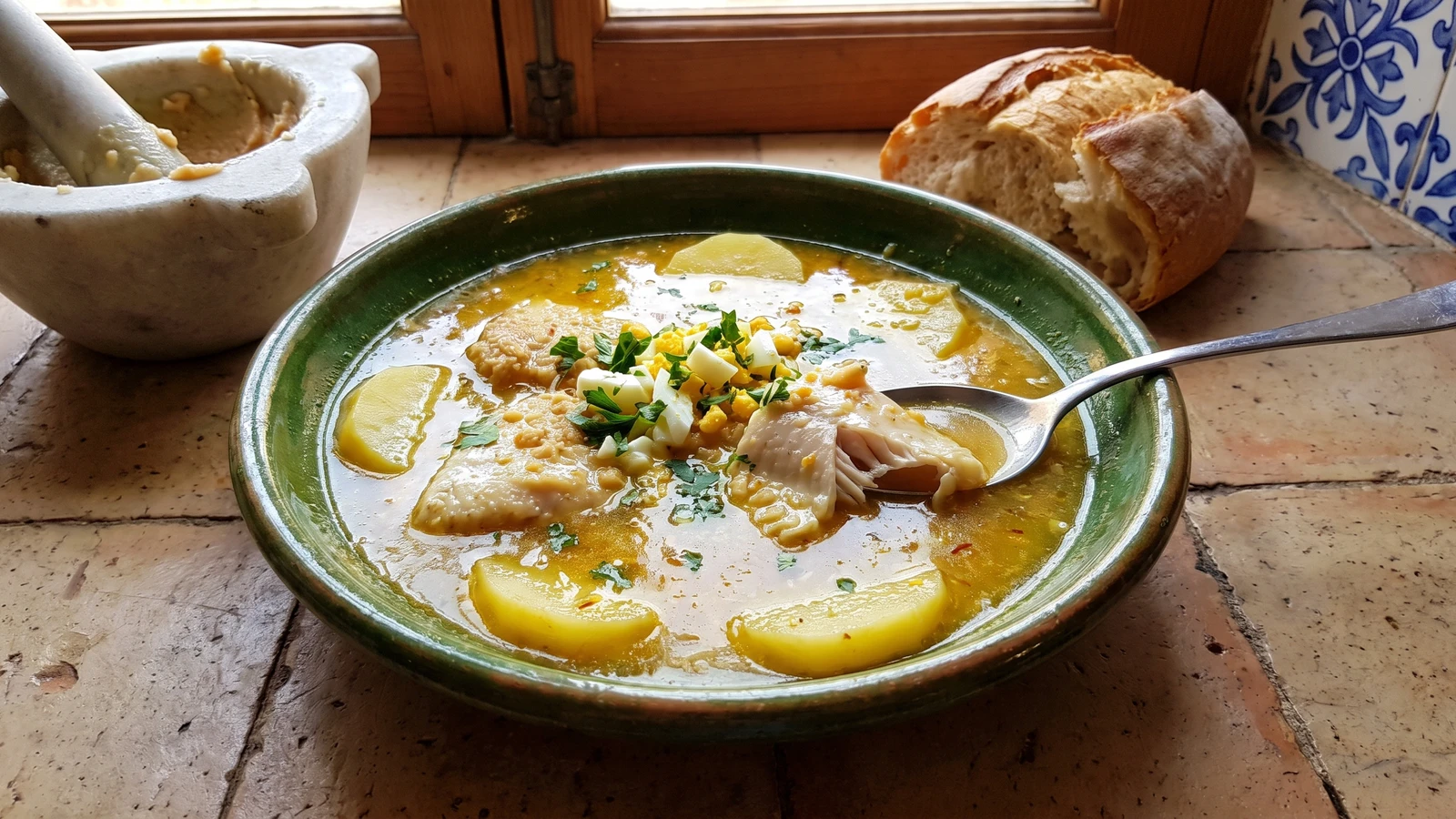
Borrida de rajada is Mallorca's Lenten skate stew: tender ray, potatoes, and a light broth made rich at the end with a picada of fried almonds and hard-boiled egg yolk.
Borrida de rajada is Mallorcan, a quiet fish stew of skate wing, potatoes, onion, tomato, and a picada, the pounded thickener that makes it itself. This is island cocina de cuchara, spoon food, but lighter than a bean pot: a broth you can eat with bread, a fish that gives itself up in soft flakes, and potatoes that carry the sea without pretending to be more than potatoes.
The method that decides it is the picada. Fry the almonds and bread properly, pound them with garlic, parsley, saffron, and hard-boiled egg yolk, then loosen that paste with broth before it goes into the pot. If you throw the almonds in whole or boil the skate hard, you get thin broth and tired fish. Pound it, lower the heat, and the stew turns gently creamy without cream. Siempre sale, si lo sigues.
If skate is hard to find where you are, use monkfish cheeks or thick pieces of hake. Monkfish gives firmness, hake gives sweetness, and neither has the cartilaginous bones that make ray so good to eat with your fingers. No hace falta haber pisado España. You do need fresh fish, a good fish stock, and the patience not to bully it.
My Margin for this one says the same thing twice: add the picada near the end and shake the cazuela, don't stir it like a laundry pot. The fish is delicate. Treat it that way and it comes to the table tal como se hace allí.
Borrida de rajada belongs to the Balearic island kitchen, especially Mallorca, where skate was a practical fish for fasting days and lean household cooking because it was plentiful, mild, and full of gelatin. The dish follows the Catalan and Mallorcan habit of finishing stews with a picada, a mortar paste of nuts, bread, garlic, herbs, and sometimes egg yolk, used to thicken broth without flour. Its place at Lent and Easter comes from that old fish-day table: filling enough for a family meal, but still within the rules of abstaining from meat.
Quantity
900g
skinned and cut into large pieces
Quantity
700g
peeled and cut into 1cm slices
Quantity
1 large
finely chopped
Quantity
2
grated
Quantity
3 cloves
divided
Quantity
80ml
divided
Quantity
1.1 litres
hot
Quantity
1
Quantity
2
yolks reserved and whites chopped for serving
Quantity
40g
Quantity
25g
torn into pieces
Quantity
1 small handful
Quantity
1 pinch
Quantity
1 teaspoon
Quantity
2 tablespoons
Quantity
to taste
Quantity
to taste
| Ingredient | Quantity |
|---|---|
| skate wingsskinned and cut into large pieces | 900g |
| waxy potatoespeeled and cut into 1cm slices | 700g |
| onionfinely chopped | 1 large |
| ripe tomatoesgrated | 2 |
| garlicdivided | 3 cloves |
| extra virgin olive oildivided | 80ml |
| fish stockhot | 1.1 litres |
| bay leaf | 1 |
| hard-boiled eggsyolks reserved and whites chopped for serving | 2 |
| blanched almonds | 40g |
| day-old country breadtorn into pieces | 25g |
| flat-leaf parsley leaves | 1 small handful |
| saffron threads | 1 pinch |
| sweet pimentón | 1 teaspoon |
| dry white wine | 2 tablespoons |
| fine sea salt | to taste |
| freshly ground black pepper | to taste |
Pat the skate pieces dry and season them with 1 teaspoon fine sea salt and a little black pepper. Let them sit while you build the base. This short salting firms the flesh just enough so it doesn't fall apart the moment it meets the broth.
Warm 50ml of the olive oil in a wide cazuela or heavy pot over low heat. Add the onion with a pinch of salt and cook 12 to 15 minutes, stirring often, until it is soft, sweet, and pale gold. Add 2 minced garlic cloves and cook 1 minute, then stir in the grated tomato. Cook until the tomato is dark, thick, and no longer watery, about 8 minutes. This sofrito, the slow onion and tomato base, is small here, but it still has to taste cooked.
Add the sweet pimentón and stir for 10 seconds off the strongest heat so it perfumes the oil without scorching. Pour in the white wine and let it bubble almost away. Add the sliced potatoes, bay leaf, and hot fish stock. The potatoes should be just covered; add a splash of water if the pot is wide. Simmer gently, uncovered, for 18 to 22 minutes, until the potatoes are nearly tender but not breaking.
While the potatoes cook, heat the remaining 30ml olive oil in a small pan. Fry the almonds until golden, then lift them into a mortar. Fry the bread pieces in the same oil until crisp and golden, then add them too. Pound with 1 garlic clove, the parsley, saffron, and the 2 hard-boiled egg yolks until you have a rough paste. Loosen it with 4 tablespoons of hot broth from the pot. Pésalo, no lo adivines: the paste should be thick enough to coat a spoon, not dry crumbs.
Lay the skate pieces over the nearly tender potatoes in one layer. Spoon a little broth over the top, lower the heat, cover the pot, and simmer very gently for 6 to 8 minutes, depending on thickness. Skate is done when the flesh pulls cleanly from the cartilage with the tip of a knife. Do not boil it hard. A hard boil turns good ray into cotton, and nobody asked for that.
Spoon the loosened picada into the broth around the fish. Shake the cazuela by the handles to distribute it instead of stirring through the skate. Simmer uncovered for 3 to 4 minutes, until the broth turns lightly creamy and glossy at the edges. Taste for salt, turn off the heat, and rest 5 minutes before serving.
Serve in shallow bowls with potatoes underneath, skate on top, and plenty of thickened broth. Scatter the chopped hard-boiled egg whites over the bowls if you like, or serve them at the table. Bread is not optional in spirit; this broth wants mopping.
1 serving (about 620g)
Culinary guides, cultural storytelling, and the editorial depth that makes cooking meaningful.
Discover Culinary ExplorerChef Isabel
Aguaillo is from the Sierra de Cadiz: cold water, stale bread, garlic, oil and vinegar, closer to a field drink than a bowl of soup, and sharp enough to wake you in the heat.

Chef Isabel
Ajilimojili is Jaen's tomato-free cold soup: potato, roasted red pepper, garlic, olive oil, and vinegar pounded into a cool, silky spoonful.

Chef Isabel
Ajo carretero is Soriano, from the pine country of Soria: lamb cooked in a plain garlicky broth, then served the old way, meat first and bread-soaked soup after.

Chef Isabel
Ajoblanco Extremeño is the poor-kitchen cold soup of Extremadura: bread, garlic, oil, egg yolk, vinegar, and icy water, with no almonds. Whisk it slowly and serve it bien fresquito.