
Chef Margarida
Açorda de Bacalhau
Two Portuguese icons meet in one humble bowl: the bread soup of Alentejo embracing flakes of salt cod. Peasant genius that proves scarcity breeds invention, that pão and bacalhau together can feed the soul.
A cooking platform built around craft, culture, and the stories behind what we eat.
Created by
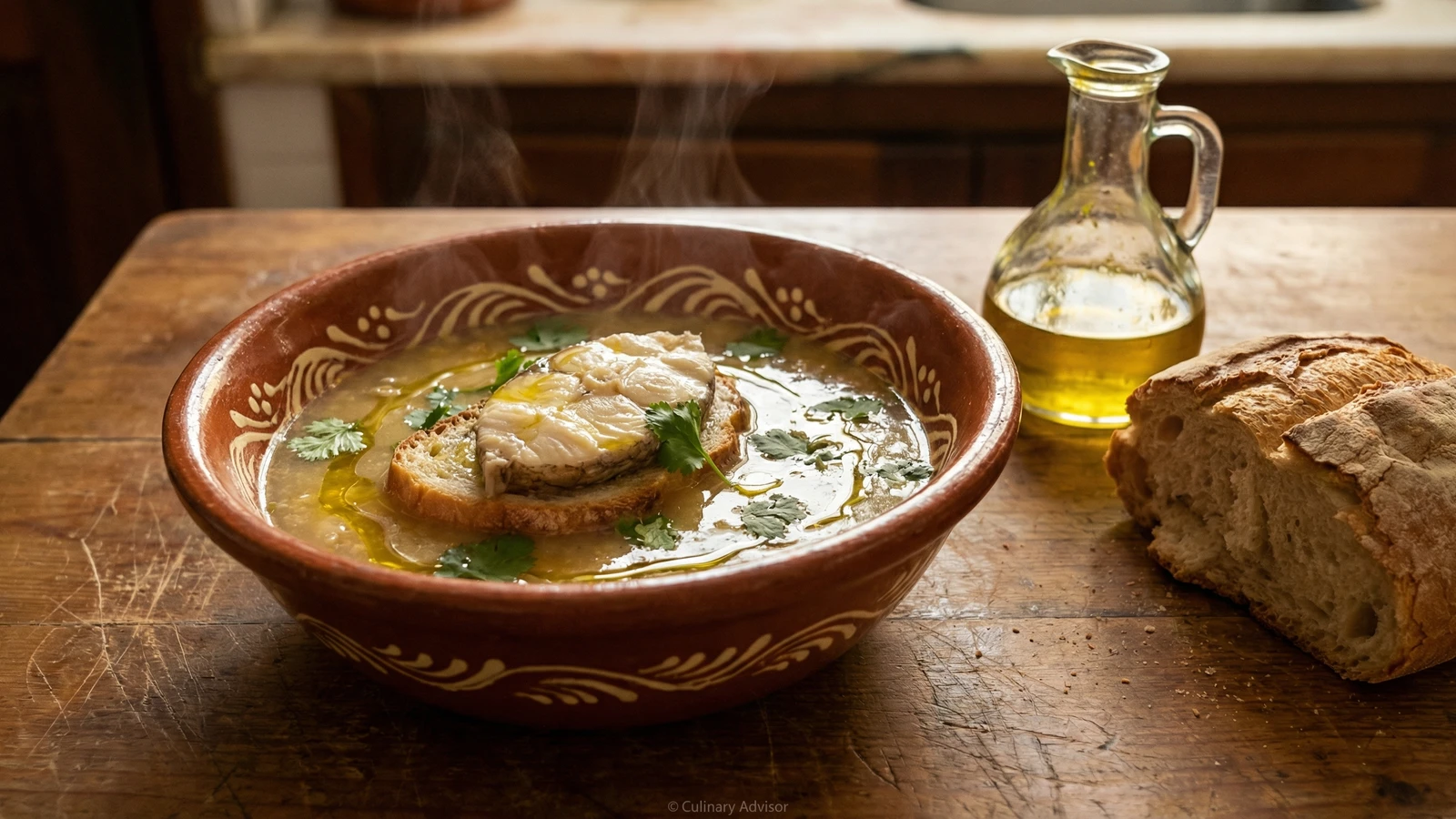
Dogfish shark marinated in vinha d'alhos, simmered and ladled over thick bread. Coastal Alentejo in a bowl. A dish the grandmothers made that we're in danger of forgetting.
Ialmost never tasted this dish. By the time I started documenting recipes, most of the grandmothers who knew how to make sopa de cação had already passed. I found it in Sines, at the kitchen table of a woman in her nineties whose husband had been a fisherman. She laughed when I asked about it. "Ninguém quer saber disso," she said. Nobody wants to know about that anymore.
But I want to know. This soup tells the story of coastal Alentejo, where the fishermen brought in cação and their wives transformed it into something remarkable. The fish is nothing special on its own. It can be strong, almost ammonia-sharp if not treated properly. But the vinha d'alhos marinade, that ancient combination of vinegar and garlic and coentros, changes everything. It softens the fish, takes away the harshness, leaves behind something delicate and clean.
The bread is not optional. This is a sopa, which in Alentejo means bread is the foundation. Thick slices of pão alentejano at the bottom of the bowl, drinking the broth, turning soft but not dissolving. The fish on top. Coentros everywhere, that sharp green brightness that tells you this is southern Portugal.
At Mesa da Avó, I serve this soup as a tribute to the coastal grandmothers. Most of my guests have never heard of it. That's exactly why I make it. A cozinha é memória, and some memories need to be saved before they disappear completely.
Sopa de cação emerged from the fishing communities along the Alentejo coast, particularly around Sines and Setúbal, where dogfish was an abundant and affordable catch. The vinha d'alhos marinade predates refrigeration, originally serving to preserve and tenderize fish in the days before ice. The dish represents a vanishing tradition of Portuguese coastal peasant cooking.
Quantity
600g
cut into thick steaks
Quantity
4
smashed
Quantity
1 large bunch
stems and leaves separated
Quantity
1/2 cup
Quantity
1 teaspoon
Quantity
1/2 teaspoon
Quantity
1
Quantity
1/3 cup
Quantity
1 medium
sliced thin
Quantity
1 liter
Quantity
4 thick slices
Quantity
freshly ground, to taste
| Ingredient | Quantity |
|---|---|
| dogfish shark (cação)cut into thick steaks | 600g |
| garlic clovessmashed | 4 |
| fresh cilantro (coentros)stems and leaves separated | 1 large bunch |
| white wine vinegar | 1/2 cup |
| sea salt | 1 teaspoon |
| black peppercorns | 1/2 teaspoon |
| bay leaf | 1 |
| extra virgin olive oil (azeite) | 1/3 cup |
| onionsliced thin | 1 medium |
| water | 1 liter |
| day-old pão alentejano | 4 thick slices |
| black pepper | freshly ground, to taste |
In a deep bowl, combine the shark steaks with the smashed garlic, coentros stems (reserve the leaves), vinegar, salt, peppercorns, and bay leaf. Turn the fish to coat it well. Cover and refrigerate for at least 4 hours, overnight if you can. The vinegar does two things: it tenderizes the fish and it takes away any strong smell. This marinade is called vinha d'alhos. It's ancient. It's essential.
In a wide heavy pot, warm the azeite over medium-low heat. Add the sliced onion and cook slowly, stirring occasionally, until soft and golden, about 12 minutes. The onion should practically melt. This is the foundation. Não tenhas pressa.
Remove the shark from the marinade, reserving the liquid. Strain the marinade and discard the solids. Lay the fish steaks over the onions. Pour in the strained marinade and the water. Bring to a gentle simmer. Don't let it boil hard or the fish will toughen. Cook at a bare simmer for 15 to 20 minutes, until the fish is cooked through and flakes easily. The broth will turn slightly cloudy and fragrant with vinegar and garlic.
Place a thick slice of bread in each deep bowl. The bread should be day-old, sturdy enough to hold the broth without dissolving into mush. This is why you need proper pão alentejano, not soft sandwich bread. The bread is not a garnish. It's the base. It's what makes this a sopa.
Roughly chop the reserved coentros leaves. Remove the pot from heat and stir in the coentros. Taste the broth and adjust the salt. Ladle the soup over the bread in each bowl, placing a piece of fish on top. The bread should drink the broth but keep some texture. Finish with a generous drizzle of your best azeite and freshly ground pepper. Serve immediately while the steam is still rising.
1 serving (about 390g)
Culinary guides, cultural storytelling, and the editorial depth that makes cooking meaningful.
Discover Culinary ExplorerChef Margarida
Two Portuguese icons meet in one humble bowl: the bread soup of Alentejo embracing flakes of salt cod. Peasant genius that proves scarcity breeds invention, that pão and bacalhau together can feed the soul.

Chef Margarida
The lamb trotter soup of Alentejo, where nothing was wasted and everything was transformed. Collagen-rich broth, sharp with garlic and coentros, bread to drink it all in. Offal cooking at its finest.

Chef Margarida
Alentejo's answer to summer abundance, when tomatoes are so ripe they nearly burst and the only sensible thing is to make soup. Eggs poached in the broth, bread waiting at the bottom. Peasant genius.
Chef Juliette
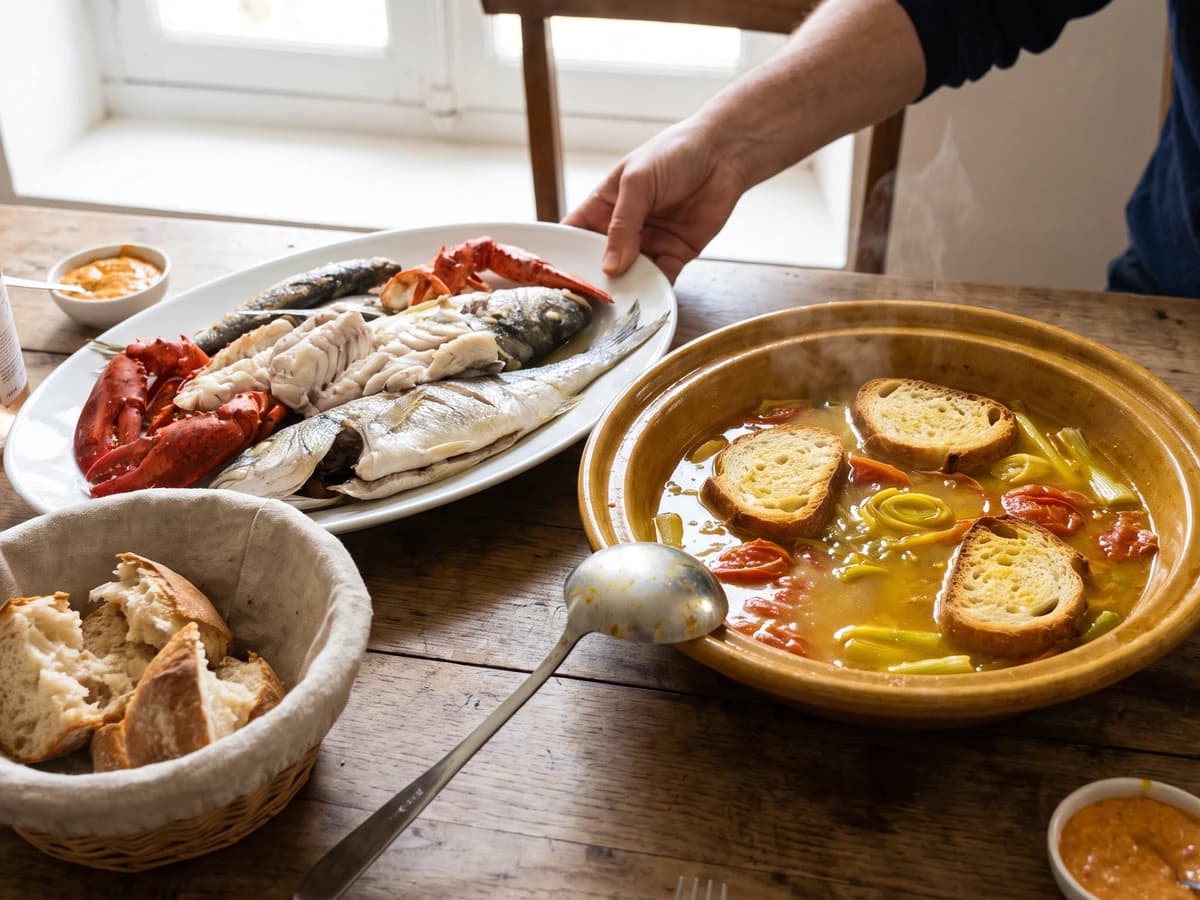
Marseille's great fish stew, saffron-gold and garlic-scented, proves that a hard boil can be the careful choice: it binds olive oil into broth before the whole pot meets bread.