
Chef Jeong-sun
Bokbunja-ju (Black Raspberry Wine)
Summer bokbunja steeped with sugar and strong damgeum soju until the berries give up their deep tart color, a make-ahead Korean fruit wine for small cold cups and a slow table.
A cooking platform built around craft, culture, and the stories behind what we eat.
Created by
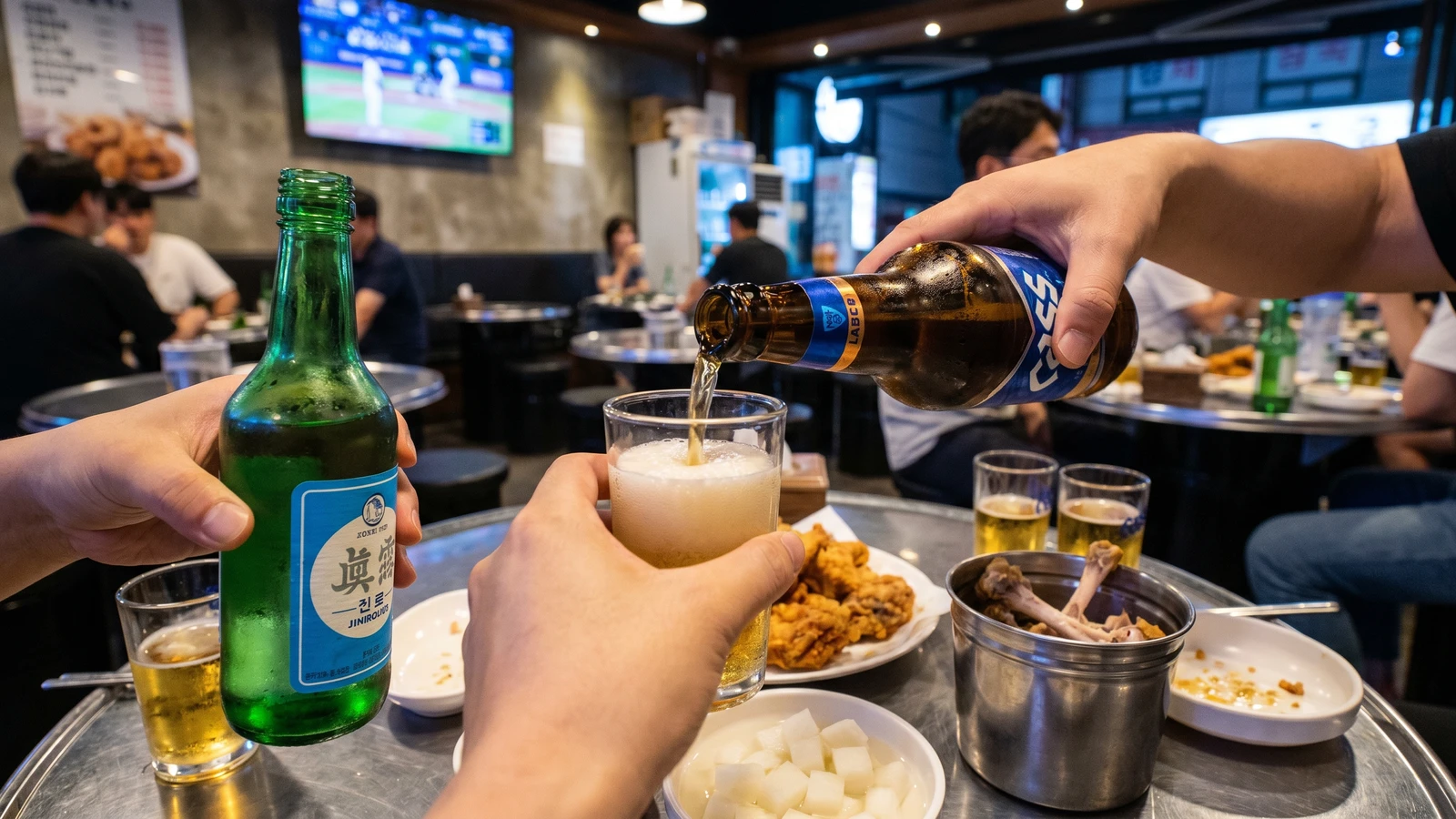
The modern Korean table drink where the whole argument is the ratio: cold lager, clean soju, a quick table mix, and enough restraint to keep it bright.
Somaek lives or dies by temperature and ratio. People make a performance of it, tapping chopsticks, dropping shot glasses, building little towers. Fine. But first get the drink right. Cold beer, cold soju, and a measured pour. The table can make noise after that.
This is not an old court drink, and we don't need to dress it in borrowed robes. It belongs to after-work tables, fried chicken nights, baseball games, pork belly grills, and dinner parties where one person always says they know the best ratio. Notebook 41 says the clean house measure is 45 ml soju to 105 ml lager, a 3:7 mix. Strong enough to announce itself, light enough that the beer still tastes like beer.
Pour gently if you want it clean, stir once if the soju sinks, and drink it while the bubbles are still alive. 손맛 is real; I measure it anyway. For somaek, that means you can adjust the second glass only after the first one has been made properly.
Somaek, a portmanteau of soju and maekju (beer), is a modern Korean drinking habit tied to late twentieth-century company dinners, barbecue restaurants, pubs, and convenience-store drinking culture rather than old household brewing. Its spread followed the rise of mass-market diluted soju and pale lager, and the drink became common enough that the ratio itself, often 3:7 or 2:8, became a familiar table argument. It has no single regional owner; it belongs to the modern shared table.
Quantity
180 ml total, 45 ml per drink
Quantity
420 ml total, 105 ml per drink
| Ingredient | Quantity |
|---|---|
| chilled soju | 180 ml total, 45 ml per drink |
| chilled Korean lager or light crisp lager | 420 ml total, 105 ml per drink |
Chill the soju, beer, and glasses until they are properly cold. Somaek has no garnish and no cooking to hide behind, so temperature does real work here. Warm beer turns heavy, and warm soju makes the mix taste harsh.
Pour 45 ml soju into each glass. This is one standard Korean soju shot, measured rather than guessed, and it gives the drink enough backbone without making the beer disappear.
Tilt the glass slightly and pour in 105 ml cold lager. The total drink is 150 ml, with soju at 30 percent and beer at 70 percent. That 3:7 ratio is the clean starting point; stronger tables can move to 4:6, but write down what you actually liked.
Stir once with a chopstick or lift and swirl the glass gently. Do not beat all the bubbles out of it. You want the soju distributed, the beer still lively, and the foam settled enough that the first sip is clean.
Serve immediately, while the glass is cold and the bubbles are still present. Somaek is mixed at the table because it does not improve by waiting. Keep food beside it, pour modestly, and do not make this the drink of anyone who is driving.
1 serving (about 150g)
Culinary guides, cultural storytelling, and the editorial depth that makes cooking meaningful.
Discover Culinary ExplorerChef Jeong-sun
Summer bokbunja steeped with sugar and strong damgeum soju until the berries give up their deep tart color, a make-ahead Korean fruit wine for small cold cups and a slow table.

Chef Jeong-sun
A cloudy Korean rice wine brewed with sweet rice, nuruk, and water, strained just enough to drink while pale grains bob on top, the celebration cup that asks for patience more than equipment.

Chef Jeong-sun
A measured home version of Myeoncheon's spring rice wine, made from steamed glutinous rice, nuruk, and edible azalea petals cleaned one by one, then strained clear for a table that waited.

Chef Jeong-sun
A late-autumn Korean rice wine made from hard-steamed glutinous rice, nuruk, chrysanthemum, goji, and rehmannia, fermented slowly until the cup turns pale gold and gently medicinal.