Chef Isabel
Acedías Fritas de Cádiz
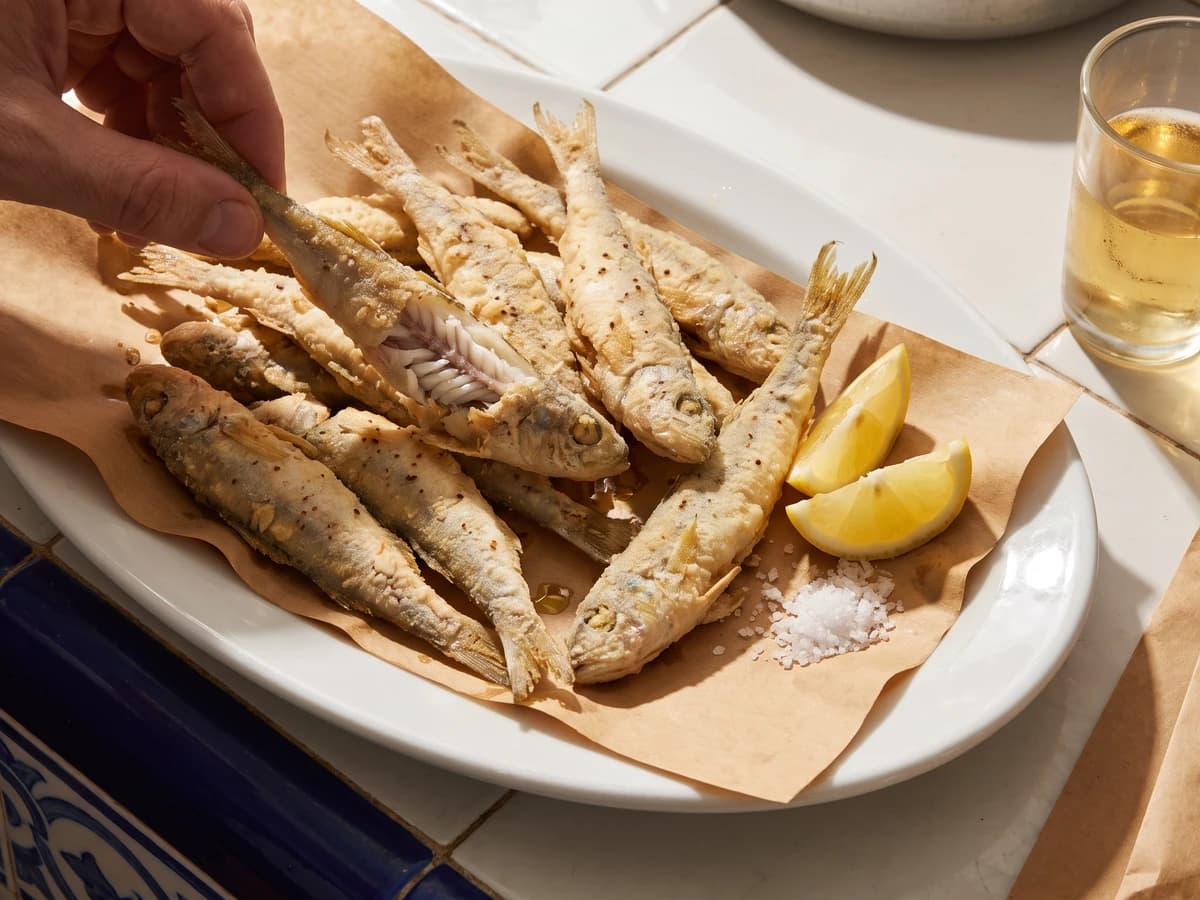
Acedías fritas belong to Cádiz: tiny wedge sole, salted, dusted in frying flour, and dropped into very hot olive oil so the rims crisp while the fish stays tender.
A cooking platform built around craft, culture, and the stories behind what we eat.
Created by
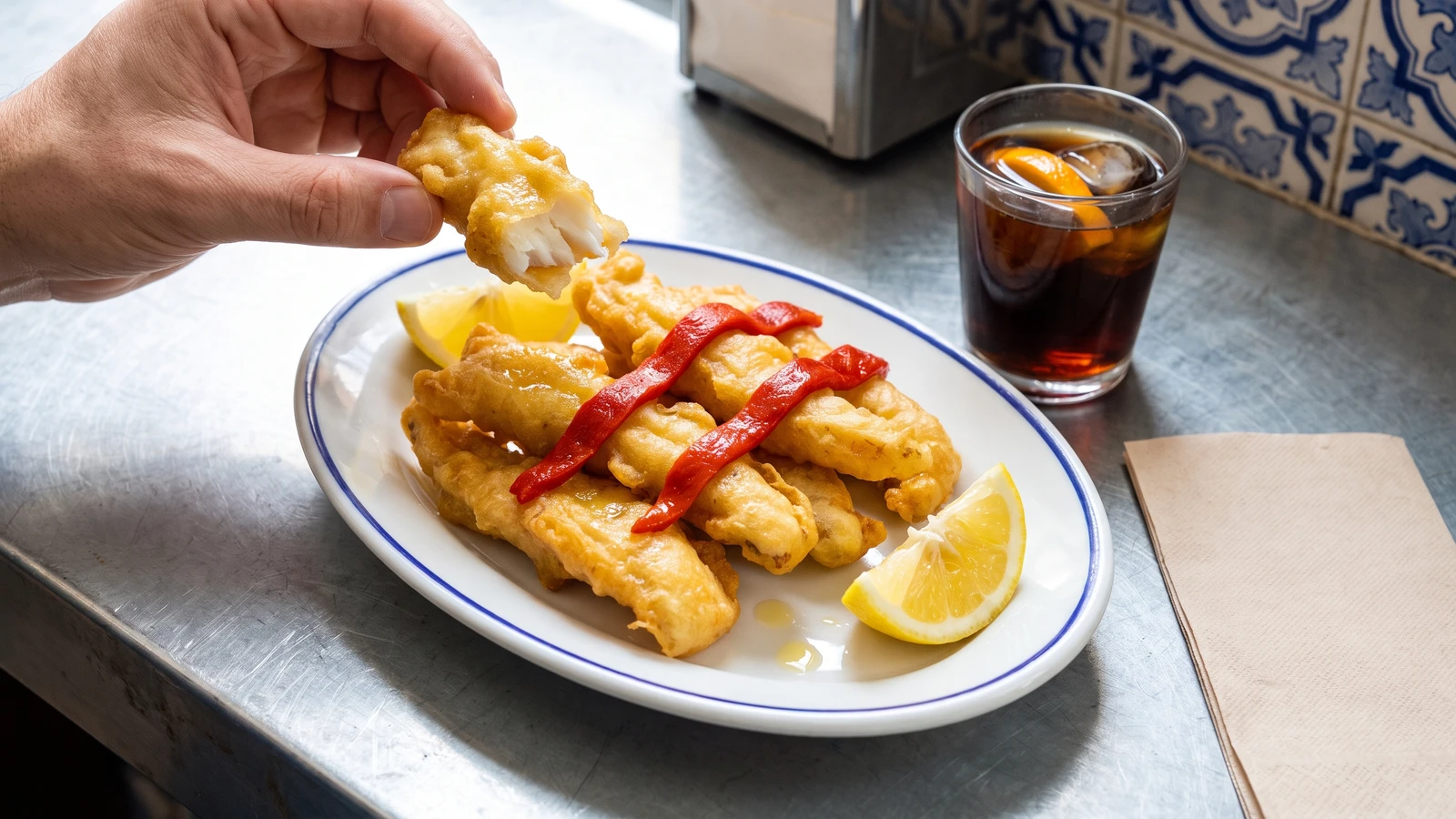
Madrid's salt cod soldiers are strips of properly desalted bacalao dipped in saffron batter and fried crisp, with a red pepper sash to finish the old joke.
Soldaditos de Pavía are Madrid's little salt cod soldiers: strips of bacalao, desalted, dipped in a saffron-gold batter, and fried until the coat is crisp and the fish inside flakes white. They belong to the old tavern counter and to Lent and Semana Santa, when salt cod did the work meat couldn't. The red pepper strip is not decoration trying to be clever. It is the soldier's sash, and without it the joke loses its face.
The method that decides it is not the batter first. It is the desalting, then the drying. Bacalao should taste seasoned all the way through, not harsh, and it must be dry before it touches flour. Wet cod throws water into the batter and the oil, and your neat soldier comes out pale and sulking. Dry it well and the batter grips.
If you are far from Madrid, look first in a Portuguese, Italian, Caribbean, or Latin market for thick salt cod or bacalhau. That is the right road. If all you can get is fresh cod, salt it briefly and use it with your eyes open: the flavor will be gentler and the flesh softer, so fry it a little less. No hace falta haber pisado España, but the cod has to be respected.
Use saffron, a little garlic if you like it, parsley, flour, egg, and very cold beer or sparkling water. The batter should run from the spoon in a ribbon, not sit like dough. Fry in small batches and eat them at once. Pésalo, no lo adivines, especially with the cod pieces. Even soldiers cook evenly.
Soldaditos de Pavía belong above all to Madrid's tavern cooking, where bacalao was a reliable fish for an inland city because it traveled preserved in salt and kept well for abstinence days. The name is tied in popular memory to the yellow coat and red trim of the Pavía hussars, echoed by the saffron batter and the strip of roasted pepper laid over each piece. The dish is especially at home around Lent and Semana Santa, when cod appears in many inland kitchens because it answered both the religious rule and the practical need for fish far from the coast.
Quantity
500g salted weight, or 650g already desalted
skin and pin bones removed after soaking
Quantity
as needed
for soaking
Quantity
180g
150g for batter, 30g for dusting
Quantity
8g
Quantity
1
cold
Quantity
180ml, plus 1 to 2 tablespoons if needed
Quantity
1 generous pinch, about 0.2g
Quantity
1 tablespoon
Quantity
1 small
finely grated
Quantity
5g
finely chopped
Quantity
700ml, or enough for 3cm depth
for frying
Quantity
80g
drained and cut into thin strips
Quantity
1
cut into wedges
| Ingredient | Quantity |
|---|---|
| thick salt cod fillet or loinskin and pin bones removed after soaking | 500g salted weight, or 650g already desalted |
| cold waterfor soaking | as needed |
| plain flour150g for batter, 30g for dusting | 180g |
| baking powder (levadura química) | 8g |
| large eggcold | 1 |
| very cold pale beer or sparkling water | 180ml, plus 1 to 2 tablespoons if needed |
| saffron threads | 1 generous pinch, about 0.2g |
| warm water | 1 tablespoon |
| garlic clove (optional)finely grated | 1 small |
| flat-leaf parsleyfinely chopped | 5g |
| mild olive oilfor frying | 700ml, or enough for 3cm depth |
| roasted red pepperdrained and cut into thin strips | 80g |
| lemon (optional)cut into wedges | 1 |
Rinse the salt cod under cold water to remove surface salt. Put it in a deep bowl, cover by at least 5cm with cold water, and refrigerate for 24 to 36 hours, changing the water every 8 hours. Thin pieces may be ready at 24 hours; thick loins usually need 36. Taste it safely by poaching a pea-sized sliver in simmering water for 30 seconds. It should taste seasoned, not sharp and thirsty-making. If it still bites with salt, give it another change of water.
Drain the cod, remove any skin and pin bones, and pat it dry hard with a clean towel. Cut it into soldiers about 2cm wide and 8cm long, roughly 30 to 35g each. Lay the pieces uncovered on a rack or towel in the refrigerator for 30 minutes. This drying is what makes the batter grip; wet cod throws water into the oil and softens the crust before it has a chance.
Crumble the saffron into 1 tablespoon warm water and leave it for 10 minutes, until the water turns deep gold and smells warm and hay-like. Do this before mixing the batter, so the saffron gives colour and flavour instead of staying as little red threads.
Whisk 150g flour with the baking powder in a bowl. In another bowl, beat the egg with the saffron water, garlic if using, parsley, and 180ml very cold beer or sparkling water. Whisk the wet mixture into the flour just until smooth; a few tiny lumps are no tragedy. Rest the batter in the refrigerator for 20 minutes. It should coat the cod in a thin, yellow layer, not sit on it like paste. If it is too thick, add cold water 1 tablespoon at a time.
Pour the oil into a deep heavy frying pan to a depth of 3cm and heat it to 180°C. Without a thermometer, drop in a little batter: it should sink slightly, rise at once, and turn gold in about 45 seconds. Too cool and the batter drinks oil; too hot and it browns before the cod warms through.
Put the remaining 30g flour on a plate. Dust each cod strip lightly, shake off the excess, dip it into the batter, and let the extra drip back into the bowl. Fry 3 or 4 pieces at a time, turning once, for 2 to 3 minutes in all, until crisp and saffron-gold. Keep the oil near 175°C to 180°C between batches. Drain on a wire rack, not in a heap.
Lay a strip of roasted red pepper across each piece, the soldier's sash, and serve at once with lemon wedges if you like them. These are not made to wait in a warm oven; the batter softens and the fish keeps cooking. Desalt, dry, batter, fry. Siempre sale, si lo sigues.
1 serving (about 210g)
Culinary guides, cultural storytelling, and the editorial depth that makes cooking meaningful.
Discover Culinary ExplorerChef Isabel
Acedías fritas belong to Cádiz: tiny wedge sole, salted, dusted in frying flour, and dropped into very hot olive oil so the rims crisp while the fish stays tender.
Chef Isabel
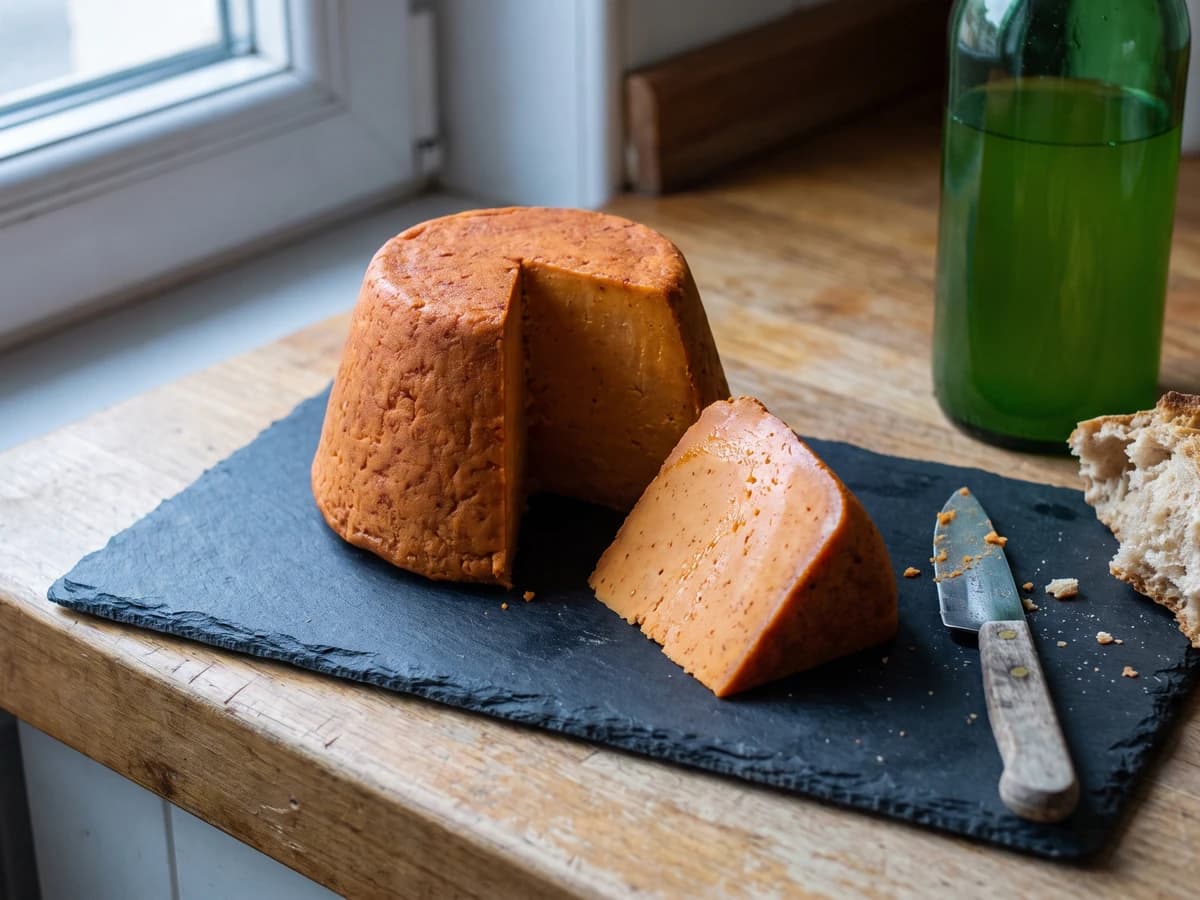
Afuega'l Pitu Roxu is Asturias in a small cheese: cow's milk set slowly to a dense curd, drained without squeezing, then kneaded with pimentón until it turns orange and grips the throat.
Chef Isabel
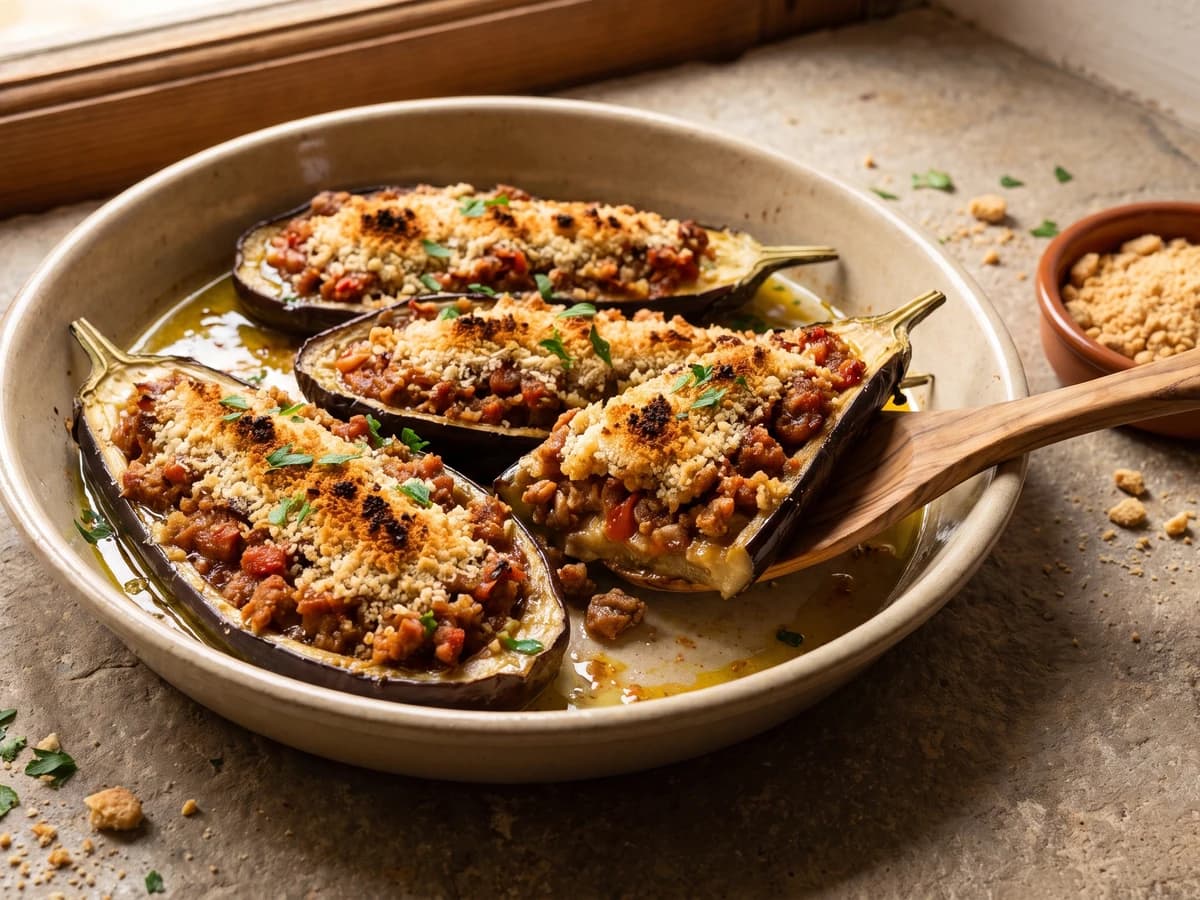
Albergínies farcides are Mallorca's summer stuffed aubergines: tender boiled shells, a slow pork sofrito with moraduix, and a plain breadcrumb cap baked until the top turns crisp and golden.

Chef Isabel
Carxofes farcides are Catalan stuffed artichokes: tender hearts filled with jamón, slow sweet onion, and breadcrumbs, then baked in a light creamy sauce until the tops turn golden.