
Chef Lesia
Banosh (банош, Carpathian cornmeal porridge)
Cornmeal and sour cream go over the flame pale and separate, then suddenly turn glossy, yellow, and almost stubborn. Stir one way only, the shepherds say, and listen.
A cooking platform built around craft, culture, and the stories behind what we eat.
Created by
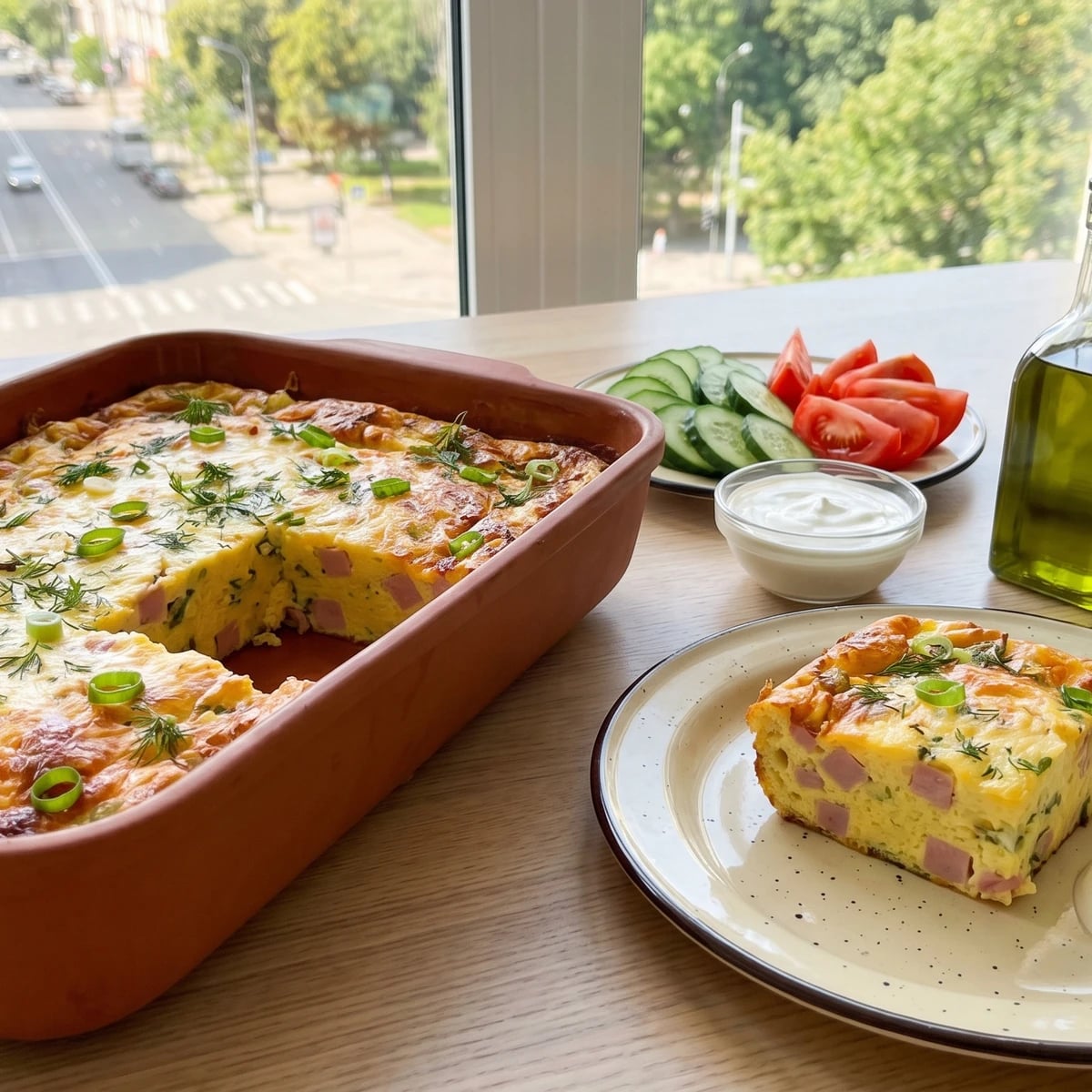
The best breakfast bake should smell awake before you are: green onion sharp at the edges, ham turning sweet, cheese bubbling gold, and the middle still soft enough to tremble.
The first thing this bake does is announce morning before anyone has properly opened their eyes. Green onion hits the warm eggs, ham turns sweet at the edges, dill goes bright, and the cheese bubbles into a golden top that looks far more festive than the effort deserves. This is breakfast for guests, or for the kind of family morning where nobody agrees when breakfast begins.
Zapikanka simply means something baked together, and Ukrainian kitchens know the wisdom of that. A little leftover shynka, ham, two cheeses, a handful of green onion, eggs beaten with smetana, and suddenly yesterday's bits have manners. Aunt Nadia would have written, "Bake until it sounds right," which was no help to me the first time. Now I know the sound: the edges quietly puffing, the center barely set, no wet slosh when you nudge the dish.
The one thing that decides it is restraint. Pull it while the center still trembles a little, because the heat keeps working after the dish leaves the oven. Overbake it and the curd cheese gives up its water and the eggs go tight. Stop early, let it stand, and it cuts clean but eats softly. That's the whole breakfast.
Zapikanky, from the Ukrainian verb zapikaty, to bake, became a practical household and canteen category in the twentieth century, but the habit is older: eggs, dairy, grains, potatoes, or leftovers bound together and cooked in the oven after bread or roasting. A breakfast version with shynka, green onion, dill, farmer's cheese, and hard cheese is a modern home-kitchen branch of that family, especially natural after Easter or any holiday table where ham and cheese remain. It is not an old village ritual pretending to be one; it is how a living cuisine keeps using what is on the table.
Quantity
10
Quantity
200g
Quantity
250g
crumbled
Quantity
120g
coarsely grated
Quantity
200g
diced
Quantity
1 bunch
finely sliced
Quantity
1 small bunch
chopped
Quantity
2 tablespoons, plus more for the dish
Quantity
1 tablespoon
for dusting the dish
Quantity
1 teaspoon
Quantity
1/2 teaspoon
Quantity
1/4 teaspoon
| Ingredient | Quantity |
|---|---|
| large eggs | 10 |
| smetana or full-fat sour cream | 200g |
| salty curd cheese or farmer's cheesecrumbled | 250g |
| firm Ukrainian-style cheese or mature cheddarcoarsely grated | 120g |
| good hamdiced | 200g |
| green onionsfinely sliced | 1 bunch |
| dillchopped | 1 small bunch |
| unrefined sunflower oil | 2 tablespoons, plus more for the dish |
| fine breadcrumbs or semolinafor dusting the dish | 1 tablespoon |
| fine sea salt | 1 teaspoon |
| black pepper | 1/2 teaspoon |
| sweet paprika (optional) | 1/4 teaspoon |
Oil a 23 by 33 cm baking dish with sunflower oil, then dust it lightly with breadcrumbs or semolina. This gives the bottom a little grip and stops the soft eggs from clinging like a sulky guest. Heat the oven to 180C.
Warm the sunflower oil in a wide pan and add the diced ham. Let it take a little color at the edges, then add the green onions for just a minute, until their raw sharpness softens and the smell turns sweet-green. Do not cook the dill. Dill goes in fresh, where it can still speak.
Whisk the eggs with the smetana, salt, pepper, and paprika if using. You want the smetana broken up properly, with no white lumps floating about, but don't whip it into foam. This is a bake, not a sponge cake.
Stir the warm ham and green onions into the eggs, then fold in the crumbled curd cheese, half the grated hard cheese, and most of the dill. The curd cheese should stay in small pockets, not disappear completely. Those little white pieces are what keep the bake tender.
Pour the mixture into the prepared dish and scatter the remaining grated cheese over the top. Bake until the edges puff, the top freckles gold, and the center gives only a soft tremble when you nudge the dish. There should be no liquid wave under the surface, but it should not look dry. Pull it before you feel certain.
Let the zapikanka stand for at least ten minutes so the heat finishes setting the middle. Scatter over the last dill, cut into generous squares, and serve with sliced cucumbers, tomatoes if they are good, or a spoon of something sour from a jar if the season is mean.
1 serving (about 160g)
Culinary guides, cultural storytelling, and the editorial depth that makes cooking meaningful.
Discover Culinary Explorer
Chef Lesia
Cornmeal and sour cream go over the flame pale and separate, then suddenly turn glossy, yellow, and almost stubborn. Stir one way only, the shepherds say, and listen.

Chef Lesia
A benderyk is a crepe taught to hold its corners: soft pancake, peppery meat, egg-dipped edges fried crisp, and the same triangular confidence my hands learned at the varenyky table.

Chef Lesia
Raw potato turns sly the moment you grate it: wet, starchy, already darkening. Deruny reward speed, hot oil, and the courage to leave the edges alone until they crisp.

Chef Lesia
Pumpkin goes into the pot pale and stubborn, then gives itself up slowly to milk and millet until the whole breakfast turns deep orange, sweet, and spoon-thick.