
Chef Lesia
Buzhenyna (буженина, garlic-studded roast pork)
A whole pork neck takes garlic into little knife pockets, roasts until the crust goes dark and fragrant, then rests overnight so every cold slice tastes better than shop ham.
A cooking platform built around craft, culture, and the stories behind what we eat.

Created by
Zander is the river fish that behaves like it was made for the pan: firm, white, clean-tasting, and sweet enough that flour and sunflower oil are all it asks from you.
The first arresting thing is the sound: a sharp, confident crackle when the floured zander meets hot sunflower oil, then a lower, steadier singing as the edges turn gold. Sudak is lean river fish, firm and white, with the kind of clean sweetness that disappears if you smother it. So don't. Salt it, flour it, fry it, squeeze lemon over the top, and let the fish speak before everyone at the table does.
This is food from the southern waterline, from the Dnipro and its estuaries, from market stalls where the fishmonger knows exactly which fish was still flashing silver that morning. My aunt's letter just says, "cut it thick, don't fuss," which is extremely unhelpful until you stand at the stove and hear what she meant. Thin pieces dry before the crust arrives. Thick pieces give you time: crisp edge outside, pearly white fish inside.
The one why that decides the dish is dryness. Pat the fish properly dry, then let the flour sit on it until it turns a little damp in patches. That means it has gripped the surface and won't slide off into the pan like wet wallpaper. Fry until the smell changes from raw river to warm nut and sweet fish, until it sounds right. Your timer can wait.
Sudak, or zander, has long been prized in the lower Dnipro, Dnipro-Bug estuary, and Black Sea basin, where firm-fleshed river and estuary fish shaped the kitchens of Kherson, Mykolaiv, Odesa, and Zaporizhzhia. Ukrainian fish cooking is not one single national plate: northern rivers, Carpathian trout streams, Danube wetlands, and the southern steppe all keep different habits. Pan-frying in flour belongs to the practical home table and market-day cooking, where fresh fish needed little more than salt, oil, and a sharp thing on the side.
Quantity
800g
skin on if possible, cut into thick portions
Quantity
1 1/2 teaspoons
Quantity
1/2 teaspoon
Quantity
80g
Quantity
2 tablespoons
for a rougher edge
Quantity
120ml
unrefined or lightly refined, for frying
Quantity
1
cut into wedges
Quantity
small bunch
chopped
Quantity
2
thinly sliced
Quantity
to serve
| Ingredient | Quantity |
|---|---|
| zander fillet or steaksskin on if possible, cut into thick portions | 800g |
| fine sea salt | 1 1/2 teaspoons |
| freshly ground black pepper | 1/2 teaspoon |
| plain flour | 80g |
| fine cornmeal or semolina (optional)for a rougher edge | 2 tablespoons |
| sunflower oilunrefined or lightly refined, for frying | 120ml |
| lemoncut into wedges | 1 |
| dillchopped | small bunch |
| spring onions (optional)thinly sliced | 2 |
| boiled potatoes or cucumber-tomato salad (optional) | to serve |
Run your fingers over the zander for pin bones, then pat every piece dry with kitchen paper until the surface feels almost tacky, not wet. Season both sides with salt and pepper and let it sit while you set the table or boil potatoes. The fish should look a little glossy, but no water should be pooling on the board.
Mix the flour with the cornmeal or semolina if you're using it. Press each piece of fish into the flour on all sides, including the skin and cut edges, then shake off the loose excess. Lay the pieces on a plate for a few minutes, just until the flour turns damp in patches. That's the coating fastening itself to the fish.
Pour enough sunflower oil into a wide heavy pan to cover the base generously. Heat it until a pinch of flour falls in and fizzes at once, lively but not furious. If it smokes, pull the pan off and let it calm down. You want a clean crackle, not bitterness.
Lay the zander in the pan skin-side down if it has skin, leaving space between pieces. The sound should jump, then settle. Don't move the fish until the edges are golden and the crust releases when you nudge it with a thin spatula. Turn once and cook the other side until the fish is white through the thickest part and flakes in broad, juicy pieces.
Lift the fish onto a warm plate or a rack set over a tray, then squeeze lemon over while the crust is still glossy with oil. Scatter with dill and spring onion if you like. Serve at once, with potatoes to catch the lemony oil or a cucumber-tomato salad if the garden is behaving.
1 serving (about 190g)
Culinary guides, cultural storytelling, and the editorial depth that makes cooking meaningful.
Discover Culinary ExplorerChef Lesia
A whole pork neck takes garlic into little knife pockets, roasts until the crust goes dark and fragrant, then rests overnight so every cold slice tastes better than shop ham.
Chef Lesia
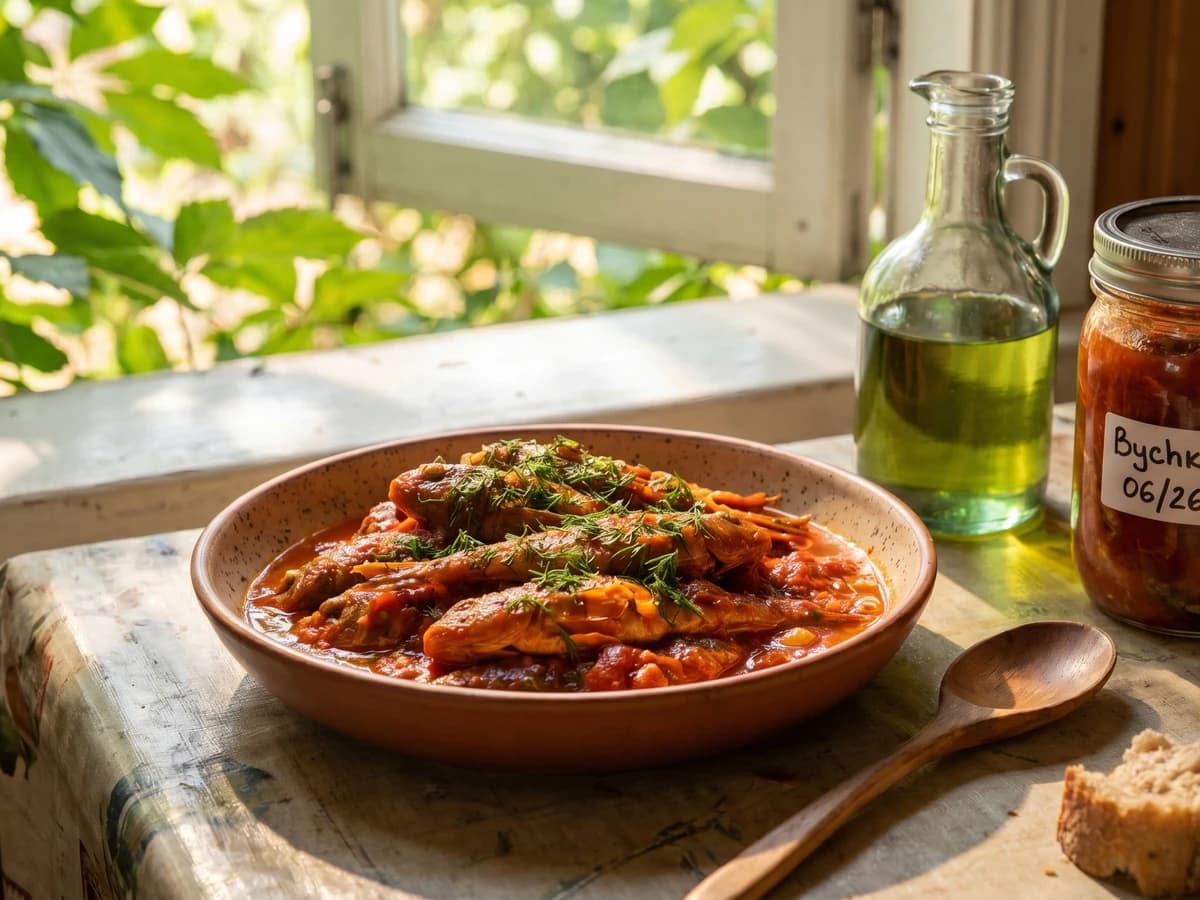
Small Azov gobies go into tomato bright as market cloth and come out soft enough that the bones give up. This is Mariupol food: cheap, red, generous, and better tomorrow.

Chef Lesia
The first sound is the meat against the board: flat, sharp, changing as the fibres loosen. Fry the cutlets fast, then let onion gravy do the soft finishing.

Chef Lesia
A heap of tiny silver fish becomes supper by the oldest Odesa trick: clean them, press them together, fry until the edges crackle, and let lemon and dill do the talking.