
Chef Lesia
Arnautka (арнаутка, southern durum-wheat loaf)
Durum wheat makes bread the color of late steppe sun: golden, firm, nutty, and strong enough to hold salo, tomato juice, and green sunflower oil without collapsing.
A cooking platform built around craft, culture, and the stories behind what we eat.

Created by
The fried cousin is all noise and color: a soft yeasted bun lowered into sunflower oil until it blisters gold, with cabbage or potato tucked inside and the seam crackling first.
The fried cousin tells on itself from the next room: oil ticking in the pan, dough puffing at the edges, the seam turning bronze before the belly goes gold. Baked pyrizhky are soft and polite. Smazheni pyrizhky are louder, the ones you eat standing at the stove because the first one is for the cook and nobody sensible waits.
The filling is everyday Ukrainian economy, in the good sense: yesterday's mashed potato with onion fried dark-sweet in sunflower oil, or cabbage cooked down until it stops smelling raw and starts smelling almost nutty. In the south, where sunflower fields go on like a dare, the oil is not background. Use refined sunflower oil for the pan and save the unrefined green one for the filling, where it can speak. Ukraine in a bottle of oil.
The one thing that decides them is dryness. The filling must be cooked, seasoned, and cooled before it goes near the dough; warm wet cabbage will split the seam, and potato that has not been dried in the pot makes the bun heavy. Aunt Nadia wrote 'until it sounds right' beside her frying note, maddening and accurate. The oil should chatter steadily around the dough, not sulk and not roar.
Make a tray, not a token plate. These are for weeknights, markets, school bags, late trains, and the hand reaching back for one more while pretending not to.
Pyrizhky are the diminutive of pyrih, the larger Ukrainian pie, a family of small filled breads that appears across home, market, and railway cooking. Fried versions grew naturally in the sunflower-oil belt of central and southern Ukraine in the nineteenth and twentieth centuries, when pressed sunflower oil became common enough to use by the panful. The fillings still tell you the season: fresh cabbage in early summer, sour cabbage from the barrel in winter, potatoes with fried onion when the pantry is doing the cooking.
Quantity
500g
plus more only if needed
Quantity
7g
Quantity
1 tablespoon
Quantity
1 1/2 teaspoons
Quantity
250ml
warmed gently
Quantity
1 large
beaten
Quantity
2 tablespoons
plus more for the bowl
Quantity
1 litre
for frying
Quantity
2 tablespoons
Quantity
1 large
finely diced
Quantity
1 medium
coarsely grated
Quantity
600g
finely shredded
Quantity
1 tablespoon tomato paste or 120g drained sour cabbage
Quantity
small handful
chopped
Quantity
to taste
Quantity
700g
peeled and cut into chunks
Quantity
1 large
finely diced
Quantity
2 tablespoons oil or 30g butter
Quantity
small handful
chopped
Quantity
to taste
Quantity
to serve
Quantity
to serve
| Ingredient | Quantity |
|---|---|
| plain flourplus more only if needed | 500g |
| instant dried yeast | 7g |
| sugar | 1 tablespoon |
| fine sea salt | 1 1/2 teaspoons |
| kefir or milkwarmed gently | 250ml |
| eggbeaten | 1 large |
| sunflower oilplus more for the bowl | 2 tablespoons |
| refined sunflower oilfor frying | 1 litre |
| sunflower oil (cabbage filling option) (optional) | 2 tablespoons |
| onion (cabbage filling option) (optional)finely diced | 1 large |
| carrot (cabbage filling option) (optional)coarsely grated | 1 medium |
| white cabbage (cabbage filling option) (optional)finely shredded | 600g |
| tomato paste or kvashena kapusta (sour cabbage) (optional) | 1 tablespoon tomato paste or 120g drained sour cabbage |
| dill (cabbage filling option) (optional)chopped | small handful |
| sea salt and black pepper (cabbage filling option) (optional) | to taste |
| floury potatoes (potato filling option) (optional)peeled and cut into chunks | 700g |
| onion (potato filling option) (optional)finely diced | 1 large |
| unrefined sunflower oil or butter (potato filling option) (optional) | 2 tablespoons oil or 30g butter |
| dill (potato filling option) (optional)chopped | small handful |
| sea salt and black pepper (potato filling option) (optional) | to taste |
| smetana (sour cream) (optional) | to serve |
| fermented cucumbers or tomatoes (optional) | to serve |
Warm the kefir or milk until it feels gently warm against your wrist, then stir in the yeast and sugar. Leave it until the surface looks creamy and alive. If it sits flat and silent, your yeast is tired; replace it before it wastes the flour.
Put the flour and salt in a large bowl, then add the beaten egg, sunflower oil, and the yeast mixture. Mix until shaggy, then knead until the dough turns smooth, soft, and a little elastic under your palms. It should cling slightly without coating your fingers; add flour only if it is truly sticky.
Set the dough in a lightly oiled bowl, cover it, and leave it until doubled, puffy, and soft when you press it. A warm kitchen hurries it, a cold one slows it down. Watch the dough, not the clock.
For cabbage, warm the sunflower oil in a wide pan and soften the onion and carrot until the smell goes sweet. Add the cabbage and salt, then cook it down until it collapses, turns glossy, and no wetness pools when you drag a spoon through; stir in tomato paste or drained sour cabbage if using, then dill and pepper. For potato, boil the potatoes in salted water until they break under a fork, drain hard, return to the dry pot, and shake over low heat until the edges look floury; mash with onion fried dark-gold in sunflower oil, then dill and pepper. Whichever filling you choose, cool it before filling the dough.
Turn the risen dough onto a lightly oiled surface and divide it into 16 pieces. Roll each piece into a ball, flatten it into a palm-sized round, and tuck a generous spoonful of filling into the middle. Pinch the seam firmly closed and set each pyrizhka seam-side down. If the dough fights back, give it a minute to relax; dough has moods too.
Pour refined sunflower oil 3-4 cm deep into a wide heavy pan, never more than halfway up the sides. Heat it until a scrap of dough rises promptly and bubbles gather around it in a steady chatter. If the scrap darkens at once, the oil is too fierce; if it sinks and sulks, wait longer.
Lower in a few buns seam-side down, leaving them room to puff. Fry until the underside is deep gold and blistered, then turn gently and cook the other side until the buns feel light for their size. Keep the oil talking steadily. Crowding the pan makes the crust heavy.
Lift the pyrizhky onto a rack or paper-lined tray and salt them lightly while the surface still glistens. Tear one open before serving; the filling should sit snug inside the soft dough, and the seam should crackle under your teeth. Serve with smetana, dill, and something fermented beside them: cucumbers, tomatoes, whatever jar is open.
1 serving (about 140g)
Culinary guides, cultural storytelling, and the editorial depth that makes cooking meaningful.
Discover Culinary ExplorerChef Lesia
Durum wheat makes bread the color of late steppe sun: golden, firm, nutty, and strong enough to hold salo, tomato juice, and green sunflower oil without collapsing.

Chef Lesia
A proper hearth loaf announces itself before you cut it: dark crust, hollow knock, flour caught in the blisters, and that deep oven smell that makes people move closer.
Chef Lesia
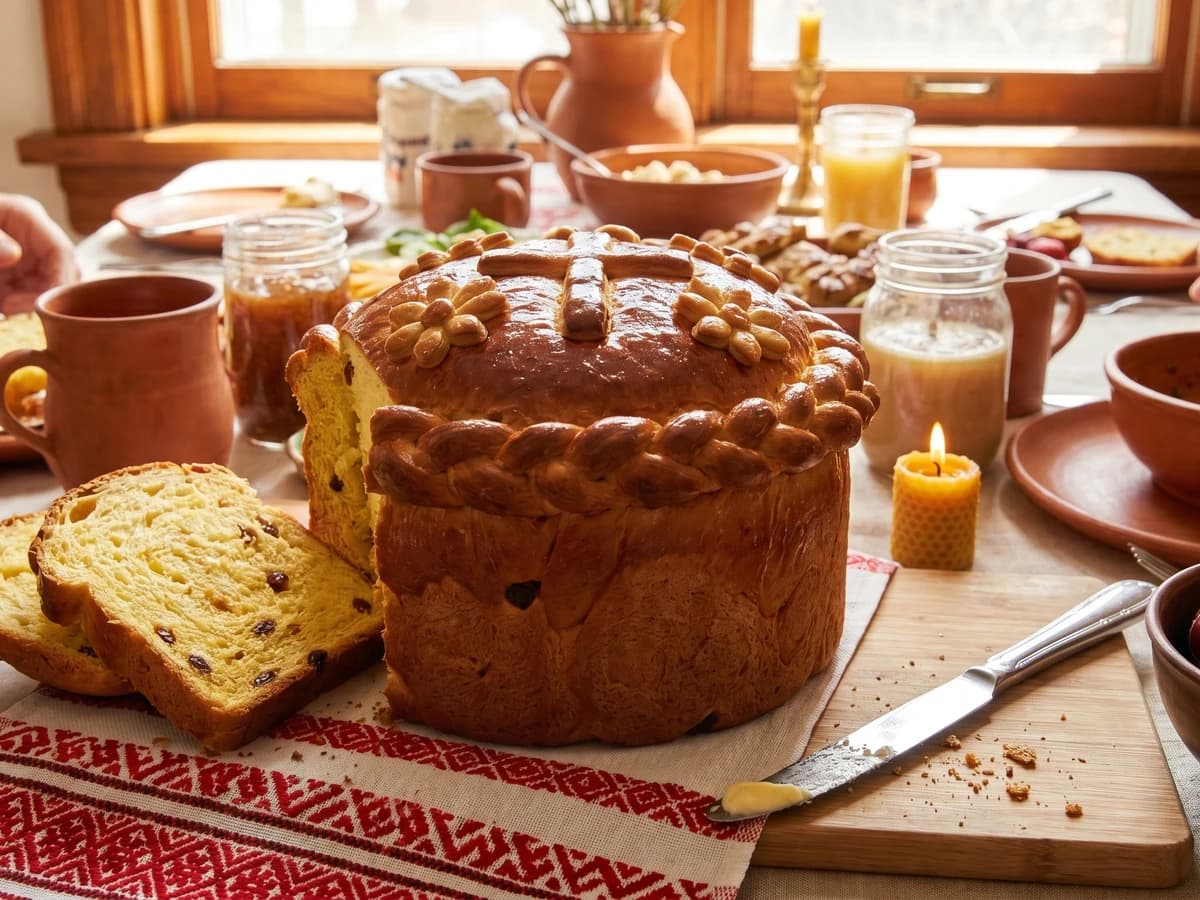
This is the Easter bread that climbs upward before it spreads out, a golden tower of eggs, butter, braids, flowers and crosses from Bukovyna's western table.
Chef Lesia
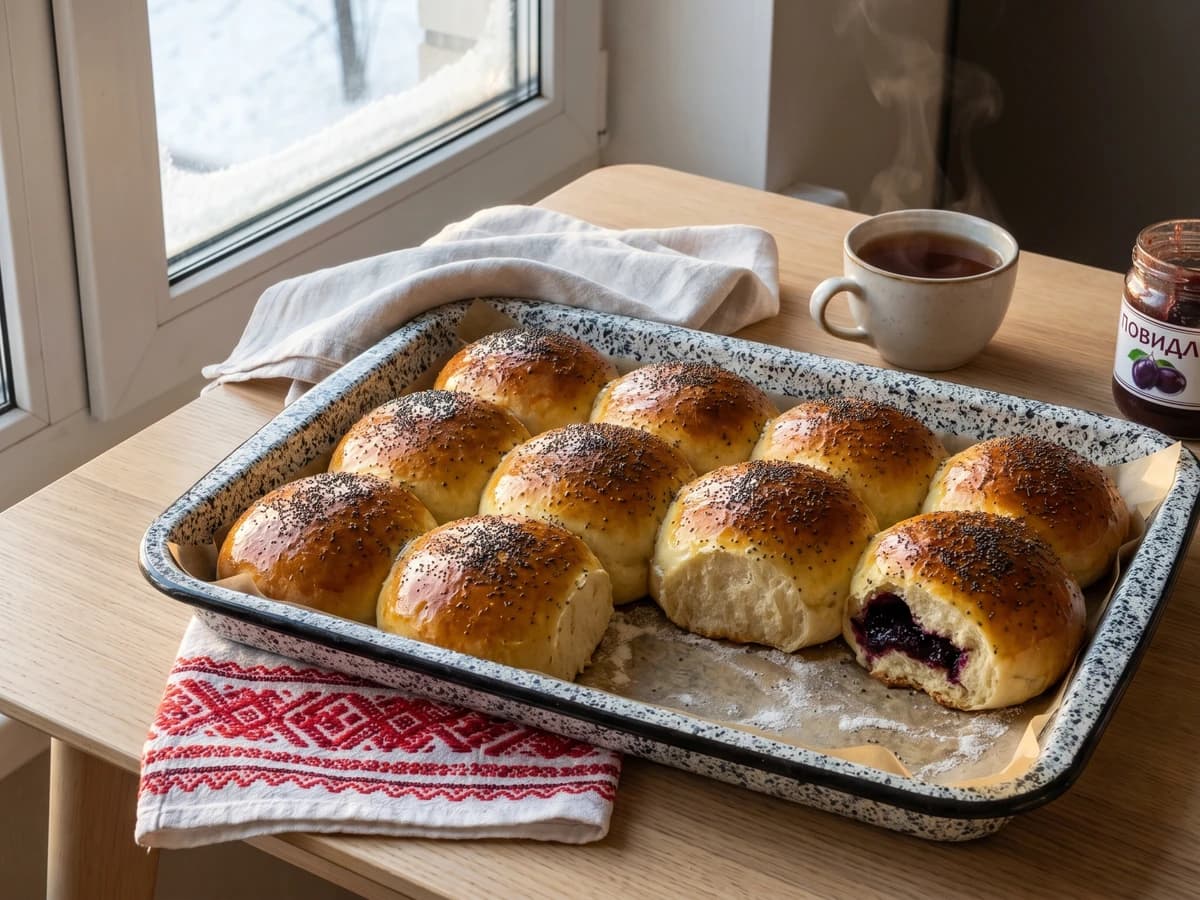
The sweetest part of bulochky is not sugar but milk: it makes a dough that pulls apart in pale threads, ready to stay plain or hide a spoon of thick povydlo.