
Chef Lesia
Arnautka (арнаутка, southern durum-wheat loaf)
Durum wheat makes bread the color of late steppe sun: golden, firm, nutty, and strong enough to hold salo, tomato juice, and green sunflower oil without collapsing.
A cooking platform built around craft, culture, and the stories behind what we eat.

Created by
This is the loaf that does not perform for you. Dark-crusted, close-crumbed, faintly sour, it sits on the board all week and makes butter, soup, and salo behave.
The crust is almost black before the loaf is ready, and that is the first lesson. Darnytskyi khlib is not a pale bakery loaf pretending to be delicate. It is rye and wheat meeting in the middle: sour enough to wake the mouth, soft enough to slice for sandwiches, sturdy enough for soup, cheese, salo, pickles, whatever the week puts on the table.
The one thing that decides it is the живий starter, zhyvyi, the living one. Rye likes acid. Give it a lively sourdough and it bakes into a moist, even crumb instead of a gummy brick. Aunt Nadia wrote once, infuriatingly, "let it stand until it smells right," and for bread she was not being poetic. When the sponge smells fruity-sour, like apples kept too long in a pantry, it is ready to carry the loaf.
Don't chase height here. This bread rises lower and broader than white wheat bread, and it tells you it is done by sound: tap the base and listen for a hollow knock, then let it cool until the crumb settles. Cut too soon and the knife drags. Wait, and you get clean slices for days.
Make two if your oven allows. One loaf is for now, still warm at the edges with butter melting into it. The other is for the week, wrapped in linen on the board, doing the quiet work of feeding people.
Darnytskyi khlib is named for Darnytsia, a district of Kyiv, and became one of Ukraine's most recognizable everyday rye-wheat loaves in the Soviet industrial baking era, when standardized breads travelled through state bakeries. Its formula, usually a mix of rye and wheat with sourdough acidity, preserved an older Ukrainian taste for sour rye while making a softer, more sliceable city loaf. The surprise is that this plain bread carries both village sourdough memory and twentieth-century Kyiv practicality in the same crumb.
Quantity
150g
100 percent hydration, bubbly and fruity-sour
Quantity
450g
lukewarm
Quantity
350g
Quantity
300g
Quantity
50g
Quantity
16g
Quantity
20g
Quantity
20g, plus more for the tins
Quantity
1 tablespoon
for dusting
| Ingredient | Quantity |
|---|---|
| active rye sourdough starter100 percent hydration, bubbly and fruity-sour | 150g |
| waterlukewarm | 450g |
| whole rye flour | 350g |
| strong white bread flour | 300g |
| whole wheat flour | 50g |
| fine sea salt | 16g |
| honey or barley malt syrup | 20g |
| unrefined sunflower oil | 20g, plus more for the tins |
| rye flour or wheat bran (optional)for dusting | 1 tablespoon |
The night before baking, feed your rye starter so it is lively by morning. It should be domed or just beginning to sink, full of small bubbles, and smell fruity-sour rather than sharp. If it smells flat or dusty, feed it again; rye bread needs that acid to behave.
In a large bowl, loosen the starter with the water, honey or malt syrup, and sunflower oil. Add the rye flour, bread flour, whole wheat flour, and salt. Mix with a wet hand or sturdy spoon until no dry patches remain. It will feel tacky, clay-like, and less stretchy than wheat dough. Good. Rye has its own manners.
Cover the bowl and let the dough rest until it looks a little puffed and smells deeper, tangy but warm. Give it two or three wet-handed folds during the first couple of hours, lifting from the edge and folding into the centre. You are not building a tall white loaf. You are giving the wheat enough strength to hold the rye steady.
Oil two medium loaf tins with sunflower oil and dust them lightly with rye flour or bran. Scrape the dough onto a wet surface, divide it in two, and shape each piece into a squat log with wet hands. Set them seam-side down in the tins and smooth the tops. Wet hands are your friend here; flour will only make paste.
Cover the tins and let the loaves rise until the tops are gently domed and a few small pinholes appear on the surface. Press lightly with a damp finger: the dent should come back slowly, not spring like a ball. If the dough smells sharply alcoholic and starts to sag, it has gone too far, so bake it at once.
Heat the oven to 230C with a tray inside. Put the tins in, splash a little hot water into the tray for the first few minutes, then lower the oven to 200C and bake until the crust is deep brown, almost black at the ridges, and the base gives a hollow knock when tapped. The smell changes from wet grain to toasted malt. That is your sign.
Turn the loaves out and let them cool on a rack until barely warm, then wait longer if you can bear it. Rye crumb finishes setting as it cools. Slice too early and it smears on the knife; slice after a proper rest and you get clean, tight, honest bread.
1 serving (about 55g)
Culinary guides, cultural storytelling, and the editorial depth that makes cooking meaningful.
Discover Culinary ExplorerChef Lesia
Durum wheat makes bread the color of late steppe sun: golden, firm, nutty, and strong enough to hold salo, tomato juice, and green sunflower oil without collapsing.

Chef Lesia
A proper hearth loaf announces itself before you cut it: dark crust, hollow knock, flour caught in the blisters, and that deep oven smell that makes people move closer.
Chef Lesia
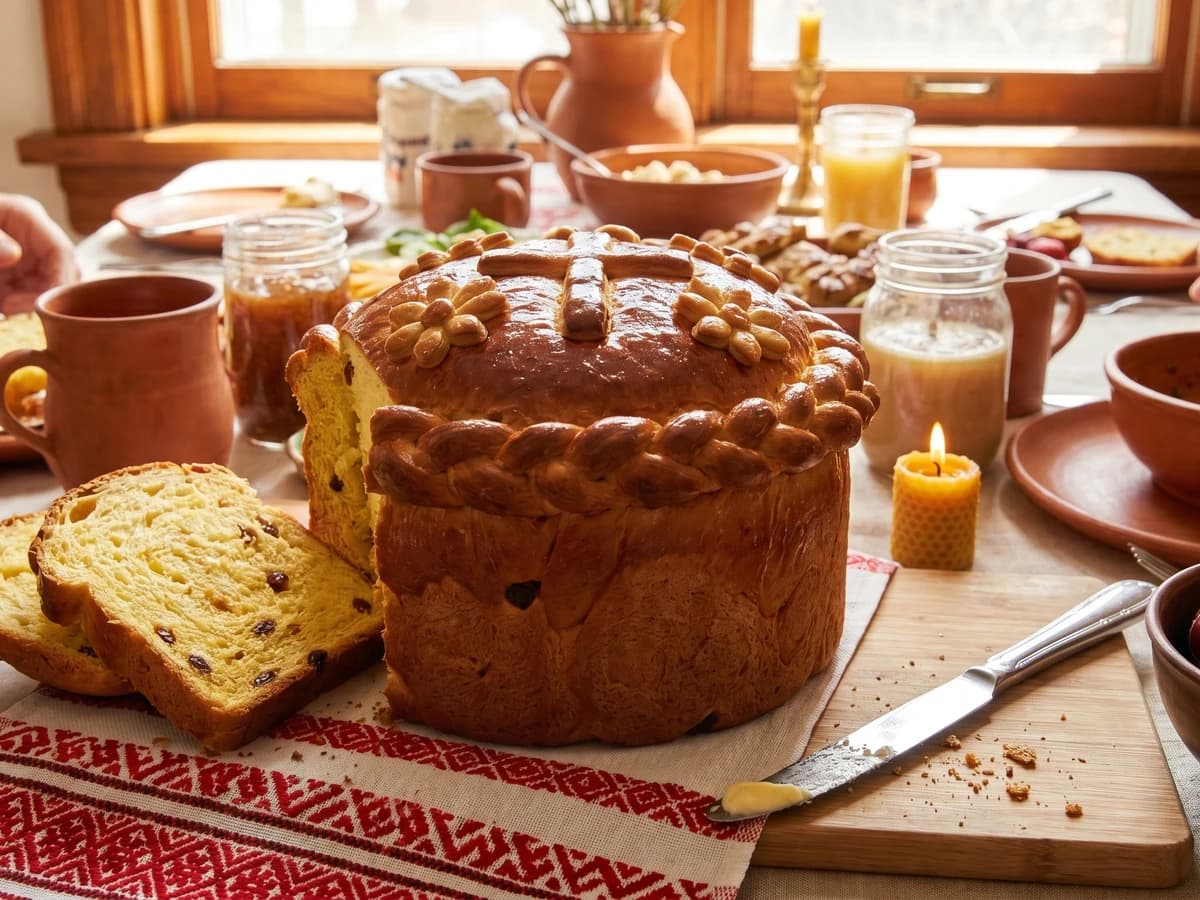
This is the Easter bread that climbs upward before it spreads out, a golden tower of eggs, butter, braids, flowers and crosses from Bukovyna's western table.
Chef Lesia
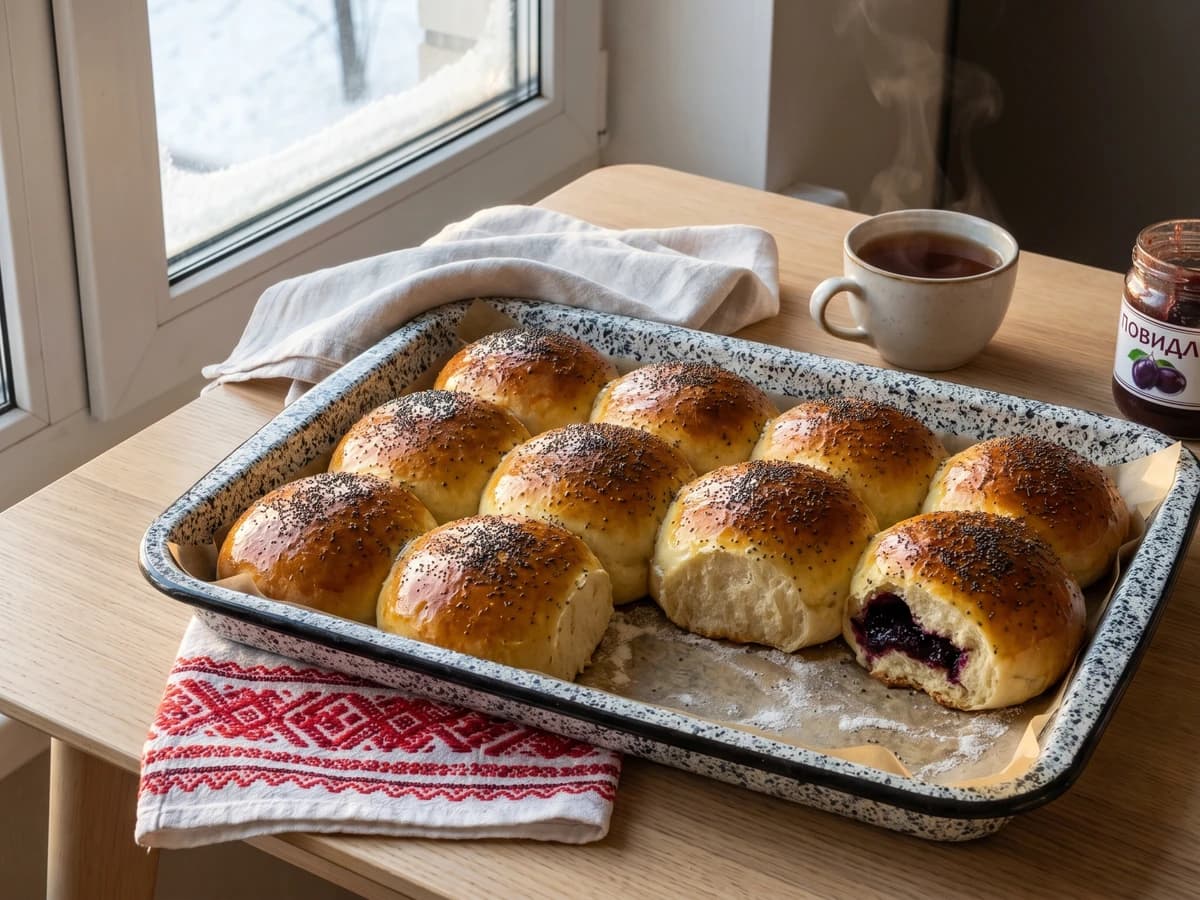
The sweetest part of bulochky is not sugar but milk: it makes a dough that pulls apart in pale threads, ready to stay plain or hide a spoon of thick povydlo.