
Chef Lesia
Bessarabskyi Khlib (бессарабський хліб, Bessarabian hearth loaf)
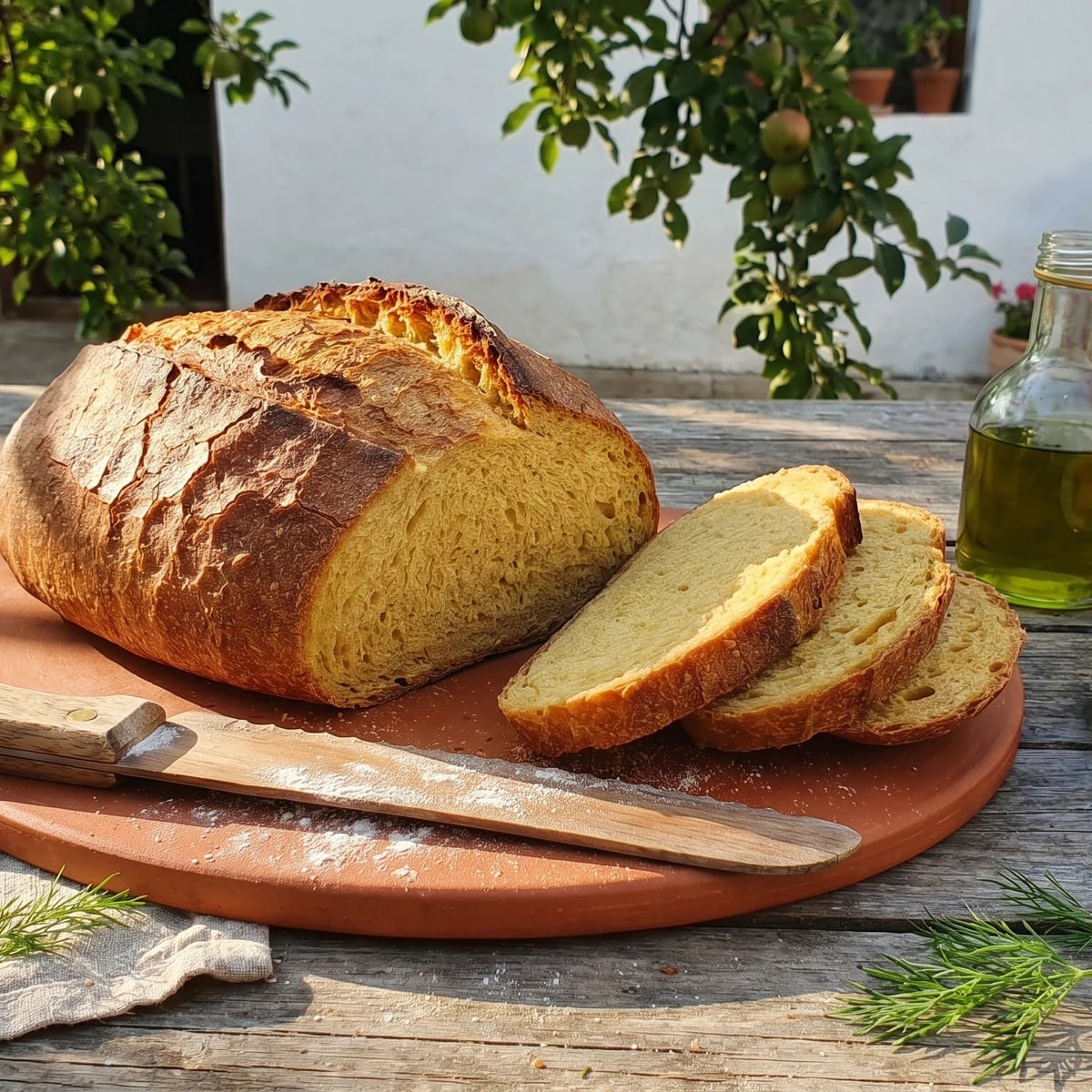
A proper hearth loaf announces itself before you cut it: dark crust, hollow knock, flour caught in the blisters, and that deep oven smell that makes people move closer.
A cooking platform built around craft, culture, and the stories behind what we eat.
Created by
Durum wheat makes bread the color of late steppe sun: golden, firm, nutty, and strong enough to hold salo, tomato juice, and green sunflower oil without collapsing.
The first thing you notice is the yellow. Not egg-yellow, not sweet-bread yellow, but the warm gold of hard wheat grown where the Black Sea wind dries everything it touches. Slice it and the crumb is tight, elastic, and faintly glossy, with a nut smell that comes up only after the loaf cools and the knife starts singing through the crust.
Arnautka asks for a different sort of patience than a soft white loaf. Durum flour is strong but not stretchy in the same easy way, so you give it water early, let it drink, then knead until the dough goes from sandy and stubborn to smooth under your palms. That rest is the one why that decides the bread: the wheat needs time to soften before it can hold itself together.
This is everyday bread, not a table decoration. It sits beside borshch, under slices of salo, beside tomatoes cut over the plate so the juice runs into the crumb. Aunt Nadia wrote once, maddening woman, "add water until it sounds right," and she was right: a good durum dough slaps the bowl softly, not wet, not dry, alive.
Make one decent loaf. It keeps well, toasts beautifully, and the second-day slice with unrefined sunflower oil and salt is enough for eight guests or one hungry Ukrainian.
Arnautka is tied to the wheat belt of southern Ukraine, especially the dry Black Sea steppe around Odesa, Kherson, and Tavria, where hard wheats were grown for their strength and keeping quality. The name is usually linked to Arnauts, a historical Ottoman-era term for Albanians and Balkan people, and by the nineteenth century arnautka appeared in the grain language of the port south, where Odesa exported wheat across the Black Sea and Mediterranean. Its golden crumb is a reminder that Ukrainian bread was never only one rye or one village loaf; each region had its own flour, climate, and table.
Quantity
350g
Quantity
150g
Quantity
340ml
Quantity
7g
Quantity
10g
Quantity
1 tablespoon, plus more for the bowl
Quantity
1 teaspoon
| Ingredient | Quantity |
|---|---|
| fine durum wheat flour or semola rimacinata | 350g |
| strong white bread flour | 150g |
| lukewarm water | 340ml |
| dried yeast | 7g |
| fine sea salt | 10g |
| unrefined sunflower oil | 1 tablespoon, plus more for the bowl |
| honey or sugar | 1 teaspoon |
Stir the durum flour, bread flour, and water together until no dry patches remain. Cover the bowl and leave it until the dough changes from rough sand to something softer and a little stretchy. Durum needs this drink before it behaves; rush it and the crumb stays tight in the wrong way.
Sprinkle in the yeast, salt, honey or sugar, and sunflower oil. Work them through with your hand, folding and squeezing until the dough feels even. It will resist you at first. Then the smell changes, from raw flour to something warmer and faintly grassy.
Knead on the table until the dough becomes smooth, firm, and springy, with a soft slap when it hits the surface. It won't stretch like a milk loaf, so don't punish it. You want strength, not exhaustion. When you press it, the dent should rise back slowly.
Oil the bowl lightly with sunflower oil, tuck the dough inside, cover, and leave it somewhere warm until it has grown generously and feels aerated under your fingers. Watch the dough, not the clock. In a cold kitchen it will take its time, and bread is allowed to have opinions.
Turn the dough out and press it gently into a rectangle, keeping the bubbles you can keep. Roll it tightly into a batard or tuck it into an oiled loaf tin, seam down. Cover and let it rise again until it looks puffy and the surface trembles slightly when you move the tin.
Bake at 220C for 15 minutes, then lower to 200C and bake until the crust is deep golden and the loaf sounds hollow when tapped underneath. Listen for it. A good arnautka loaf answers back with a dry, wooden knock, not a dull thud.
Cool the loaf fully on a rack before cutting. I know, this is the cruel part. Slice too early and the crumb gums under the knife; wait and it sets into that firm golden texture that holds tomato juice, salo, cheese, or a slick of Ukraine in a bottle of oil.
1 serving (about 80g)
Culinary guides, cultural storytelling, and the editorial depth that makes cooking meaningful.
Discover Culinary Explorer
Chef Lesia
A proper hearth loaf announces itself before you cut it: dark crust, hollow knock, flour caught in the blisters, and that deep oven smell that makes people move closer.

Chef Lesia
The sweetest part of bulochky is not sugar but milk: it makes a dough that pulls apart in pale threads, ready to stay plain or hide a spoon of thick povydlo.

Chef Lesia
This is the loaf that does not perform for you. Dark-crusted, close-crumbed, faintly sour, it sits on the board all week and makes butter, soup, and salo behave.

Chef Lesia
The queue is part of the seasoning: hot sausage wrapped in yeasted dough, dropped into oil, and eaten from paper before the bronze crust loses its nerve.