
Chef Lesia
Buzhenyna (буженина, garlic-studded roast pork)
A whole pork neck takes garlic into little knife pockets, roasts until the crust goes dark and fragrant, then rests overnight so every cold slice tastes better than shop ham.
A cooking platform built around craft, culture, and the stories behind what we eat.
Created by
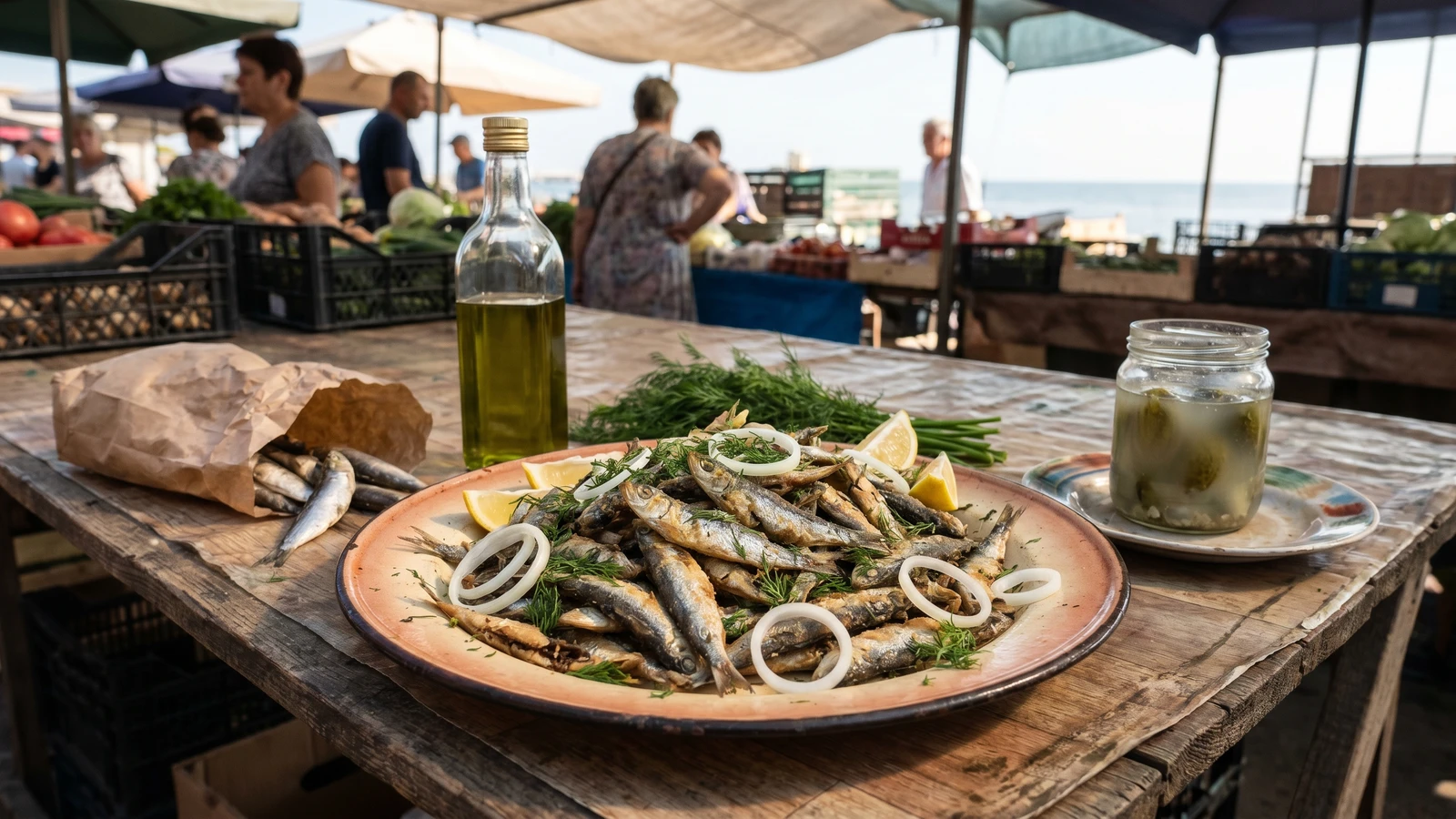
A whole market handful of tyulka goes into flour silver and comes out bronze, loud, and edible from nose to tail. This is Black Sea supper you eat with your fingers.
The sound comes first: a whole handful of silver fish hitting hot sunflower oil at once, bright little bodies crackling until the pan changes its voice. Tyulka are small enough to eat whole, head if you keep it, tail, bones, everything. That is the pleasure, not the trick. You pick them up with your fingers, pull one through dill and onion, and the sea gives you salt, oil, crunch, and a little bitterness at the edge.
On the southern coast, this is not a special-occasion fish. It is the fish you buy because the market woman tipped too much into your bag and nobody argued, because a weeknight still deserves something hot and golden. My aunt's letter only said, "flour, salt, pan, until it sounds right," which is terrible recipe writing and also exactly correct.
The one thing that decides the dish is dryness before heat. Pat the fish until the skins feel tacky, flour them only at the last minute, then give them a wide hot pan so the coating crisps before the tiny flesh has time to sulk into oil. If the pan goes quiet, you've crowded it. Take a few out, pour tea, pretend that was the plan.
Tyulka is the southern Ukrainian market name for tiny clupeid fish, often Black Sea-Caspian sprat or kilka, caught through the Black Sea, Sea of Azov, and the Dnipro-Buh and Danube estuaries. In Odesa, Mykolaiv, and Kherson kitchens it has long been a quick pan fish rather than a restaurant plate, sold fresh by weight, salted for zakusky, or packed into tins when the catch was too large for one supper. Soviet-era canning made small fish feel anonymous, but the home version stayed specific: a hot pan, sunflower oil, and a pile eaten whole before anyone bothers with forks.
Quantity
900g
Quantity
120g
Quantity
1 1/2 teaspoons, plus more for finishing
Quantity
1 teaspoon
Quantity
1/2 teaspoon
Quantity
250ml
for shallow frying
Quantity
1 small
very thinly sliced
Quantity
1 small bunch
roughly chopped
Quantity
to serve
Quantity
to serve
| Ingredient | Quantity |
|---|---|
| small fresh or thawed Black Sea sprats (tyulka) | 900g |
| plain flour | 120g |
| fine sea salt | 1 1/2 teaspoons, plus more for finishing |
| freshly ground black pepper | 1 teaspoon |
| sweet paprika (optional) | 1/2 teaspoon |
| sunflower oilfor shallow frying | 250ml |
| white onionvery thinly sliced | 1 small |
| dillroughly chopped | 1 small bunch |
| lemon wedges or fermented cucumber brine (optional) | to serve |
| rye bread or boiled new potatoes (optional) | to serve |
Rinse the tyulka quickly in cold water and pull out any bruised fish. If they are tiny, leave them whole; if they are bigger than your little finger and smell a little strong, pinch off the heads and draw out the insides with them. Lay the fish on a clean towel and pat until the skins lose their wet shine and feel lightly tacky.
Mix the flour, salt, black pepper, and paprika if using in a wide shallow dish. It should smell peppery and taste properly seasoned, because the fish will only wear a thin coat of it.
Pour sunflower oil into a wide heavy pan to the depth of a little fingernail. Heat it until a pinch of flour hisses at once and floats, not sinks. If it darkens immediately, pull the pan aside for a breath; if it sits there sulking, wait.
Toss one loose handful of tyulka through the flour, lift them out, and shake away the extra. Flour only what will fit in the pan right now. Aunt Nadia would write "not too many" and leave me to learn the rest, but she was right: crowded fish make the pan go quiet.
Lay the fish into the hot oil in one layer. They should shout at first, then settle into a finer, drier crackle as the tails bronze and the flour tightens around the skins. Turn them once with tongs or a slotted spoon and cook the other side until the bodies feel firm and the edges are crisp.
Lift the fried tyulka onto a rack or paper towel and salt them while the oil still glistens. Repeat with the remaining fish, letting the oil come back to its lively hiss between batches. Pile them onto a platter, scatter with dill and thin onion, and serve with lemon or a spoonful of fermented cucumber brine, rye bread, or boiled potatoes. Eat them bones and all.
1 serving (about 230g)
Culinary guides, cultural storytelling, and the editorial depth that makes cooking meaningful.
Discover Culinary ExplorerChef Lesia
A whole pork neck takes garlic into little knife pockets, roasts until the crust goes dark and fragrant, then rests overnight so every cold slice tastes better than shop ham.
Chef Lesia
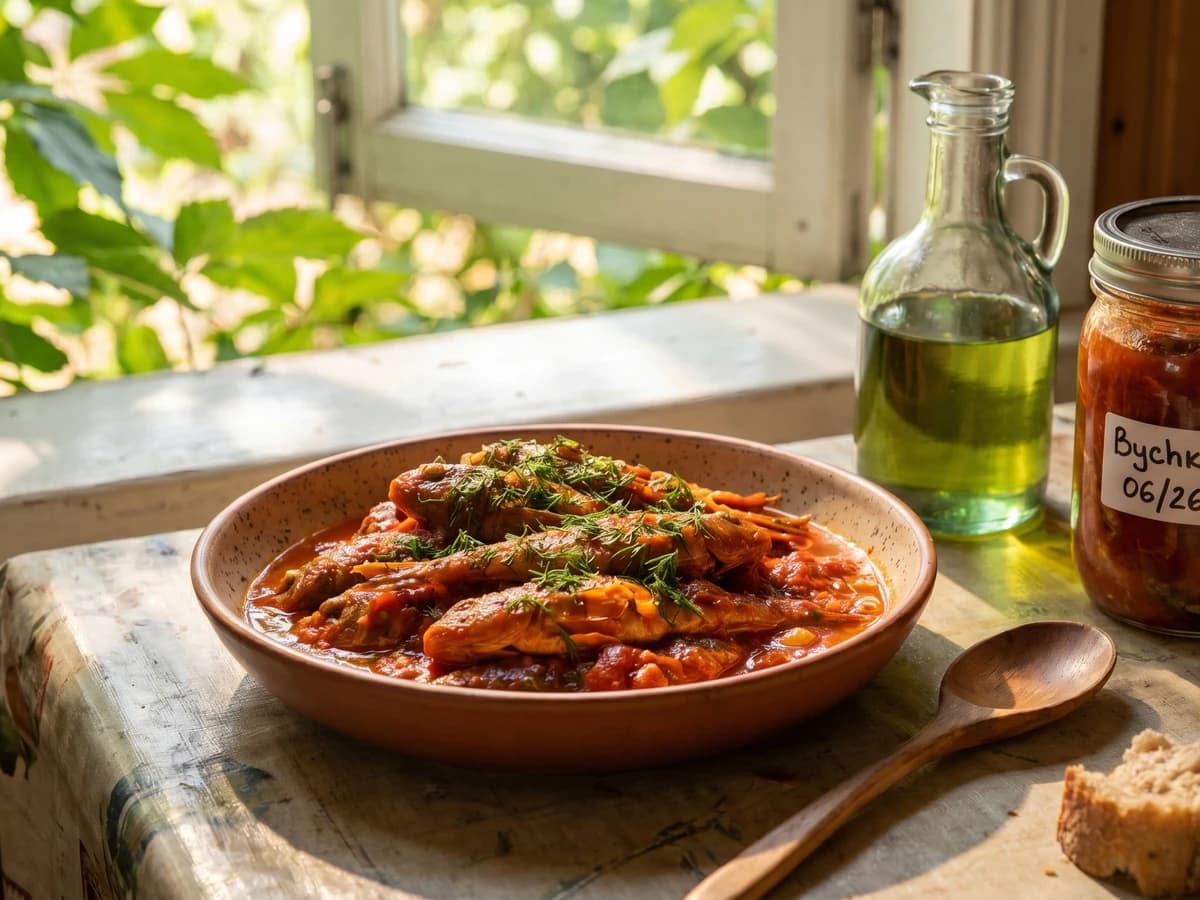
Small Azov gobies go into tomato bright as market cloth and come out soft enough that the bones give up. This is Mariupol food: cheap, red, generous, and better tomorrow.

Chef Lesia
The first sound is the meat against the board: flat, sharp, changing as the fibres loosen. Fry the cutlets fast, then let onion gravy do the soft finishing.

Chef Lesia
A heap of tiny silver fish becomes supper by the oldest Odesa trick: clean them, press them together, fry until the edges crackle, and let lemon and dill do the talking.