Chef Makoa
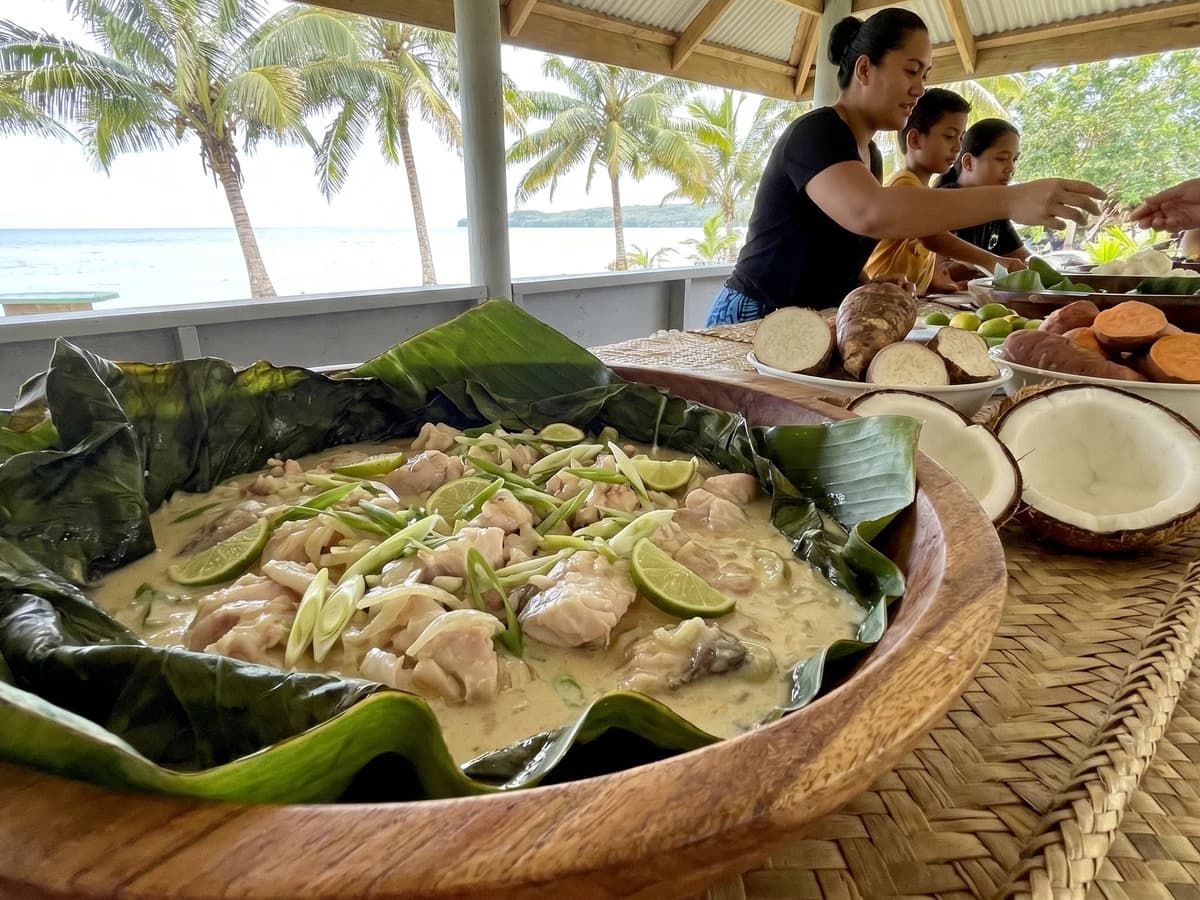
Ika Lolo (Tongan Fish Baked in Taro Leaves and Coconut Cream)
Tonga's ika lolo, fresh fish folded into taro leaves with ginger, garlic, and coconut cream, then baked until the leaf goes silky and the fish stays sweet under the coconut.
A cooking platform built around craft, culture, and the stories behind what we eat.
Created by
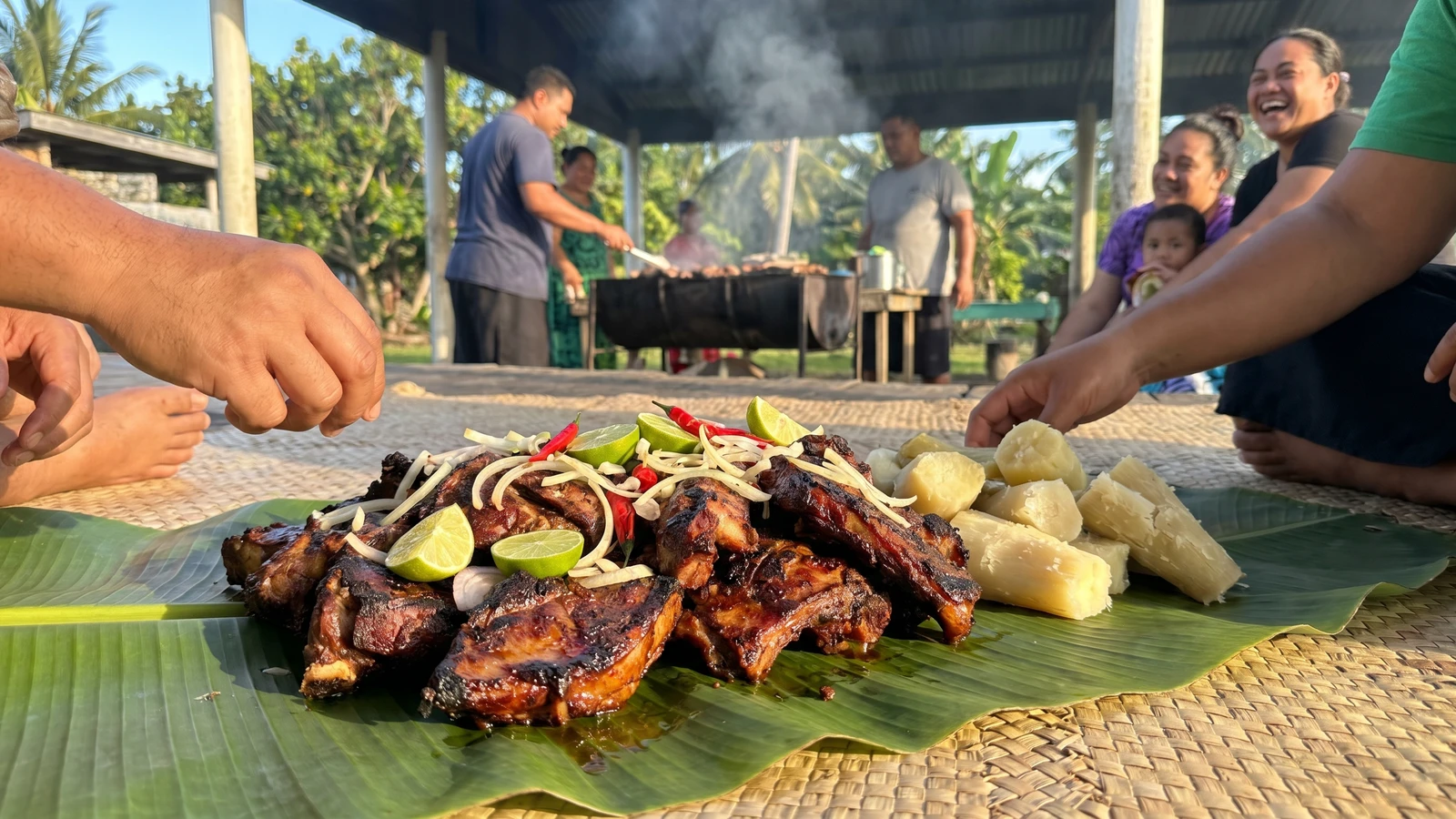
Tonga took the trader's fatty mutton offcut and made it street-corner food, celebration food, budget food: charred crisp over fire, eaten with talo or cassava and plenty onion.
The first time a Tongan uncle put sipi in my hand, he didn't make it sound fancy. He just pointed at the fire, the talo on the table, the onions cut thick, and said eat while it's hot. Tonga has that way. Generous first, explanation after.
This belongs to Tonga, not to some nameless mixed-up island plate. Sipi means sheep or mutton, and these mutton flaps were not some old canoe crop like talo, ʻufi, or mei. They came later through trade, a fatty offcut from far away, cheap enough to feed plenty people. Tonga took it, seasoned it, threw it over open fire, and made it part of the real table: Nukuʻalofa corners, family gatherings, church fundraisers, a plate with boiled manioke and raw onion sharp enough to wake you up.
That's the thing about keeping foodways alive, yeah? Deep food and everyday food sit beside each other. The umu, the Tongan earth oven, carries ceremony and the old heat of the islands. The grill carries the weeknight, the roadside, the celebration when money is tight but the table still needs to be full. One ocean, one canoe, one root still holds us, and every cousin also knows how to make do with what history handed them.
So cook this open-handed. Let the fat render slow enough to crisp instead of burn. Serve the talo like kin, not filler. And for the deeper Tongan meanings around the feast, the ʻeiki, the chiefs, the kāinga, the extended family, go sit with Tongan elders and aunties. They should tell their own story. I can only stand at the grill with respect and make sure nobody leaves hungry.
Mutton flaps became central to modern Tongan eating through twentieth-century import trade, especially from New Zealand, where fatty sheep belly was cheap and abundant. It is not a pre-contact deep food like talo, ʻufi, breadfruit, or the umu, but Tonga made the offcut its own through the grill, the feast table, and the everyday plate with manioke or talo. That mix of canoe crops and imported meat tells the honest food history of the islands today: old roots still holding, new pressures worked into family life.
Quantity
3 pounds
cut into 4-inch pieces
Quantity
1/2 cup
Quantity
1/4 cup
plus wedges for serving
Quantity
2 tablespoons
Quantity
6
crushed
Quantity
1 tablespoon
grated
Quantity
1 small
grated or finely minced
Quantity
1 teaspoon
Quantity
1 to 2
minced
Quantity
2 tablespoons
for the grill
Quantity
for serving
Quantity
for serving
| Ingredient | Quantity |
|---|---|
| mutton flaps (sipi)cut into 4-inch pieces | 3 pounds |
| soy sauce | 1/2 cup |
| fresh lemon or lime juiceplus wedges for serving | 1/4 cup |
| brown sugar | 2 tablespoons |
| garlic clovescrushed | 6 |
| fresh gingergrated | 1 tablespoon |
| oniongrated or finely minced | 1 small |
| black pepper | 1 teaspoon |
| fresh red chiles (optional)minced | 1 to 2 |
| neutral oilfor the grill | 2 tablespoons |
| cooked talo (taro) or manioke (cassava) | for serving |
| thinly sliced onion | for serving |
Lay out the sipi, the Tongan word here for sheep or mutton, and trim only the loose ragged fat. Don't strip it clean. The fat is why this cut survives the fire and turns crisp at the edges, so leave enough to baste the meat as it cooks.
Stir the soy sauce, lemon or lime juice, brown sugar, garlic, ginger, grated onion, black pepper, and chile if you're using it. It should taste salty first, sharp second, a little sweet behind that. This is everyday Tonga now, the pantry that came through trade and got worked into the local fire.
Turn the mutton flaps through the marinade until every piece is glossy and coated. Cover and chill at least 2 hours, or overnight if the pieces are thick. Give it a turn once or twice so the onion and garlic don't sit in one corner doing nothing.
Set up a charcoal grill or gas grill with a hot side and a cooler side. Oil the grate lightly. You want the first contact hot enough to crisp the fat, but you need a gentler side too, because mutton flap can burn outside before the chewy parts relax.
Lift the sipi from the marinade and let the extra drip off. Grill over the hot side 3 to 5 minutes per side, turning often as the fat renders and the edges go dark and crisp. Move pieces to the cooler side whenever flames lick too hard, then bring them back to finish. The good sign is a mahogany glaze, charred edges, and meat that bends when you pick it up with tongs.
Rest the grilled sipi 5 to 10 minutes so the juices settle back into the meat. Serve it family-style with boiled talo, the taro root, or manioke, the cassava root, plus sliced onion, lemon or lime wedges, and chile. The starch catches the fat and salt. That's the plate.
1 serving (about 320g)
Culinary guides, cultural storytelling, and the editorial depth that makes cooking meaningful.
Discover Culinary ExplorerChef Makoa
Tonga's ika lolo, fresh fish folded into taro leaves with ginger, garlic, and coconut cream, then baked until the leaf goes silky and the fish stays sweet under the coconut.
Chef Makoa
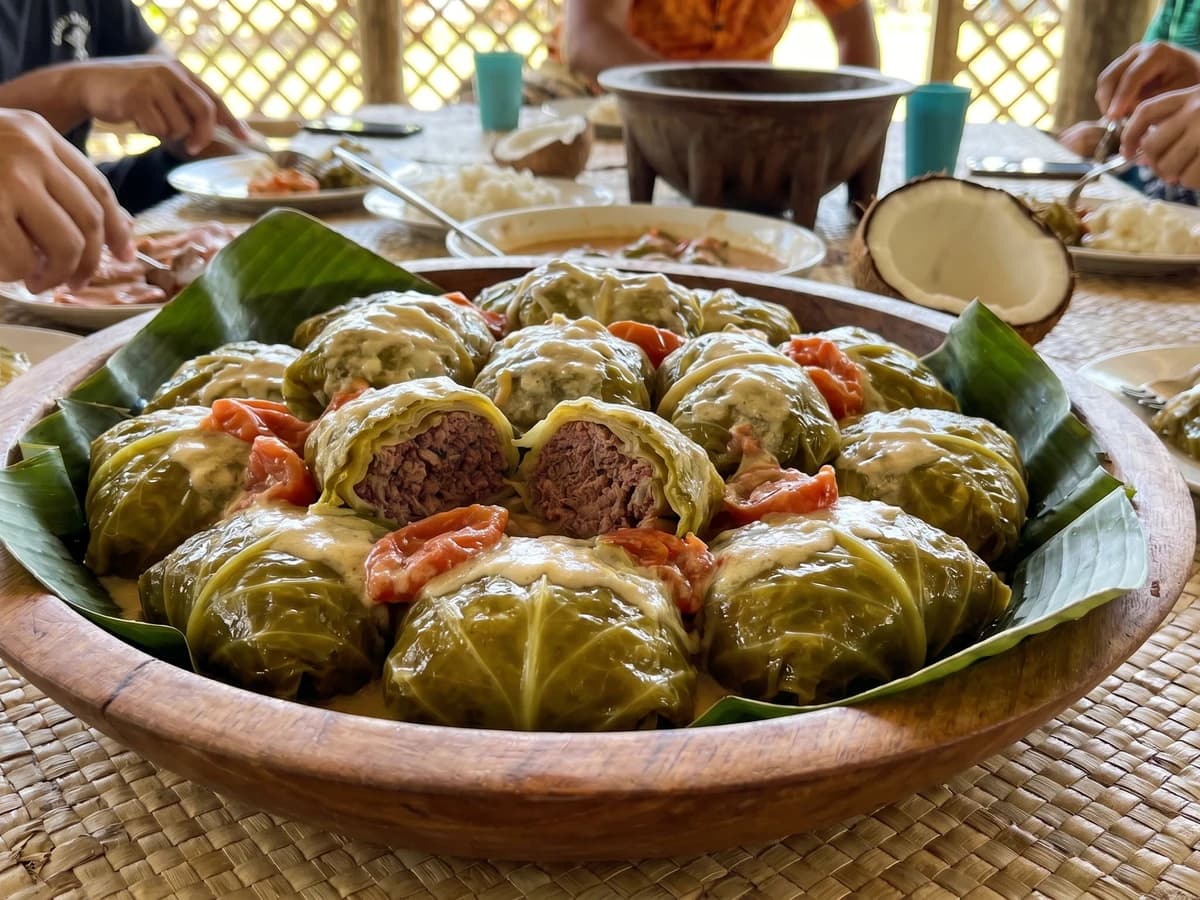
Tonga takes cabbage, tinned corned beef, tomato, onion, and coconut cream, then bakes them into generous parcels for Sunday tables. Cheap food, feast hand, everybody fed.
Chef Makoa
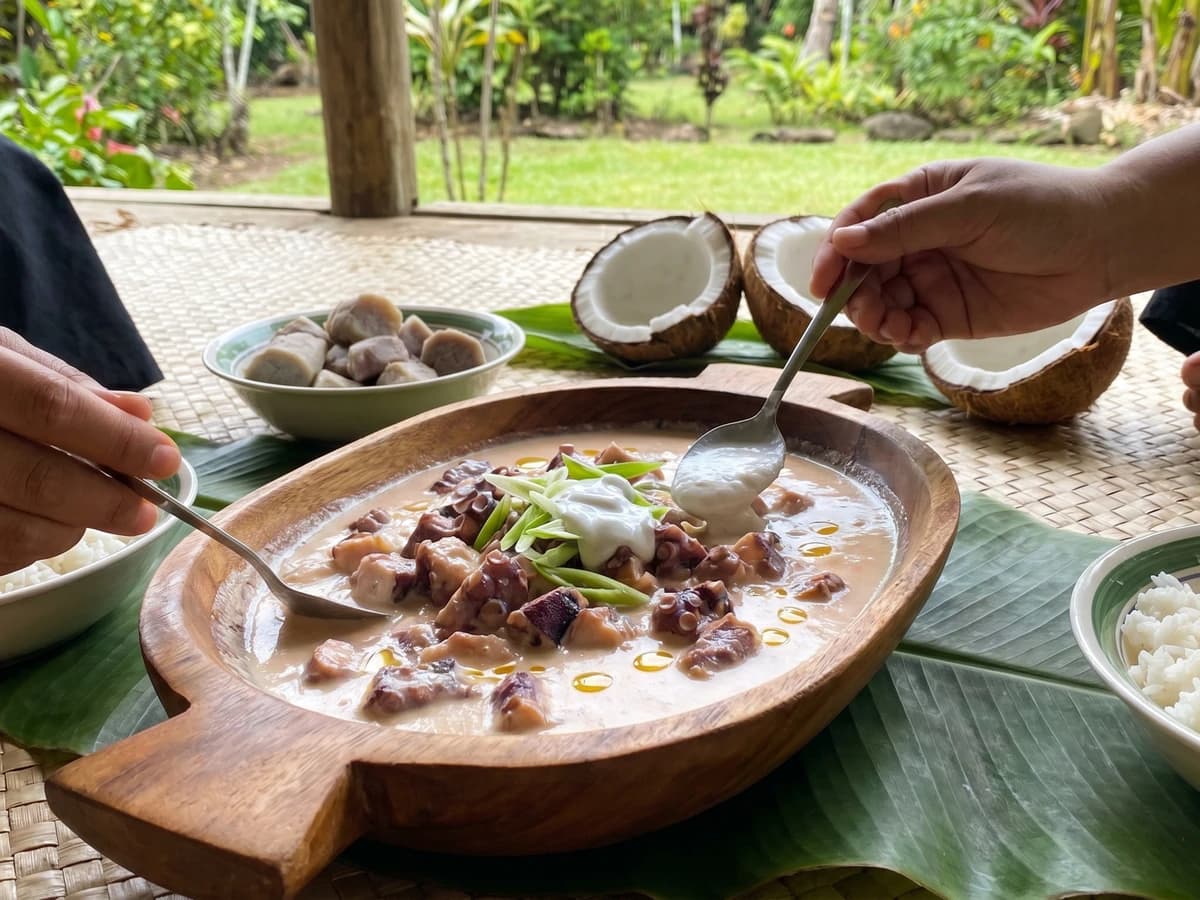
Tonga's loʻi feke takes reef octopus slow in coconut cream, onion, and tomato until the meat gives under the spoon and the sauce turns rich enough for rice, talo, or ʻulu.
Chef Makoa
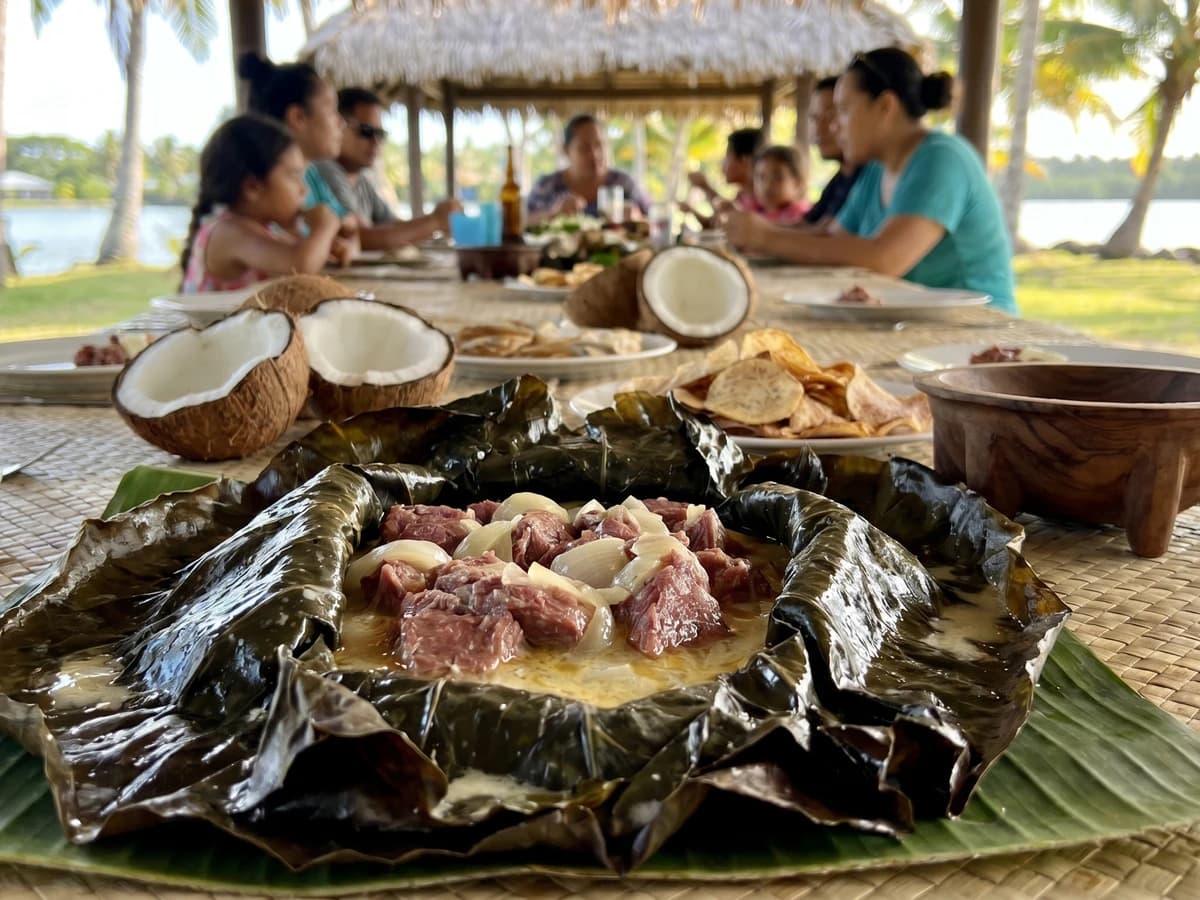
Tonga's lū pulu folds taro leaves around corned beef, onion, and lolo niu coconut cream, then bakes it slow until leaf and meat turn soft, dark, and rich.