Culinary Explorer

A cooking platform built around craft, culture, and the stories behind what we eat.
Discover Culinary Explorer
Singin' Hinnies

Singin' Hinnies

Created by Chef Thomas

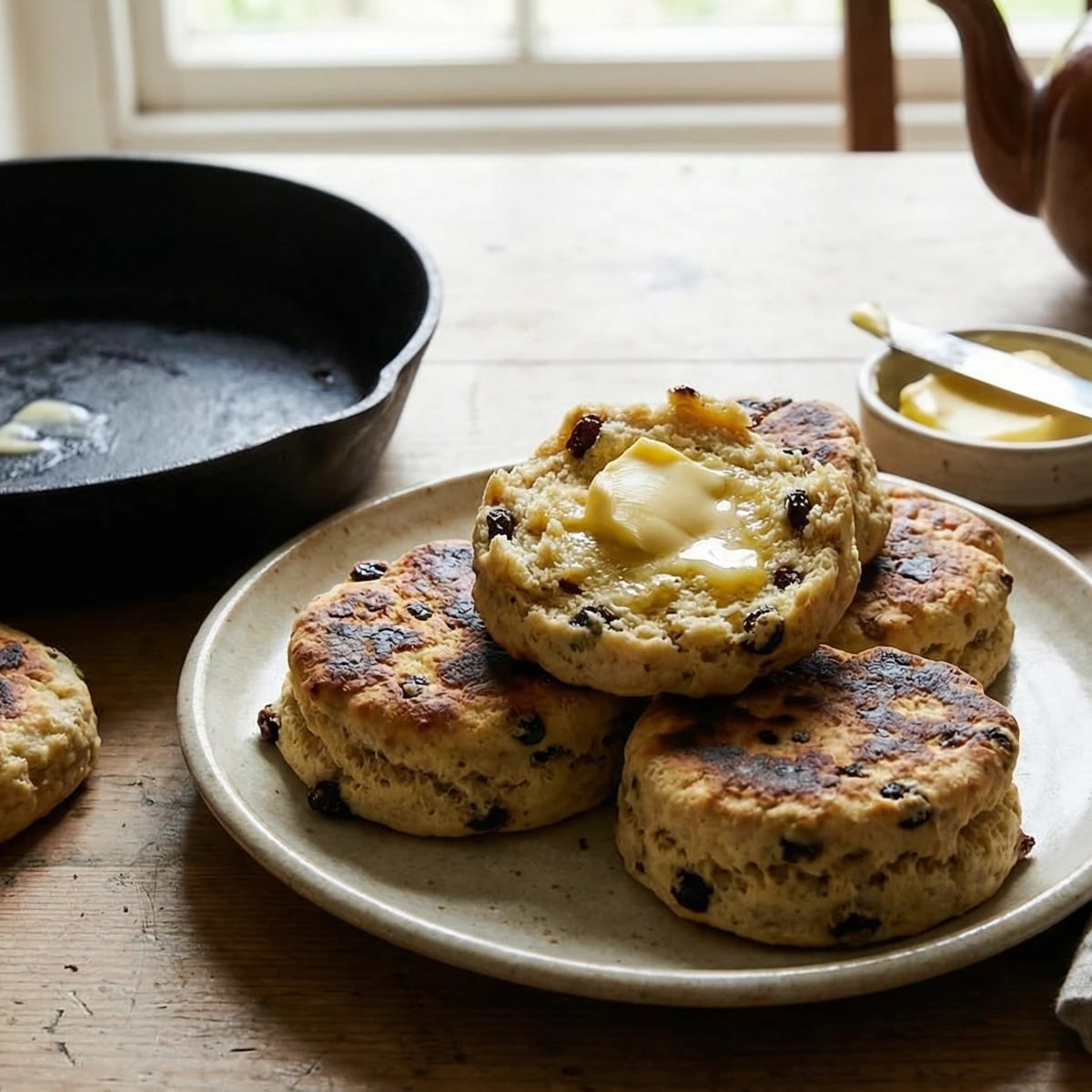
A Northumbrian griddle scone, named for the sizzle of lard on hot iron, eaten warm from the pan with cold butter slumping into the crumb.

Pastries & Cookies
British
Comfort Food
15 min
Active Time
15 min cook30 min total
Yield8 hinnies

On a wet afternoon, when the light has gone grey by three and the kettle has been on twice already, this is what I want. A pan on the hob. A bowl of flour and fat on the counter. The smell of warm currants and butter and something faintly nutty from the lard hitting the cast iron.

Singin' hinnies are from Northumberland, a part of the country I love and don't pretend to be from. The name comes from the noise: when the fat in the dough meets the hot pan, they sing. A proper hiss and crackle, like wet leaves on a bonfire. Hinny is the local word for a sweetheart, the kind of thing called across a kitchen by someone who's been calling you it for forty years. A singing sweetheart. There are worse things to put on a plate.

This is coal-country food. Built for hungry people coming in cold, made from what was in the cupboard, cooked on whatever pan was already hot. There's no oven involved, no rising, no waiting. You rub the fats into the flour, scatter in the currants, bring it together with a splash of milk, and the whole thing is on the table within half an hour. We're only making dinner. Or tea, in this case. The principle is the same.

The lard matters. I know lard has fallen out of fashion, and I know butter would be easier to reach for, but lard is what gives these their proper shortness and that quiet savoury edge that stops them being just a fruit scone. Use both, the way I've written it here, and you'll get the best of each. Eat them with cold butter while they're still warm enough to melt it. There are few better feelings.

The technique, the tradition, and the story behind every dish.

Discover Culinary Explorer

Ingredients

plain flour

Quantity

250g

baking powder

Quantity

1 teaspoon

fine sea salt

Quantity

pinch

lard

Quantity

60g

cold and cubed

unsalted butter

Quantity

60g

cold and cubed, plus extra for serving

currants

Quantity

75g

whole milk

Quantity

about 120ml

or half milk and half single cream

lard for greasing

Quantity

a little extra

Equipment Needed

  • Heavy cast iron frying pan or griddle
  • Mixing bowl
  • Round cutter or a drinking glass
  • Fish slice or palette knife for turning

Instructions

  1. 1

    Rub in the fats

    Sift the flour, baking powder and salt into a wide bowl. Add the cold cubes of lard and butter. Rub them into the flour with your fingertips, lifting the mixture as you go to keep it light. Stop when it looks like coarse breadcrumbs with a few pebbly bits of fat still visible. Those bits matter. They're what give the hinnies their flake.

    Cold hands help. Run them under the cold tap for a minute before you start. Warm hands melt the fat into the flour and you lose the texture before you've begun.
  2. 2

    Add currants and bring together

    Scatter in the currants and stir them through. Pour in most of the milk and bring it together with a knife, then a hand, into a soft, slightly shaggy dough. Add the rest of the milk only if you need it. The dough should hold together when you press it but not feel wet or sticky. Tip it out onto a floured surface and give it the gentlest of kneads, just enough to smooth it.

  3. 3

    Roll and cut

    Pat or roll the dough out to about a centimetre thick. No thinner. You want some body to them. Cut into rounds with a glass or a cutter, or do it the old way and cut the whole thing into one large round and then into wedges. There's no right answer. Gather the scraps, press them together, and cut again until the dough is used up.

  4. 4

    Heat the pan

    Set a heavy frying pan or a flat griddle over a medium heat and let it warm through properly. Cast iron is best if you have it. Rub the surface with a little lard, just enough to gloss it. When you flick a bead of water onto the pan and it dances rather than sits, you're ready.

    Trust your nose and your ears here. The pan should smell faintly of warm fat, not smoke. If it's smoking, pull it off the heat for a minute and let it settle.
  5. 5

    Cook until they sing

    Lay the hinnies onto the hot pan, leaving room between them. They'll hiss and sizzle as they hit the fat. That's the singing. That's the whole point and the reason for the name. Cook for about four or five minutes on the first side, until the underside is a deep, mottled gold. Flip them once, gently, and cook the other side for another four minutes or so. They should feel firm at the edges and just give a little in the middle when you press them. If they're colouring too fast, drop the heat. Slow and steady wins here.

  6. 6

    Split and butter

    Lift them off the pan and onto a clean cloth or a wooden board. Split each one in half while it's still hot, and put a generous knob of cold butter inside. The butter will soften and slump into the warm crumb. Eat them straight away, standing at the counter if you must. This is not a thing that improves with waiting.

Chef Tips

  • The pan is the recipe here as much as anything else. Cast iron, heavy-bottomed, evenly heated. A thin pan will scorch them before the middles cook. If you only have a thin pan, drop the heat lower and give them longer.
  • Don't be tempted to leave the lard out. Butter alone will give you something perfectly nice, but it won't be a singin' hinny. The lard is the savoury counterweight to the currants and the reason the texture is short and crumbly rather than cakey.
  • Eat them warm. This is not negotiable. A singin' hinny that has gone cold is just a slightly sad currant scone. Reheat any leftovers in a dry pan for a minute on each side and they come back to life, but the first batch, straight from the griddle, is the one to remember.

Advance Preparation

  • The dough can be made an hour or two ahead and kept in the fridge, wrapped, until you're ready to cook. Bring it back to cool room temperature before rolling.
  • Cooked hinnies are best on the day, but they'll keep in a tin overnight and revive nicely in a dry pan over a low heat the next morning. Don't try to microwave them. They turn to rubber.

Frequently Asked Questions

Nutrition Information

1 serving (about 80g)

Calories
285 calories
Total Fat
16 g
Saturated Fat
8 g
Trans Fat
0 g
Unsaturated Fat
7 g
Cholesterol
20 mg
Sodium
80 mg
Total Carbohydrates
32 g
Dietary Fiber
1 g
Sugars
7 g
Protein
4 g

Note: Chef personas and recipes are created with AI assistance. Cook with care: follow safe food-handling practices, check doneness with a thermometer when needed, and adapt for allergies and your kitchen.

Where cooking meets culture.

Culinary guides, cultural storytelling, and the editorial depth that makes cooking meaningful.

Discover Culinary Explorer

More from British Biscuits & Scones

Browse the full collection