
Chef Takumi
Agedashi Tofu (揚げ出し豆腐)
Agedashi tofu looks like a fryer test. It is only drained tofu, potato starch, clean oil, and a hot dashi broth waiting nearby.
A cooking platform built around craft, culture, and the stories behind what we eat.
Created by
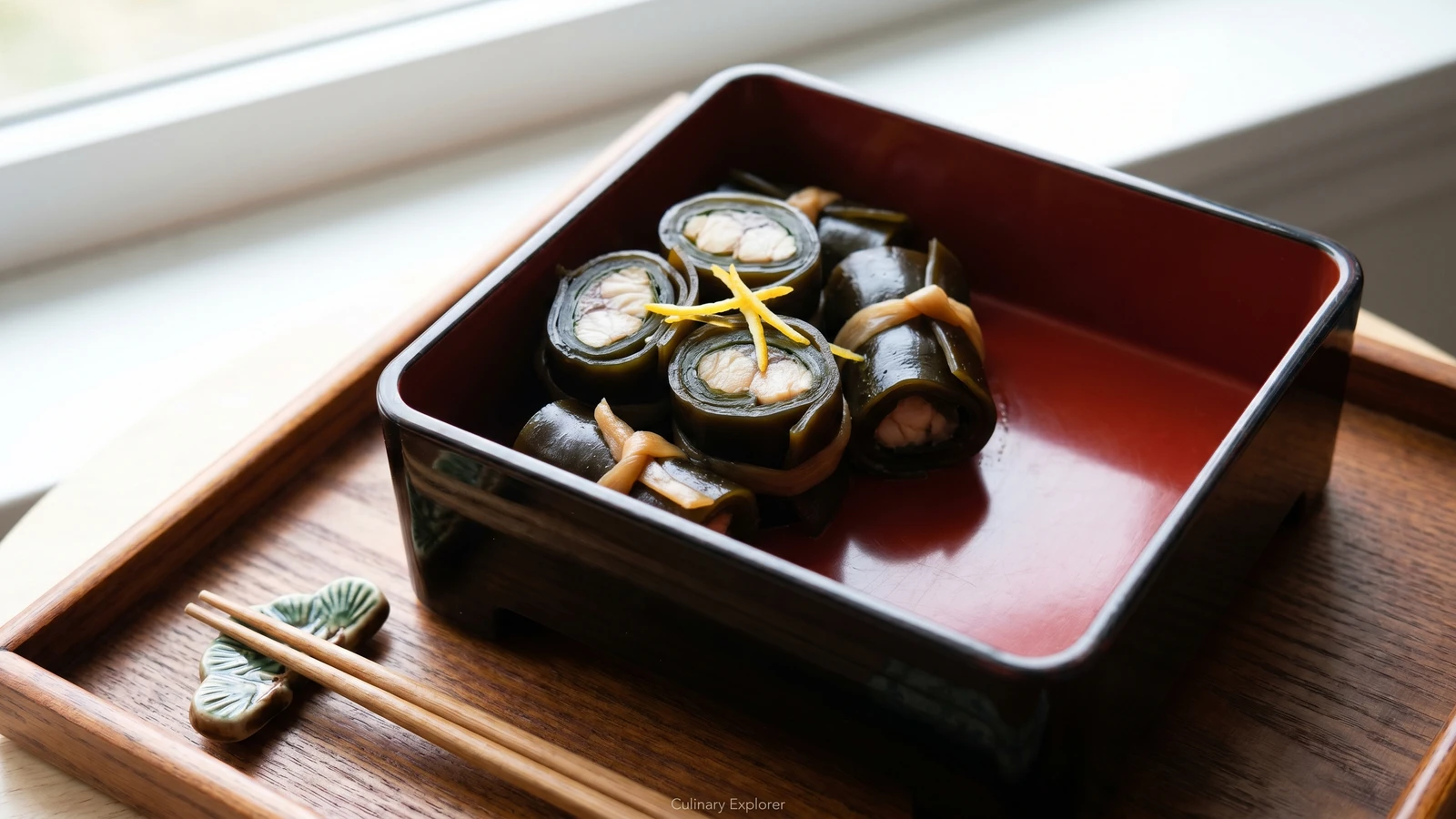
Kobumaki looks elaborate because it is tied like a little parcel. The work is calmer than that: soften good Hidaka kelp, roll it around fish, simmer gently, and let it rest.
Kobumaki looks like a ceremony because it wears a knot. A strip of kelp rolled around fish, tied with kanpyō, and simmered until dark and glossy: it seems like something only an osechi tray would dare ask of you. It isn't difficult. It is patient work, and patience is not the same thing as difficulty.
The first secret is the kelp. Use Hidaka konbu, the kind meant to soften under simmering, not a thick stock-only sheet that stays leathery and teaches you new words under your breath. Soak it until it bends without cracking, tie it loosely because it swells, and simmer it before the soy goes in. Salted seasoning too early keeps the kelp firm, and a firm kobumaki is a sad little scroll.
Only after the roll is tender do we season it deeply with sugar, soy, and mirin, then let it cool in its own broth. That rest is not idleness. The dashi settles into the kelp and fish, the surface turns glossy, and the slice holds cleanly. On the New Year table, the name leans toward yorokobu, to rejoice, but the cooking stays plain: good konbu, good fish, clean dashi, nothing hidden.
Kobumaki is a standard part of osechi ryōri, the foods prepared for the first days of the New Year, and its name is prized because kobu echoes yorokobu, 'to rejoice.' Herring-filled nishin no kobumaki became especially associated with the Edo-period kitamaebune trade, which carried Hokkaido konbu and dried herring south to Kyoto and Osaka. Kanpyō, dried gourd strip, served as an edible tie before modern kitchen string had any place at the table.
Quantity
1 piece (about 10g)
Quantity
4 cups
for dashi
Quantity
20g
Quantity
8 wide pieces (about 40g total)
for rolling
Quantity
3 cups
for soaking the rolling konbu
Quantity
20g
Quantity
1 teaspoon
for rubbing the kanpyō
Quantity
200g
cut into 8 batons about 4 inches long
Quantity
1/2 cup
Quantity
1 tablespoon
Quantity
3 tablespoons
Quantity
3 tablespoons
Quantity
2 tablespoons
Quantity
1 small strip
cut into fine threads
| Ingredient | Quantity |
|---|---|
| konbu for dashi | 1 piece (about 10g) |
| cold waterfor dashi | 4 cups |
| katsuobushi (bonito flakes) | 20g |
| Hidaka konbu (edible dried kelp)for rolling | 8 wide pieces (about 40g total) |
| cold waterfor soaking the rolling konbu | 3 cups |
| kanpyō (dried gourd strips) | 20g |
| sea saltfor rubbing the kanpyō | 1 teaspoon |
| skinless salmon fillet, or softened migaki nishincut into 8 batons about 4 inches long | 200g |
| sake | 1/2 cup |
| rice vinegar | 1 tablespoon |
| sugar | 3 tablespoons |
| soy sauce | 3 tablespoons |
| mirin | 2 tablespoons |
| yuzu peel (optional)cut into fine threads | 1 small strip |
Wipe the dashi konbu with a damp cloth, but don't wash it. Put it in 4 cups cold water and warm slowly over low heat until the water trembles and small bubbles climb the sides, 10 to 12 minutes. Lift the konbu out before the boil, because boiling pulls bitterness and a slick edge from the kelp. Bring the water to a gentle boil, add the katsuobushi all at once, take the pot off the heat, and leave it for 2 minutes. Strain through a cloth and let it drip without pressing; squeezing clouds the stock with oily, harsh flavors. Measure 3 cups for the simmering pot.
Wipe the Hidaka konbu lightly and soak it in 3 cups cold water for 30 to 40 minutes, until it bends around your finger without cracking. Save the soaking water until the dish is finished; add a splash if the simmering liquid falls too low. Cut the softened konbu into eight rectangles about 4 by 6 inches, trimming only the ragged edges.
Rinse the kanpyō, sprinkle it with the salt, and rub firmly for a minute until the strips feel more flexible. Rinse off the salt, then simmer the strips in plain water for 5 minutes and drain. Cut into 16 ties, each about 10 inches long. The salt rub is not for seasoning; it wakes the dried gourd, removes a stale edge, and keeps the ties from snapping when you knot them.
Cut the salmon into 8 neat batons, each about the width of the konbu rectangle. If using softened migaki nishin, remove any small bones and cut it the same way. Pat the fish dry so it grips the kelp instead of sliding. If the fish smells tired, change the dish. Kobumaki has nothing heavy enough to hide it, and that's a virtue.
Lay one konbu rectangle with a short edge nearest you. Set one fish baton along that near edge, running left to right, then roll it away from you into a firm cylinder. Tie the roll in two places with kanpyō, snug enough to hold but not tight. The kelp swells as it cooks, and a tight tie cuts into it. Repeat with the remaining konbu and fish.
Set the rolls seam-side down in a wide pot in a single layer. Add 3 cups dashi, the sake, and the rice vinegar; the liquid should come almost to the top of the rolls. Bring to a quiet simmer, skim once, then set a wooden drop-lid, or a parchment circle, directly on the surface. Simmer gently for 45 to 60 minutes, until a skewer slips into the kelp with little resistance. This is the detail that decides the dish: soy goes in later because salt slows the softening of the kelp.
Add the sugar and simmer for 10 minutes. Add the soy sauce and mirin, return the drop-lid, and simmer 30 to 40 minutes more, until the liquid is reduced and the rolls are glossy. Tilt the pot now and then instead of stirring, which keeps the little parcels intact. Sugar enters more easily before the soy tightens the surface, so the order is practical, not ceremonial.
Turn off the heat and let the rolls cool in their simmering liquid for at least 1 hour. Overnight is better for osechi. Lift them out, cut each roll between the two ties into two pieces, and set the cut faces up. Spoon over a little reduced broth and add one or two threads of yuzu if using. Serve at room temperature, with space around the pieces. Leave it room.
1 serving (about 45g)
Culinary guides, cultural storytelling, and the editorial depth that makes cooking meaningful.
Discover Culinary ExplorerChef Takumi
Agedashi tofu looks like a fryer test. It is only drained tofu, potato starch, clean oil, and a hot dashi broth waiting nearby.

Chef Takumi
Aspara-bacon is late-spring asparagus treated with common sense: thin bacon, hot grill, and a last brush of shōyu and mirin so the spear stays sweet while the wrap crisps.

Chef Takumi
This is Osaka street food at its plainest and best: good beef cut small, a thin batter, fine panko, hot beef tallow, and one clean dip in sauce.

Chef Takumi
Buta-bara is not a trick of the grill. Good pork belly, even cutting, steady heat, and the patience to let the fat turn glossy do most of the work.