
Chef Takumi
Ago Dashi (あごだし, grilled flying fish stock)
Ago dashi is quiet luxury: roasted flying fish, konbu, and patient water. Steep it slowly and you get a clear stock that tastes sweet, clean, and full without heaviness.
A cooking platform built around craft, culture, and the stories behind what we eat.

Created by
Kikkakabu looks like knife work from a sterner school, then yields to two chopsticks, a sharp blade, and patience. Salt opens the petals, sweet vinegar sets the flower for the New Year box.
Winter turnips look plain until the knife shows what was waiting inside them. Kikkakabu, chrysanthemum turnip, is an osechi pickle for the jubako, the lacquered New Year box. It looks like a small trick of carving. It isn't. Two chopsticks stop the blade, the salt opens the cuts, and vinegar does the quiet finishing work.
Choose small white kabu when they're at their prime, firm and heavy, with leaves that still look lively. A tired turnip gives you woody petals and a watery pickle, and no clever cut will make that honest. Peel just enough to remove the skin, then make the crosscuts close together without slicing through the base. The closer the cuts, the finer the flower. The uncut base is what keeps it a flower instead of a little pile of vegetable confetti.
The first secret is the salt. It draws water from the turnip, seasons it to the center, and makes the fine cuts supple enough to spread. Skip that step and the sweet vinegar has to fight its way in while the turnip waters it down. After the salt has done its work, the amazu, sweet vinegar, sets the petals bright and clean.
This is why kikkakabu belongs among rich New Year foods. Osechi needs little sharp notes between sweet black beans, soy-glossed fish, and simmered roots. Set three or five flowers in a corner of the box and leave them room. The beauty is in restraint, and the pickle will do its work without shouting.
Kikkakabu is an amazuzuke, a sweet-vinegar pickle, shaped to resemble kiku, the chrysanthemum. Chōyō no Sekku, the ninth day of the ninth month, came from Chinese calendrical custom and was observed at the Japanese court by the Heian period, helping make the chrysanthemum a sign of long life and rank. In osechi ryōri, the New Year foods packed into lacquered jubako, the flower shape carries that auspicious meaning while the vinegar gives the meal a practical pause between rich preserved dishes.
Quantity
8 small, about 600g total
trimmed and peeled
Quantity
2 teaspoons
for salting
Quantity
1/4 cup
Quantity
3 tablespoons
Quantity
1/2 teaspoon
for the sweet vinegar
Quantity
1/2 cup
Quantity
1 piece, about 5cm square
Quantity
1
seeded and sliced into thin rings
Quantity
3 thin strips
| Ingredient | Quantity |
|---|---|
| small white Japanese turnips (kabu)trimmed and peeled | 8 small, about 600g total |
| fine sea saltfor salting | 2 teaspoons |
| water | 1/4 cup |
| sugar | 3 tablespoons |
| fine sea saltfor the sweet vinegar | 1/2 teaspoon |
| rice vinegar | 1/2 cup |
| konbu | 1 piece, about 5cm square |
| dried red chile (takanotsume)seeded and sliced into thin rings | 1 |
| yuzu peel (optional) | 3 thin strips |
Choose small white kabu no wider than 2 inches, firm and heavy, with smooth skins. Cut away the greens, leaving a very short stem if you like the look, and peel the turnips. The skin can turn fibrous after pickling, so this is one of the rare times I won't scold you for peeling neatly. If the turnips are larger, halve them through the middle and treat each half as one flower.
Set one peeled turnip on its flattest side between two chopsticks. Slice across it at 1/16 to 1/8 inch intervals, letting the blade stop against the chopsticks before it reaches the bottom. Turn the turnip 90 degrees and repeat, making a fine grid. The chopsticks are not a beginner's crutch. They're the guard that keeps the base intact, and that base is the hinge of every petal.
Sprinkle the 2 teaspoons salt over the cut turnips, teasing a little between the cuts with your fingertips. Set them in a bowl cut side up for 30 minutes, turning once. The salt pulls out water, seasons the turnip, and relaxes the flesh so the petals open instead of snapping. They should glisten and feel bendable, not limp.
Rinse the turnips briefly in cold water to remove harsh surface salt. Lay them cut side down in a clean towel and press gently from the base toward the petals. Don't wring them. The point is to remove excess water so the vinegar stays bright, not to punish the poor things.
In a small pan, warm the water, sugar, and 1/2 teaspoon salt only until the sugar dissolves. Take it off the heat, stir in the rice vinegar, and add the konbu. Let the sweet vinegar cool completely. Warming the water dissolves the sugar quickly; keeping the vinegar off the boil preserves its clean edge.
Arrange the turnips cut side down in a shallow nonreactive container. Add the chile rings and yuzu peel, if using, then pour the cooled amazu over the turnips. Set a small plate or a piece of parchment on top so the flowers stay submerged without being crushed. Refrigerate at least 4 hours, preferably overnight, turning once. The fine cuts give the vinegar a hundred little doors.
Drain the turnips lightly and open the petals with your fingertips. Set one chile ring or a thread of yuzu peel in the center of each flower. Serve chilled or at cool room temperature, in threes or fives, with space around them. They are small, but they should not look apologetic.
1 serving (about 175g)
Culinary guides, cultural storytelling, and the editorial depth that makes cooking meaningful.
Discover Culinary ExplorerChef Takumi
Ago dashi is quiet luxury: roasted flying fish, konbu, and patient water. Steep it slowly and you get a clear stock that tastes sweet, clean, and full without heaviness.
Chef Takumi
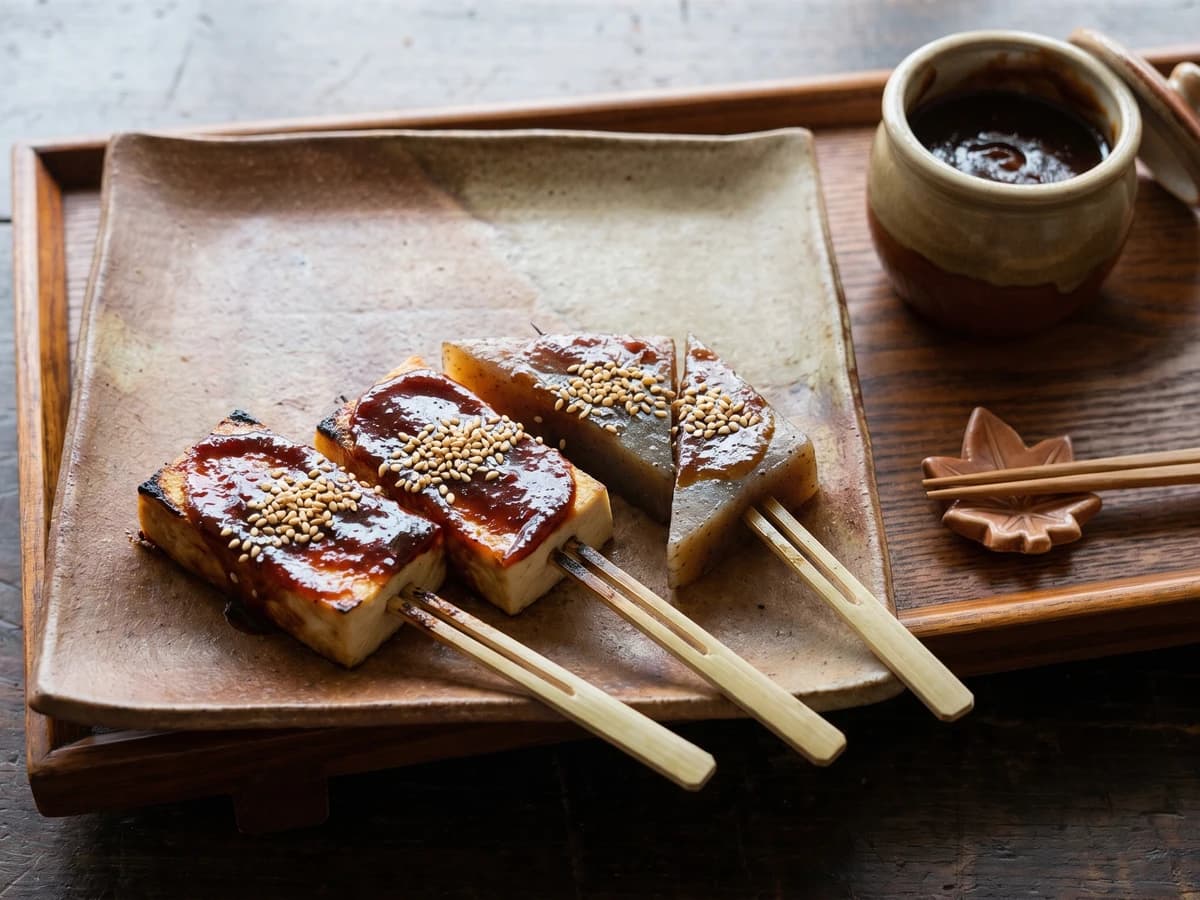
Akamiso dengaku-miso is plain work: bean miso, sweetness, sake, and patient stirring until the glaze turns dark, glossy, and thick enough to cling to the grill.
Chef Takumi
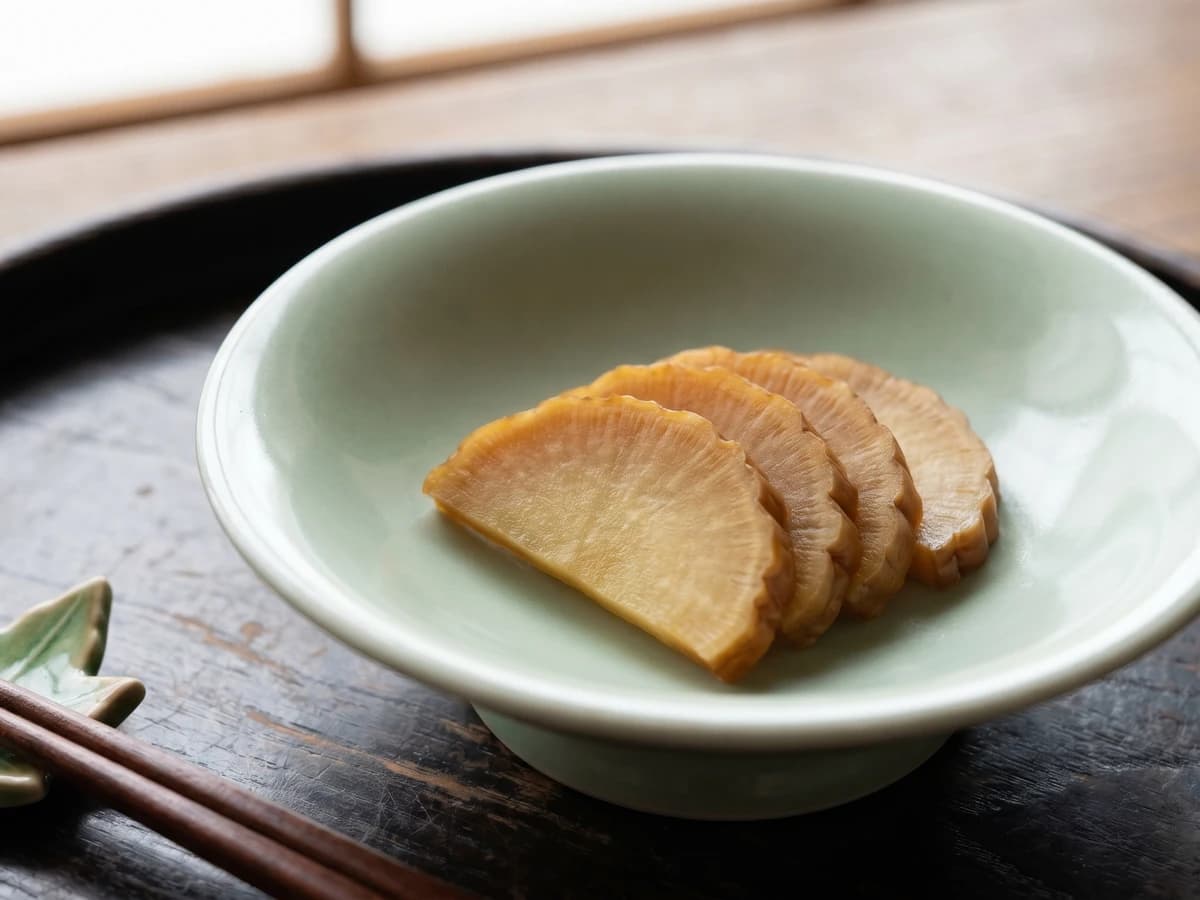
Snow-country takuan begins with smoke. Hang the daikon, dry it gently, then let rice bran, salt, and time turn it into Akita's amber pickle.

Chef Takumi
Aso takanazuke is spring caught in salt: sharp mustard greens pressed until they soften, fermented until their edge turns round, then fried briefly with sesame for rice.