
Chef Takumi
Abura Soba (油そば, brothless ramen)
Abura soba is ramen without the hiding place of soup: hot noodles, strong shōyu tare, fragrant oil, and the discipline to mix while every strand is still hot.
A cooking platform built around craft, culture, and the stories behind what we eat.

Created by
Hakata zōni is New Year in a clear bowl: round mochi, winter yellowtail, katsuona greens, and ago-dashi from grilled flying fish, each piece visible because the broth hides nothing.
The first thing Hakata zōni asks of you is not knife skill. It asks for ago, the grilled dried flying fish that gives this New Year soup its clear, firm backbone. Find that, and the bowl is already leaning in the right direction.
This looks ceremonial because it is. Round mochi, winter buri, katsuona greens, shiitake, kamaboko, and clear broth all arrive with meaning, but the cooking itself is calmer than the list suggests. The stock decides the dish. Draw the ago slowly with konbu and dried shiitake, lift the konbu before the boil, and strain without pressing. You are guarding clarity, not performing a rite for the benefit of the pot.
The small trap is the mochi. If you soften it in the finished soup, its starch clouds the broth you just took such care to make. So we cook the round mochi in a separate pot, then assemble the bowl at the end. That one detail keeps the soup honest: clear dashi, clean fish, green katsuona, nothing hidden.
Hakata zōni belongs to the first days of the year, when a meal is asked to carry wishes as well as flavor. Buri is a fish of advancement, katsuona is a green with victory in its name, and the ago-dashi tastes of northern Kyushu. Honmono, yes. Difficult, no. Only unfamiliar until you make it once.
Hakata zōni belongs to the old merchant quarter of present-day Fukuoka, a city shaped when Kuroda Nagamasa began building Fukuoka Castle in 1601 beside the older port of Hakata. Its clear broth uses ago, grilled dried flying fish long associated with northern Kyushu stocks, and the bowl carries two auspicious local ingredients: buri, a shusse-uo whose changing names suggest promotion, and katsuona, a Hakata green written with characters for victory and man. The round mochi follows the western Japanese New Year pattern, distinct from the square mochi more common around Edo and eastern Japan.
Quantity
2 fish (about 25 to 30g)
Quantity
1 piece (about 10g)
Quantity
4
Quantity
5 cups
Quantity
300g
cut into 4 portions
Quantity
1 teaspoon
for salting the yellowtail
Quantity
4
Quantity
4 small
peeled
Quantity
4 thin rounds
peeled
Quantity
4 thin rounds
cut as flowers if you like
Quantity
4 leaves
or komatsuna as a stand-in
Quantity
4 slices
about 1/4 inch thick
Quantity
1 tablespoon
Quantity
2 teaspoons
Quantity
1/2 teaspoon, plus more to taste
for seasoning the broth
Quantity
4 thin strips
| Ingredient | Quantity |
|---|---|
| dried grilled flying fish (ago no yakiboshi) | 2 fish (about 25 to 30g) |
| konbu | 1 piece (about 10g) |
| dried shiitake mushrooms | 4 |
| cold water | 5 cups |
| buri (yellowtail) filletcut into 4 portions | 300g |
| sea saltfor salting the yellowtail | 1 teaspoon |
| round mochi (maru-mochi) | 4 |
| satoimo (taro)peeled | 4 small |
| daikonpeeled | 4 thin rounds |
| carrotcut as flowers if you like | 4 thin rounds |
| katsuona leavesor komatsuna as a stand-in | 4 leaves |
| kamabokoabout 1/4 inch thick | 4 slices |
| sake | 1 tablespoon |
| usukuchi shōyu (light-colored soy sauce) | 2 teaspoons |
| sea saltfor seasoning the broth | 1/2 teaspoon, plus more to taste |
| yuzu peel (optional) | 4 thin strips |
Break the dried ago in half. If the belly cavity is dark and bitter-looking, pinch out the black innards. Wipe the konbu with a damp cloth, but don't wash it. That pale bloom on the surface is flavor, not dirt. Put the ago, konbu, dried shiitake, and cold water in a pot or bowl and refrigerate 8 to 12 hours. Cold water draws out the clean sweetness slowly; a fast boil makes the fish taste coarse before it has given you depth.
Set the soaking liquid, ago, konbu, and shiitake over low heat and bring it up slowly, about 15 minutes. Lift out the konbu when the water trembles and small bubbles climb the sides of the pot. Let the ago and shiitake barely simmer for 8 minutes, skimming any foam. Strain through a cloth-lined sieve and let it drip on its own. Don't press. Pressing forces smoky bitterness and mushroom sediment into the clear broth you have been protecting.
Sprinkle the yellowtail with 1 teaspoon salt and leave it for 30 minutes. Pour boiling water over the pieces just until the surface turns pale, then rinse briefly in cold water and pat dry. This quick blanching, shimofuri, tightens the outside and carries off blood and strong fish smell, so the finished soup stays clear and clean.
Put the peeled satoimo in a small pot of cold water, bring to a simmer, and cook 5 minutes. Drain and rinse away the slickness. In fresh water, simmer the daikon and carrot 4 to 5 minutes, until a skewer enters with a little resistance. These vegetables will finish in the dashi, but plain water removes starch and sharpness that would cloud the soup.
Bring a pot of salted water to a boil. Dip the katsuona stems first for 30 seconds, then lower in the leaves for another 20 seconds. Chill in cold water, squeeze gently, and cut into short lengths. Blanching sets the green and softens the mustard edge; the cold water stops the cooking before the leaves go dull.
Return the strained dashi to a clean pot. Add the sake, usukuchi shōyu, and 1/2 teaspoon salt, then taste. It should be clear, savory, and a shade stronger than you want in the bowl, because the mochi will soften it. Add the shiitake caps, satoimo, daikon, and carrot and simmer quietly for 3 minutes. Add the yellowtail and cook 4 to 5 minutes, just until opaque. Slip in the kamaboko for the final minute. Keep the heat gentle; a hard boil toughens the fish and roughens the broth.
While the broth finishes, bring a separate pot of water to a quiet simmer. Add the round mochi and cook 4 to 6 minutes, until soft through the center but still holding its shape. Lift each one with a wet spoon. The mochi cooks separately because its starch would fog the dashi, and in zōni that fog is not poetry. It's just starch.
Warm four soup bowls. Place one mochi in each, then arrange a piece of yellowtail, one shiitake cap, satoimo, daikon, carrot, kamaboko, and folded katsuona. Ladle the clear broth gently around them and finish with a thin strip of yuzu peel if using. Put the heavier pieces low and the greens a little high, with open broth showing between them. Leave it room. The bowl should read red, white, green, dark, and gold before the first spoonful.
1 serving (about 470g)
Culinary guides, cultural storytelling, and the editorial depth that makes cooking meaningful.
Discover Culinary ExplorerChef Takumi
Abura soba is ramen without the hiding place of soup: hot noodles, strong shōyu tare, fragrant oil, and the discipline to mix while every strand is still hot.
Chef Takumi
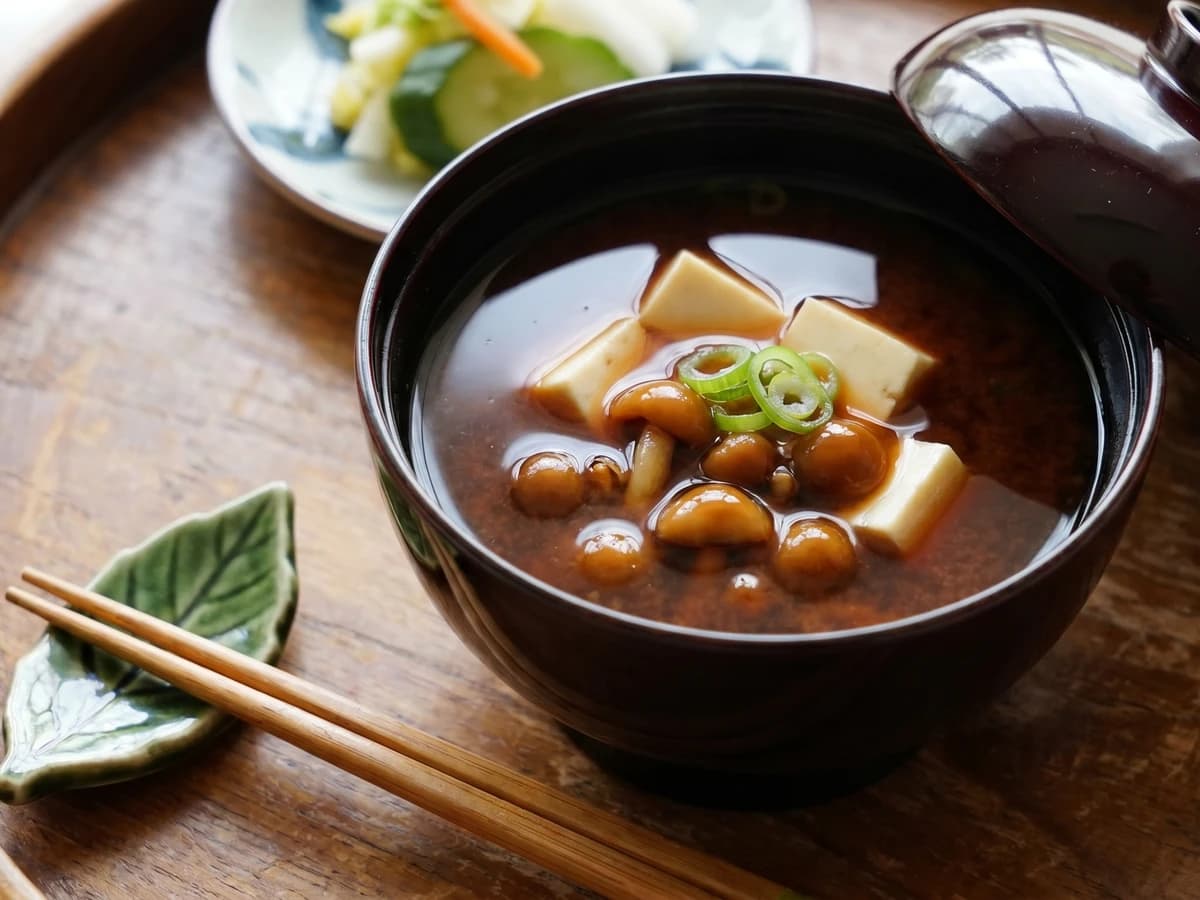
Akadashi asks you to trust the dark miso. Build a clear dashi, loosen the Hatchō mame-miso gently, and the soup turns coffee-dark, savory, and clean.

Chef Takumi
Toast the rice until its skin is firm, then let it meet chicken broth, burdock, maitake, and seri. The pot looks grand, but the work is rice, broth, and patience.
Chef Takumi
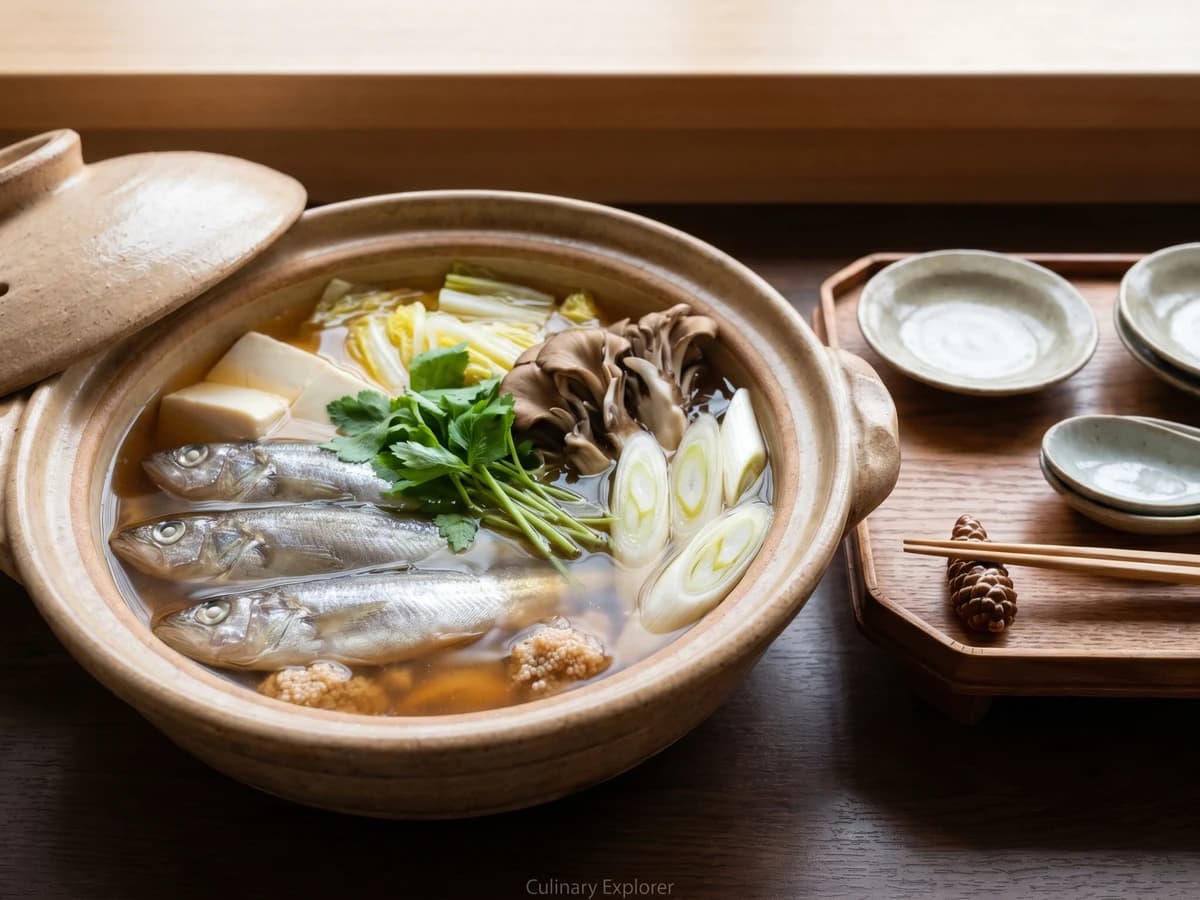
Shottsuru nabe is Akita winter in one pot: clean dashi, hatahata at shun, tofu and napa cabbage carrying a salt-deep broth without anything heavy enough to hide the fish.