
Chef Takumi
Abura Soba (油そば, brothless ramen)
Abura soba is ramen without the hiding place of soup: hot noodles, strong shōyu tare, fragrant oil, and the discipline to mix while every strand is still hot.
A cooking platform built around craft, culture, and the stories behind what we eat.

Created by
Kamigata ozōni is the gentle Kansai New Year bowl: round mochi, winter roots, and white miso folded into dashi so softly the broth stays sweet, pale, and calm.
Round mochi is the first instruction in Kamigata ozōni. It tells you not to chase toast or smoke, but to boil the rice cake until it softens and rests quietly in sweet white miso. The bowl appears at New Year, so people make it sound solemn. In the hand, it is gentler than that: dashi, winter roots, white miso, mochi.
The detail that decides it is heat. White miso has a soft sweetness that turns dull and salty if it boils, so we cook the satoimo, daikon, and carrot first, then dissolve the miso off the boil. This is honmono, the real thing, in its plain clothes: heat held back so the broth stays pale, rounded, and kind, with konbu and katsuobushi doing their work underneath.
Choose the vegetables as though they have to stand in a nearly bare room, because they do. Firm satoimo, juicy daikon, a carrot with real sweetness, all cut round if you can. A flower cutter is pleasant, but a plain circle is already speaking the language of the dish. Mochi, root, bowl, the year beginning again: leave it room.
Kamigata was the Edo-period name for the Kyoto-Osaka cultural region, the older courtly center west of Edo. Its ozōni is marked by round mochi and a sweet white-miso broth, while Edo and later Tokyo came to favor square cut mochi in a clear soy-seasoned soup, a contrast often linked to the efficiency of cutting sheet mochi for a crowded city. In many Kansai households, daikon, carrot, and satoimo are cut round as well, echoing the mochi's shape and the New Year wish for completeness.
Quantity
5 cups
Quantity
1 piece (about 10g)
Quantity
20g
Quantity
3
soaked overnight; use instead of katsuobushi for meatless dashi
Quantity
4 small (about 300g total)
peeled and trimmed
Quantity
1 teaspoon
for rubbing the satoimo
Quantity
4 thin rounds
peeled, about 1/4 inch thick
Quantity
1 small
peeled and sliced into 4 rounds
Quantity
4 pieces
Quantity
as needed
for boiling the mochi
Quantity
150 to 180g
preferably Saikyō-style
Quantity
4 thin strips
Quantity
small pinch per bowl
| Ingredient | Quantity |
|---|---|
| cold water | 5 cups |
| konbu (dried kelp) | 1 piece (about 10g) |
| katsuobushi (bonito flakes) | 20g |
| dried shiitake (optional)soaked overnight; use instead of katsuobushi for meatless dashi | 3 |
| satoimo (Japanese taro)peeled and trimmed | 4 small (about 300g total) |
| sea saltfor rubbing the satoimo | 1 teaspoon |
| daikonpeeled, about 1/4 inch thick | 4 thin rounds |
| Kintoki carrot or regular carrotpeeled and sliced into 4 rounds | 1 small |
| round mochi (maru mochi) | 4 pieces |
| plain waterfor boiling the mochi | as needed |
| sweet white miso (shiro miso)preferably Saikyō-style | 150 to 180g |
| yuzu peel (optional) | 4 thin strips |
| katsuobushi shavings (optional) | small pinch per bowl |
Wipe the konbu with a damp cloth, but don't wash it. Put it in 5 cups cold water and warm it slowly over low heat, 12 to 15 minutes, until the water trembles and small bubbles climb the sides. Lift the konbu out before the water boils. The pale bloom on the kelp is flavor, and a hard boil pulls bitterness and slipperiness into the dashi.
Bring the konbu dashi to a gentle boil, add the katsuobushi all at once, and take the pot off the heat. Let the flakes sink on their own, 2 to 3 minutes, then strain through a cloth-lined sieve. Do not stir and do not squeeze. Stirring and squeezing press strong, oily flavors into the stock, and even under white miso that heaviness shows.
Peel the satoimo and trim any dark spots. Rub them with the salt, rinse, then parboil in plain water for 3 minutes and rinse again. This removes the slippery surface starch that would muddy the pale broth. Cut the daikon and carrot into rounds about 1/4 inch thick; bevel the edges if you want them neat, because softened edges keep the pieces from breaking.
Return 4 cups of the strained dashi to a clean pot, adding a little water if needed to make the amount. Add the satoimo, daikon, and carrot and simmer gently until a skewer slips through the satoimo, 10 to 14 minutes. Keep the liquid quiet. The vegetables should sweeten and soften without knocking each other into ragged edges.
While the vegetables simmer, bring a small saucepan of plain water to a gentle boil. Add the round mochi and cook until soft and slightly swollen, 2 to 3 minutes for fresh mochi or 5 to 7 for firm packaged mochi. Lift each piece with a wet spoon. Boiling the mochi separately keeps loose rice starch out of the soup, and the soft, pale mochi is the Kamigata character here.
Lower the soup to the barest heat, or take it off the burner. Put the white miso in a miso koshi, a small miso strainer, or a bowl, loosen it with a ladleful of hot dashi, and stir it back into the pot. Do not boil after the miso goes in. Sweet white miso is fragrant and rounded when treated gently; boiling makes it sharper, duller, and a little grainy.
Warm four lacquer soup bowls or deep bowls with hot water, then empty and dry them. Set one mochi in each bowl, place the satoimo, daikon, and carrot around it, and ladle over the white-miso broth. Finish with yuzu peel and, if your table is not meatless, a small pinch of katsuobushi shavings. Serve at once, while the mochi is yielding and the surface still looks calm.
1 serving (about 330g)
Culinary guides, cultural storytelling, and the editorial depth that makes cooking meaningful.
Discover Culinary ExplorerChef Takumi
Abura soba is ramen without the hiding place of soup: hot noodles, strong shōyu tare, fragrant oil, and the discipline to mix while every strand is still hot.
Chef Takumi
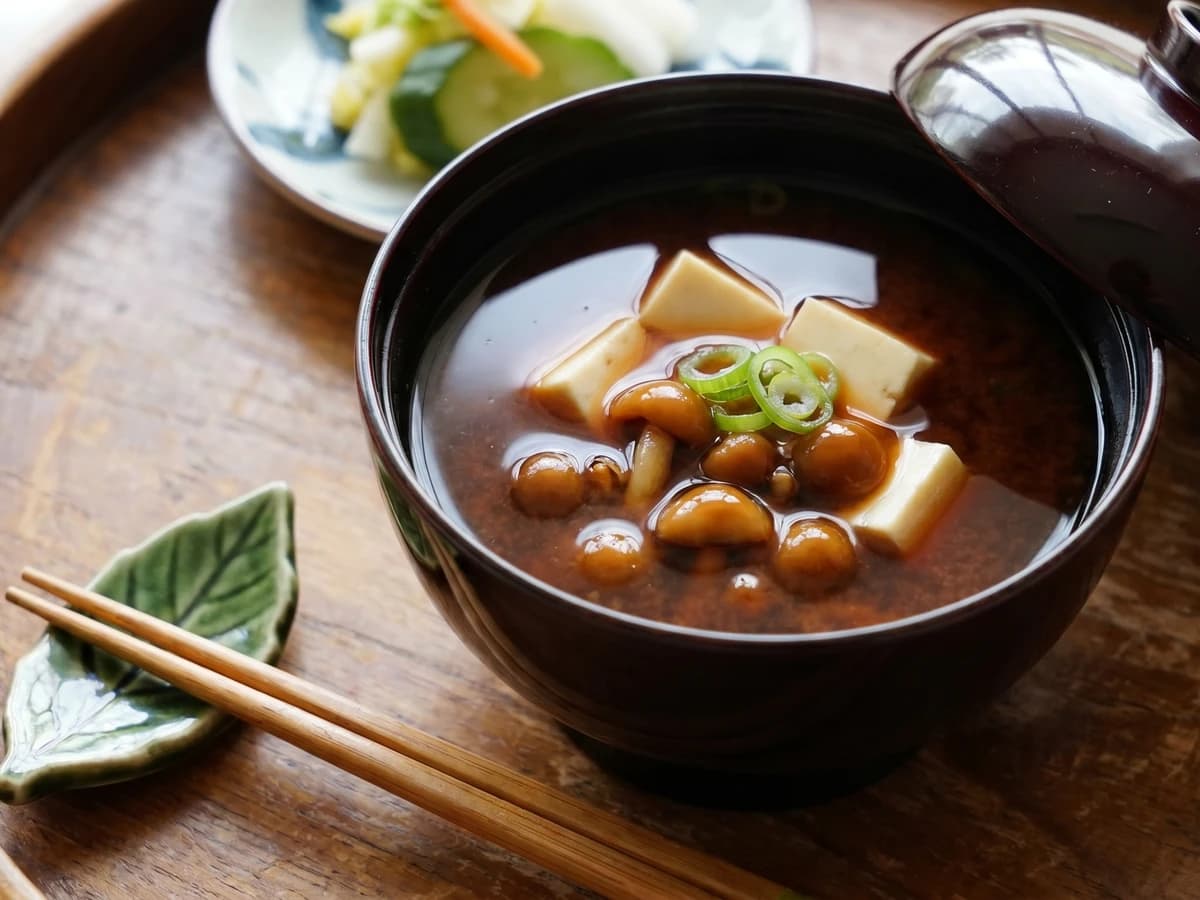
Akadashi asks you to trust the dark miso. Build a clear dashi, loosen the Hatchō mame-miso gently, and the soup turns coffee-dark, savory, and clean.

Chef Takumi
Toast the rice until its skin is firm, then let it meet chicken broth, burdock, maitake, and seri. The pot looks grand, but the work is rice, broth, and patience.
Chef Takumi
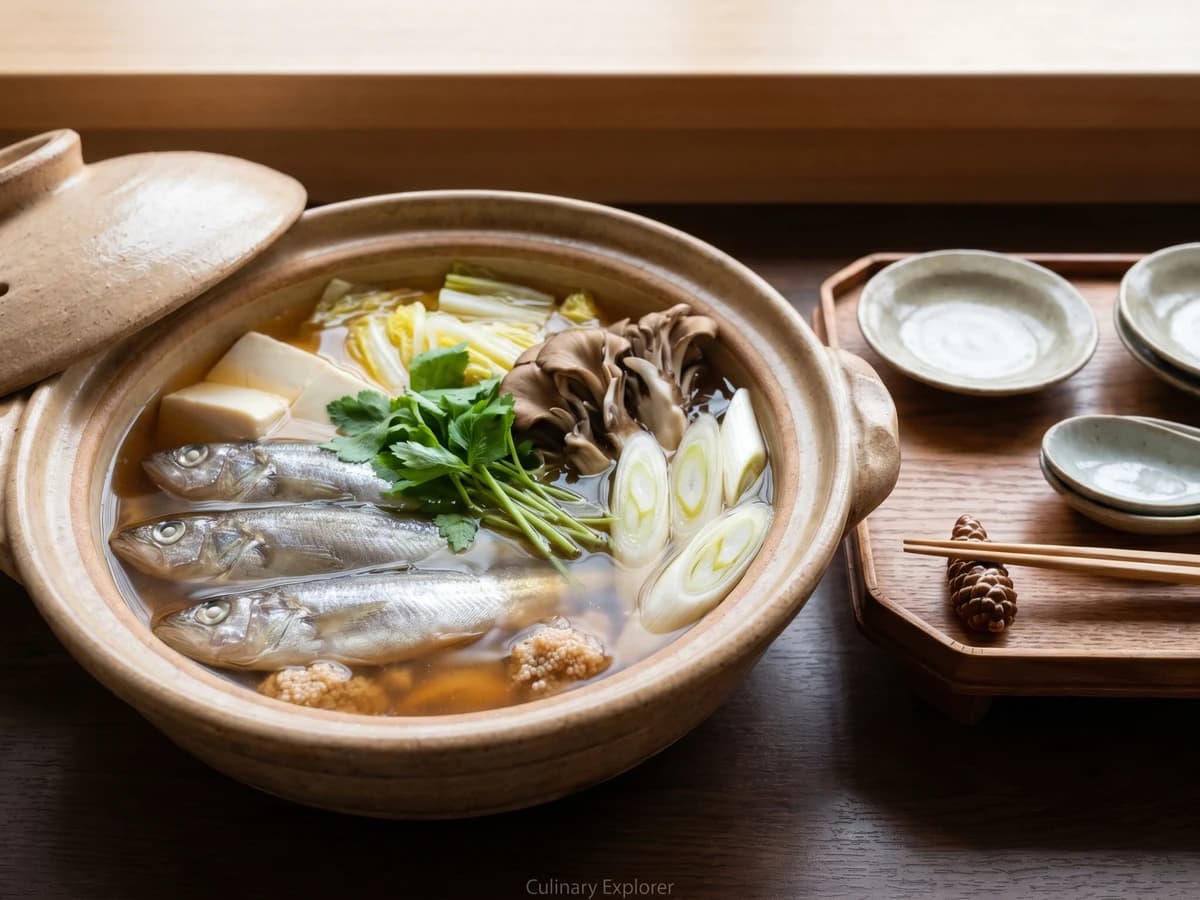
Shottsuru nabe is Akita winter in one pot: clean dashi, hatahata at shun, tofu and napa cabbage carrying a salt-deep broth without anything heavy enough to hide the fish.