
Chef Takumi
Aji Fry (アジフライ, panko-fried horse mackerel)
Aji fry is weeknight fish with no mystery: fresh horse mackerel opened cleanly, breaded lightly, and fried until the panko crackles while the flesh stays sweet.
A cooking platform built around craft, culture, and the stories behind what we eat.

Created by
A winter pot of chicken thigh and daikon, simmered gently under a drop-lid until the radish turns clear at the edges and the broth tastes deeper than its few ingredients.
Daikon tells you the season before the pot does. In its cold-weather shun, a good one feels heavy, cuts wet and clean, and sweetens as it simmers; outside that season it can be peppery, so we treat it plainly and don't pretend. This dish is not elaborate: chicken thigh, daikon, dashi, soy, and time under a lid that knows how to sit still.
The detail that decides it is not the chicken. It is the daikon. Peel it thickly past the fibrous ring, cut it into pieces large enough to stay itself, and simmer it gently until the white turns translucent at the edges. Rush that and you get radish wearing sauce. Give it time and the broth moves inward, the chicken fat and dashi meeting in the center.
This is nimono, simmered food, one of the ways we build a meal by method, not the menu. The otoshibuta, the drop-lid, is a small thing with a large opinion: it keeps the pieces just under the broth so you don't stir and break them. A circle of parchment will do the job. Serve it with rice and miso soup, leave the bowl some empty space, and let the quiet food be quiet.
Nimono is an old method category rather than a single dish; Ryōri Monogatari, first printed in 1643, records simmered preparations among its practical sections on fish, birds, and vegetables. Daikon became one of the defining winter vegetables of the Edo table, with regional strains such as Nerima daikon valued for pickling and cooking. Pairing chicken with daikon follows the household logic of nimono: a modest amount of poultry enriches dashi, and the root vegetable carries that flavor back to the rice.
Quantity
1 piece (about 8g)
Quantity
15g
Quantity
3 cups
Quantity
700g
peeled thickly and cut into 1-inch half-moons
Quantity
600g
cut into 2-inch pieces
Quantity
1 teaspoon
Quantity
1/3 cup
Quantity
2 tablespoons
Quantity
1 tablespoon
Quantity
3 tablespoons
divided
Quantity
3 thin slices
Quantity
1/2 teaspoon
Quantity
1 tablespoon
Quantity
thin strips
| Ingredient | Quantity |
|---|---|
| konbu (dried kelp) | 1 piece (about 8g) |
| katsuobushi (bonito flakes) | 15g |
| cold water | 3 cups |
| daikonpeeled thickly and cut into 1-inch half-moons | 700g |
| boneless skin-on chicken thighscut into 2-inch pieces | 600g |
| neutral oil | 1 teaspoon |
| sake | 1/3 cup |
| mirin | 2 tablespoons |
| sugar | 1 tablespoon |
| shōyu (Japanese soy sauce)divided | 3 tablespoons |
| fresh ginger | 3 thin slices |
| sea salt (optional) | 1/2 teaspoon |
| blanched daikon greens or thinly sliced scallion (optional) | 1 tablespoon |
| yuzu peel (optional) | thin strips |
Wipe the konbu with a damp cloth, but don't wash it. The pale bloom on the surface isn't dirt, it's flavor. Put the konbu in the cold water and bring it up slowly over low heat, about ten minutes. Pull it the moment the water trembles and small bubbles climb the sides of the pot.
Bring the water to a gentle boil, add the katsuobushi all at once, and take the pot off the heat. Leave it alone until the flakes sink, two or three minutes. Strain through a cloth or fine-mesh strainer and let it drip by itself. Don't squeeze, or the strong, oily taste of the flakes clouds the clean stock you just made. Measure out 2 1/2 cups dashi for the simmering broth.
Peel the daikon thickly, until the faint fibrous ring under the skin is gone, then cut it into 1-inch half-moons. If you like neat pieces, shave the sharp edges lightly with the knife. Those corners break first in the pot, and a small trim keeps the broth clear and the pieces handsome.
Pat the chicken dry. Warm the oil in a wide heavy pot over medium heat, then set the chicken skin-side down and brown it lightly, three or four minutes. Turn it once and remove it to a plate. You want the skin to give the pot some flavor, not a hard crust that would make the broth taste heavy.
Spoon off excess fat, leaving about a teaspoon in the pot. Add the daikon, the 2 1/2 cups dashi, sake, mirin, sugar, and ginger. Bring it to a quiet simmer and skim any foam. The sweetness goes in before most of the soy because daikon takes seasoning slowly, and you want depth through the piece, not salt sitting on the surface.
Return the chicken to the pot, skin-side up where you can. Add 2 tablespoons of the shōyu. Lay an otoshibuta, a wooden drop-lid, directly on the food; a circle of parchment with a small center hole works well. Simmer gently for 25 minutes. The lid keeps the broth moving over the top of the pieces so you don't have to stir and damage them.
Add the remaining 1 tablespoon shōyu and simmer 10 to 15 minutes more, still gentle, until the daikon is translucent at the edges and a skewer slides through without resistance. The chicken should be tender enough to part with chopsticks. Taste the broth only at the end; add a little salt if it needs focus, not more soy if the aroma is already there.
Turn off the heat and let the pot rest for at least 15 minutes. This is when the daikon drinks. Lift the chicken and daikon into shallow bowls, spoon over a little broth, and finish with daikon greens or scallion and a few threads of yuzu peel if you have them. Serve with rice.
1 serving (about 375g)
Culinary guides, cultural storytelling, and the editorial depth that makes cooking meaningful.
Discover Culinary ExplorerChef Takumi
Aji fry is weeknight fish with no mystery: fresh horse mackerel opened cleanly, breaded lightly, and fried until the panko crackles while the flesh stays sweet.
Chef Takumi
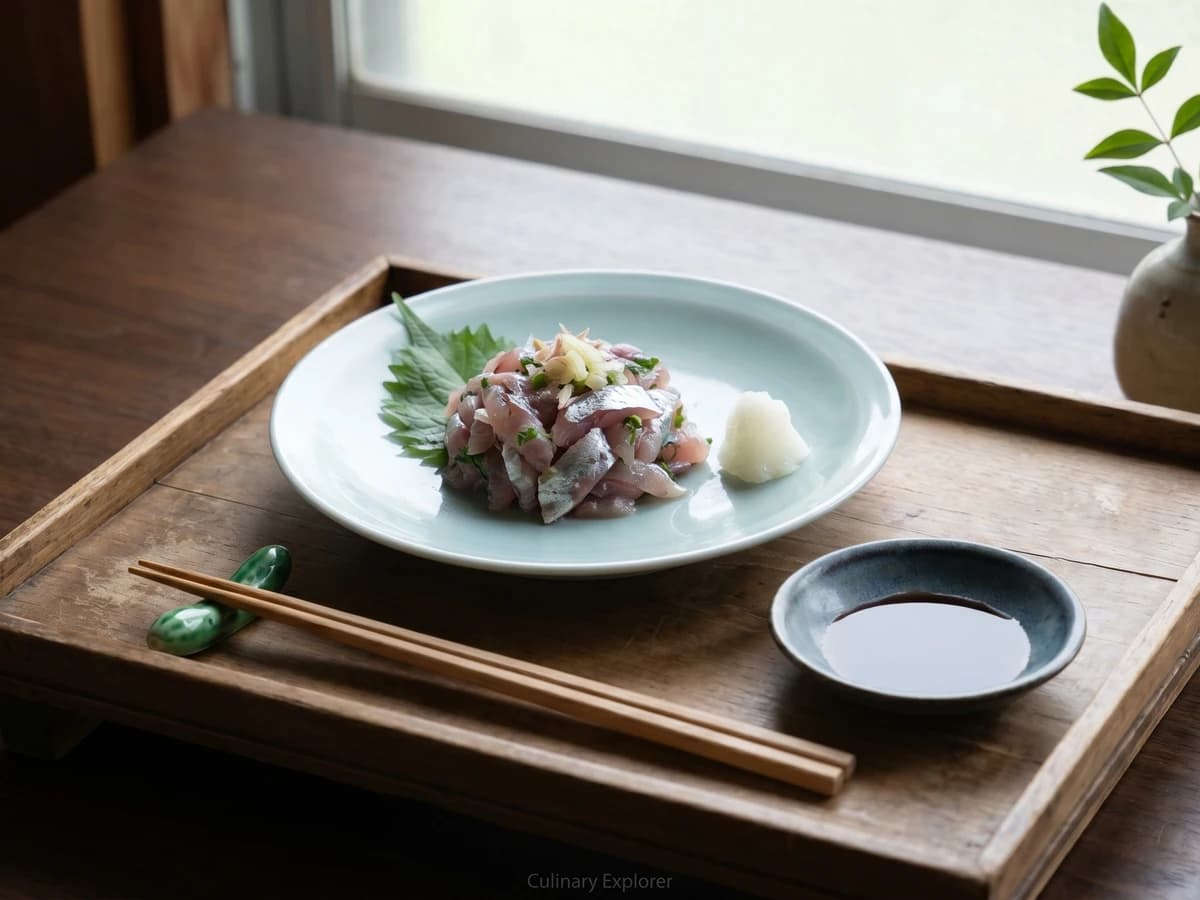
Summer horse mackerel, chopped just enough to catch ginger and scallion, becomes a cool, clean main dish with rice. The secret is fresh fish and a knife that does not bruise it.
Chef Takumi
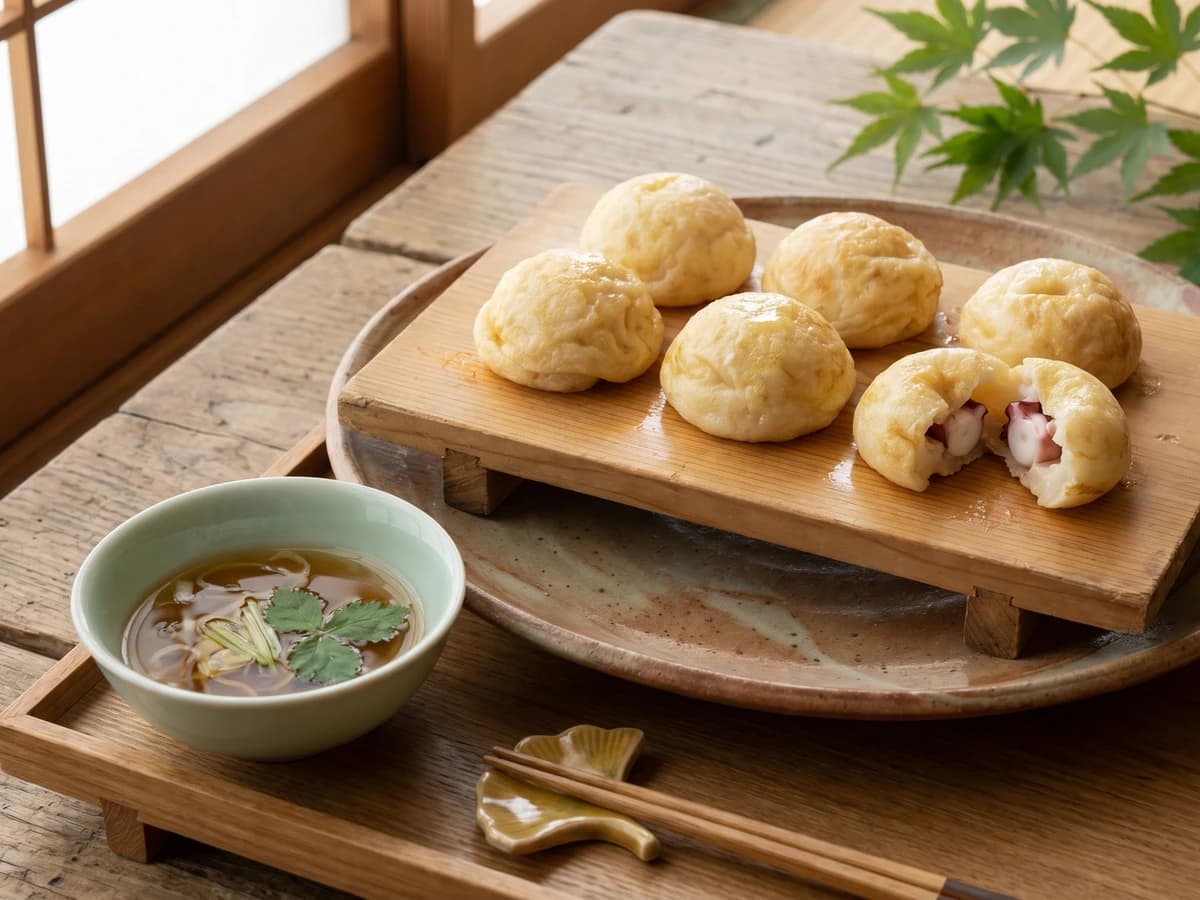
Akashi-yaki is not sauced takoyaki. It is egg-rich batter, tender octopus, and clear dashi, cooked pale and soft so each ball can be dipped like a small custard dumpling.

Chef Takumi
A whole anago looks like a test of nerve. It is mostly good sourcing, a dry skin, cold batter, and oil hot enough to leave the eel sweet under its lace.