
Chef Takumi
Aji Fry (アジフライ, panko-fried horse mackerel)
Aji fry is weeknight fish with no mystery: fresh horse mackerel opened cleanly, breaded lightly, and fried until the panko crackles while the flesh stays sweet.
A cooking platform built around craft, culture, and the stories behind what we eat.
Created by
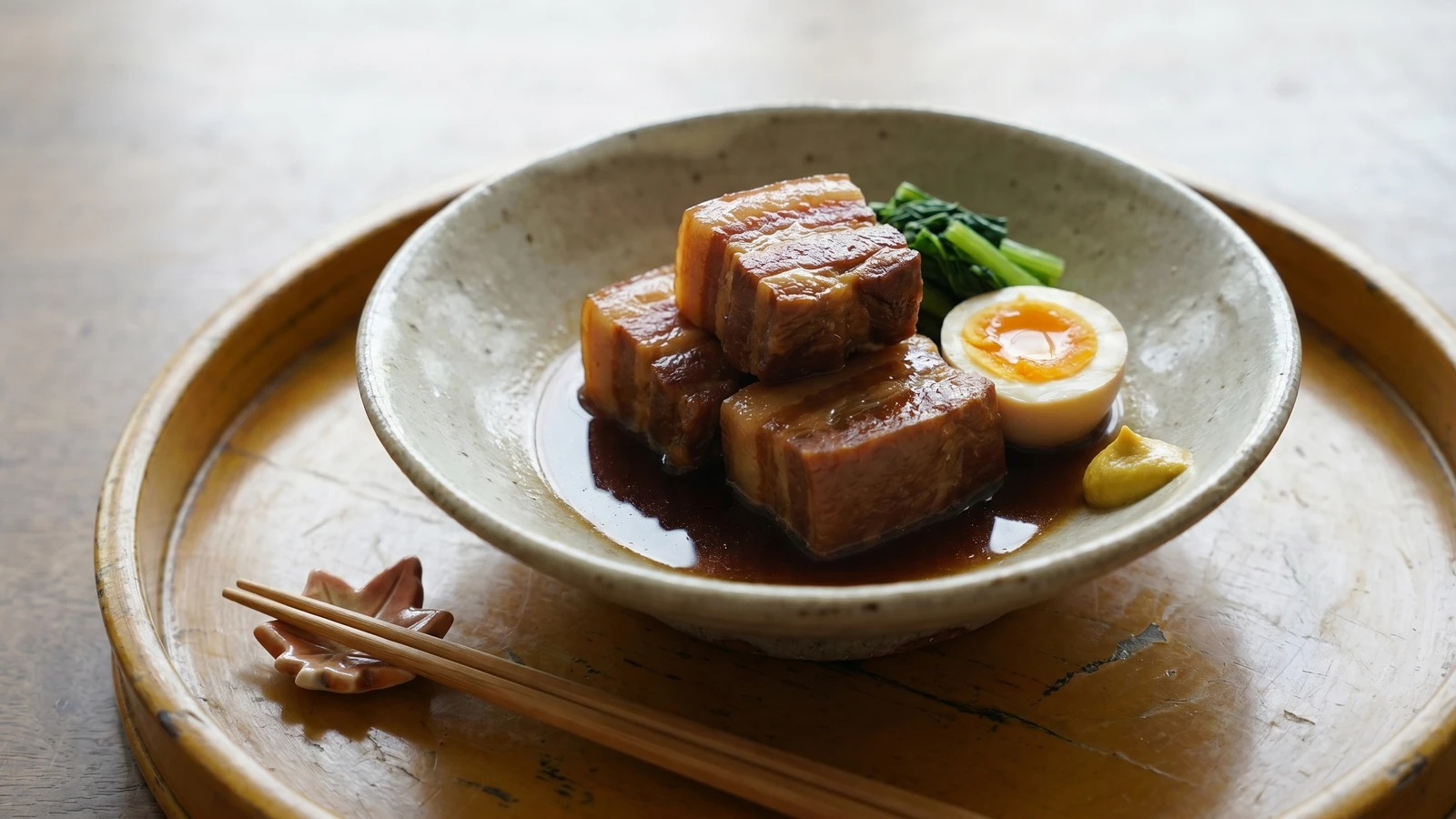
Kakuni looks like a long, stern dish. It isn't. Boil the pork first, simmer it slowly, and the belly turns tender, glossy, and clean-tasting.
Pork belly frightens people because it looks like excess given a square shape. Kakuni answers by taking its time. First we boil the pork, then we season it, and that order is the whole dish.
The first simmer is not for flavor. It draws out blood, dull porkiness, and some surface fat so the finished pieces taste clean, not heavy. Only after that do we let the belly meet dashi, sake, soy sauce, sugar, and ginger. If you season too early, the soy tightens the meat before the fat has softened. A chopstick should slide through without a little argument from the pork. That is how you know.
This is nimono, a simmered dish, but a generous one: soy-dark, glossy, and quiet enough to sit beside rice without bullying the table. Make it ahead if you can. Like many simmered dishes, kakuni improves while it rests, because the seasoning settles into the meat after the flame has done its work. Honmono here is not difficult, only patient.
Buta no kakuni is strongly associated with Nagasaki, where Chinese foodways entered Japan through the port during the Edo period and helped shape the local shippoku banquet style. The dish is often linked to Chinese red-cooked pork, but in Japan it became a simmered washoku dish seasoned with soy sauce, sake or shochu, sugar, and aromatics. Okinawa has a close cousin, rafute, traditionally simmered with awamori and served in the Ryukyuan court tradition.
Quantity
900g
skinless or skin-on, cut into 2-inch cubes
Quantity
1 tablespoon
Quantity
4 cups, plus more for parboiling
Quantity
1 cup
Quantity
1 cup
Quantity
1/2 cup
Quantity
3 tablespoons
Quantity
2 tablespoons
Quantity
1 thumb-size piece
sliced
Quantity
1 long onion or 2 scallions
green parts only
Quantity
4
peeled
Quantity
for serving
blanched
Quantity
for serving
| Ingredient | Quantity |
|---|---|
| pork belly slabskinless or skin-on, cut into 2-inch cubes | 900g |
| neutral oil | 1 tablespoon |
| water | 4 cups, plus more for parboiling |
| dashi | 1 cup |
| sake | 1 cup |
| soy sauce | 1/2 cup |
| sugar | 3 tablespoons |
| mirin | 2 tablespoons |
| fresh gingersliced | 1 thumb-size piece |
| Japanese long onion or scallionsgreen parts only | 1 long onion or 2 scallions |
| soft-boiled eggs (optional)peeled | 4 |
| spinach or komatsuna (optional)blanched | for serving |
| karashi mustard (optional) | for serving |
Cut the pork belly into large cubes, about two inches across. Pat them dry, then brown them lightly in the oil on the fat sides. You are not trying to build a hard crust. A little color gives aroma, and rendering some surface fat now keeps the final broth cleaner.
Put the browned pork in a clean pot and cover it with fresh water by an inch. Add the onion greens and half the ginger. Bring it to a boil, skim the gray foam, then lower the heat and simmer gently for 1 1/2 hours. This first cooking softens the fat and pulls out heaviness before any soy sauce enters the pot.
Lift the pork out carefully and rinse each piece under warm water to remove clinging scum. Strain and save 1 cup of the pork cooking liquid if it tastes clean, or use water if it tastes dull. Let the pieces rest a few minutes so they firm enough to handle without breaking.
In a wide pot, combine the dashi, sake, saved pork cooking liquid or water, soy sauce, sugar, mirin, and remaining ginger. Bring it just to a simmer and taste. It should be stronger than soup, because the pork will drink it slowly and the fat will soften its edge.
Return the pork to the pot in a single layer. Set a wooden drop-lid, otoshibuta, directly on the surface, or use a round of parchment with a small hole in the center. Simmer very gently for 60 to 75 minutes, turning the pieces once or twice. The drop-lid keeps the seasoning moving over the pork without rough stirring, so the cubes stay whole.
If using eggs, add the peeled soft-boiled eggs during the last 10 minutes, rolling them gently in the broth. Ten minutes is enough to stain and season the whites. Longer, and the yolks lose their softness, which is a poor trade.
Turn off the heat and let the pork rest in the broth at least 30 minutes, or cool it completely and refrigerate overnight. Skim the firm fat from the surface if chilled. Rewarm gently before serving, spooning the glossy broth over the pork until it shines. Serve with blanched greens and a small dab of karashi if you like.
1 serving (about 310g)
Culinary guides, cultural storytelling, and the editorial depth that makes cooking meaningful.
Discover Culinary ExplorerChef Takumi
Aji fry is weeknight fish with no mystery: fresh horse mackerel opened cleanly, breaded lightly, and fried until the panko crackles while the flesh stays sweet.
Chef Takumi
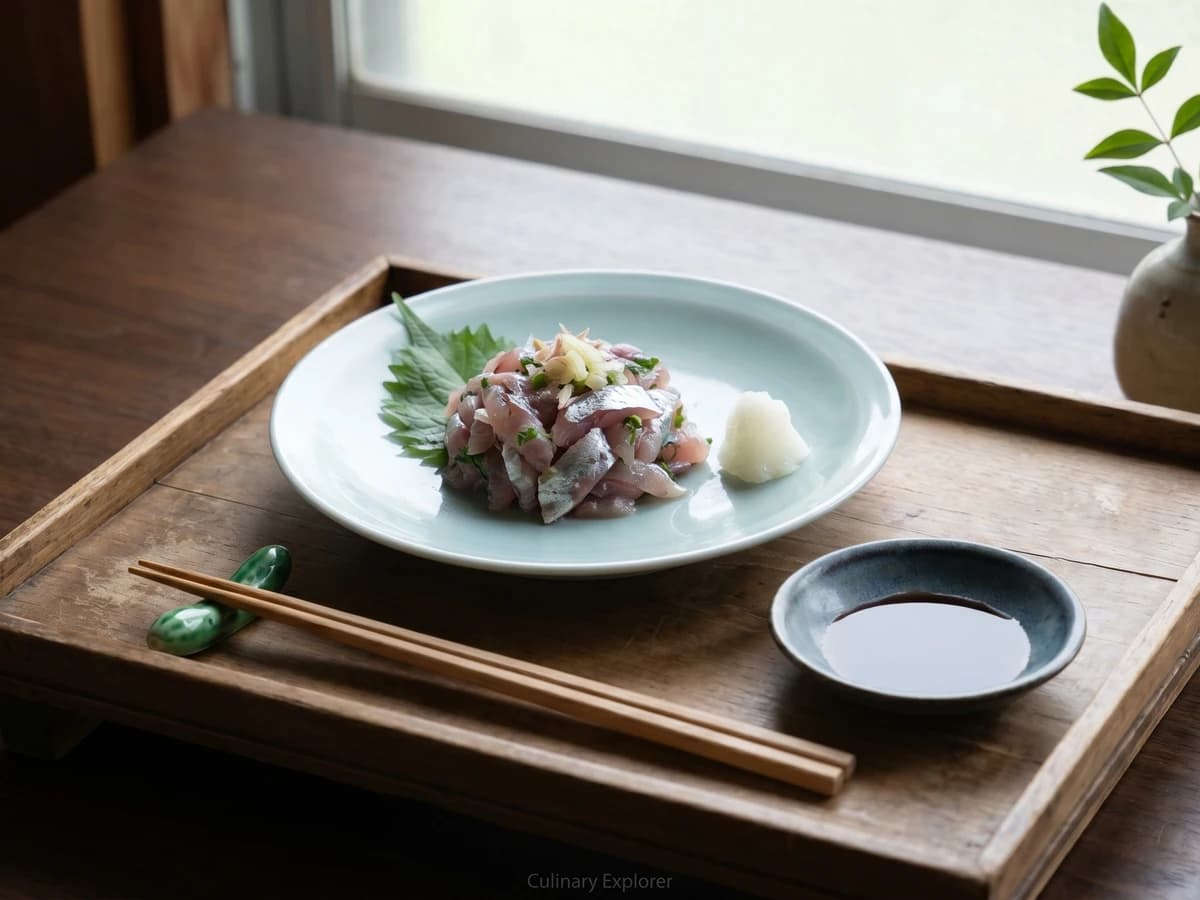
Summer horse mackerel, chopped just enough to catch ginger and scallion, becomes a cool, clean main dish with rice. The secret is fresh fish and a knife that does not bruise it.
Chef Takumi
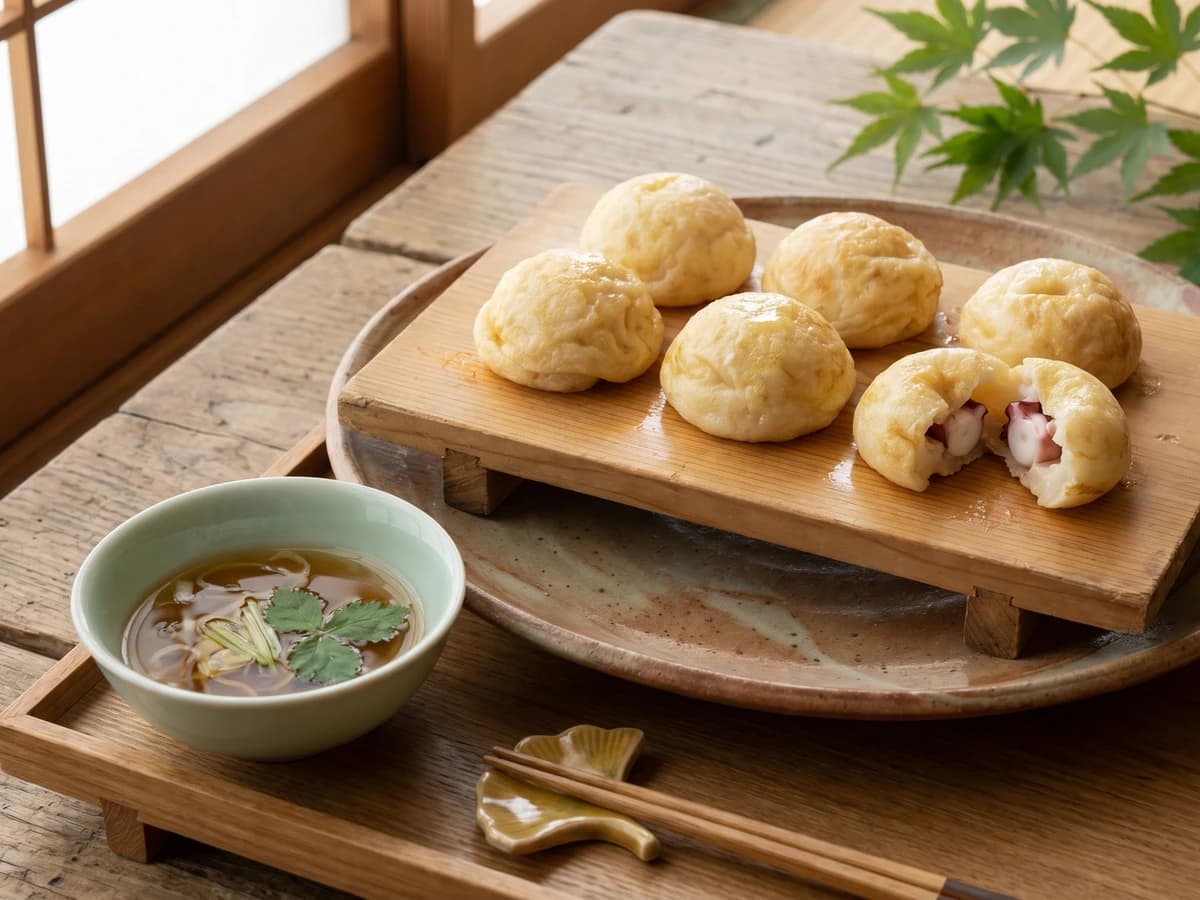
Akashi-yaki is not sauced takoyaki. It is egg-rich batter, tender octopus, and clear dashi, cooked pale and soft so each ball can be dipped like a small custard dumpling.

Chef Takumi
A whole anago looks like a test of nerve. It is mostly good sourcing, a dry skin, cold batter, and oil hot enough to leave the eel sweet under its lace.