
Chef Takumi
Braised Pork Belly (豚の角煮, Buta no Kakuni)
Kakuni looks like a long, stern dish. It isn't. Boil the pork first, simmer it slowly, and the belly turns tender, glossy, and clean-tasting.
A cooking platform built around craft, culture, and the stories behind what we eat.
Created by
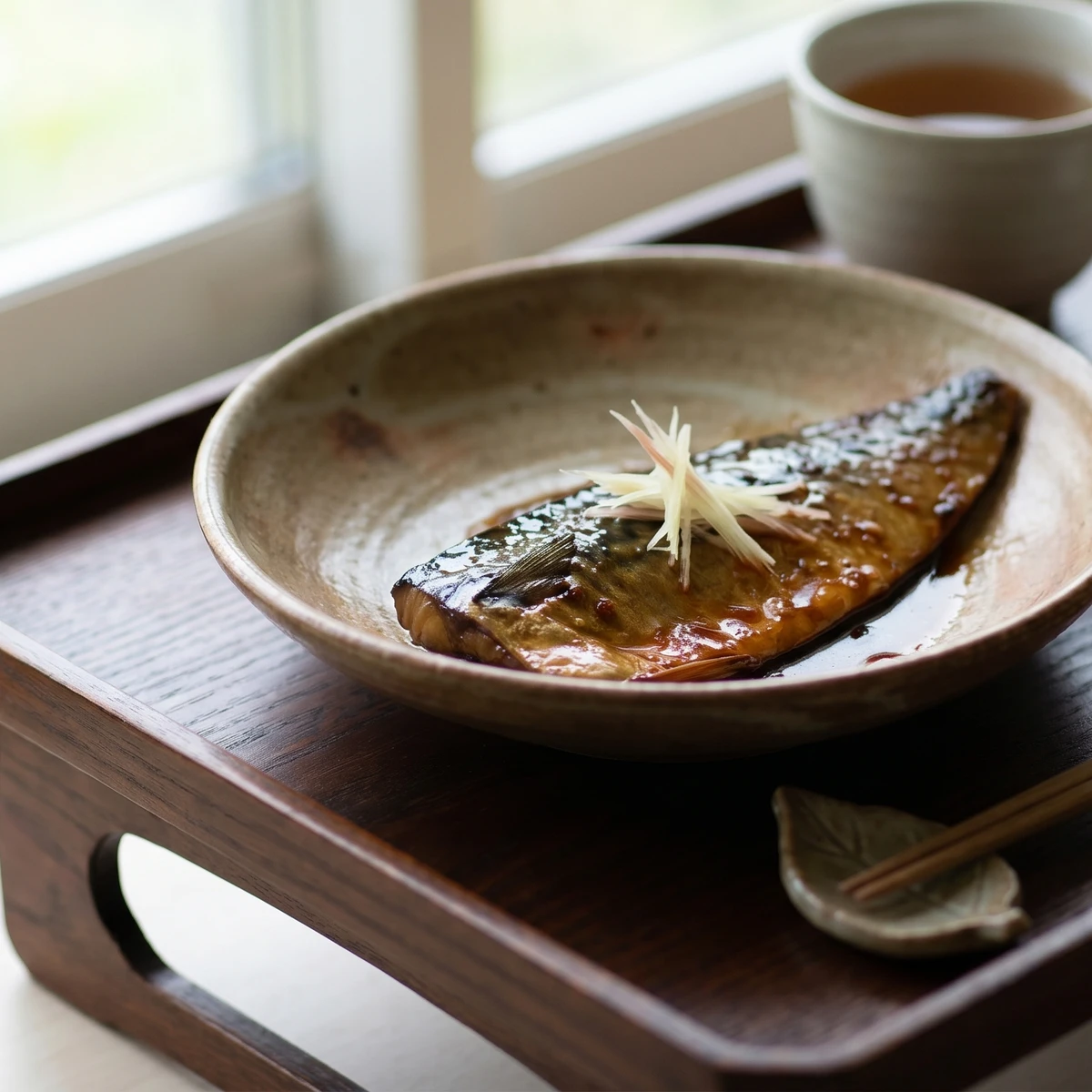
A strong fish, treated honestly: salt, rinse, simmer gently, then let red miso thicken around it until the sauce clings dark and glossy.
Mackerel makes some cooks nervous. It has a voice of its own, and if the fish is tired, it will tell on you before the pot is warm. That is not a problem to solve with more sauce. Buy saba that is glistening fresh, especially in autumn when it is at its prime, and the dish is already leaning toward success.
The first secret is the salt. A short salting draws out surface moisture and the strong smell that people mistake for the nature of mackerel itself. Rinse it, pat it dry, then pour boiling water over the skin. This tightens the surface and washes away what would muddy the simmering liquid. It sounds fussy only until you do it once. Then it becomes common sense with sleeves rolled up.
After that, the pot is quiet. Sake, dashi, ginger, and a little sweetness soften the fish before the miso goes in, because miso thickens and turns harsh if you boil it hard from the beginning. Add it in two stages: first to season the fish, then at the end to keep the fragrance alive. We are not hiding saba under miso. We are giving a good fish a warm coat and asking it to behave at the table.
Serve it with rice, something green, and perhaps one sharp little pickle. Saba no misoni belongs to the everyday meal, not the ryōtei performance. The method, not the menu, is what matters: clean the fish properly, simmer gently, and stop when the sauce shines.
Saba no misoni became a familiar home and teishoku dish in the modern period, when mackerel was widely available, inexpensive, and well suited to strong seasonings such as miso and ginger. The preparation belongs to nimono, the simmered category of washoku, but it also reflects a practical coastal habit: oily fish are often paired with sake, ginger, and fermented soybean paste to keep their flavor clean. Regional versions vary by miso, with darker aka miso common in eastern Japan and mixed miso used in many home kitchens.
Quantity
4 fillets (about 150g each)
skin on
Quantity
1 teaspoon
for salting the fish
Quantity
as needed
for rinsing the fish
Quantity
1 cup
Quantity
1/2 cup
Quantity
3 tablespoons
Quantity
1 tablespoon
Quantity
2 tablespoons
Quantity
2 tablespoons
Quantity
1 tablespoon
Quantity
30g
thinly sliced
Quantity
1 small knob
cut into fine threads for garnish
| Ingredient | Quantity |
|---|---|
| mackerel filletsskin on | 4 fillets (about 150g each) |
| sea saltfor salting the fish | 1 teaspoon |
| boiling waterfor rinsing the fish | as needed |
| dashi | 1 cup |
| sake | 1/2 cup |
| red miso | 3 tablespoons |
| awase miso or white miso | 1 tablespoon |
| sugar | 2 tablespoons |
| mirin | 2 tablespoons |
| soy sauce | 1 tablespoon |
| fresh gingerthinly sliced | 30g |
| fresh ginger (optional)cut into fine threads for garnish | 1 small knob |
Sprinkle the mackerel lightly on both sides with the sea salt and leave it on a tray for 10 minutes. The salt draws out surface moisture and some of the strong aroma, which gives you a cleaner simmer later. If beads of moisture appear, good. That is the fish letting go of what you don't want.
Rinse the fish quickly under cold water and pat it very dry. Set the fillets skin-side up in a colander and pour boiling water over the skin, just enough to make it tighten and turn slightly opaque. This is shimofuri, a quick hot rinse. It cleans the surface without cooking the fish through, so the broth stays clear instead of fishy.
In a wide shallow pot, combine the dashi, sake, sugar, mirin, soy sauce, and sliced ginger. Bring it to a gentle simmer, stirring so the sugar dissolves. Sake helps soften the aroma of the oily fish, ginger sharpens the broth, and the dashi gives the sauce a quiet base without making it heavy.
Lay the mackerel in the pot skin-side up in a single layer. Spoon the hot broth over the top, then set a wooden drop-lid, or otoshibuta, directly on the fish. A circle of parchment with a small hole in the center works well. Simmer gently for 8 minutes. The drop-lid keeps the fish basted without turning it, and that matters because mackerel flakes if you fuss with it.
Ladle a little hot broth into a bowl and loosen the red miso and awase miso until smooth. Stir about two-thirds of this miso mixture into the pot around the fish, not directly on top of it. Keep the simmer low for 7 to 10 minutes, spooning sauce over the fillets now and then. Miso scorches and turns coarse when boiled hard, so let it thicken quietly.
Remove the drop-lid and add the remaining miso mixture. Spoon the sauce over the fish until it looks glossy and dark and clings lightly to the spoon, 2 to 4 minutes. Taste the sauce. It should be savory, a little sweet, and deep with ginger, not salty enough to bully the rice.
Lift each fillet carefully with a wide spatula and set it in a shallow bowl, skin-side up. Spoon a little sauce around and over it, then place a small tangle of fine ginger threads on top. Serve with hot rice. The rice is not decoration here; it is the quiet partner that makes the miso sauce make sense.
1 serving (about 220g)
Culinary guides, cultural storytelling, and the editorial depth that makes cooking meaningful.
Discover Culinary Explorer
Chef Takumi
Kakuni looks like a long, stern dish. It isn't. Boil the pork first, simmer it slowly, and the belly turns tender, glossy, and clean-tasting.

Chef Takumi
Chikuzenni looks like a pot full of decisions, but the secret is simple: cut each ingredient with care, saute first, then simmer gently until everything tastes like itself.

Chef Takumi
Kanazawa's famous simmered dish is simpler than it looks: good poultry, clear dashi, a light dusting of flour, and wasabi added only at the end.

Chef Takumi
Thin beef, plain tofu, and scallions simmer in a sukiyaki-style broth until the tofu drinks the seasoning and the beef stays tender. Fifteen minutes, no performance.