
Chef Lupita
Aceite de Chiltepin Bajacaliforniano
Baja California's wild chiltepin steeped in olive oil with garlic, orejon, and lime peel, until the oil turns ruby-amber and carries the slow, sneaky burn of the desert coast.
A cooking platform built around craft, culture, and the stories behind what we eat.

Created by
Baja California's sierra en escabeche: Pacific mackerel poached and steeped in cane vinegar, whole garlic, laurel, and chile güero. A pre-refrigeration preservation that became the Lenten staple of every coastal home from Ensenada to San Felipe.
This is Baja California. The long peninsula on the Pacific, where the sierra runs in schools off the coast from Ensenada down to San Felipe and the fishermen come back with more fish than any household can eat fresh. Escabeche is what they did about it. Before refrigeration, vinegar and oil and salt and chile were how you kept the catch alive for another week.
The fish is sierra, Pacific sierra mackerel, Scomberomorus sierra. Not Spanish mackerel, not king mackerel, not whatever the supermarket calls white fish. Sierra has the oily, firm flesh that holds up to vinegar without disintegrating. Lean white fish turns to mush in escabeche. The wrong fish ruins the dish before you start. Si no conoces el mercado, no conoces la cocina.
The chile is güero. The pale yellow-green fresh chile you also call caribe or largo, depending on which side of the border you bought it. Not jalapeño, not serrano. Güero has a thin skin and a mild fruity heat that infuses the vinegar without taking it over. The laurel, the clove, the peppercorn, the garlic, these are the Spanish inheritance of escabeche, a technique the Moors brought to Spain and Spain brought to the Americas. Baja made it its own.
I collected this version from a senora in San Felipe who has made it every Lent for fifty-three years. She wrote nothing down. She told me the vinegar should bite but not burn, the chile should be visible in the jar, and the dish should never be touched for at least one day after it goes in the refrigerator. Recetas probadas y garantizadas. Cada estado, su propia cocina, and this one belongs to Baja.
Escabeche traces to medieval Persian sikbāj, a meat-and-vinegar stew that traveled through Arab kitchens to Al-Andalus, where Spanish cooks adapted it as a preservation method for fish and game. Spanish galleons carried the technique to New Spain in the 16th century, and Mexico's coastal regions, especially the Pacific Northwest, embraced it as a practical solution to the perishability of the daily catch in a hot climate without refrigeration. By the 19th century, sierra en escabeche had become deeply embedded in Baja California's Lenten tradition, when Catholic dietary rules required fish on Fridays and throughout Cuaresma, and the make-ahead nature of escabeche meant a single afternoon of work fed a household for the week.
Quantity
2 pounds
cut into 1-inch steaks with skin on
Quantity
1 tablespoon, plus more for the poaching water
Quantity
1/2 cup
Quantity
1 large
sliced into thin half-moons
Quantity
1
cloves peeled and left whole
Quantity
2 medium
sliced on the bias into 1/4-inch coins
Quantity
6
left whole with a small slit in each
Quantity
1 1/2 cups
Quantity
1/2 cup
Quantity
6
Quantity
1 teaspoon
Quantity
4
Quantity
4
Quantity
1 teaspoon
Quantity
1 teaspoon
Quantity
for serving
Quantity
for serving
Quantity
for serving
| Ingredient | Quantity |
|---|---|
| sierra fish (Pacific sierra mackerel)cut into 1-inch steaks with skin on | 2 pounds |
| kosher salt | 1 tablespoon, plus more for the poaching water |
| olive oil | 1/2 cup |
| white onionsliced into thin half-moons | 1 large |
| head of garliccloves peeled and left whole | 1 |
| carrotssliced on the bias into 1/4-inch coins | 2 medium |
| fresh chile güero (chile caribe or chile largo)left whole with a small slit in each | 6 |
| white vinegar (vinagre blanco de caña) | 1 1/2 cups |
| water | 1/2 cup |
| black peppercorns | 6 |
| dried Mexican oregano | 1 teaspoon |
| whole cloves | 4 |
| bay leaves (laurel) | 4 |
| kosher salt for the escabeche | 1 teaspoon |
| sugar | 1 teaspoon |
| saltine crackers or tostadas (optional) | for serving |
| lime wedges (optional) | for serving |
| sliced avocado (optional) | for serving |
Lay the sierra steaks on a sheet pan and salt both sides with the tablespoon of kosher salt. Let them rest for 15 minutes at room temperature. The salt firms the flesh and starts pulling out the moisture that would otherwise dilute the escabeche. Sierra is an oily fish with a soft texture. Without this step, the steaks fall apart in the vinegar.
Bring a wide pot of salted water to a bare simmer, not a boil. The water should taste like the Pacific. Slide in the sierra steaks and poach for 4 to 5 minutes, just until the flesh turns opaque and pulls away from the central bone. Lift them out gently with a slotted spatula and lay them on a wire rack to drain and cool. Boiling water will tear the fish apart. Bare simmer. No me vengas con atajos.
Heat the olive oil in a wide non-reactive pot over medium. Add the onion, whole garlic cloves, and carrots. Cook for 6 to 8 minutes, stirring, until the onion turns translucent and the garlic just begins to color at the edges. Do not brown the vegetables. Escabeche wants sweetness from the onion, not caramelization. The olive oil is the carrier of every flavor in this dish.
Add the chile güero, peppercorns, oregano, cloves, and bay leaves to the pot. Cook for one more minute until the spices wake up. Pour in the white vinegar and the water. Stir in the salt and sugar. Bring to a simmer and cook for 5 minutes so the vinegar loses its sharp edge and the spices give up their oils. Taste the brine. It should be bright, salty, slightly sweet, with the chile and laurel pulling through.
Arrange the cooled sierra steaks in a wide glass or ceramic dish, or layer them into clean glass jars. Pour the hot escabeche, with all its vegetables and spices, directly over the fish. The brine should cover the steaks completely. If it does not, top up with a little more vinegar and water in the same ratio. Let it cool to room temperature on the counter.
Cover the dish and refrigerate for at least 24 hours before eating. Two days is better. Three days is the sweet spot. The fish gives up its flavor to the vinegar and the vinegar gives back the laurel, the chile, the garlic. You cannot rush this. Escabeche is a dish that teaches patience. Saber cocinar es saber vivir.
Pull the dish out and let it sit on the counter for 15 minutes to take the deep chill off, but serve it cold, not at room temperature. Spoon the sierra and a generous amount of vegetables and brine onto small plates. Eat with saltines or tostadas, a squeeze of lime if you want it, and slices of avocado if you have a good one. In Ensenada and San Felipe this is Lenten food. In any Baja kitchen, it is a make-ahead staple. Asi se hace y punto.
1 serving (about 180g)
Culinary guides, cultural storytelling, and the editorial depth that makes cooking meaningful.
Discover Culinary ExplorerChef Lupita
Baja California's wild chiltepin steeped in olive oil with garlic, orejon, and lime peel, until the oil turns ruby-amber and carries the slow, sneaky burn of the desert coast.

Chef Lupita
Puebla's Lenten convent adobo, a brick-red vinegar chile paste of ancho, guajillo, garlic, oregano, and comino made to dress fish for the meatless calendar.
Chef Lupita
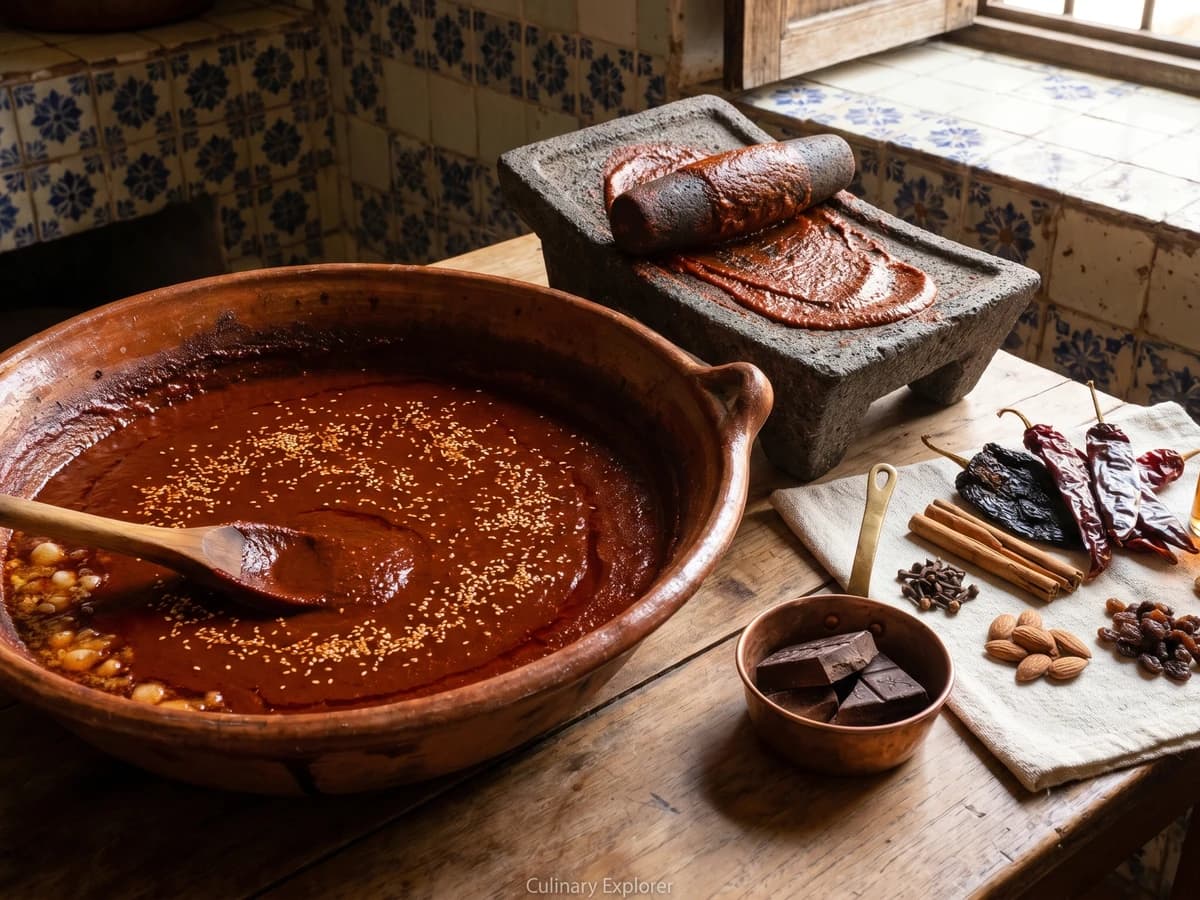
Zacatecas' wedding-table adobo, built from toasted guajillo and ancho, piloncillo, sour orange, chocolate, canela, clavo, almonds, sesame, and lard.

Chef Lupita
Puebla's convent kitchens built this adobo with ancho, guajillo, jerez, almonds, raisins, clove, and lard, a baroque marinade that stains pork loin and finishes as the sauce.