
Chef Lupita
Aceite de Chiltepin Bajacaliforniano
Baja California's wild chiltepin steeped in olive oil with garlic, orejon, and lime peel, until the oil turns ruby-amber and carries the slow, sneaky burn of the desert coast.
A cooking platform built around craft, culture, and the stories behind what we eat.

Created by
Nayarit's brick-red marinade for pescado zarandeado. Toasted guajillo, achiote, naranja agria, and Mexican mayonesa, painted on butterflied fish before the mangrove smoke turns it into the signature dish of Mexcaltitan.
This adobo is from Nayarit. Specifically from the island of Mexcaltitan and the coastal towns of San Blas and Boca de Camichin, where the men still butterfly snapper at dawn and the women still mix this marinade in plastic tubs the size of laundry baskets. Pescado zarandeado is the dish. The adobo is what makes it that dish and not generic grilled fish.
The chiles are guajillo and ancho. Toasted on the comal, soaked in hot water, blended with garlic, achiote, naranja agria, and the trinity of Mexican coastal seasoning: salsa inglesa, salsa Maggi, and soy. People who have not eaten on the Pacific coast think these are foreign additions. They are not. These bottles have lived on marisqueria tables in Mexico since before my mother was born. They belong in this adobo the way lard belongs in tamales.
The mayonesa is the part that surprises people. Yes, mayonesa. Mexican mayonesa with lime, whisked into the chile paste until the whole thing turns into a brick-red lacquer thick enough to paint on with a brush. The mayonesa is what keeps the fish moist over the open fire of mesquite or mangrove wood, and it is what gives pescado zarandeado its caramelized, almost glossy crust. Cada estado, su propia cocina, and this is how Nayarit cooks its fish.
I learned this adobo from a senora named Dona Mercedes in Mexcaltitan in 2014. She was 78 years old and she mixed her adobo in a five-gallon bucket because she made enough for the whole island on Sundays. She did not measure anything. I measured for her, scribbling in my notebook while she stirred. What you have here is her recipe, scaled down and written out, but the proportions are hers. Recetas probadas y garantizadas.
Pescado zarandeado takes its name from the zaranda, a hinged wire basket used to suspend butterflied fish over coals while it is flipped, or zarandeado, throughout the cook. The technique originated among the indigenous fishing communities of the Nayarit coast, particularly on the island of Mexcaltitan, often cited in Mexican folk tradition as the legendary Aztlan from which the Mexica people migrated south in the 12th century. The modern adobo, which incorporates mayonesa alongside the older base of guajillo and achiote, developed in the mid-20th century as bottled Mexican mayonesa became widely available along the Pacific coast, and the inclusion of soy sauce and Maggi reflects the long-standing influence of Asian seasonings on Mexican coastal cooking dating to the Manila galleon trade of the 16th through 19th centuries.
Quantity
8
stemmed and seeded
Quantity
2
stemmed and seeded
Quantity
1
cloves separated and peeled
Quantity
2 tablespoons
Quantity
1/2 cup
or 1/4 cup orange juice plus 1/4 cup lime juice
Quantity
1/2 cup
Quantity
3 tablespoons
Quantity
2 tablespoons
Quantity
1 tablespoon
Quantity
1 tablespoon
Quantity
1 teaspoon
Quantity
1 tablespoon
Quantity
1 teaspoon
Quantity
2 tablespoons
Quantity
1/4 cup
| Ingredient | Quantity |
|---|---|
| dried chile guajillostemmed and seeded | 8 |
| dried chile anchostemmed and seeded | 2 |
| head of garliccloves separated and peeled | 1 |
| achiote paste (recado rojo) | 2 tablespoons |
| fresh naranja agria juiceor 1/4 cup orange juice plus 1/4 cup lime juice | 1/2 cup |
| Mexican mayonesa (McCormick or similar) | 1/2 cup |
| yellow mustard | 3 tablespoons |
| Worcestershire sauce (salsa inglesa) | 2 tablespoons |
| Maggi sauce (salsa Maggi jugo sazonador) | 1 tablespoon |
| dried Mexican oregano | 1 tablespoon |
| ground cumin | 1 teaspoon |
| kosher salt | 1 tablespoon |
| freshly ground black pepper | 1 teaspoon |
| soy sauce | 2 tablespoons |
| white vinegar | 1/4 cup |
Heat a dry comal or heavy skillet over medium. Toast the guajillo and ancho chiles flat, about 20 to 30 seconds per side, pressing them lightly with a spatula. They should puff and turn fragrant, never blacken. The kitchen will smell like the chile section of the Mercado del Mar in Tepic. That smell is the oils releasing. Skip this step and your adobo will taste raw and thin.
Transfer the toasted chiles to a heatproof bowl and cover with hot tap water. Hot, not boiling. Boiling water bruises the skin and turns the adobo bitter. Let them soften for 20 minutes, weighted down with a small plate so they stay submerged. They should be pliable when you pinch them.
Drain the chiles, reserving half a cup of the soaking liquid. Place the chiles in a blender along with the garlic cloves, achiote paste, naranja agria juice, vinegar, soy sauce, Worcestershire, Maggi, mustard, oregano, cumin, salt, and pepper. Blend on high for two full minutes, until you have a deep red-brown paste with no pieces of chile skin visible. Add a spoonful of the reserved soaking liquid only if the blender struggles. You want the consistency of thick yogurt, not soup.
Press the blended adobo through a fine-mesh sieve into a clean bowl, working it with the back of a spoon or a small ladle. Discard the bits of chile skin left in the strainer. This is the difference between a smooth, glossy adobo that paints onto the fish and a chunky one that scorches over the fire. Strain once. It is worth the five minutes.
Whisk the Mexican mayonesa into the strained chile paste until you have a uniform brick-red sauce, glossy and thick enough to coat the back of a spoon. The mayonesa is the Nayarit signature. It keeps the fish moist over the live fire, browns into a lacquer on the flesh, and is the reason pescado zarandeado from Mexcaltitan does not dry out the way grilled fish dries out everywhere else. La mayonesa hace el trabajo que la manteca no puede hacer aqui.
Let the finished adobo sit at room temperature for at least 30 minutes before using, or refrigerate for up to three days. The achiote needs time to bloom into the mayonesa and the chiles need time to settle. Taste it before you paint the fish. It should be salty, faintly sour, deeply red, and assertive. If it tastes shy, add another half teaspoon of salt and a squeeze of lime.
Butterfly a whole fish (red snapper, robalo, or pargo, scaled and gutted, opened from the back so it lies flat with the skin intact). Pat dry with paper towels. Using a brush or your hands, paint a generous layer of adobo on the flesh side first, working it into every crevice. Flip and paint a thinner layer on the skin side. The flesh side faces the fire first in the zaranda, so it takes more adobo. Let the painted fish rest at room temperature for 20 minutes before it hits the grill.
If you have a zaranda, the hinged wire basket used along the Nayarit coast, clamp the fish flesh-side down first. If you do not, use a fish grilling basket. Cook over hot mesquite or mangrove coals, flesh-side down, for six to eight minutes until the adobo has lacquered into a deep red crust. Flip and cook skin-side down for another four to six minutes, until the skin crackles and lifts from the wires. The fish is done when the flesh flakes at the thickest part and the adobo looks like burnished leather. Serve immediately on a banana leaf with lime halves, raw white onion, salsa huichol, and warm hand-pressed corn tortillas.
1 serving (about 95g)
Culinary guides, cultural storytelling, and the editorial depth that makes cooking meaningful.
Discover Culinary ExplorerChef Lupita
Baja California's wild chiltepin steeped in olive oil with garlic, orejon, and lime peel, until the oil turns ruby-amber and carries the slow, sneaky burn of the desert coast.

Chef Lupita
Puebla's Lenten convent adobo, a brick-red vinegar chile paste of ancho, guajillo, garlic, oregano, and comino made to dress fish for the meatless calendar.
Chef Lupita
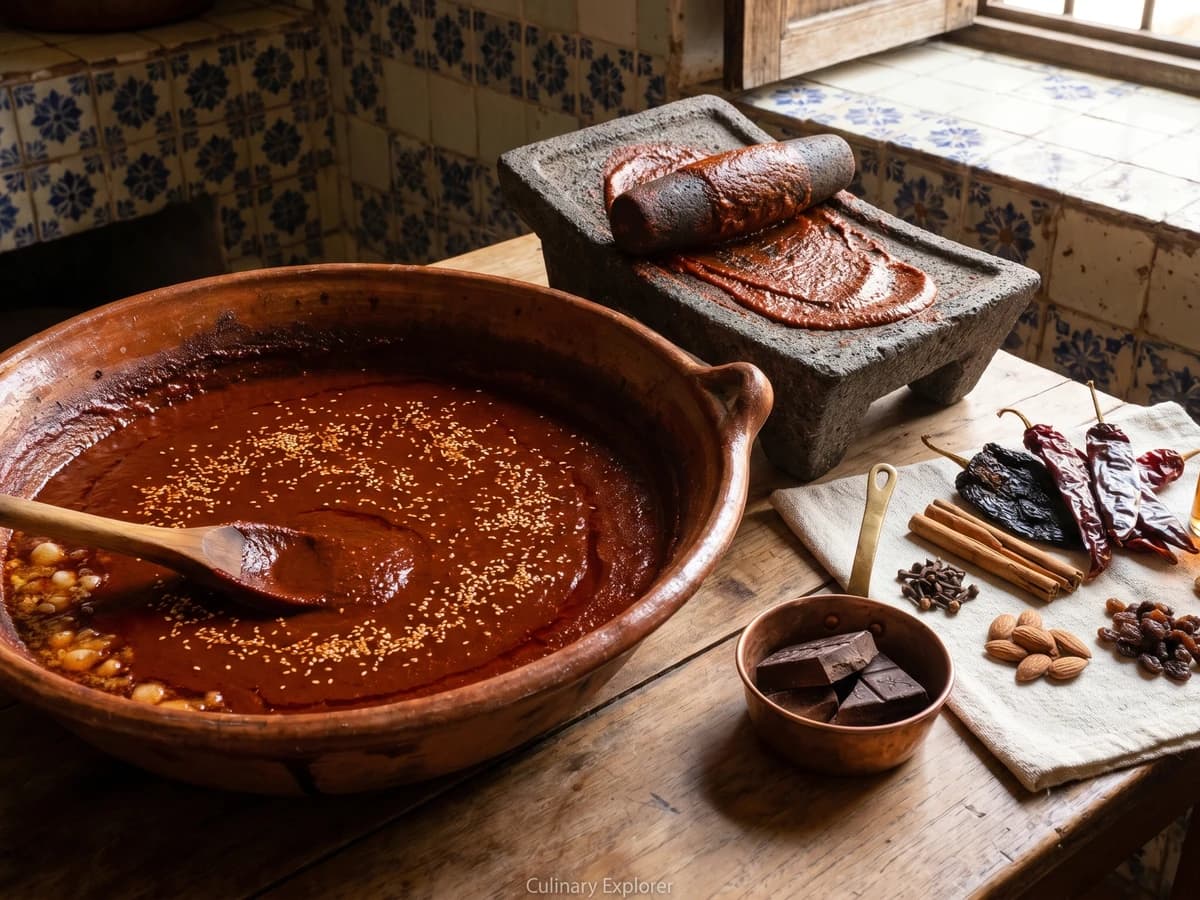
Zacatecas' wedding-table adobo, built from toasted guajillo and ancho, piloncillo, sour orange, chocolate, canela, clavo, almonds, sesame, and lard.

Chef Lupita
Puebla's convent kitchens built this adobo with ancho, guajillo, jerez, almonds, raisins, clove, and lard, a baroque marinade that stains pork loin and finishes as the sauce.