
Chef Lupita
Aceite de Chiltepin Bajacaliforniano
Baja California's wild chiltepin steeped in olive oil with garlic, orejon, and lime peel, until the oil turns ruby-amber and carries the slow, sneaky burn of the desert coast.
A cooking platform built around craft, culture, and the stories behind what we eat.

Created by
Sonora's table jar of wild chiltepines pickled in vinagre blanco with garlic, oregano sonorense, and bay. The condiment every norteno kitchen keeps within arm's reach of the parrilla.
This is from Sonora. The northwest. The desert state where the cattle range stretches to the horizon, the carne asada is cooked over mesquite coals, and a small glass jar of chiltepines en vinagre lives on every dining table within reach of the salt and the limes.
The chiltepin is the mother chile. Botanists call it the wild ancestor of every domesticated chile on earth, and it still grows wild on small bushes in the Sonoran desert and the Sierra Madre foothills outside Hermosillo, Magdalena, Banamichi, and the Rio Sonora valley. The pods are no bigger than a peppercorn. The heat is bright, fast, and clean, gone in thirty seconds, which is why Sonorans can eat them by the spoonful at breakfast and not regret it by lunch. This is not the slow burn of habanero or the smoky depth of chipotle. This is a desert chile and it tastes like the place it grows.
The technique is honest and short. Toast the oregano sonorense, the resinous northern variety that is stronger and more medicinal than the central Mexican kind. Boil the vinagre blanco with salt, sugar, and water. Layer the chiltepines, the garlic, the bay, the peppercorns into a sterilized jar. Pour the hot brine over the top, seal it, and walk away for two weeks. That is the recipe. There is no shortcut and there is no need for one.
My mother was from Jalisco, not Sonora, and she did not keep chiltepines on the table. I learned this jar from a senora in Ures, a small town up the Rio Sonora, who pickled chiltepines every fall when the harvesters came down from the sierra with buckets of fresh pods. She told me her grandmother taught her, and her grandmother had learned from a tia who lived in the ranch country near Yecora. The jar she gave me was older than I was. She refilled it twice a year and had been doing it for forty years. Saber cocinar es saber vivir.
The chiltepin (Capsicum annuum var. glabriusculum) is the wild progenitor of the domesticated chile pepper and is one of the few chiles still harvested almost exclusively from wild plants in Mexico. Sonoran and Tarahumara cooks have preserved chiltepines in vinegar, salt, and rendered fat for centuries, with the pre-Columbian practice predating the introduction of European white vinegar; the vinagre blanco version that defines the modern jar emerged after Spanish viticulture and distilled vinegars arrived in the Noroeste through Jesuit missions in the 17th century. In 1999, the Mexican federal government granted protected status to wild chiltepin harvesting zones in the Sierra de Mazatan, recognizing the cultural and ecological significance of the harvest, which is still done by hand by ejidatario families during a short fall season and remains one of the most expensive chiles in Mexico by weight.
Quantity
1 cup (about 2 ounces)
fresh green or ripe red, or dried whole
Quantity
1 1/2 cups
Quantity
1/2 cup
Quantity
6
peeled and lightly smashed
Quantity
1 tablespoon, dried
Quantity
1 teaspoon
Quantity
2
Quantity
1 tablespoon
Quantity
1 teaspoon
Quantity
1/2 small
sliced into thin half-moons
Quantity
1 small
sliced into thin rounds
| Ingredient | Quantity |
|---|---|
| chiltepinesfresh green or ripe red, or dried whole | 1 cup (about 2 ounces) |
| vinagre blanco (white distilled vinegar, 5% acidity) | 1 1/2 cups |
| water | 1/2 cup |
| garlic clovespeeled and lightly smashed | 6 |
| oregano sonorense (Mexican oregano from the north) | 1 tablespoon, dried |
| black peppercorns | 1 teaspoon |
| bay leaves | 2 |
| sea salt | 1 tablespoon |
| sugar | 1 teaspoon |
| white onionsliced into thin half-moons | 1/2 small |
| carrot (optional)sliced into thin rounds | 1 small |
The chiltepin is a wild chile that grows on small bushes in the Sonoran desert and the foothills of the Sierra Madre Occidental. It is harvested by hand, one tiny pea-sized pod at a time, mostly by women and families in ranching communities outside Hermosillo, Magdalena, and Yecora. That is why it costs what it costs. If you have access to fresh green or red chiltepines from a Sonoran source, use them. If not, dried whole chiltepines from a serious mercado or a Sonoran specialty importer are the right ingredient. No me vengas con atajos. Pequin and bird chiles are not chiltepin and they do not taste the same.
Wash a 16-ounce glass jar and its lid in hot soapy water. Rinse well. Place the jar and lid in a pot, cover with water, and bring to a boil for 10 minutes. Lift them out with tongs and set them upside down on a clean towel to dry. A properly sterilized jar is what makes this a shelf-stable preserve and not a refrigerator project. Asi se hace y punto.
Heat a dry comal or small cast iron skillet over medium-low. Add the peppercorns, bay leaves, and oregano sonorense. Toast for about a minute, shaking the pan, until the oregano releases its scent. Sonoran oregano is stronger and more resinous than the central Mexican variety. You will smell the difference. Pull it off the heat before anything darkens. Toasted, not burned.
While the jar is still warm, layer in the chiltepines, garlic, onion, and carrot if using. Scatter the toasted oregano, peppercorns, and bay leaves throughout. Do not pack the jar so tight that the vinegar cannot circulate. The chiles need room to swim. Pequena cosa, gran sabor.
Combine the vinagre blanco, water, salt, and sugar in a small saucepan. Bring to a hard boil over medium-high heat, stirring once to dissolve the salt and sugar. Let it boil for one full minute. The boil is not decoration. It kills off anything on the rim of the jar and it lets the vinegar penetrate the chiles. A cold brine gives you a weak pickle that turns cloudy in a week.
Pour the boiling brine over the chiltepines, all the way to the top, covering everything by at least a quarter inch. Tap the jar gently on the counter to release any trapped air bubbles. Wipe the rim clean with a damp towel. Seal tight with the lid while the brine is still hot. The vacuum forms as the jar cools.
Set the jar on the counter and let it cool to room temperature. You will hear the lid pop down as the seal forms. Then put it in a dark cupboard for at least one week before opening. Two weeks is better. The chiltepines drink the brine, the garlic softens, the oregano marries everything together. Open too soon and the chile tastes raw and the brine tastes harsh. La paciencia es parte de la receta.
This is not a sauce. It is a jar that lives on the table. Spoon a few chiltepines with their brine over frijoles puercos, machaca con huevo, carne asada from the parrilla, caldo de queso, or a bowl of menudo. In Sonora, the jar sits next to the salt, the limes, and the salsa de chile colorado, available to anyone who wants more heat. A few drops of brine on a taco de carne asada is the way norteno cooks finish a plate. Cada estado, su propia cocina, and this jar is Sonora's.
1 serving (about 14g)
Culinary guides, cultural storytelling, and the editorial depth that makes cooking meaningful.
Discover Culinary ExplorerChef Lupita
Baja California's wild chiltepin steeped in olive oil with garlic, orejon, and lime peel, until the oil turns ruby-amber and carries the slow, sneaky burn of the desert coast.

Chef Lupita
Puebla's Lenten convent adobo, a brick-red vinegar chile paste of ancho, guajillo, garlic, oregano, and comino made to dress fish for the meatless calendar.
Chef Lupita
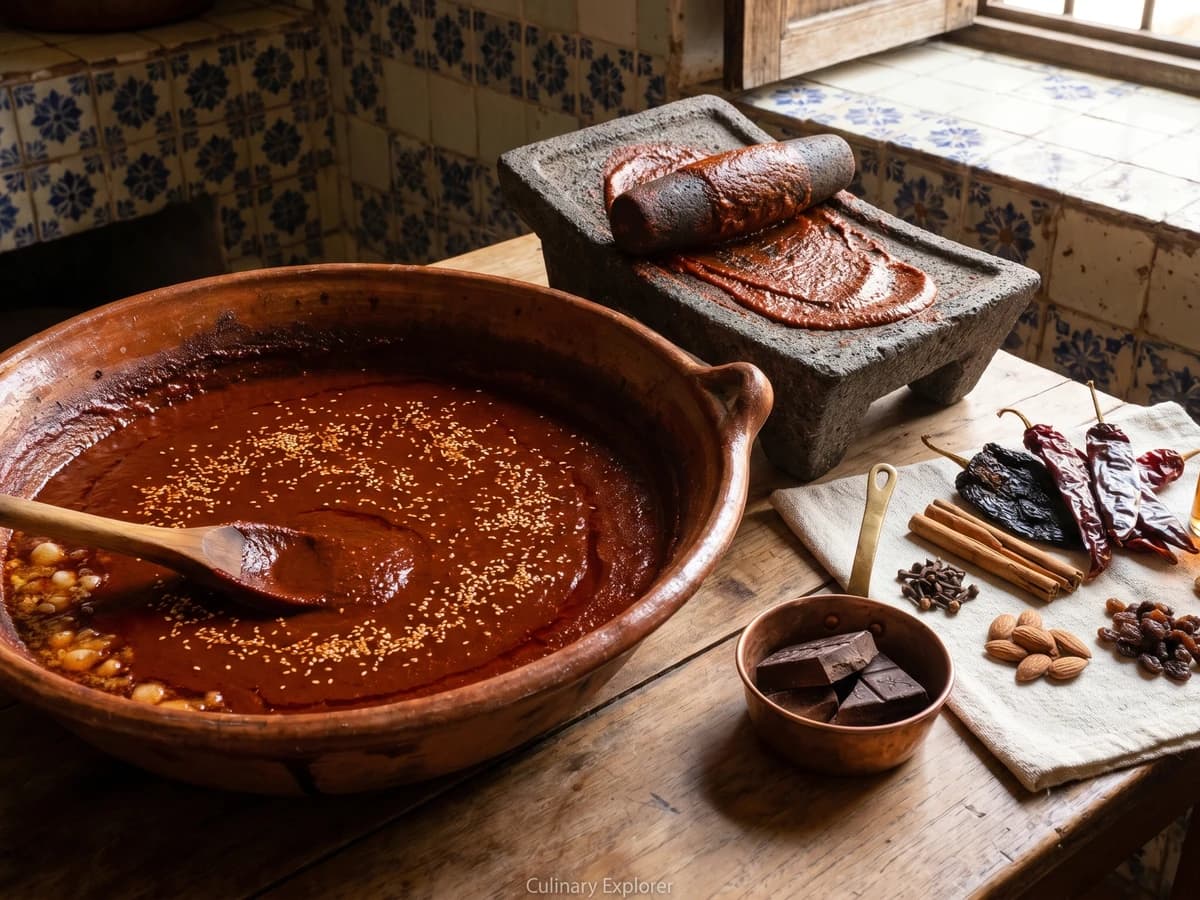
Zacatecas' wedding-table adobo, built from toasted guajillo and ancho, piloncillo, sour orange, chocolate, canela, clavo, almonds, sesame, and lard.

Chef Lupita
Puebla's convent kitchens built this adobo with ancho, guajillo, jerez, almonds, raisins, clove, and lard, a baroque marinade that stains pork loin and finishes as the sauce.