
Chef Takumi
Anpan (あんぱん)
Anpan is not a pastry trick. It is soft bread, sweet azuki, and a careful seal, so the bean paste stays centered while the bun rises round and tender.
A cooking platform built around craft, culture, and the stories behind what we eat.

Created by
Siberia looks odd until the first clean slice: honeyed castella, firm red-bean yōkan, and just enough restraint to make a bakery sweet feel calm beside tea.
Siberia is a neat little contradiction: a bakery cake with the manners of wagashi. Two golden sheets of castella hold a dark bar of yōkan, and the slice looks so exact that a sensible cook suspects machinery is involved. It isn't. The real thing asks for patience, not cleverness.
The castella must be springy enough to stand upright, so we use bread flour and a well-whipped egg foam. The yōkan must be firm enough to cut like a slab, so we use kanten, the agar of Japanese sweets, not gelatin. Gelatin trembles and softens too warmly. Kanten cuts clean and keeps its edge. That edge is Siberia.
The only delicate moment is assembly. Pour the yōkan too hot and the sponge drinks it; wait too long and it sets in the pan before it bonds. Let it cool until glossy and thick, still pourable, then sandwich it under a light weight. A small slice beside tea is enough. This is bakery comfort, yes, but it keeps the old discipline: clear layers, restrained sweetness, nothing hidden.
One often-cited origin places Siberia at Coty Bakery in Yokohama, which is said to have begun selling the sweet in 1916, in the Taishō period, before it became a familiar Shōwa bakery item. The name's origin is unsettled; explanations include the dark yōkan running between pale castella like the Trans-Siberian Railway through snow, or a simple taste for Russian-sounding names at the time. Hayao Miyazaki's 2013 film The Wind Rises gave the old bakery sweet a new public moment when the characters share it on screen.
Quantity
5
room temperature
Quantity
150g
Quantity
45g
Quantity
2 tablespoons
Quantity
120g
sifted twice
Quantity
4g
Quantity
250ml
Quantity
80g
Quantity
500g
Quantity
1/8 teaspoon
Quantity
1 tablespoon
| Ingredient | Quantity |
|---|---|
| large eggsroom temperature | 5 |
| granulated sugar, for the castella | 150g |
| honey | 45g |
| warm water | 2 tablespoons |
| bread floursifted twice | 120g |
| powdered kanten | 4g |
| water, for the yōkan | 250ml |
| granulated sugar, for the yōkan | 80g |
| koshian (smooth sweet red bean paste) | 500g |
| fine sea salt | 1/8 teaspoon |
| mizuame (Japanese starch syrup) (optional) | 1 tablespoon |
Heat the oven to 325°F (160°C). Line an 8-inch square pan with parchment, letting the paper rise above the sides. Siberia depends on straight layers, and a well-lined pan gives you clean edges without wrestling the cake out later.
Stir the honey into the warm water until loose and pourable. Honey gives castella its quiet fragrance and helps the crumb stay moist, but it must be thinned first so it disappears evenly into the egg foam.
Put the eggs and castella sugar in a mixer bowl and set it over a bowl of warm water for a minute, whisking until the mixture feels just warm to the touch. Beat on high until pale, thick, and ribbony, 7 to 9 minutes. Warm eggs hold more air, and that air is the lift. There is no butter or baking powder here to rescue a lazy foam.
Beat in the honey mixture on low speed, then sift the bread flour over the batter in three additions, folding after each one until no dry streaks remain. Bread flour gives castella its slight chew and steady body. Fold cleanly, scraping from the bottom, because hidden pockets of flour bake into pale seams.
Pour the batter into the lined pan and run a skewer through it in a few slow lines to break large bubbles. Bake for 30 to 35 minutes, until the top is deep golden and springs back when pressed lightly. Drop the pan once from a few inches above the counter after baking. That little shock helps the crumb settle evenly instead of shrinking in a sulky crater.
Lift the castella out, peel away the side paper, and wrap it loosely while it cools. When fully cool, trim the edges and slice the cake horizontally into two even slabs. A wrapped rest keeps the sponge moist, and a cool cake cuts cleanly. Try to hurry this and the knife will drag the crumb.
Line the same pan again with fresh parchment. In a saucepan, whisk the powdered kanten into the 250ml water and bring it to a full boil. Boil for 2 minutes, whisking. Kanten must be properly boiled to dissolve; if it only warms, the yōkan may set weakly or weep at the edges.
Add the yōkan sugar and stir until dissolved. Add the koshian, salt, and mizuame if using, then cook over medium-low heat for 5 to 7 minutes, stirring constantly, until the mixture is glossy, thick, and falls from the spatula in heavy folds. This short cooking concentrates the water so the finished yōkan cuts as a firm slab, not a soft paste.
Set one castella slab in the lined pan, cut side up. Stir the yōkan off the heat until it thickens slightly and looks glossy, still pourable but no longer hot enough to soak the cake, about 130°F to 140°F (55°C to 60°C). Pour it over the castella and level it quickly, then set the second slab on top, cut side down. This is the one detail that decides the dish: warm enough to bond, cool enough not to flood the crumb.
Cover the top with parchment and set a small flat board or another pan over it with a light weight. Chill for at least 3 hours, until the yōkan is firm all the way through. The weight keeps the layers in contact while the kanten sets, so the slices hold together instead of politely falling apart.
Lift the slab from the pan and trim the edges. Cut into 9 squares or 12 narrow rectangles with a long knife dipped in hot water and wiped dry between cuts. Clean steel gives you clean faces, and Siberia is a sweet that shows every hesitation. Serve small pieces with tea and leave the plate room.
1 serving (about 115g)
Culinary guides, cultural storytelling, and the editorial depth that makes cooking meaningful.
Discover Culinary ExplorerChef Takumi
Anpan is not a pastry trick. It is soft bread, sweet azuki, and a careful seal, so the bean paste stays centered while the bun rises round and tender.
Chef Takumi
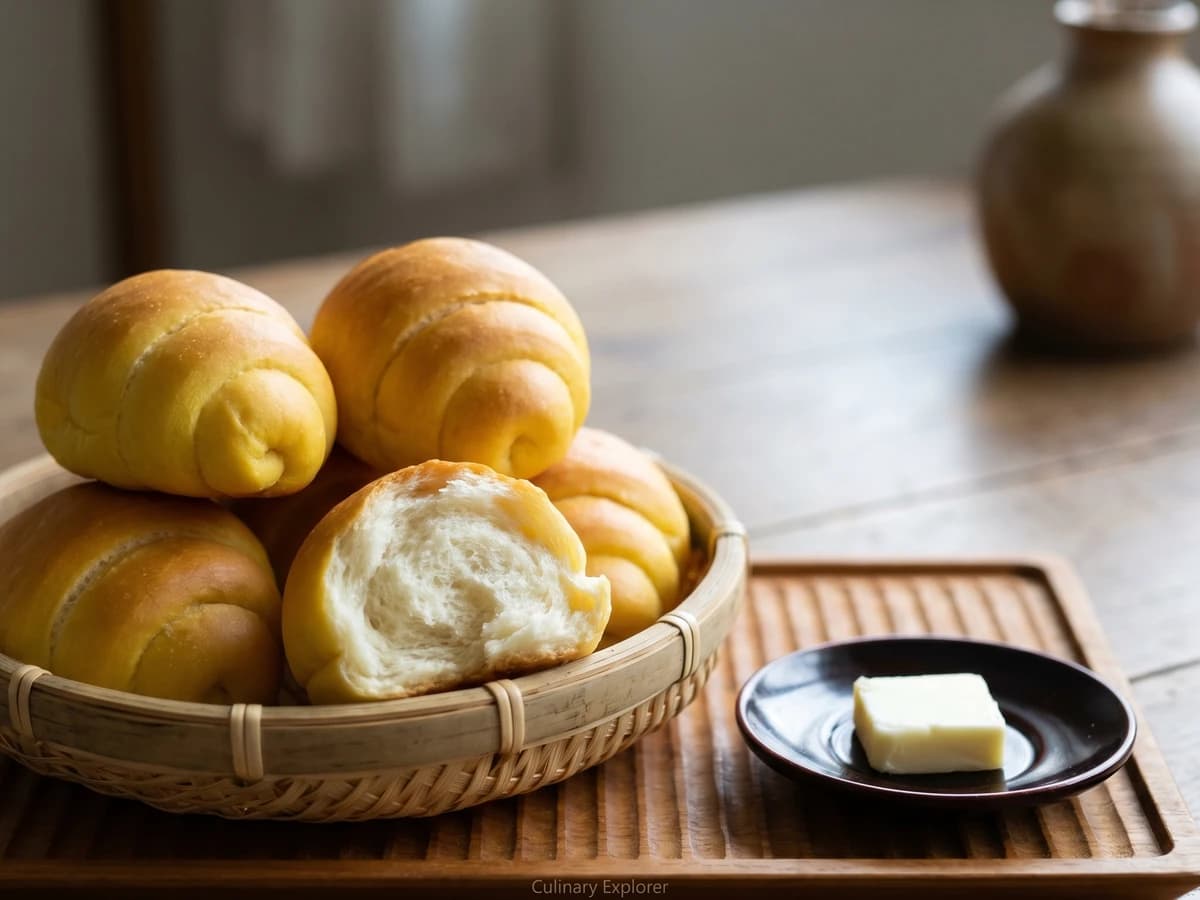
A panya staple made reachable: soft milk dough rolled wide-to-narrow into its little horn shape, proofed until light, then brushed with egg for that quiet gold crust.

Chef Takumi
Chigiri-pan is bread made small on purpose: soft enriched dough portioned into neat balls, crowded in a square tin, and baked until every tender roll tears away with its own golden edge.

Chef Takumi
Choco cornet looks clever, which is how bakery bread frightens sensible people. Wrap a soft rope around a cone, bake it golden, then pipe in chocolate cream only after the shell is cool.