
Chef Takumi
Aji Fry (アジフライ, panko-fried horse mackerel)
Aji fry is weeknight fish with no mystery: fresh horse mackerel opened cleanly, breaded lightly, and fried until the panko crackles while the flesh stays sweet.
A cooking platform built around craft, culture, and the stories behind what we eat.
Created by
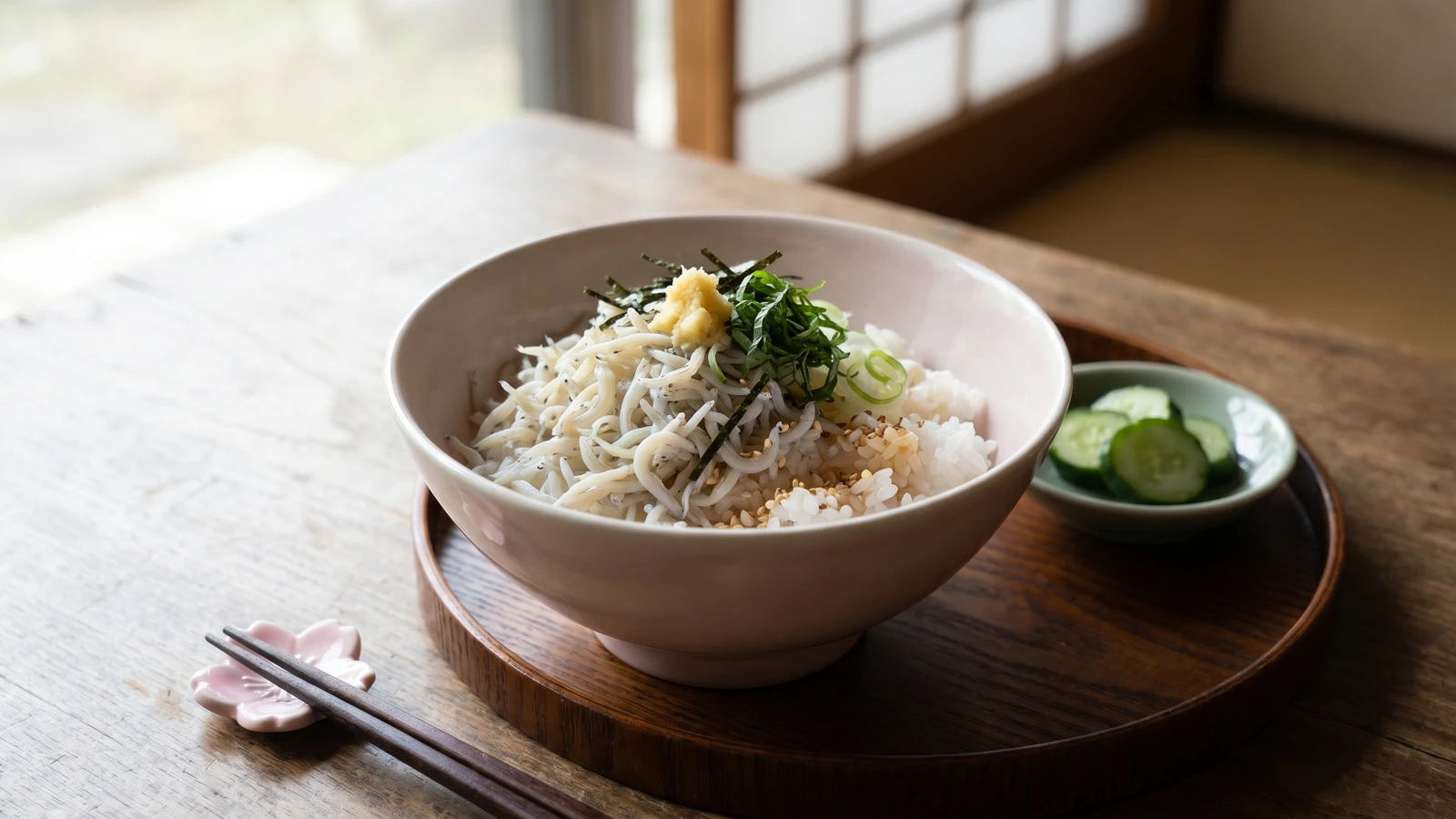
Kama-age shirasu needs almost no cooking at home. Set it lightly over hot rice, sharpen it with ginger and shōyu, and the little fish stay sweet, briny, and clear.
Shirasu are small enough that people mistrust them. A whole bowl of tiny fish looks as if it ought to be difficult, or at least a little stern. It isn't. When they're glistening fresh, or gently boiled as kama-age shirasu, they need only hot rice, ginger, and a measured touch of shōyu.
The one detail that decides shirasudon is restraint. The rice should be hot, because its warmth lifts the sea-sweet aroma of the fish, but the shirasu should not be cooked again or drowned. Pour on too much soy and all you taste is salt. Spoon the seasoning around the rice, let the grains carry it upward, and keep the fish pale and clean.
In Sagami and Suruga Bay, nama-shirasu, raw whitebait, is a spring pleasure when the boats have just come in. Away from that coast, kama-age is the honest choice, not a lesser one. We serve it as donburi, a rice bowl, plain enough for a weeknight and clear enough to expose the cook. Nothing hidden, which is good news here: there is hardly anything to do.
Shirasu is the collective market name for translucent juvenile iwashi, especially katakuchi iwashi (Japanese anchovy), landed in tight windows along Japan's Pacific coast. Sagami Bay in Kanagawa and Suruga Bay in Shizuoka are two of the best-known shirasu districts; Kanagawa's fishery is closed from January into mid-March, which makes the first spring bowls a local event. Nama-shirasu is eaten close to the boats because the fish deteriorate within hours, while kama-age shirasu, lightly boiled in salt water and drained, is the form that travels inland and fills everyday donburi.
Quantity
2 donburi portions (about 360g cooked)
Quantity
160g
kept cold, then drained gently
Quantity
1 tablespoon
Quantity
1 tablespoon
Quantity
2 teaspoons
finely grated
Quantity
1 sheet
torn into thin strips
Quantity
2 leaves
very thinly sliced
Quantity
1
thinly sliced
Quantity
1 teaspoon
Quantity
as desired
| Ingredient | Quantity |
|---|---|
| freshly cooked Japanese short-grain rice | 2 donburi portions (about 360g cooked) |
| kama-age shirasu (lightly boiled whitebait)kept cold, then drained gently | 160g |
| shōyu (Japanese soy sauce) | 1 tablespoon |
| dashi (optional) | 1 tablespoon |
| fresh gingerfinely grated | 2 teaspoons |
| toasted noritorn into thin strips | 1 sheet |
| ōba leaves (green shiso) (optional)very thinly sliced | 2 leaves |
| scallionthinly sliced | 1 |
| toasted white sesame seeds (optional) | 1 teaspoon |
| Japanese pickles (optional) | as desired |
Open the shirasu and smell it before anything touches the rice. It should be moist, ivory, and clean, with a mild sea sweetness, not a strong fishy smell. Keep it chilled until the bowls are ready, because these tiny fish lose their freshness fast. If you're using nama-shirasu, use only fish sold that day for raw eating and keep it over ice until the last moment.
Fluff the freshly cooked rice with a shamoji, a rice paddle, using a lifting motion instead of pressing. Divide it between two deep donburi bowls while it is still hot. Loose grains catch the seasoning and warm the shirasu gently; packed rice turns heavy and mutes the fish.
Stir the shōyu with the dashi, if using. This makes a light dashi-shōyu that seasons the rice without making the fish taste only of soy. Spoon a few drops over the rice before the topping goes on, then hold back the rest for the table. You can always add; you cannot un-salt a small fish.
Drain any liquid from the shirasu in a small sieve, but don't rinse it. Rinsing washes away the gentle salt and the sea sweetness you paid for. Lift the fish with chopsticks or a spoon and set it over the rice in a soft mound, leaving a crescent of rice showing at one side so the bowl doesn't look buried.
Set the grated ginger at the center, then scatter the nori, scallion, ōba, and sesame if using. Spoon a little more seasoning around the edge of the rice rather than directly over the fish. The ginger sharpens the sweetness and the nori gives a dry sea aroma, while restrained shōyu keeps the shirasu pale and clean. Eat at once, before the rice turns the topping wet.
1 serving (about 290g)
Culinary guides, cultural storytelling, and the editorial depth that makes cooking meaningful.
Discover Culinary ExplorerChef Takumi
Aji fry is weeknight fish with no mystery: fresh horse mackerel opened cleanly, breaded lightly, and fried until the panko crackles while the flesh stays sweet.
Chef Takumi
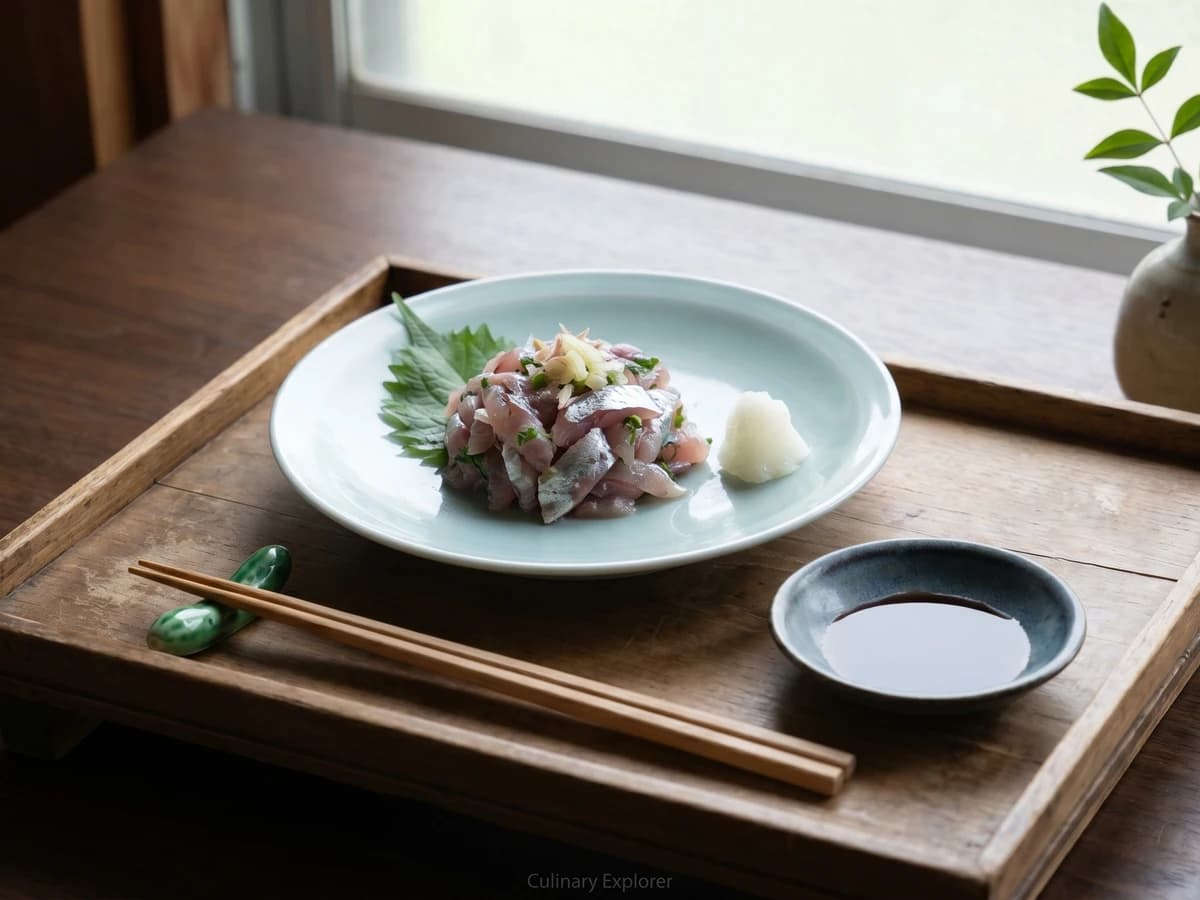
Summer horse mackerel, chopped just enough to catch ginger and scallion, becomes a cool, clean main dish with rice. The secret is fresh fish and a knife that does not bruise it.
Chef Takumi
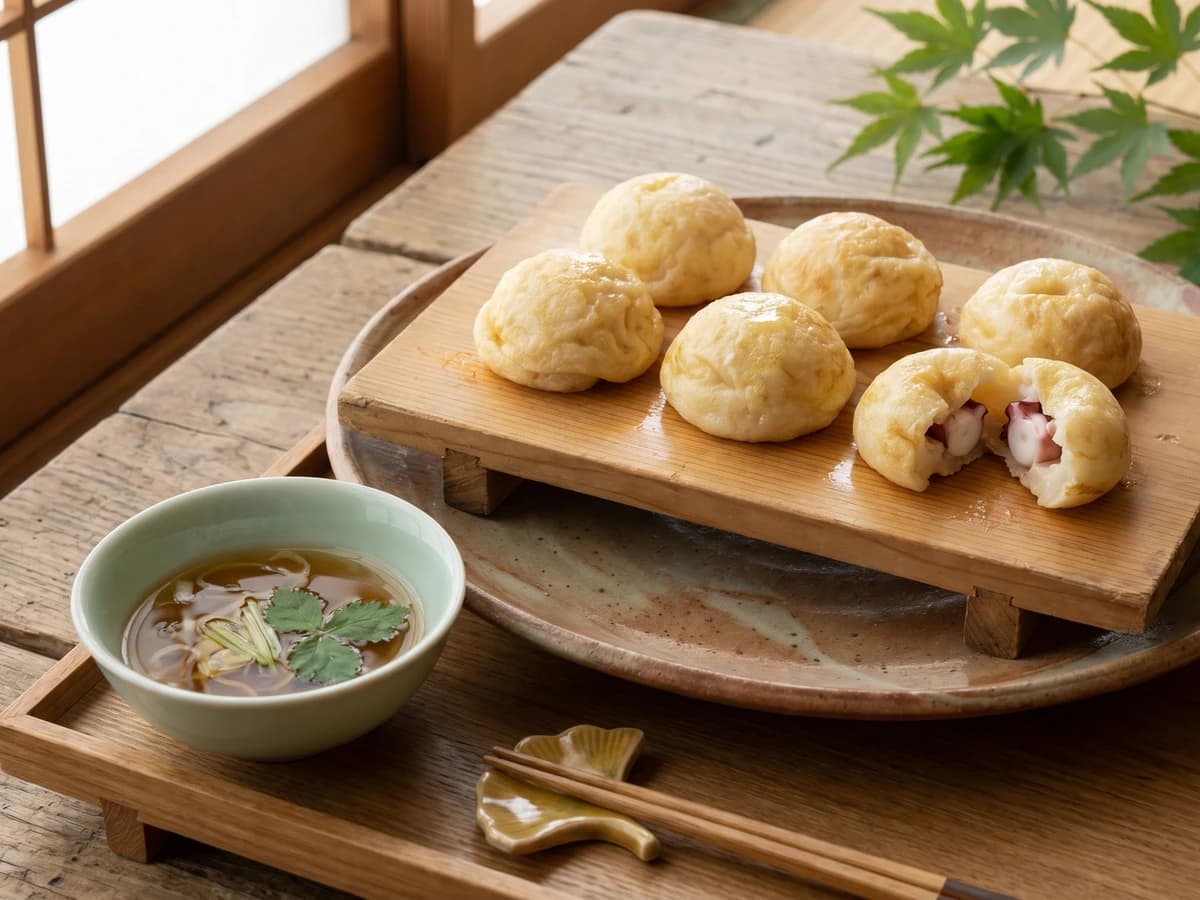
Akashi-yaki is not sauced takoyaki. It is egg-rich batter, tender octopus, and clear dashi, cooked pale and soft so each ball can be dipped like a small custard dumpling.

Chef Takumi
A whole anago looks like a test of nerve. It is mostly good sourcing, a dry skin, cold batter, and oil hot enough to leave the eel sweet under its lace.