Chef Zohra
Boushnikha
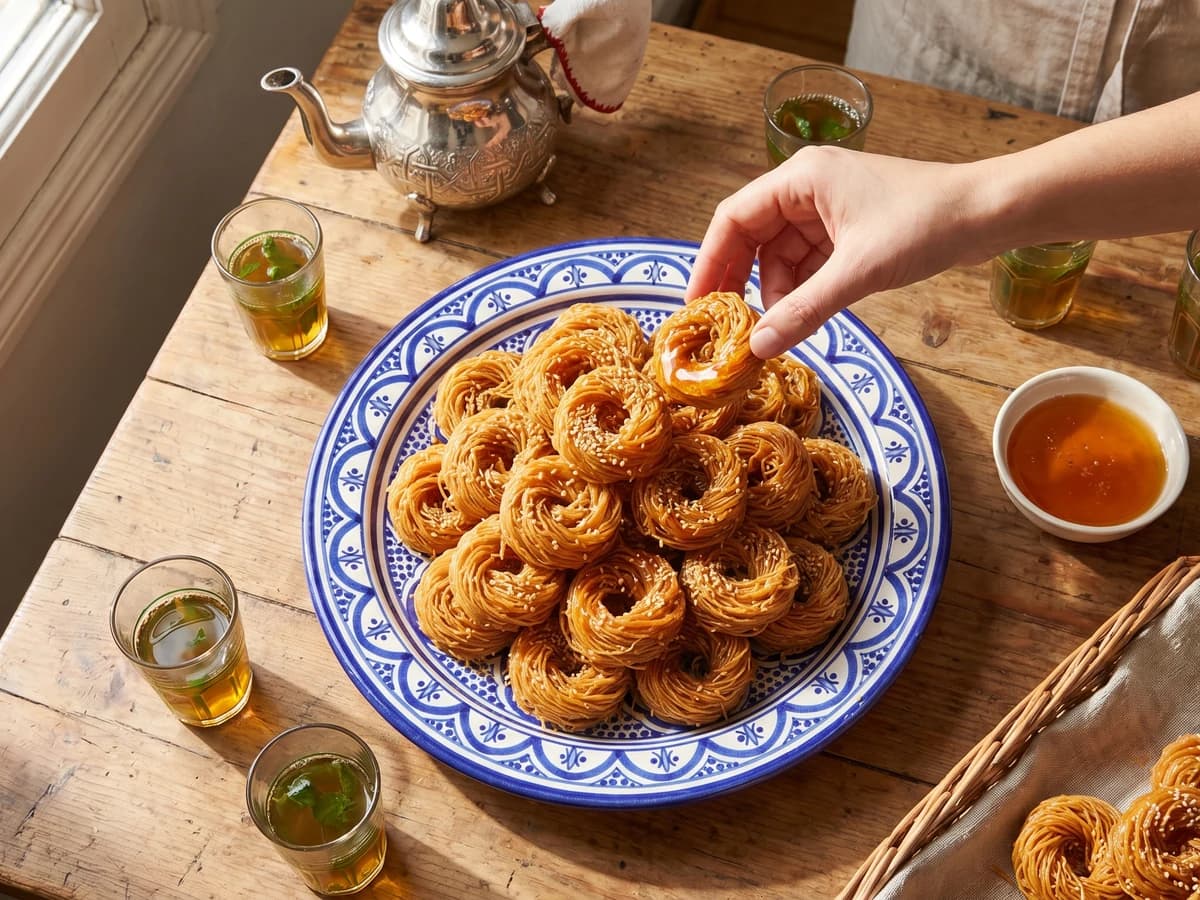
A Ramadan sweet lighter than chebakia: fine milk dough drawn into threads, fried until crisp, then bathed in orange-blossom honey and shared from a generous plate.
A cooking platform built around craft, culture, and the stories behind what we eat.
Created by
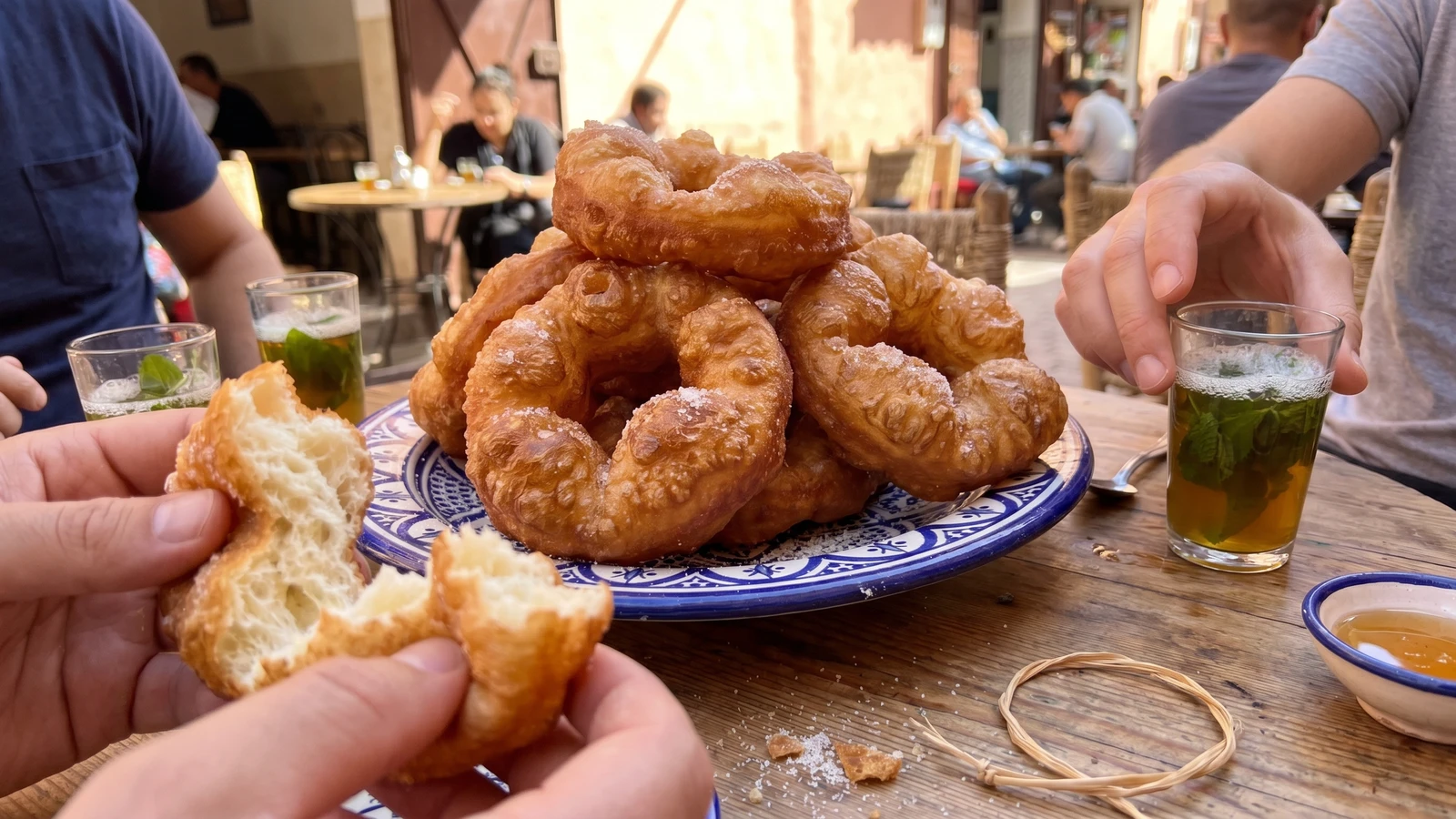
Sfenj is the medina doughnut of dawn: wet dough, no sugar inside, pulled into uneven rings and fried deep gold, then carried home hot for the people who woke to its smell.
The dough is supposed to frighten you a little. Sfenj begins as a wet, slack yeast dough that clings to the hand and refuses the neatness of bread. That's why it fries into those open, chewy rings with bubbled edges. Tighten it with flour and it becomes a dry little bread with a hole.
Wet your hands, pinch the dough, pierce it with your thumbs, stretch, and lower it close to the oil. The water on your fingers matters: it lets you shape without adding flour, and flour would toughen the dough and burn before the sfenj is cooked. This is the gesture the dish lives by.
In Moroccan medinas, sfenj belongs to morning. The sfenji (sfenj seller) threads the hot rings onto palm string, and someone carries them home beside mint tea or coffee, enough for whoever is awake and whoever knocks. This is la cuisine du lien (the cooking of connection): little money, open hands, one more ring for one more person.
The word sfenj is linked to Arabic isfanj, 'sponge', a term known in medieval Arabic and Andalusi cookery for airy fried doughs; during the Marinid centuries, 13th to 15th, such techniques moved along Maghrebi-Andalusi routes into Moroccan cities, though the exact date is not proven. By the 19th and 20th centuries, the sfenji was a familiar figure in medinas from Fez and Marrakech to Oujda and Tetouan, frying early for workers, children, and market people. Moroccan Jewish families also fry sfenj for Hanukkah in some regions, one more sign that there are des cuisines marocaines (many Moroccan cuisines), sharing habits without becoming one flat story.
Quantity
500g
Quantity
1 1/2 tsp
Quantity
2 tsp instant or 15g fresh
Quantity
380-450ml
added gradually
Quantity
enough for 5-7cm depth
for deep-frying
Quantity
to taste
for dipping
Quantity
to taste
warmed
| Ingredient | Quantity |
|---|---|
| strong white flour or unbleached all-purpose flour | 500g |
| fine sea salt | 1 1/2 tsp |
| instant yeast or fresh yeast | 2 tsp instant or 15g fresh |
| lukewarm wateradded gradually | 380-450ml |
| neutral oilfor deep-frying | enough for 5-7cm depth |
| granulated sugar (optional)for dipping | to taste |
| runny honey (optional)warmed | to taste |
Pour 380ml of the lukewarm water into a wide bowl and whisk in the yeast. Let it stand 5 to 10 minutes, until fine bubbles gather on the surface and it smells alive. If the bowl stays flat and silent, the yeast has failed and no amount of frying will rescue it. No sugar goes into the dough; sfenj rises on flour, water, salt, and patience.
Add the flour and salt, then mix with one hand, squeezing the dough through your fingers. Add more water, a tablespoon or two at a time, until the dough is very sticky, loose, and elastic, between bread dough and batter. It should cling to your hand and stretch in thick ribbons, not sit in a smooth ball.
Keep the dough in the bowl. Wet one hand, lift an edge high, slap it back, fold, and repeat for 8 to 10 minutes. You are building strength in a dough too wet to knead on the table; that strength traps the gas and gives sfenj its open chew. The surface will turn glossy, and small bubbles will begin to show.
Cover the bowl and leave it at warm room temperature for 60 to 90 minutes, until doubled, jiggly, and full of bubbles. In a cool kitchen it can take longer. Do not punch it down hard; loosen the edge gently with wet fingers so you keep the air the yeast has made.
Pour oil into a deep heavy pot to a depth of 5 to 7cm and heat to 175-180°C. Without a thermometer, drop in a tiny piece of dough: it should rise, bubble steadily, and turn gold in about a minute. If it darkens too fast, lower the heat; if it sinks and sits oily, wait.
Set a bowl of water beside you. Wet both hands, pinch off an egg-sized piece of dough, pierce the center with your thumbs, and stretch it into a loose ring. Lower one edge close to the oil and let the ring slip away from you. Wet hands are the whole secret here: they let you handle the slack dough without flour, and flour would tighten the dough and burn in the oil.
Fry 2 or 3 rings at a time, leaving room for them to swell. Turn with a wooden spoon handle, chopstick, or skimmer when the underside is deep gold and the edges look bubbled, about 2 to 3 minutes per side. The rings should be irregular and light, with crisp edges and a chewy center.
Lift the sfenj to a rack or paper-lined tray and let excess oil drain for a minute, then serve at once, plain, pressed into sugar, or with honey for dipping. Do not cover them while hot or the crisp edge softens. Make enough that one extra hand can reach in.
1 serving (about 80g)
Culinary guides, cultural storytelling, and the editorial depth that makes cooking meaningful.
Discover Culinary ExplorerChef Zohra
A Ramadan sweet lighter than chebakia: fine milk dough drawn into threads, fried until crisp, then bathed in orange-blossom honey and shared from a generous plate.

Chef Zohra
Tissue-thin warqa folded into small triangles around orange-blossom almond paste, fried until gold, then dipped warm into honey. This is the sweet Fassi briouat that makes tea feel like a feast.
Chef Zohra
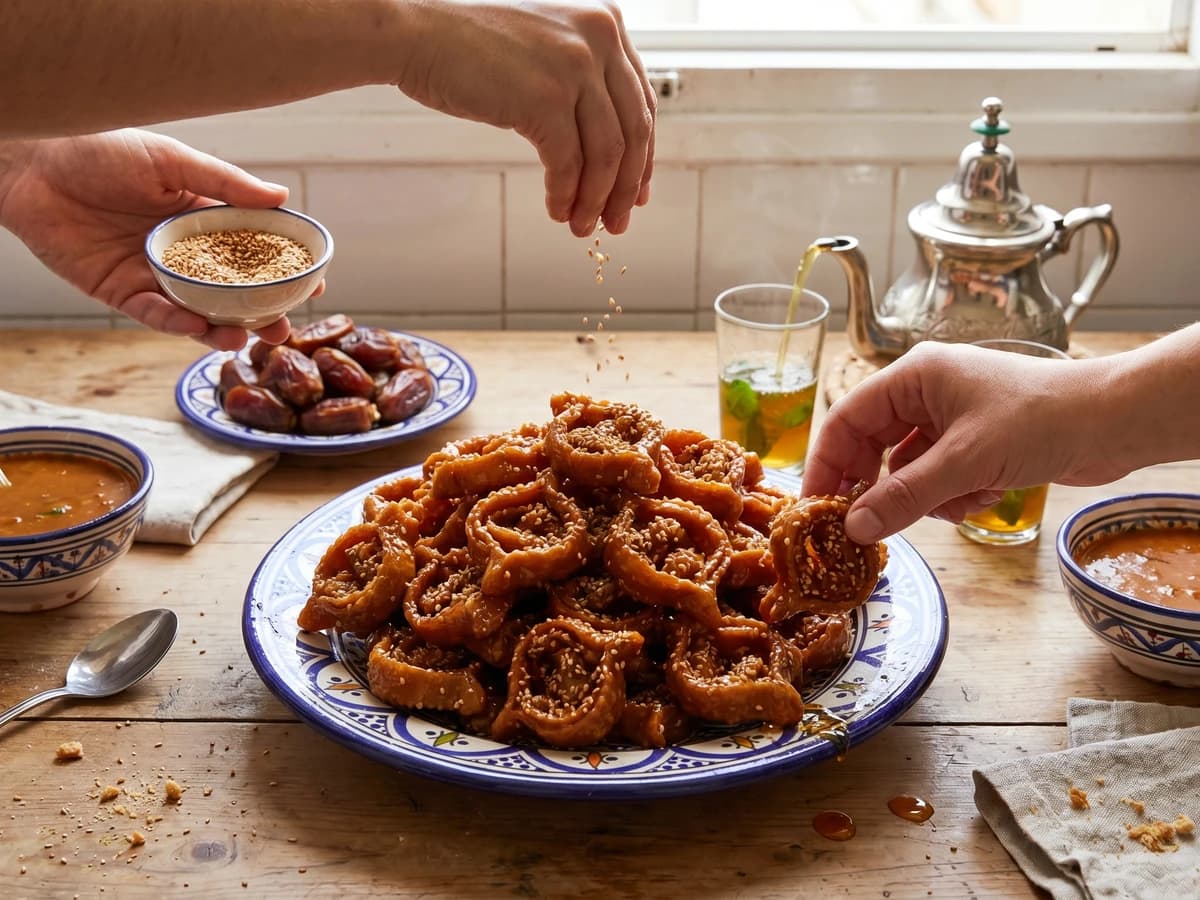
The flower of the Ramadan table: dough scented with toasted sesame, anise, saffron, and orange blossom water, fried crisp, then soaked in warm honey beside harira.

Chef Zohra
Slim warqa cigars filled with orange-blossom almond paste, fried until crisp under the teeth, then soaked in warm honey for the festive table.