Chef Zohra
Boushnikha
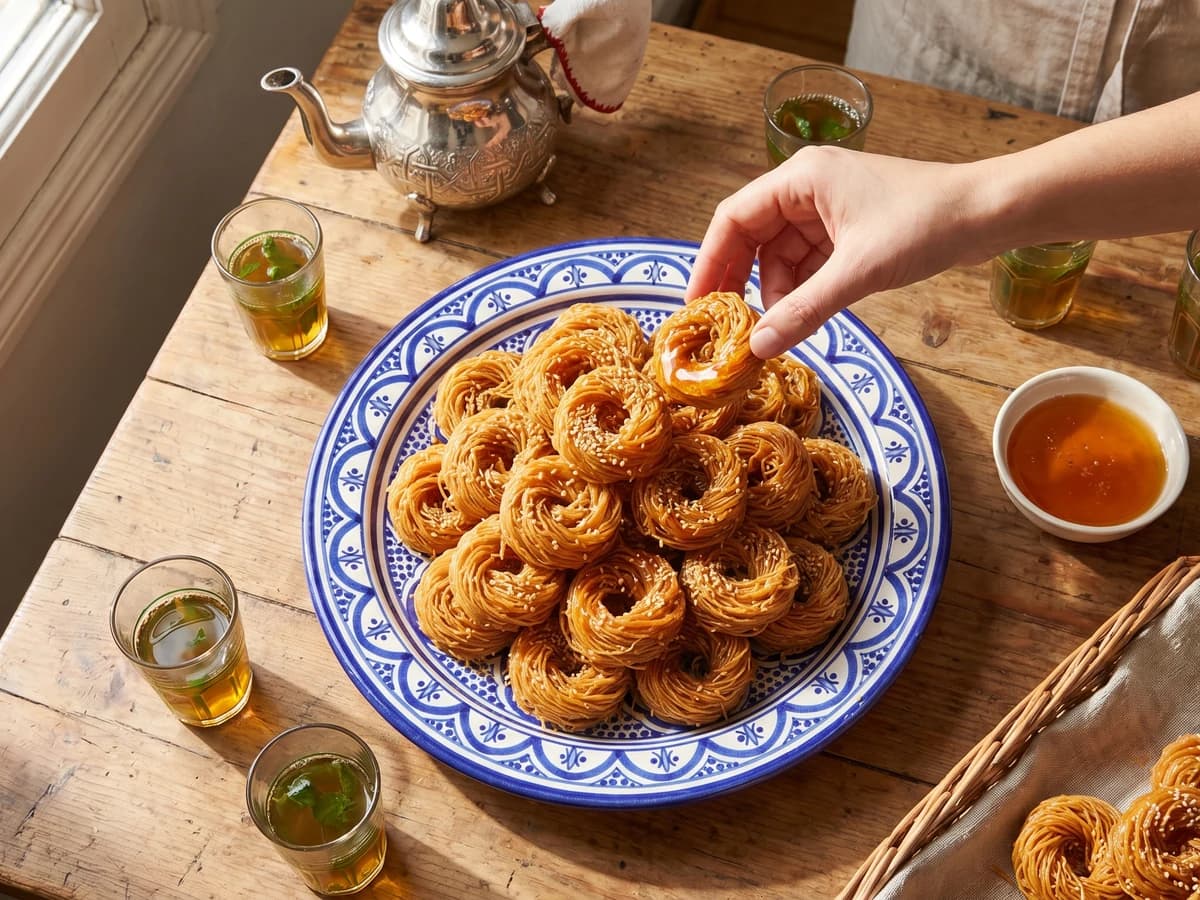
A Ramadan sweet lighter than chebakia: fine milk dough drawn into threads, fried until crisp, then bathed in orange-blossom honey and shared from a generous plate.
A cooking platform built around craft, culture, and the stories behind what we eat.
Created by
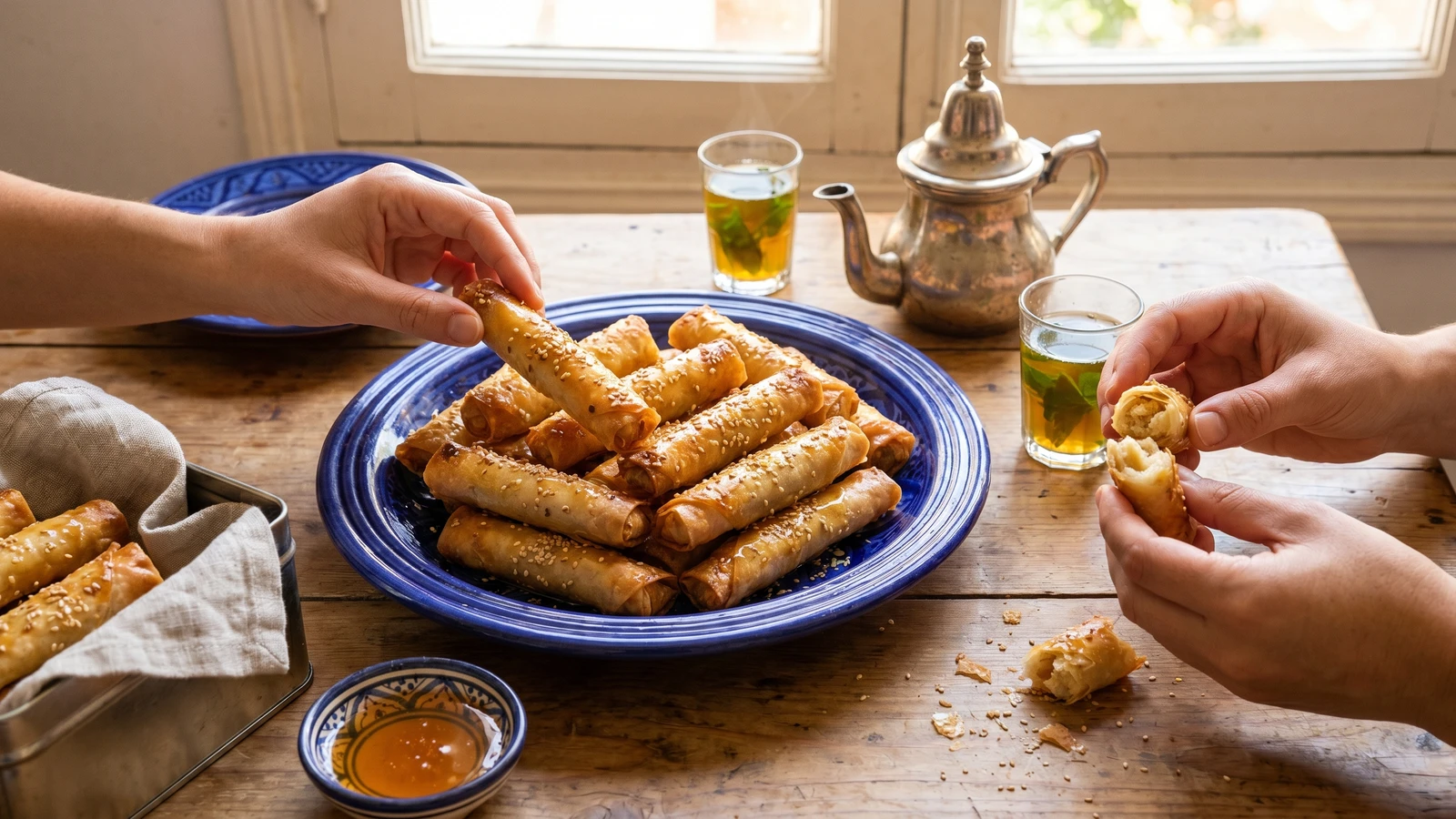
Slim warqa cigars filled with orange-blossom almond paste, fried until crisp under the teeth, then soaked in warm honey for the festive table.
The roll is the dish. Tight, even, sealed with a little flour paste, so the almond filling stays where it belongs and the pastry fries crisp instead of opening in the oil. If the cigar is loose, honey rushes inside and makes it heavy. If it's tight, the outside crackles and the center stays fragrant with orange blossom.
These are celebration sweets, the kind you make ahead for Eid, weddings, Ramadan evenings, or any day when the mint tea is going to be poured more than once. They are the long, slender cousins of almond briouates, less triangular, just as generous. The almonds must taste alive, so blanch them, dry them well, and grind them with sugar, cinnamon, butter, and mazhar, orange blossom water. La balance est dans les yeux, the scale is in the eyes, but the paste should hold together when pressed without feeling wet.
Fry patiently, in small batches, then turn each cigar in warm honey until it shines. Stack them on a shared plate, scatter sesame if your house does, and leave room for hands to reach. Une table, c'est une porte qu'on laisse ouverte, a table is a door you leave open.
Almond-and-honey pastries belong strongly to the Andalusi and Fassi festive register that grew in Morocco after the medieval movement of Muslims and Jews from al-Andalus, especially from the 13th to 16th centuries. Warqa, the paper-thin pastry cooked by hand on a hot surface, became a mark of urban Moroccan pastry work in cities such as Fez, Rabat, and Tetouan. The cigar shape is a later household cousin of the triangular almond briouat, and its exact dating is not fixed in writing because much of this pastry repertoire stayed in women's hands before it reached books.
Quantity
500g
well dried
Quantity
150g
Quantity
2 tbsp
softened
Quantity
2 tbsp plus 1 tsp
Quantity
1 tsp
Quantity
1 small pinch
Quantity
16 sheets
cut in half
Quantity
2 tbsp
mixed with 2 to 3 tbsp water for sealing paste
Quantity
750ml
for frying
Quantity
350g
Quantity
2 tbsp
| Ingredient | Quantity |
|---|---|
| blanched almondswell dried | 500g |
| granulated sugar | 150g |
| unsalted buttersoftened | 2 tbsp |
| orange blossom water | 2 tbsp plus 1 tsp |
| ground cinnamon | 1 tsp |
| fine sea salt | 1 small pinch |
| warqa, or brick pastry as a substitutecut in half | 16 sheets |
| plain flourmixed with 2 to 3 tbsp water for sealing paste | 2 tbsp |
| neutral oilfor frying | 750ml |
| honey | 350g |
| toasted sesame seeds (optional) | 2 tbsp |
Spread the blanched almonds on a clean towel and let them dry very well. If they feel damp, put them on a tray in a low oven for 10 minutes, then cool them fully. Water is the enemy here: it makes the paste dull and makes the pastry spit in the oil.
Grind the almonds with the sugar in a food processor until fine, then add the butter, orange blossom water, cinnamon, and salt. Pulse until the paste clumps when you press it in your palm. It should smell of almond first, flower second, never like perfume.
Pinch off small pieces of almond paste and roll them into logs about 8cm long and as thick as your thumb. Keep them even so the cigars fry at the same pace and sit neatly on the plate.
Lay a half sheet of warqa or brick pastry with the straight edge facing you. Place one almond log near the bottom, fold in the sides, then roll tightly into a slim cigar. Brush the last edge with flour paste and press to seal. The tight roll matters: it keeps oil out, filling in, and gives the honey a crisp shell to cling to.
Warm the honey gently in a small saucepan with 1 teaspoon orange blossom water. Keep it fluid, not boiling. Hot honey grabs the pastry too hard and softens it; warm honey coats it generously.
Heat the oil to 170°C in a deep pan. Fry the cigars in small batches, turning them until evenly golden, about 3 to 4 minutes. Listen to the oil: a steady lively sizzle is right, a violent crackle means the heat is too high.
Lift the fried cigars straight into the warm honey and turn them for 1 to 2 minutes until glossy. Drain on a rack set over a tray, then scatter with toasted sesame seeds if you like them. Let them settle before serving, so the shell stays crisp and the honey sets to a shine.
1 serving (about 47g)
Culinary guides, cultural storytelling, and the editorial depth that makes cooking meaningful.
Discover Culinary ExplorerChef Zohra
A Ramadan sweet lighter than chebakia: fine milk dough drawn into threads, fried until crisp, then bathed in orange-blossom honey and shared from a generous plate.

Chef Zohra
Tissue-thin warqa folded into small triangles around orange-blossom almond paste, fried until gold, then dipped warm into honey. This is the sweet Fassi briouat that makes tea feel like a feast.
Chef Zohra
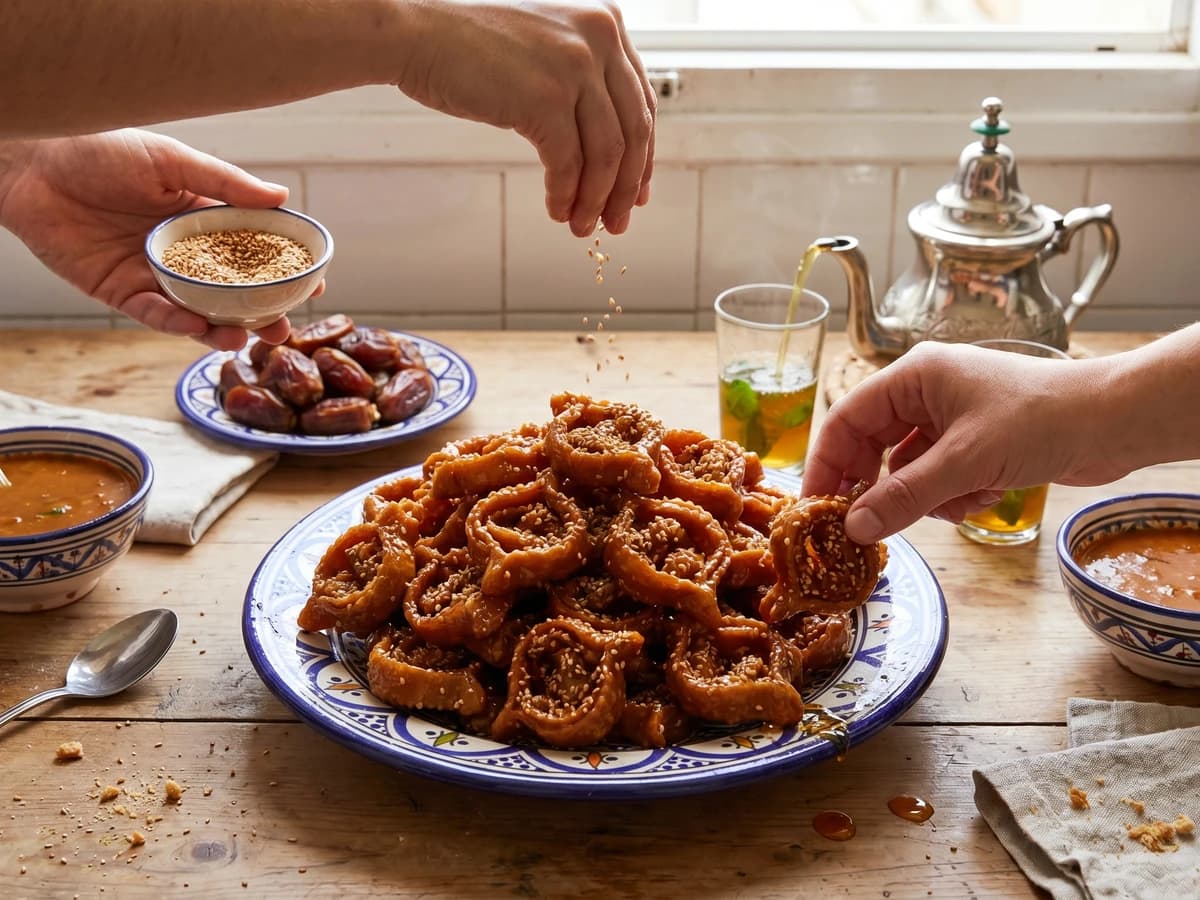
The flower of the Ramadan table: dough scented with toasted sesame, anise, saffron, and orange blossom water, fried crisp, then soaked in warm honey beside harira.

Chef Zohra
The Moroccan biscuit that waits well: anise-scented logs baked once, cooled, sliced thin, then baked again until crisp enough for mint tea and generous enough for guests.