Chef Zohra
Boushnikha
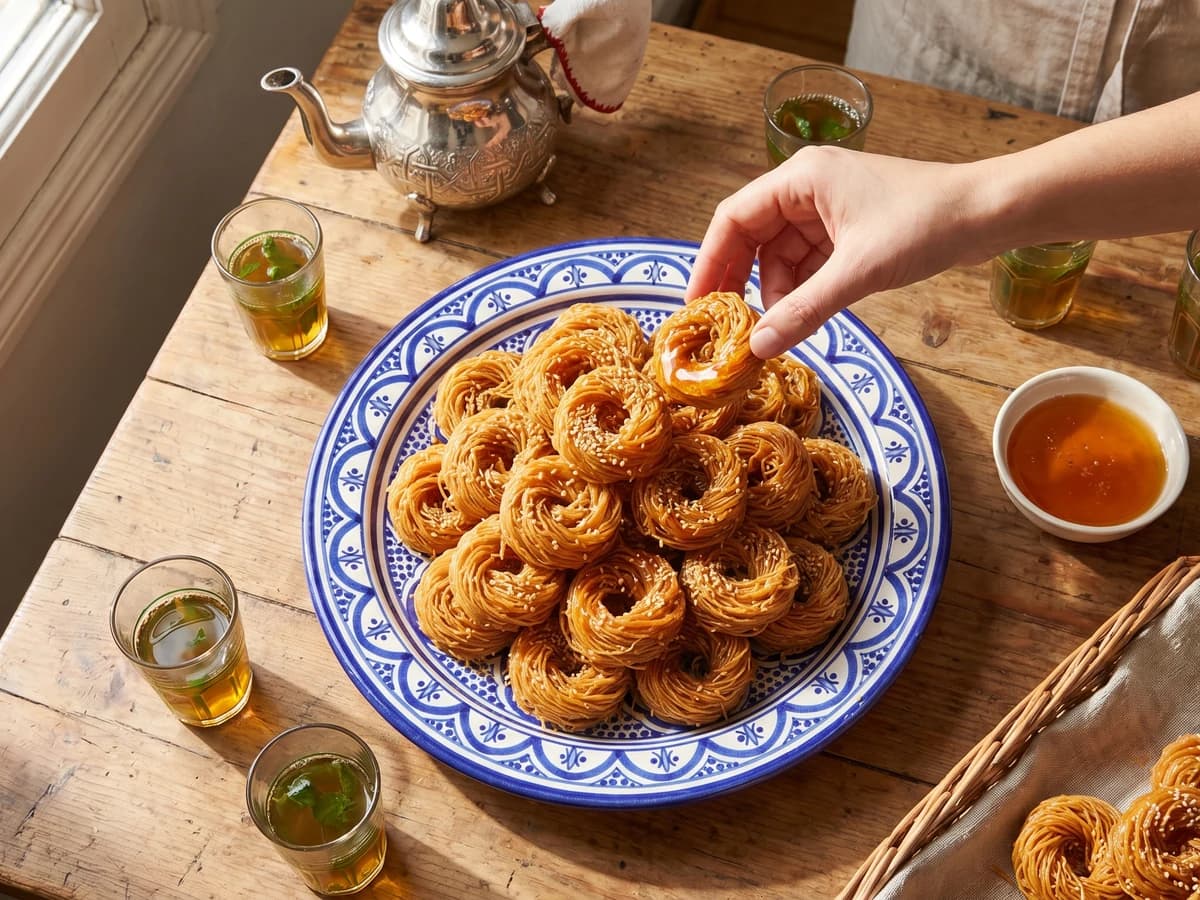
A Ramadan sweet lighter than chebakia: fine milk dough drawn into threads, fried until crisp, then bathed in orange-blossom honey and shared from a generous plate.
A cooking platform built around craft, culture, and the stories behind what we eat.

Created by
Rabat's triangular answer to the briouat: thin warqa wrapped around toasted sesame and almonds, fried until gold, then dropped warm into honey scented with orange blossom.
The triangle has to close cleanly. That is where marchouka lives or fails. You fold the warqa around a dry, fragrant filling of sesame and almonds, each turn sealing the next, so the pastry can meet the oil without spilling its heart into the pan.
This is Rabat's festive register, close to the briouat but not swallowed by it. Il n'y a pas une cuisine marocaine, mais des cuisines marocaines, and the capital has its own manners at the sweet table. Sesame gives depth, almond gives body, cinnamon warms it, and honey carries the whole thing to the guests with sticky fingers and small glasses of tea.
Keep the filling dry enough to hold, the oil steady, and the honey warm, not boiling hard. The pastry should come out crisp under the teeth, then soften just enough as it drinks. Make more than you think. Une table, c'est une porte qu'on laisse ouverte, and sweets like these are made for the cousin who arrives after the tray is already passing.
Marchouka is associated with Rabat and its urban pastry repertoire, where warqa sweets sit beside briouates, chebakia, and almond-filled celebration trays. The technique belongs to the same Andalusi and Maghrebi pastry world that spread through cities such as Fez, Rabat, Salé, and Tetouan after the medieval and post-1492 movements from Iberia, though the exact date of this Rabati form is not firmly documented. Its sesame-and-almond filling also reflects Morocco's long trade in sugar, honey, nuts, and aromatics through Atlantic ports and inland market routes.
Quantity
250g
Quantity
200g
Quantity
90g
Quantity
1 1/2 tsp
Quantity
1 tbsp
for the filling, plus more if needed
Quantity
1 tbsp
softened
Quantity
1 small pinch
Quantity
18 to 20 sheets
or good filo as a substitute
Quantity
2 tbsp
for sealing paste
Quantity
3 tbsp
for sealing paste
Quantity
1 liter
for frying
Quantity
500g
Quantity
2 tbsp
for the honey
Quantity
2 tbsp
for finishing
| Ingredient | Quantity |
|---|---|
| blanched almonds | 250g |
| hulled sesame seeds | 200g |
| icing sugar | 90g |
| ground cinnamon | 1 1/2 tsp |
| orange blossom waterfor the filling, plus more if needed | 1 tbsp |
| unsalted buttersoftened | 1 tbsp |
| fine sea salt | 1 small pinch |
| warqaor good filo as a substitute | 18 to 20 sheets |
| flourfor sealing paste | 2 tbsp |
| waterfor sealing paste | 3 tbsp |
| neutral oilfor frying | 1 liter |
| good honey | 500g |
| orange blossom waterfor the honey | 2 tbsp |
| toasted sesame seeds (optional)for finishing | 2 tbsp |
Toast the almonds in a dry pan or low oven until they smell warm and nutty, then toast the sesame seeds separately until they turn pale gold. Keep them moving. Sesame burns fast, and bitterness will sit in the pastry no matter how much honey you give it.
Grind the almonds to a fine meal with a little texture left, then grind the sesame seeds until fragrant but not oily. Mix them with the icing sugar, cinnamon, salt, softened butter, and orange blossom water. The filling should press together in your palm, then break apart when rubbed. If it crumbles like sand, add orange blossom water by drops. La balance est dans les yeux, the scale is in the eyes.
Stir the flour and water into a smooth paste, thick enough to brush on the final edge of pastry. Cover the warqa with a clean towel while you work so it stays pliable. If you use filo, keep it covered even more carefully, because it dries before you've finished one story.
Cut the warqa into long strips about 6 to 7 cm wide. Place a small spoonful of filling at one end, then fold corner to corner into a triangle, turning it over itself until the strip is used. Seal the last flap with the flour paste and press gently. The point is not decoration. A tight triangle protects the filling in the oil.
Warm the honey gently with the orange blossom water in a small pot. Keep it fluid and glossy, not boiling hard. Honey that boils too fiercely loses its perfume, and this pastry needs that flower note when it comes out of the oil.
Heat the oil to 170°C. Fry the marchouka in small batches, turning them once or twice, until they are evenly golden and crisp. Do not crowd the pan. If the oil drops too low, the pastry drinks fat; if it races too hot, the outside darkens before the layers cook.
Lift the hot pastries straight into the warm honey and let them soak for 2 to 3 minutes, turning once so every face glistens. Drain them on a rack set over a tray, then scatter with toasted sesame while the honey still catches it.
Serve at room temperature with mint tea. The first bite should give crisp pastry, then sesame, almond, honey, and orange blossom. Stack them generously on a shared platter, because marchouka is celebration food, and celebration never counts pieces too tightly.
1 serving (about 46g)
Culinary guides, cultural storytelling, and the editorial depth that makes cooking meaningful.
Discover Culinary ExplorerChef Zohra
A Ramadan sweet lighter than chebakia: fine milk dough drawn into threads, fried until crisp, then bathed in orange-blossom honey and shared from a generous plate.

Chef Zohra
Tissue-thin warqa folded into small triangles around orange-blossom almond paste, fried until gold, then dipped warm into honey. This is the sweet Fassi briouat that makes tea feel like a feast.
Chef Zohra
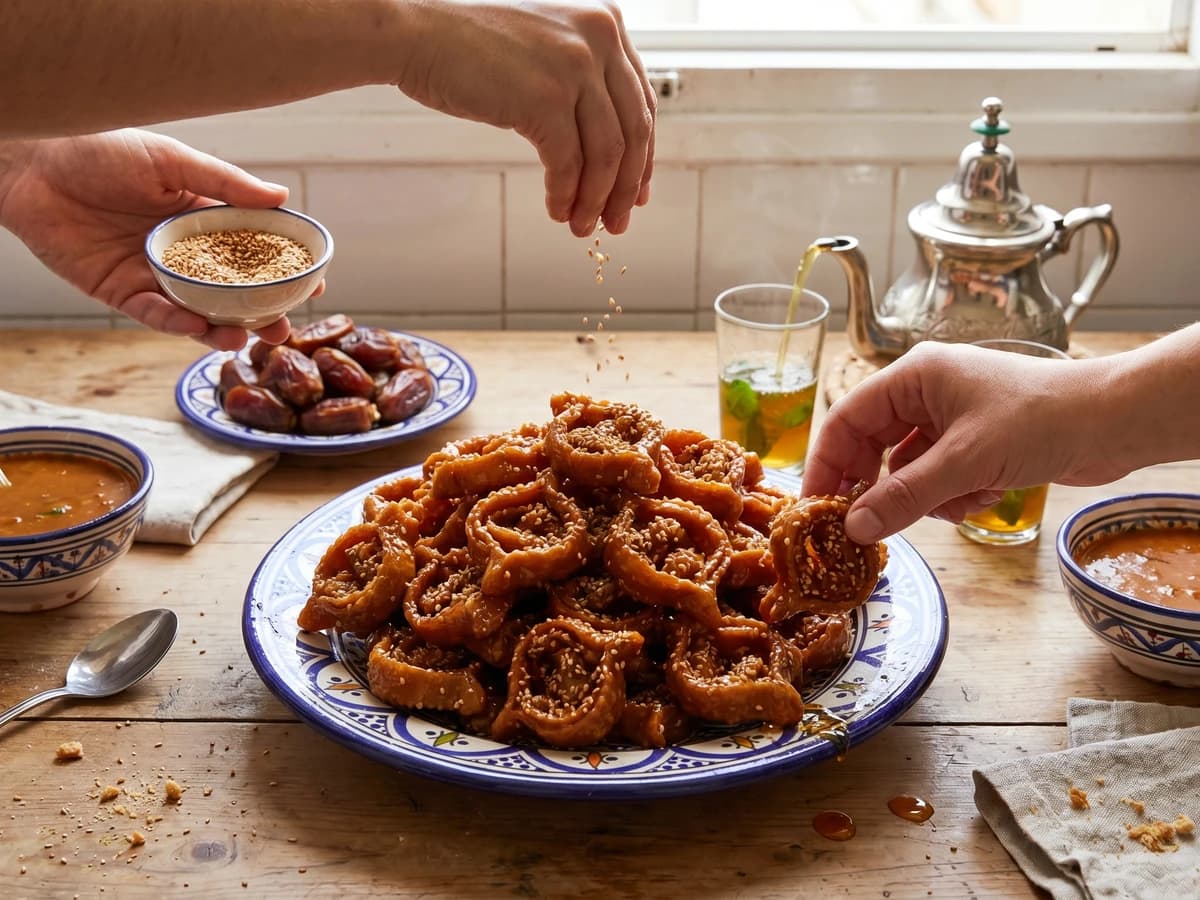
The flower of the Ramadan table: dough scented with toasted sesame, anise, saffron, and orange blossom water, fried crisp, then soaked in warm honey beside harira.

Chef Zohra
Slim warqa cigars filled with orange-blossom almond paste, fried until crisp under the teeth, then soaked in warm honey for the festive table.