
Chef Ally
Beurre Blanc
The Loire Valley's gift to home cooks: cold butter whisked into wine and shallots until it transforms into something silky, bright, and impossibly rich. Perfect simplicity.
A cooking platform built around craft, culture, and the stories behind what we eat.
Created by
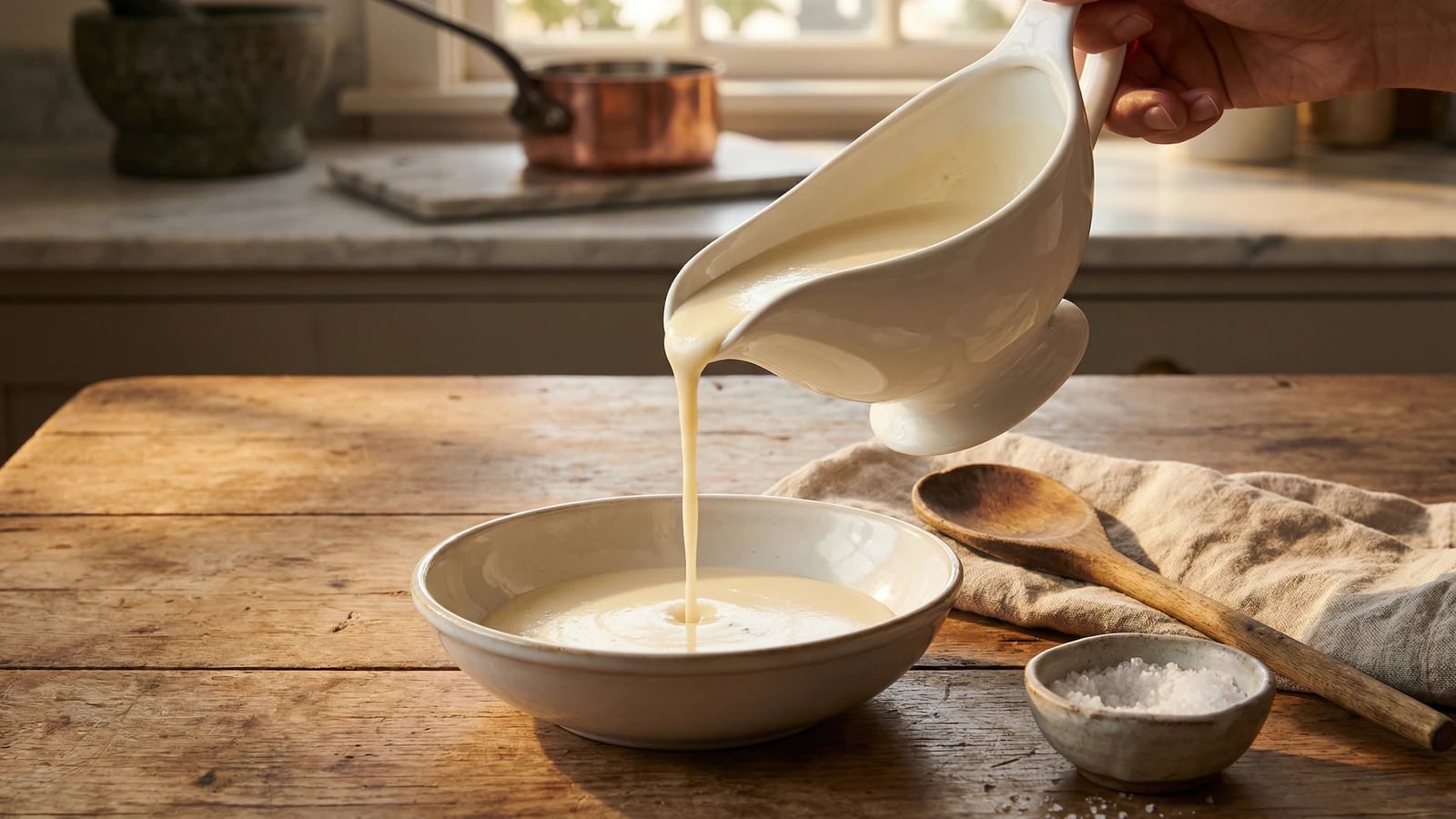
The quiet French mother sauce that proves thickening can be an act of respect rather than disguise, letting your careful stock speak for itself with nothing more than a whisper of blonde roux.
Start with the stock. Everything else is just technique in service of what you already made.
Velouté is the most honest of the mother sauces. Béchamel hides behind dairy. Espagnole builds layers of tomato and mirepoix. But velouté? It takes your stock and gives it body, nothing more. If your stock is alive with flavor, your velouté will be extraordinary. If your stock is weak or tired, no amount of butter or simmering will save you.
This is why I love this sauce. It holds you accountable. The chicken whose bones simmered for hours, the farmer who raised that bird, the care you took skimming and reducing: all of it shows up in the finished sauce. There is nowhere to hide and no reason to want to.
The technique is French, passed down through generations of cooks who understood that a perfect ingredient needs almost nothing done to it. A blonde roux, warm stock, patience. Let things taste of what they are.
Quantity
3 tablespoons
Quantity
3 tablespoons
Quantity
2 cups
warm
Quantity
to taste
Quantity
to taste
| Ingredient | Quantity |
|---|---|
| unsalted butter | 3 tablespoons |
| all-purpose flour | 3 tablespoons |
| light stock (chicken, veal, or fish)warm | 2 cups |
| fine sea salt | to taste |
| white pepper | to taste |
Bring your stock to a gentle simmer in a small saucepan. This is not optional. Cold stock added to hot roux seizes and lumps. Warm stock incorporates smoothly, and the sauce comes together as it should. Keep it warm while you build the roux.
Melt the butter in a heavy-bottomed saucepan over medium heat. When it foams and the foam subsides, add the flour all at once. Stir constantly with a wooden spoon or whisk for two to three minutes. The mixture will bubble and smell faintly of toasted grain. You are looking for a pale blonde color, not brown. The roux should look like wet sand at the beach.
Remove the pan from heat for a moment. Pour in about a third of the warm stock, whisking vigorously. The mixture will seize and thicken immediately. This is right. Return to medium heat and continue whisking until smooth. Add another third of the stock, whisk until incorporated. Add the remaining stock and whisk until the sauce is uniform and silky.
Reduce heat to low and let the sauce simmer gently for fifteen to twenty minutes, stirring occasionally. Impurities and raw flour taste will rise to the surface as a thin skin or foam. Skim these away. The sauce will reduce slightly and develop a velvety sheen. It should coat the back of a spoon and hold a line when you draw your finger through it.
Season with salt and white pepper. Taste. The sauce should taste clearly of your stock, with body and richness but no heaviness. Strain through a fine-mesh sieve into a clean container. If using immediately, keep warm with a circle of parchment or a thin film of butter pressed onto the surface to prevent a skin from forming.
1 serving (about 120g)
Culinary guides, cultural storytelling, and the editorial depth that makes cooking meaningful.
Discover Culinary ExplorerChef Ally
The Loire Valley's gift to home cooks: cold butter whisked into wine and shallots until it transforms into something silky, bright, and impossibly rich. Perfect simplicity.

Chef Ally
A quiet, refined vinaigrette built on the delicate acidity of champagne vinegar, soft enough for butter lettuces and elegant enough for your best dinner party, yet simple enough for any Tuesday.

Chef Ally
A silky white sauce of butter, flour, and milk, perfumed with nutmeg and made honest by the quality of your dairy. This is the foundation upon which a hundred dishes rest.

Chef Dean
A glossy, deeply savory pan sauce built from caramelized mushrooms and shallots, finished with cream and fresh thyme. This is the sauce that transforms a Tuesday pork chop into something worth remembering.