
Chef Ally
Champagne Vinaigrette
A quiet, refined vinaigrette built on the delicate acidity of champagne vinegar, soft enough for butter lettuces and elegant enough for your best dinner party, yet simple enough for any Tuesday.
A cooking platform built around craft, culture, and the stories behind what we eat.
Created by
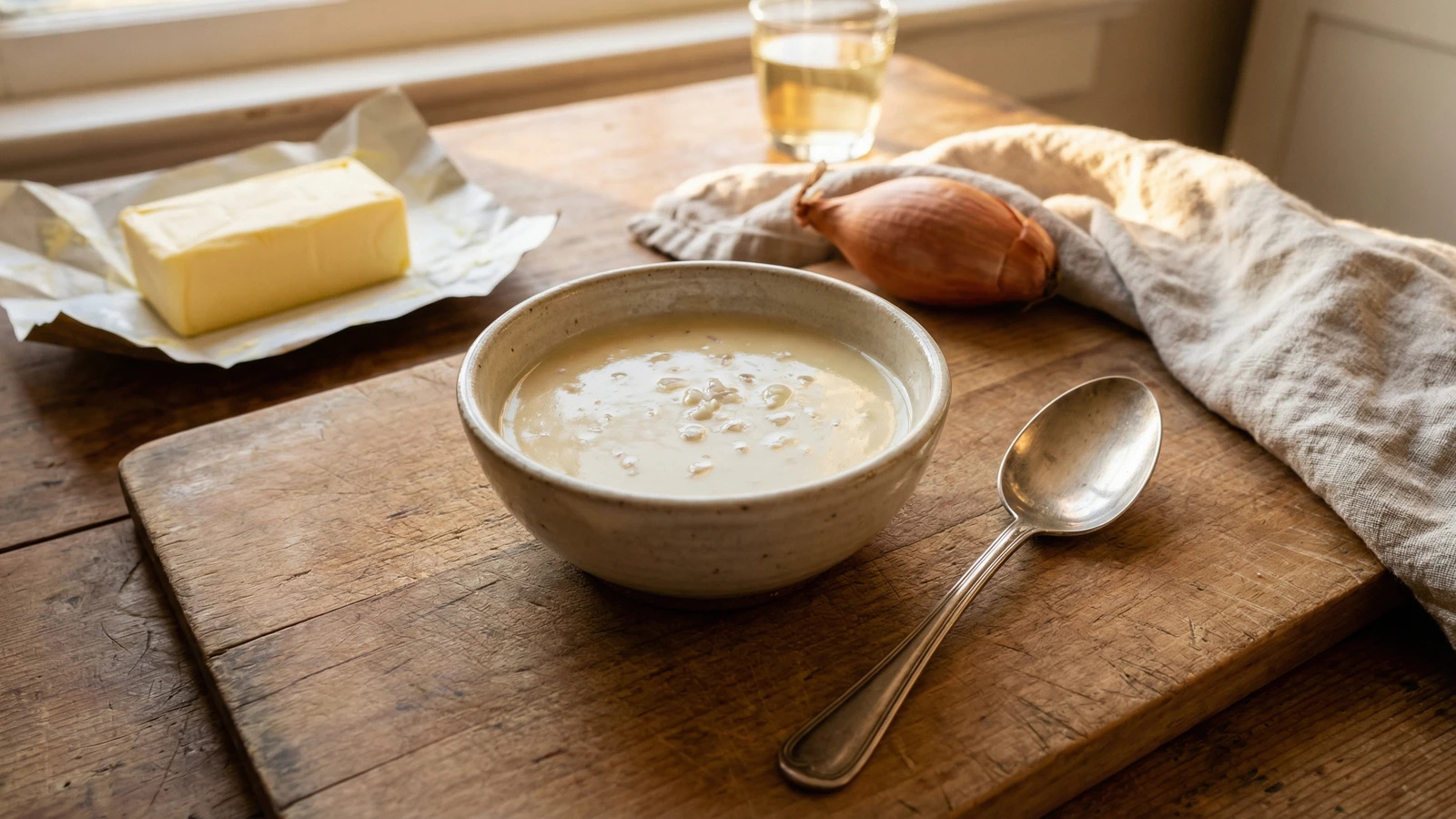
The Loire Valley's gift to home cooks: cold butter whisked into wine and shallots until it transforms into something silky, bright, and impossibly rich. Perfect simplicity.
Start with the butter. Everything depends on it. Find butter from a dairy you trust, from cows that grazed on good pasture. The color should be deep yellow, the aroma clean and sweet. This is a sauce that hides nothing.
Beurre blanc came from the Loire Valley, where women cooked for fishermen and had no use for fuss. They had shallots from the garden, white wine from the region, and good butter. They understood that perfect ingredients need almost nothing done to them.
The technique asks for patience more than skill. You reduce wine and shallots until nearly dry, then coax in cold butter, piece by piece, until it transforms into something silky and emulsified. The sauce should taste bright, rich, and alive. If you rush it, it breaks. If you overheat it, it separates. But when you get it right, there is nothing like it.
This is the sauce that makes a piece of simply poached fish feel like a celebration. Every meal is a meaningful choice, and choosing to make beurre blanc says you believe good butter and ten minutes of attention are worth the trouble.
Quantity
2 tablespoons (about 1 medium)
finely minced
Quantity
1/2 cup
Quantity
2 tablespoons
Quantity
1 cup (2 sticks/226g)
cut into tablespoon-sized pieces
Quantity
to taste
Quantity
to taste
| Ingredient | Quantity |
|---|---|
| shallotsfinely minced | 2 tablespoons (about 1 medium) |
| dry white wine | 1/2 cup |
| white wine vinegar | 2 tablespoons |
| cold unsalted buttercut into tablespoon-sized pieces | 1 cup (2 sticks/226g) |
| fine sea salt | to taste |
| white pepper | to taste |
Cut the cold butter into tablespoon-sized pieces and return them to the refrigerator. The butter must be cold when it meets the reduction. Room temperature butter will not emulsify properly. This small act of preparation makes all the difference.
Combine the minced shallots, white wine, and vinegar in a small heavy-bottomed saucepan. Set over medium heat and bring to a simmer. The shallots will soften and the liquid will begin to reduce. Watch it carefully.
Continue simmering until the liquid reduces to about two tablespoons. The shallots should be soft and translucent, sitting in just enough syrupy liquid to coat the bottom of the pan. This concentration is where the flavor lives. Do not rush it.
Remove the pan from heat and let it cool for thirty seconds. The reduction should be warm but not hot when the butter goes in. If the pan is too hot, the butter will melt too quickly and the sauce will break. This is the moment that requires your full attention.
Return the pan to the lowest possible heat. Add one piece of cold butter and whisk constantly until it is nearly incorporated, leaving just a few visible bits. The butter should soften and emulsify into the reduction, not melt into a pool of fat. Add another piece before the first fully disappears.
Add the remaining butter one piece at a time, whisking constantly and maintaining gentle, steady heat. The sauce will grow creamy and opaque, turning pale ivory with a glossy sheen. Listen to the whisk: it should move smoothly through something that feels like heavy cream. This takes eight to ten minutes of patient attention.
Remove from heat. Season with fine sea salt and white pepper. Taste it. The sauce should be rich but bright, with the wine and vinegar providing lift against all that butter. For a silky finish, strain through a fine-mesh sieve to remove the shallots. For a more rustic presentation, leave them in.
Beurre blanc waits for no one. Serve it the moment it is finished, spooned over poached fish, steamed vegetables, or anything that deserves to be treated gently. If you must hold it briefly, set the pan in a larger pan of warm water, whisking occasionally. It will never be better than it is right now.
1 serving (about 60g)
Culinary guides, cultural storytelling, and the editorial depth that makes cooking meaningful.
Discover Culinary ExplorerChef Ally
A quiet, refined vinaigrette built on the delicate acidity of champagne vinegar, soft enough for butter lettuces and elegant enough for your best dinner party, yet simple enough for any Tuesday.

Chef Ally
A silky white sauce of butter, flour, and milk, perfumed with nutmeg and made honest by the quality of your dairy. This is the foundation upon which a hundred dishes rest.

Chef Dean
A glossy, deeply savory pan sauce built from caramelized mushrooms and shallots, finished with cream and fresh thyme. This is the sauce that transforms a Tuesday pork chop into something worth remembering.

Chef Ally
A living vinaigrette that changes with the seasons and your market haul, built on good oil, sharp vinegar, and whatever tender herbs look most alive today.