
Chef Takumi
Braised Pork Belly (豚の角煮, Buta no Kakuni)
Kakuni looks like a long, stern dish. It isn't. Boil the pork first, simmer it slowly, and the belly turns tender, glossy, and clean-tasting.
A cooking platform built around craft, culture, and the stories behind what we eat.
Created by
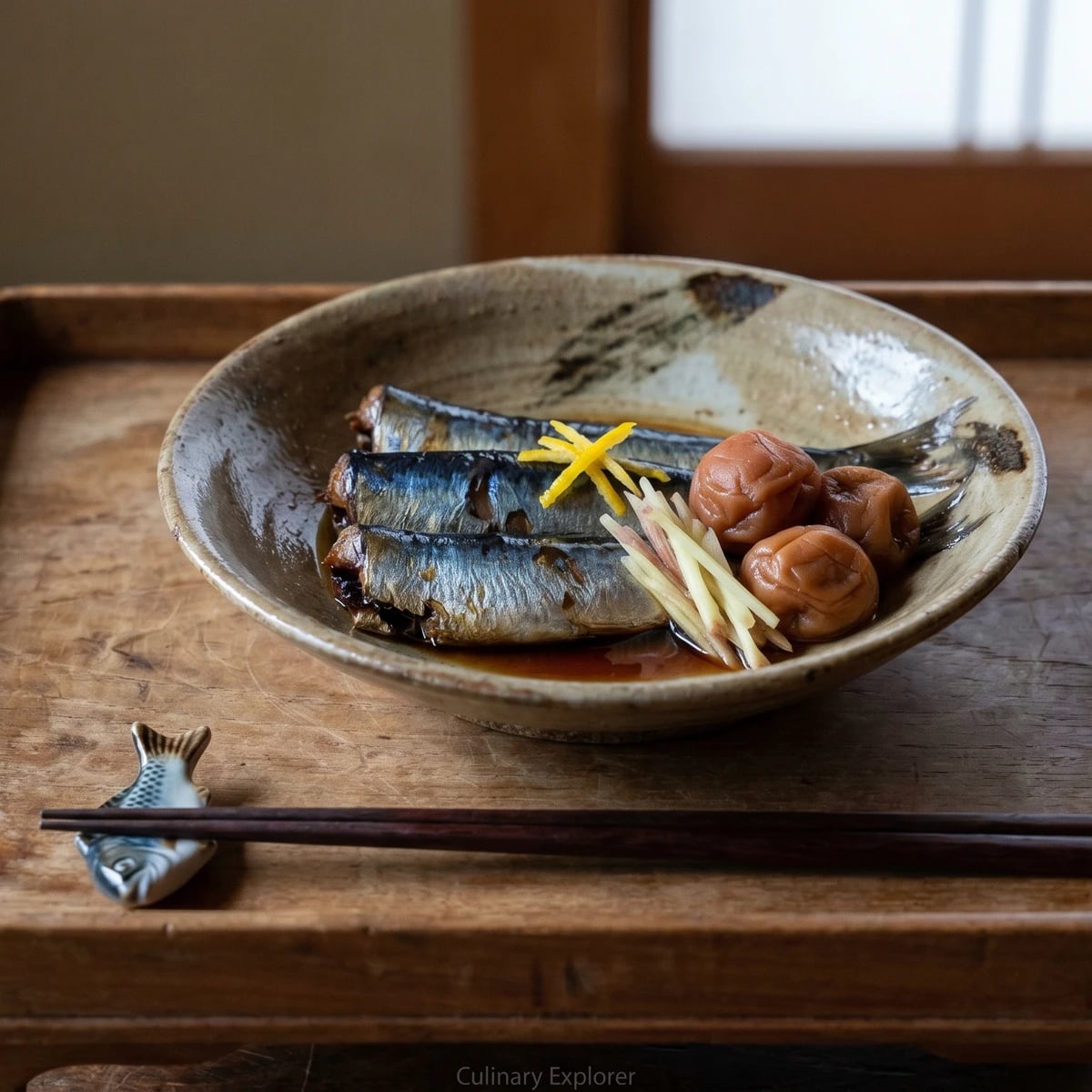
Small sardines, sour plum, and a quiet simmer. The umeboshi clears the oil of the fish, the soy-dark broth settles in, and even the bones soften.
Iwashi makes some cooks nervous. It is small, oily, and honest about the sea. That is exactly why we simmer it with umeboshi, the sharp salted plum that cuts through the richness and leaves the finish clean. Nothing hidden. Just fish at its prime, a few seasonings, and time enough for the pot to do its work.
The first secret is the size of the sardine. Choose small, glistening fresh iwashi with clear eyes and firm bellies, about 10 to 15 cm long if you want the bones to soften in a weeknight pot. Larger sardines can be used, but don't pretend the bones will vanish politely. Fillet them, or eat around the spine. Sourcing first, always.
The simmer must be quiet. A hard boil tosses the fish about, tears the skin, and clouds the broth. A wooden drop-lid, otoshibuta, holds the fish just under the surface so the seasoning moves evenly without stirring. No otoshibuta? A circle of parchment with a small hole in the center does the same sensible work. The umeboshi is not decoration here. Its salt and acidity season the broth, firm the flavor, and make the oil of the iwashi feel clean rather than heavy.
This is summer cooking with backbone: budget friendly, good with rice, and better after it rests. Serve two or three fish, not a heap, with a little of the soy-plum broth spooned over. Leave it room. A dish this plain tells on you if you crowd it.
Iwashi has long been one of Japan's most practical fish, eaten fresh, dried, salted, and simmered in households that needed nourishment without extravagance. Umeboshi, salted and dried Japanese plums, were widely used as a preservative and appetite sharpener by the medieval period, and their sour-salty character made them a natural partner for oily blue-backed fish. Iwashi no umeni belongs to the nimono family of simmered dishes, where the method, not the menu, organizes the cooking.
Quantity
8, about 600g total
heads removed and gutted
Quantity
2
pitted if large and gently torn
Quantity
1 thumb-size piece
thinly sliced
Quantity
1/2 cup
Quantity
1/2 cup
Quantity
3 tablespoons
Quantity
2 tablespoons
Quantity
1 tablespoon
Quantity
1 small strip
thinly cut for serving
| Ingredient | Quantity |
|---|---|
| small fresh sardines (iwashi)heads removed and gutted | 8, about 600g total |
| umeboshipitted if large and gently torn | 2 |
| gingerthinly sliced | 1 thumb-size piece |
| water | 1/2 cup |
| sake | 1/2 cup |
| soy sauce | 3 tablespoons |
| mirin | 2 tablespoons |
| sugar | 1 tablespoon |
| yuzu peel or fresh ginger (optional)thinly cut for serving | 1 small strip |
Rinse the sardines gently under cold water, cleaning the belly cavity with your thumb, then pat them very dry. Wash it twice, wash it thrice, but don't soak them. Quick washing clears bitterness and scales; soaking pulls water into the flesh and dulls the flavor.
Choose a wide pot that holds the sardines in one layer. Add the water, sake, soy sauce, mirin, sugar, torn umeboshi, and sliced ginger, then bring it just to a simmer. Starting the fish in a hot seasoned broth firms the surface quickly, so the skin is less likely to tear.
Slide the sardines into the simmering broth side by side, belly openings facing down if you can manage it. Spoon a little broth over the tops. Don't stir. These are small fish, not stones, and the pot will season them without your help.
Set a wooden drop-lid, otoshibuta, directly on the fish, or use a parchment circle with a small hole cut in the center. Simmer quietly for 35 to 45 minutes, adding a splash of water if the broth drops too low. The drop-lid keeps the sardines bathed in seasoning without stirring, and the gentle heat softens the small bones while keeping the fish whole.
Remove the drop-lid and simmer for 5 to 8 minutes more, basting the sardines with the broth until the liquid looks glossy and soy-dark. Stop while a few spoonfuls remain. Reduce it too far and the umeboshi salt turns harsh, which is a rather stern reward for inattention.
Take the pot off the heat and let the sardines rest at least 20 minutes in their broth. This is when the seasoning settles into the flesh. Serve warm or at room temperature with rice, spooning a little broth over each fish and finishing with yuzu peel or fine ginger if you like.
1 serving (about 180g)
Culinary guides, cultural storytelling, and the editorial depth that makes cooking meaningful.
Discover Culinary Explorer
Chef Takumi
Kakuni looks like a long, stern dish. It isn't. Boil the pork first, simmer it slowly, and the belly turns tender, glossy, and clean-tasting.

Chef Takumi
Chikuzenni looks like a pot full of decisions, but the secret is simple: cut each ingredient with care, saute first, then simmer gently until everything tastes like itself.

Chef Takumi
Kanazawa's famous simmered dish is simpler than it looks: good poultry, clear dashi, a light dusting of flour, and wasabi added only at the end.

Chef Takumi
A strong fish, treated honestly: salt, rinse, simmer gently, then let red miso thicken around it until the sauce clings dark and glossy.