
Chef Lupita
Aceite de Chiltepin Bajacaliforniano
Baja California's wild chiltepin steeped in olive oil with garlic, orejon, and lime peel, until the oil turns ruby-amber and carries the slow, sneaky burn of the desert coast.
A cooking platform built around craft, culture, and the stories behind what we eat.

Created by
Sonora's chiltepín-driven salsa macha, a glass jar of wild desert chile, peanuts, sesame, and garlic slow-fried in oil until everything turns mahogany. Spoon it over anything that came off the parrilla.
Salsa macha is from Veracruz. The original, the one made with chile morita and pasilla and pureed almost smooth, belongs to the Gulf coast and to the cooks of the Orizaba and Coatepec sierra. Let me say that first because the people of Veracruz earned it.
But what you are making here is the noroeste version. Sonora's. And it is its own animal. The defining ingredient is chiltepín, the wild round chile that grows on shrubs in the foothills of the Sierra Madre Occidental, harvested by hand from August through October by families who have been doing it for generations. Sonoran cooks call it the mother of all chiles because botanists believe it is genetically the closest living relative to the original wild capsicum that every other chile in the world descends from. You hold a chiltepín in your palm and you are holding the beginning of the chile family.
The Sonoran macha has texture. It is not pureed. The peanut stays in pieces, the sesame stays whole, the chiltepín cracks but does not pulverize. The fat is neutral oil, sometimes cut with a little olive oil, never lard, because this is a noroeste sauce and the noroeste cooks differently than central Mexico. It is built for the parrilla, for the carne asada that defines a Sonoran weekend, for a flour tortilla the size of a dinner plate, for the mariscos that come off the Sea of Cortez.
My mother's notebook does not have a recipe for this one. Sonora was not her territory. I learned this version from a senora named Doña Beatriz at the mercado in Hermosillo, who sold chiltepines en frasco out of a wooden crate and corrected my Spanish three times before she would tell me how she made it. Cada estado, su propia cocina, and Sonora's belongs to the desert and to the chile that grows there wild.
Chiltepín (Capsicum annuum var. glabriusculum) is the only chile native to what is now the United States and northern Mexico that is still primarily harvested wild rather than cultivated, and the Sonoran town of Baviácora has held an annual Feria del Chiltepín since the 1990s to honor the harvest. The salsa macha format itself originated in Veracruz, almost certainly in the Papaloapan and Orizaba regions, where 19th-century cooks built versions on local chile seco and adopted Mediterranean techniques of frying chiles in oil from the Spanish escabeche tradition. The Sonoran adaptation, anchored in chiltepín and peanut rather than morita and almond, emerged in the late 20th century as the macha format spread north and was rebuilt around the noroeste pantry, with the wild chile and the peanut crops of the Yaqui Valley replacing the Gulf coast ingredients of the original.
Quantity
1 1/2 cups
preferably a mix of vegetable oil and a few tablespoons of olive oil
Quantity
1 whole
cloves peeled and left whole
Quantity
1/2 cup
skins on
Quantity
3 tablespoons
Quantity
20 to 30
Quantity
15
stemmed
Quantity
2
stemmed
Quantity
1 1/2 teaspoons
Quantity
1 teaspoon
oregano sonorense if you can find it
Quantity
1 tablespoon
| Ingredient | Quantity |
|---|---|
| neutral oilpreferably a mix of vegetable oil and a few tablespoons of olive oil | 1 1/2 cups |
| head of garliccloves peeled and left whole | 1 whole |
| raw Spanish peanutsskins on | 1/2 cup |
| raw white sesame seeds (ajonjolí) | 3 tablespoons |
| dried chile chiltepín | 20 to 30 |
| dried chile de árbolstemmed | 15 |
| dried chile cola de rata (optional)stemmed | 2 |
| kosher salt | 1 1/2 teaspoons |
| dried Mexican oreganooregano sonorense if you can find it | 1 teaspoon |
| apple cider vinegar | 1 tablespoon |
Have everything within arm's reach before the oil ever touches the heat. The chiltepines, the árbol, the peeled garlic, the peanuts, the sesame, the salt, the oregano, and a heatproof bowl with a fine-mesh strainer set over it nearby. Once you start frying you cannot leave the stove. The chiltepín is small and stubborn but the sesame and the garlic burn in seconds. No me vengas con atajos.
Pour the oil into a heavy small saucepan or a 2-quart cazuela and set it over medium-low heat. Add the whole peeled garlic cloves while the oil is still cold. Let them come up to temperature together. The garlic should sizzle gently, never aggressively. After about 6 to 8 minutes, the cloves will turn pale gold and smell sweet. Lift them out with a slotted spoon and set aside on a plate. They are not done cooking. They are resting.
Slip the raw peanuts into the same warm oil. Stir them gently with a wooden spoon. They take about 3 to 4 minutes to turn a deep tan, the color of mesquite bark. Pull them out the second the skins start to crackle and the kitchen smells like a roadside botanero in Hermosillo. Drain them on the plate with the garlic. Burned peanuts taste like ash and there is no salvaging the salsa once that flavor is in the oil.
Drop the sesame seeds into the oil. They cook fast, 30 to 45 seconds, and you want them the color of wet sand turning dry. Stir constantly. Lift them out with a fine-mesh strainer or a small spider and add them to the plate. The oil should now smell deeply nutty. That is the foundation.
Lower the heat to low. Add the chile de árbol and the cola de rata first; they are larger and need a few seconds to bloom. Within 20 seconds they will turn from dull red to a glossy brick. Now add the chiltepines all at once. They will sputter and dance. Stir constantly for 15 to 20 seconds, no longer. The chiltepín is small and turns bitter the instant it blackens. The moment the kitchen smells like the desert after rain, pull the pan off the heat. The chiles will keep cooking in the residual heat. Asi se hace y punto.
Let the pan sit off the heat for at least 15 minutes. The oil should be warm, not hot, before you process anything. While it cools, chop the fried garlic and the peanuts roughly with a knife on a mesquite cutting board. Do not blend them smooth. Sonoran salsa macha has texture. You should see the peanut, the seed, the broken chiltepín. This is not a Veracruzano macha pureed in a blender; this is the noroeste version, built for the parrilla and meant to crunch.
Stir the chopped peanuts and garlic, the sesame seeds, the salt, the oregano crumbled between your palms, and the apple cider vinegar back into the warm oil with the chiles. Taste a small spoonful on a piece of bread or a saltine. It should hit you with chiltepín first, then the sweet garlic and peanut, then a slow citrus-bright finish from the vinegar. Adjust salt now. Transfer to a clean glass jar and let it sit at room temperature for at least 4 hours before using. Overnight is better. The flavor settles into the oil the way a sauce should.
Spoon it over carne asada, over a flour tortilla blistered on the comal, over a fried egg, over machaca, over grilled fish from the Sea of Cortez, over a thick slab of queso menonita. The Sonoran cook keeps a jar on the counter, not in the fridge. As long as the chile and the solids stay submerged in oil, it will keep for two months and the flavor will only deepen. Recetas probadas y garantizadas.
1 serving (about 15g)
Culinary guides, cultural storytelling, and the editorial depth that makes cooking meaningful.
Discover Culinary ExplorerChef Lupita
Baja California's wild chiltepin steeped in olive oil with garlic, orejon, and lime peel, until the oil turns ruby-amber and carries the slow, sneaky burn of the desert coast.

Chef Lupita
Puebla's Lenten convent adobo, a brick-red vinegar chile paste of ancho, guajillo, garlic, oregano, and comino made to dress fish for the meatless calendar.
Chef Lupita
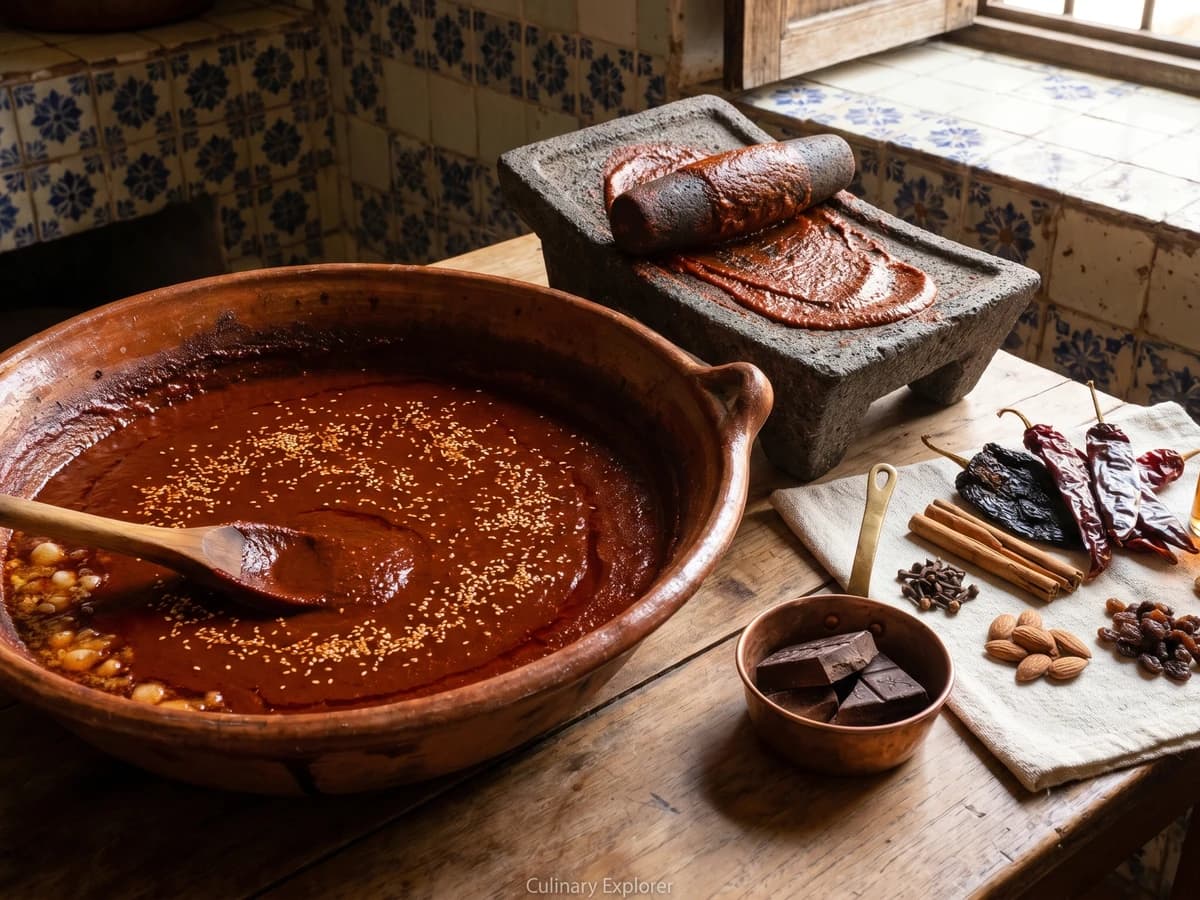
Zacatecas' wedding-table adobo, built from toasted guajillo and ancho, piloncillo, sour orange, chocolate, canela, clavo, almonds, sesame, and lard.

Chef Lupita
Puebla's convent kitchens built this adobo with ancho, guajillo, jerez, almonds, raisins, clove, and lard, a baroque marinade that stains pork loin and finishes as the sauce.