
Chef Lupita
Aceite de Chiltepin Bajacaliforniano
Baja California's wild chiltepin steeped in olive oil with garlic, orejon, and lime peel, until the oil turns ruby-amber and carries the slow, sneaky burn of the desert coast.
A cooking platform built around craft, culture, and the stories behind what we eat.
Created by
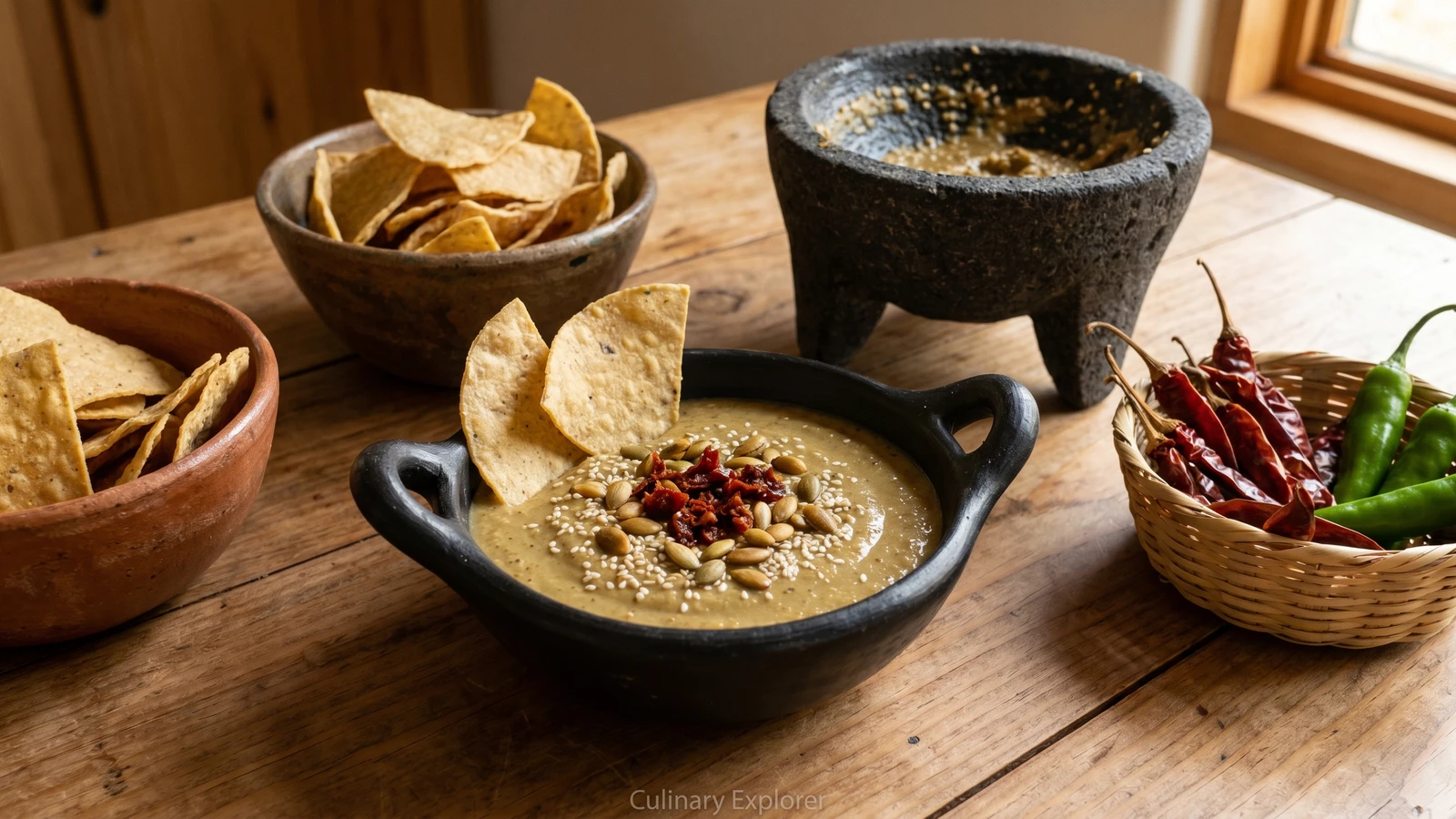
Chiapas' Central Depression gives this salsa its grammar: toasted pepita, peanut, sesame, and chile simojovel ground into a thick seed paste for totopos, not a show of chile heat.
Chiapas, in the Central Depression between Tuxtla Gutierrez and Chiapa de Corzo, is where this salsa belongs. You see it in clay bowls on family tables, thick enough to cling to a totopo, made from seeds toasted on a comal until the kitchen smells nutty and serious. This is not a loose table salsa. This is a paste with weight.
The chile here is chile simojovel, the small red chile from the Chiapas highlands. It is not pasilla. It is not there to punish anybody. The work is done by pepita de calabaza, cacahuate, and ajonjoli, each toasted separately because each burns at its own speed. Seeds have their own discipline. Ignore that and the sauce turns bitter.
I learned a version like this from a woman in the Tuxtla market who corrected my hand before I had finished grinding. More water later, she said. First make the paste understand itself. She was right. Grind the chile with salt, grind the seeds until they release their oil, then loosen the sauce only enough for dipping. Cada estado, su propia cocina. Chiapas speaks in seed and comal.
Pepita-based sauces belong to an old Mesoamerican family of ground seed preparations, built from squash seeds, chile, and maize long before the Spanish arrived. Sesame entered southern Mexican cooking after the conquest through colonial trade routes, while peanut moved through broader American foodways and became common in regional sauces where its oil and body helped stretch richer ingredients. The Chiapas version should not be confused with Yucatan's sikil p'ak or with Oaxacan chile pastes: its balance comes from pepita, peanut, sesame, and a restrained use of chile simojovel.
Quantity
1 cup
Quantity
1/2 cup
skinless if possible
Quantity
1/4 cup
Quantity
3
stemmed and seeds shaken out
Quantity
2
Quantity
1/4 medium
Quantity
2
unpeeled
Quantity
1 small
center rib removed
Quantity
3/4 teaspoon, plus more to taste
Quantity
3/4 cup, plus more as needed
Quantity
1 tablespoon
Quantity
for serving
| Ingredient | Quantity |
|---|---|
| raw hulled pumpkin seeds (pepitas de calabaza) | 1 cup |
| raw unsalted peanutsskinless if possible | 1/2 cup |
| white sesame seeds (ajonjoli) | 1/4 cup |
| dried chile simojovelstemmed and seeds shaken out | 3 |
| ripe Roma tomatoes | 2 |
| white onion | 1/4 medium |
| garlic clovesunpeeled | 2 |
| momo leaf, also called hoja santa in Chiapas and Tabascocenter rib removed | 1 small |
| sea salt | 3/4 teaspoon, plus more to taste |
| warm water | 3/4 cup, plus more as needed |
| fresh lime juice | 1 tablespoon |
| totopos de maiz (optional) | for serving |
Heat a dry comal over medium-low heat. Toast the pepitas first, stirring constantly, until they puff, pop lightly, and smell green and nutty, 3 to 4 minutes. Move them to a plate. Toast the peanuts until golden in spots, 4 to 5 minutes, then toast the sesame seeds until pale gold, about 1 minute. Do not toast them together. Pepita, peanut, and sesame do not keep the same clock.
On the same comal, toast the chile simojovel for 10 to 15 seconds per side, just until fragrant and a shade darker. It is small and it burns fast. This chile gives a Chiapas edge to the sauce, not a mouthful of fire.
Place the tomatoes, onion, and unpeeled garlic on the comal. Turn them as they blister. The tomatoes should soften and collapse in spots, the onion should char at the edges, and the garlic skins should blacken while the inside turns sweet. Peel the garlic. Pass the momo leaf over the hot comal for 5 seconds per side, just until glossy and flexible.
In a molcajete, grind the toasted chile simojovel with the salt until it becomes a red paste. Add the pepitas by handfuls, then the peanuts, then the sesame, grinding until the seeds release their oil and the mixture clumps against the stone. If using a blender or food processor, pulse the toasted seeds and chile with the salt until finely ground, scraping often. Do not turn it into smooth nut butter. You want a thick, living paste.
Work in the roasted garlic, onion, tomatoes, and momo leaf. Add the warm water a little at a time, grinding or pulsing until the salsa is thick but spoonable. It should hold ridges when stirred and still loosen enough to catch on the edge of a totopo. Stir in the lime juice and taste for salt.
Let the salsa rest for 30 minutes before serving. The seeds drink the liquid and the flavor settles. If it tightens too much, add warm water one tablespoon at a time. Serve in a Chiapas clay bowl with totopos de maiz. This is a dipping sauce, not a pourable salsa. Asi se hace y punto.
1 serving (about 65g)
Culinary guides, cultural storytelling, and the editorial depth that makes cooking meaningful.
Discover Culinary ExplorerChef Lupita
Baja California's wild chiltepin steeped in olive oil with garlic, orejon, and lime peel, until the oil turns ruby-amber and carries the slow, sneaky burn of the desert coast.

Chef Lupita
Puebla's Lenten convent adobo, a brick-red vinegar chile paste of ancho, guajillo, garlic, oregano, and comino made to dress fish for the meatless calendar.
Chef Lupita
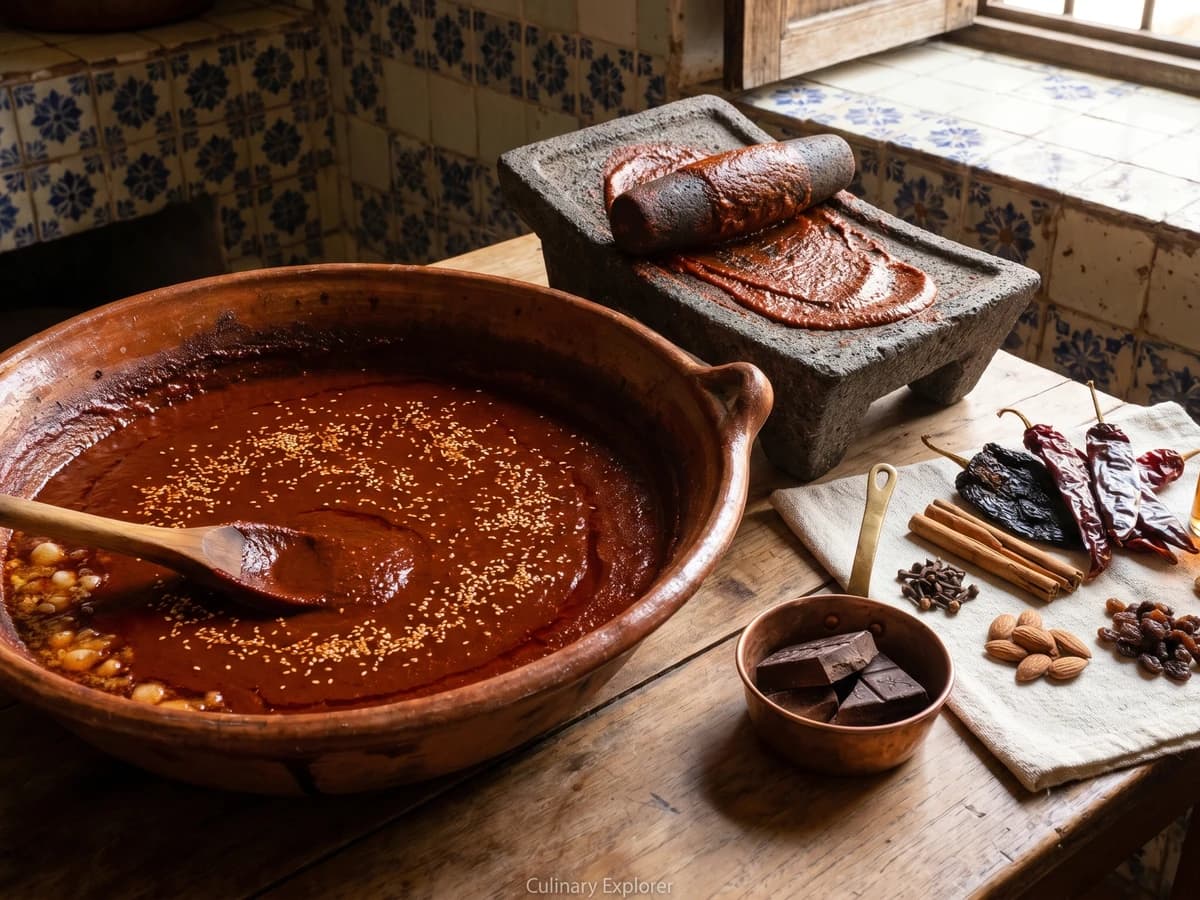
Zacatecas' wedding-table adobo, built from toasted guajillo and ancho, piloncillo, sour orange, chocolate, canela, clavo, almonds, sesame, and lard.

Chef Lupita
Puebla's convent kitchens built this adobo with ancho, guajillo, jerez, almonds, raisins, clove, and lard, a baroque marinade that stains pork loin and finishes as the sauce.