
Chef Zohra
Bakoula (بقولة)
Mallow greens cooked soft and dark with garlic, cumin, preserved lemon, and olives, the Moroccan cooked salad that tastes of spring rain and a loaf of khobz shared warm.
A cooking platform built around craft, culture, and the stories behind what we eat.
Created by
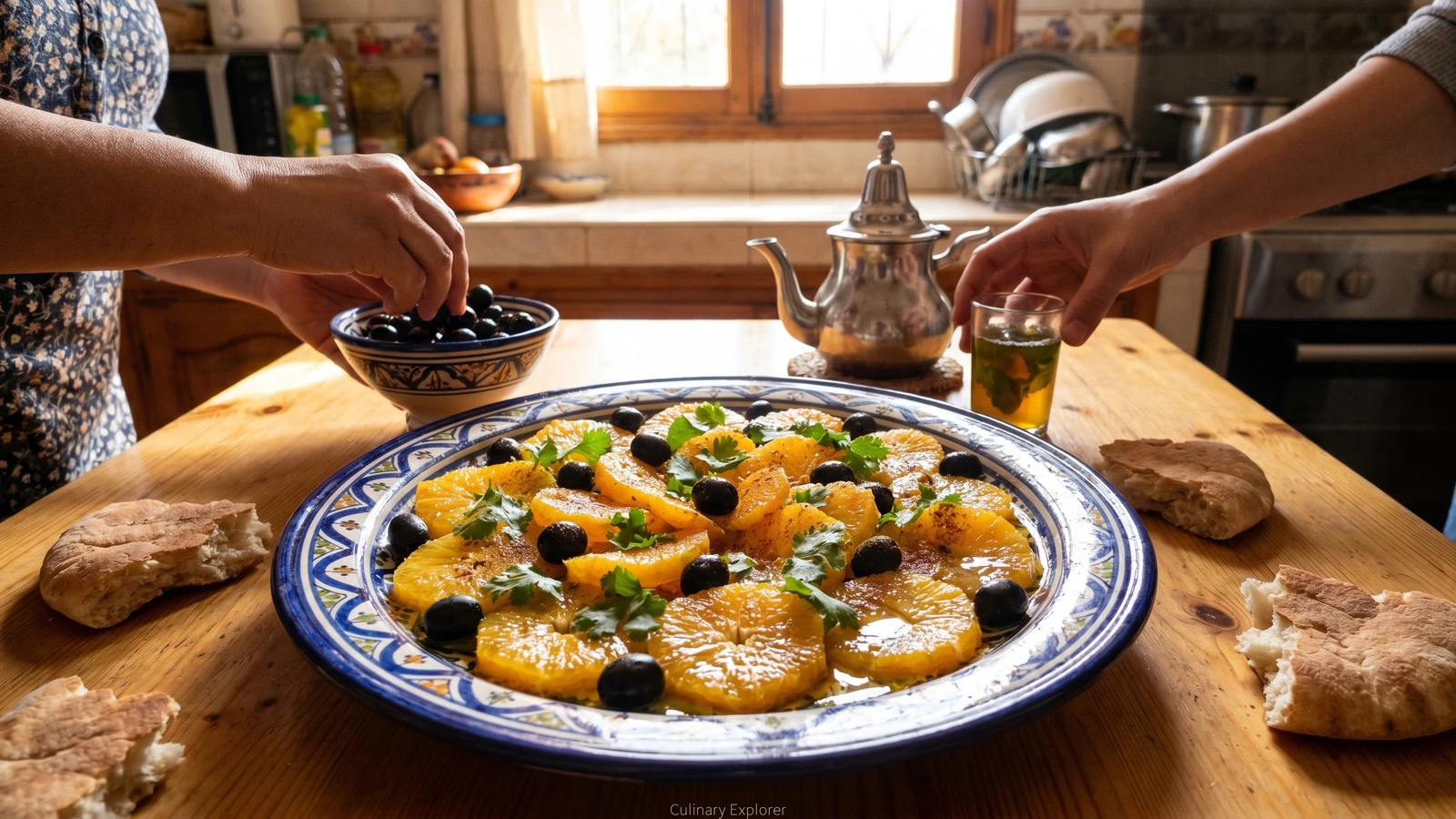
A winter Moroccan salad where sweet oranges meet black olives, olive oil, cumin, and paprika. Cold, bright, salty, and generous, it startles in the old way.
When the oranges are heavy in the hand and their skin smells bright before you even cut it, this is the salad you make. Not in August. In winter, when citrus is full of juice and costs least because the market is telling the truth. Slice the fruit cleanly, catch the juice, and don't drown it. The olive oil should shine, not cover.
Citrus entered Morocco through medieval Islamic and Andalusi agronomy, with bitter orange established in the Maghreb by the 10th to 12th centuries and sweet oranges spreading later through Mediterranean trade. The pairing of oranges with olives belongs to the shared cold-salad register of Moroccan tables, especially in citrus regions such as Berkane, the Souss, and the old city markets of Fez and Marrakech. Its exact origin is not fixed, and that is honest: Muslim, Jewish-Moroccan, and regional city kitchens all kept versions of sweet fruit sharpened by salt, oil, and spice.
Quantity
5 large
peeled and sliced into rounds
Quantity
80g
pitted if you like
Quantity
3 tbsp
Quantity
1 tbsp
caught from slicing
Quantity
1/2 tsp, or to taste
Quantity
1/4 tsp
Quantity
1 small pinch
Quantity
1 tbsp
chopped
Quantity
1 tsp
used lightly
| Ingredient | Quantity |
|---|---|
| sweet orangespeeled and sliced into rounds | 5 large |
| Moroccan black olivespitted if you like | 80g |
| extra-virgin olive oil | 3 tbsp |
| orange juicecaught from slicing | 1 tbsp |
| ground cumin | 1/2 tsp, or to taste |
| sweet paprika | 1/4 tsp |
| sea salt | 1 small pinch |
| fresh coriander leaves (optional)chopped | 1 tbsp |
| orange blossom water (optional)used lightly | 1 tsp |
Cut the top and bottom from each orange, then slice away the peel and white pith with a sharp knife. Work over a bowl so you catch the juice. The pith is bitter, and this salad has no sauce to hide it.
Cut the oranges into thin rounds, about the thickness of a coin, and lay them on a wide platter with a little overlap. Pour over the juice you caught, but leave behind any seeds.
Scatter the olives between the orange slices. Drizzle with olive oil, then dust with cumin, paprika, and a small pinch of salt. La balance est dans les yeux, the scale is in the eyes: the fruit should still taste like orange, with the spice waking it up.
Let the salad sit for 10 minutes so the salt pulls a little juice from the oranges and the oil turns glossy around the edges. Add coriander and a few drops of orange blossom water only if your table likes it. Serve cool, with bread nearby for the last orange-salty oil on the platter.
1 serving (about 160g)
Culinary guides, cultural storytelling, and the editorial depth that makes cooking meaningful.
Discover Culinary ExplorerChef Zohra
Mallow greens cooked soft and dark with garlic, cumin, preserved lemon, and olives, the Moroccan cooked salad that tastes of spring rain and a loaf of khobz shared warm.

Chef Zohra
Potatoes simmered until tender, then turned while warm through chermoula, garlic, cumin, paprika, coriander, olive oil, and preserved lemon. This is a weeknight Moroccan salad that still opens the table.

Chef Zohra
Fresh fava beans cooked until tender, then folded warm into chermoula of garlic, cumin, paprika, coriander, and preserved lemon. Spring food for a shared bowl, carried to the table with bread.
Chef Zohra
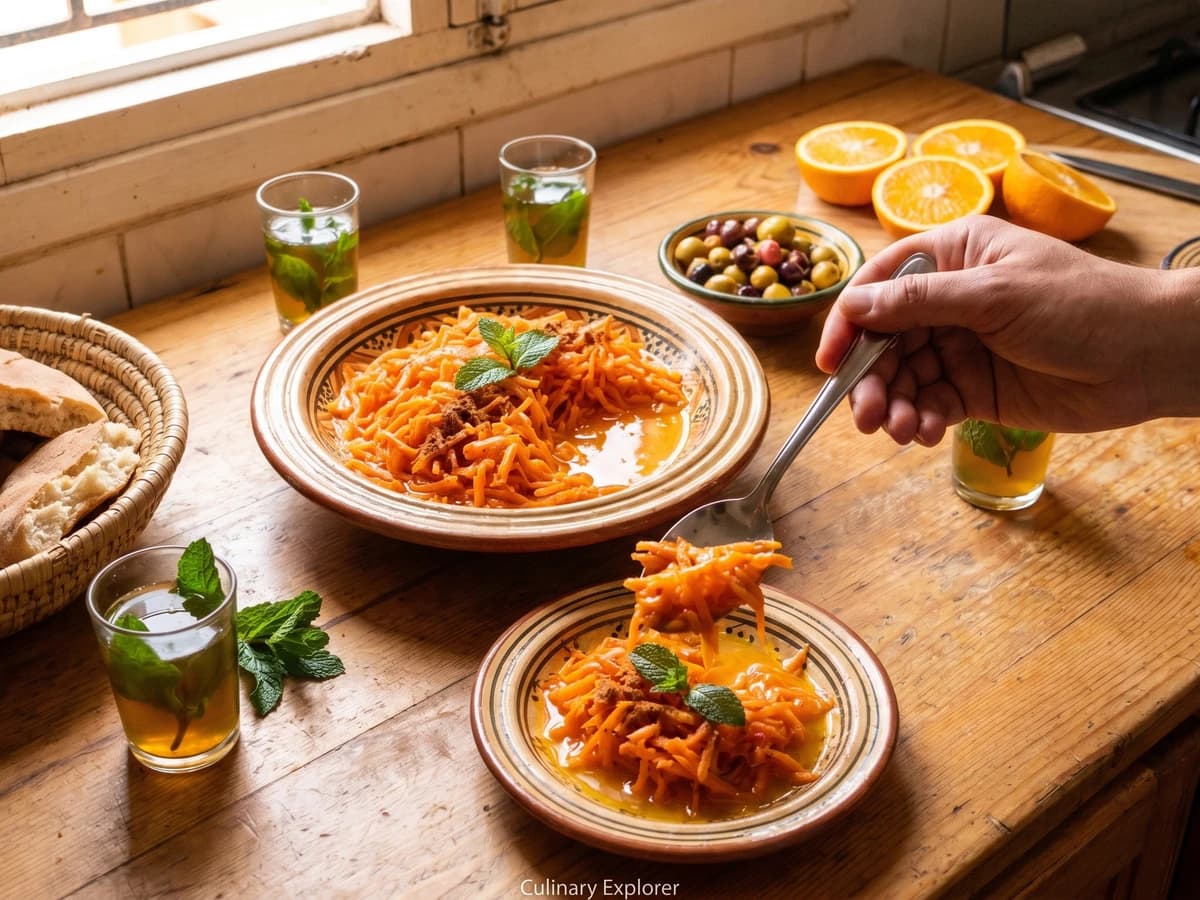
Fine-grated carrot dressed with orange juice, a little sugar, orange-flower water, and cinnamon. Khizou bel limoun is the fresh raw counterpoint that wakes up a Moroccan table.