Culinary Explorer

A cooking platform built around craft, culture, and the stories behind what we eat.
Discover Culinary Explorer
Batata Mchermla (بطاطا مشرملة)

Batata Mchermla (بطاطا مشرملة)

Created by

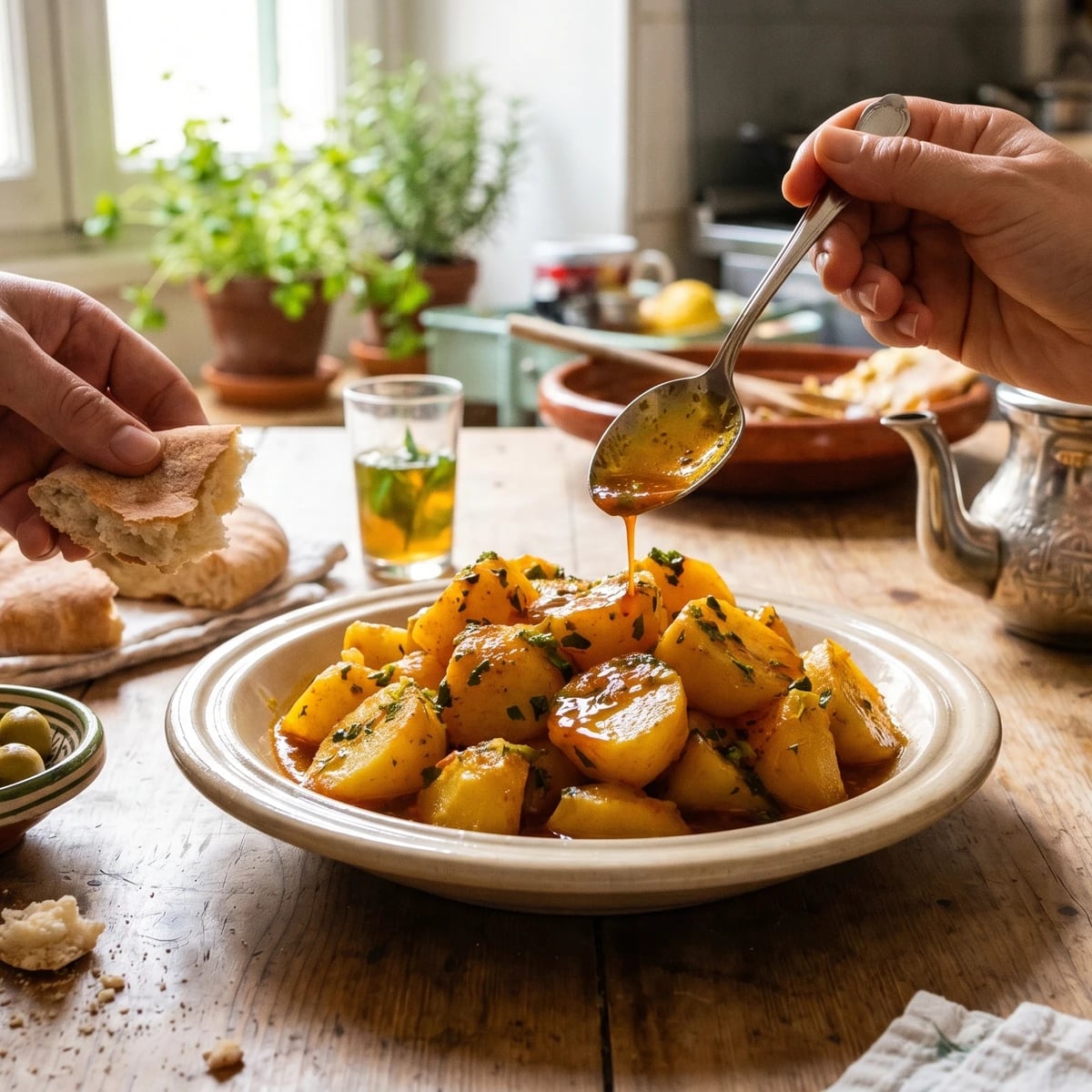
Potatoes simmered until tender, then turned while warm through chermoula, garlic, cumin, paprika, coriander, olive oil, and preserved lemon. This is a weeknight Moroccan salad that still opens the table.

Salads
Moroccan
Weeknight
Budget Friendly
Comfort Food
15 min
Active Time
20 min cook35 min total
Yield4 to 6 servings

The potato must meet the chermoula while it's still warm. That is the gesture that decides this dish. Cold potato sits there politely, taking almost nothing. Warm potato drinks the oil, garlic, cumin, paprika, coriander, and preserved lemon until every piece tastes awake.

Batata mchermla belongs among the small cooked salads that fill a Moroccan table before the main dish arrives, but don't treat it as decoration. Put it in the middle with bread, olives, maybe eggs or grilled fish if the evening asks for more. It feeds well, costs little, and leaves nobody feeling like an afterthought.

Cut the potatoes evenly so they cook together, then dress them gently so they don't break into mash. The scale is in the eyes, la balance est dans les yeux: enough oil to gloss, enough lemon to brighten, enough cumin that you smell it before you taste it. A table is a door you leave open, and a bowl of potatoes like this makes one more place without fuss.

Chermoula belongs to the Maghrebi family of herb, garlic, spice, oil, and acid preparations used especially for fish along the Atlantic coast from Essaouira to Casablanca, with related forms across Morocco and Algeria. Potatoes entered Moroccan kitchens after the Columbian exchange, becoming common by the 19th century through Mediterranean and Atlantic trade, then settled easily into cooked salad tables. Batata mchermla is not tied to one royal kitchen or one city; it lives in the daily repertoire of des cuisines marocaines, where the same chermoula grammar dresses fish, carrots, potatoes, and olives.

The technique, the tradition, and the story behind every dish.

Discover Culinary Explorer

Ingredients

waxy potatoes

Quantity

900g

peeled and cut into 2.5cm pieces

fine sea salt

Quantity

2 tsp, divided

plus more to taste

extra-virgin olive oil

Quantity

4 tbsp

garlic cloves

Quantity

3

finely grated or pounded

ground cumin

Quantity

1 1/2 tsp

sweet paprika

Quantity

1 tsp

hot paprika or cayenne (optional)

Quantity

1/4 tsp

preserved lemon rind

Quantity

1/2 lemon

pulp removed, finely chopped

fresh lemon juice

Quantity

2 tbsp, or to taste

fresh coriander

Quantity

1 small bunch

finely chopped

flat-leaf parsley

Quantity

2 tbsp

finely chopped

potato cooking water

Quantity

2 to 4 tbsp

as needed

freshly ground black pepper

Quantity

to taste

green olives (optional)

Quantity

a small handful

for serving

Equipment Needed

  • Medium pot for simmering potatoes
  • Wide saute pan
  • Shallow serving bowl

Instructions

  1. 1

    Cook the potatoes

    Put the potatoes in a pot with cold water to cover by 3cm and add 1 1/2 tsp salt. Bring to a gentle boil, then simmer until a knife enters cleanly but the pieces still hold their corners, about 12 to 16 minutes. Save a small cup of the cooking water, then drain well.

  2. 2

    Wake the chermoula

    While the potatoes cook, warm the olive oil in a wide pan over low heat. Add the garlic, cumin, sweet paprika, hot paprika if using, and the remaining 1/2 tsp salt. Stir for 30 to 45 seconds, just until the garlic smells round and the spices bloom into the oil. Don't brown the garlic, bitterness is a poor guest.

    Blooming the spices in oil carries their flavor across the potatoes; dry spice thrown on at the end stays dusty.
  3. 3

    Dress while warm

    Add the drained potatoes to the pan while they are still warm. Fold gently with a spoon or your hands once they are cool enough to touch, adding 2 tbsp potato cooking water to loosen the sauce. The pieces should turn amber-red and glossy, not wet.

  4. 4

    Finish with lemon

    Take the pan off the heat and fold in the preserved lemon rind, lemon juice, coriander, parsley, and black pepper. Taste with bread, not with the spoon alone, because this salad is eaten with bread. Add more lemon or salt only after the preserved lemon has had a minute to speak.

  5. 5

    Serve at the table

    Spoon the batata mchermla into a shallow bowl and let it sit 10 minutes so the potatoes finish drinking the dressing. Serve warm or at room temperature, with olives if you like and round khobz for scooping.

Chef Tips

  • Use waxy potatoes if you can. Floury potatoes fall apart before the chermoula has time to cling.
  • Preserved lemon is not fresh lemon. Fresh lemon gives sharpness; preserved lemon gives salt, perfume, and that deep citrus taste Moroccan cooked salads need.
  • If your cumin has been open for a year, it will taste tired. Toast whole cumin and grind it if you can. With spices, cooking becomes alchemy, but only when the spices are alive.
  • This dish takes well to green olives, but don't bury the potatoes under them. The chermoula is the center.

Advance Preparation

  • You can cook the potatoes up to 1 day ahead, but dress them warm if possible. If they are already cold, let them come to room temperature before folding through the chermoula.
  • Batata mchermla keeps 2 days in the refrigerator. Bring it back to room temperature and refresh with a small spoon of olive oil, a squeeze of lemon, and a little chopped coriander before serving.

Frequently Asked Questions

Nutrition Information

1 serving (about 185g)

Calories
185 calories
Total Fat
9 g
Saturated Fat
1 g
Trans Fat
0 g
Unsaturated Fat
7 g
Cholesterol
0 mg
Sodium
880 mg
Total Carbohydrates
30 g
Dietary Fiber
3 g
Sugars
2 g
Protein
3 g

Note: Chef personas and recipes are created with AI assistance. Cook with care: follow safe food-handling practices, check doneness with a thermometer when needed, and adapt for allergies and your kitchen.

Where cooking meets culture.

Culinary guides, cultural storytelling, and the editorial depth that makes cooking meaningful.

Discover Culinary Explorer

More from Moroccan Salads (Salades Cuites & Crues)

Browse the full collection