
Chef Zohra
Batata Mchermla (بطاطا مشرملة)
Potatoes simmered until tender, then turned while warm through chermoula, garlic, cumin, paprika, coriander, olive oil, and preserved lemon. This is a weeknight Moroccan salad that still opens the table.
A cooking platform built around craft, culture, and the stories behind what we eat.

Created by
Mallow greens cooked soft and dark with garlic, cumin, preserved lemon, and olives, the Moroccan cooked salad that tastes of spring rain and a loaf of khobz shared warm.
When the first wild khoubiza appears after the rains, the market changes color. The leaves sit in loose green heaps, a little dusty, not grand at all, and the women who know them buy quickly. This is the season for bakoula: mallow cooked down until it turns dark, glossy, and almost creamy, sharpened with preserved lemon and held together by olive oil.
Khoubiza is the Moroccan name for wild mallow, a spring green gathered across the Atlantic plains and sold in markets from Rabat and Salé down toward Casablanca after the winter rains. The dish belongs less to palace cooking than to the older household repertoire of foraged greens, a register shared across des cuisines marocaines, from Muslim to Jewish-Moroccan tables. Its exact dating is not fixed, but mallow appears in medieval Arabic medical and agricultural writing as both food and useful plant, which tells us this green has been close to Maghrebi kitchens for many centuries.
Quantity
1 kg
washed very well, thick stems removed
Quantity
1 kg
use when khoubiza is out of season
Quantity
4 tbsp, plus more to finish
Quantity
4
finely grated or crushed
Quantity
1 small
pulp removed, peel finely chopped
Quantity
2 tbsp
chopped
Quantity
2 tbsp
chopped
Quantity
1 tsp
Quantity
1 tsp
Quantity
1/4 tsp
Quantity
1/2 tsp, plus more to taste
Quantity
2 tbsp
only if the preserved lemon needs help
Quantity
100g
rinsed
Quantity
1 small handful
chopped, for finishing
| Ingredient | Quantity |
|---|---|
| fresh khoubiza (mallow greens)washed very well, thick stems removed | 1 kg |
| spinach or Swiss chard (optional)use when khoubiza is out of season | 1 kg |
| olive oil | 4 tbsp, plus more to finish |
| garlic clovesfinely grated or crushed | 4 |
| preserved lemonpulp removed, peel finely chopped | 1 small |
| fresh corianderchopped | 2 tbsp |
| fresh parsleychopped | 2 tbsp |
| ground cumin | 1 tsp |
| sweet paprika | 1 tsp |
| cayenne pepper (optional) | 1/4 tsp |
| sea salt | 1/2 tsp, plus more to taste |
| lemon juice (optional)only if the preserved lemon needs help | 2 tbsp |
| Moroccan olivesrinsed | 100g |
| fresh coriander (optional)chopped, for finishing | 1 small handful |
Wash the khoubiza in several changes of cold water, lifting the leaves out each time so the grit stays behind. Be patient here. Wild greens carry the field with them, and one sandy bite can spoil the whole plate. Strip away tough stems and keep the tender stems if they snap easily.
Put the washed greens in a wide pot with only the water clinging to their leaves. Cover and cook over medium heat until they collapse, 6 to 10 minutes for mallow or chard, less for spinach. Drain well, press out the extra water, then chop the greens finely. This pressing matters: bakoula should cook in olive oil and its own flavor, not drown in green water.
Warm the olive oil in a wide skillet over medium-low heat. Add the garlic, coriander, parsley, cumin, paprika, cayenne if using, and salt. Stir just until the garlic smells sweet and the spices darken the oil, about 1 minute. Don't let the garlic brown; bitterness has no place at this table.
Add the chopped greens and fold them through the spiced oil. Cook uncovered, stirring often, until the mixture turns dark, thick, and glossy, 15 to 20 minutes. A spoon dragged through the pan should leave a path before the greens slowly fall back. That's the dish telling you it's ready.
Stir in the chopped preserved lemon peel and the olives, then cook 3 to 5 minutes more so the salt and perfume settle into the greens. Taste before adding lemon juice. Preserved lemon is the real accent here; fresh lemon is only a correction if your lemon was too quiet.
Spoon the bakoula into a shallow bowl, gloss it with a little more olive oil, and scatter chopped coriander over the top if you like. Serve warm or at room temperature with round khobz for scooping. No fork is necessary when the bread is good.
1 serving (about 170g)
Culinary guides, cultural storytelling, and the editorial depth that makes cooking meaningful.
Discover Culinary ExplorerChef Zohra
Potatoes simmered until tender, then turned while warm through chermoula, garlic, cumin, paprika, coriander, olive oil, and preserved lemon. This is a weeknight Moroccan salad that still opens the table.

Chef Zohra
Fresh fava beans cooked until tender, then folded warm into chermoula of garlic, cumin, paprika, coriander, and preserved lemon. Spring food for a shared bowl, carried to the table with bread.
Chef Zohra
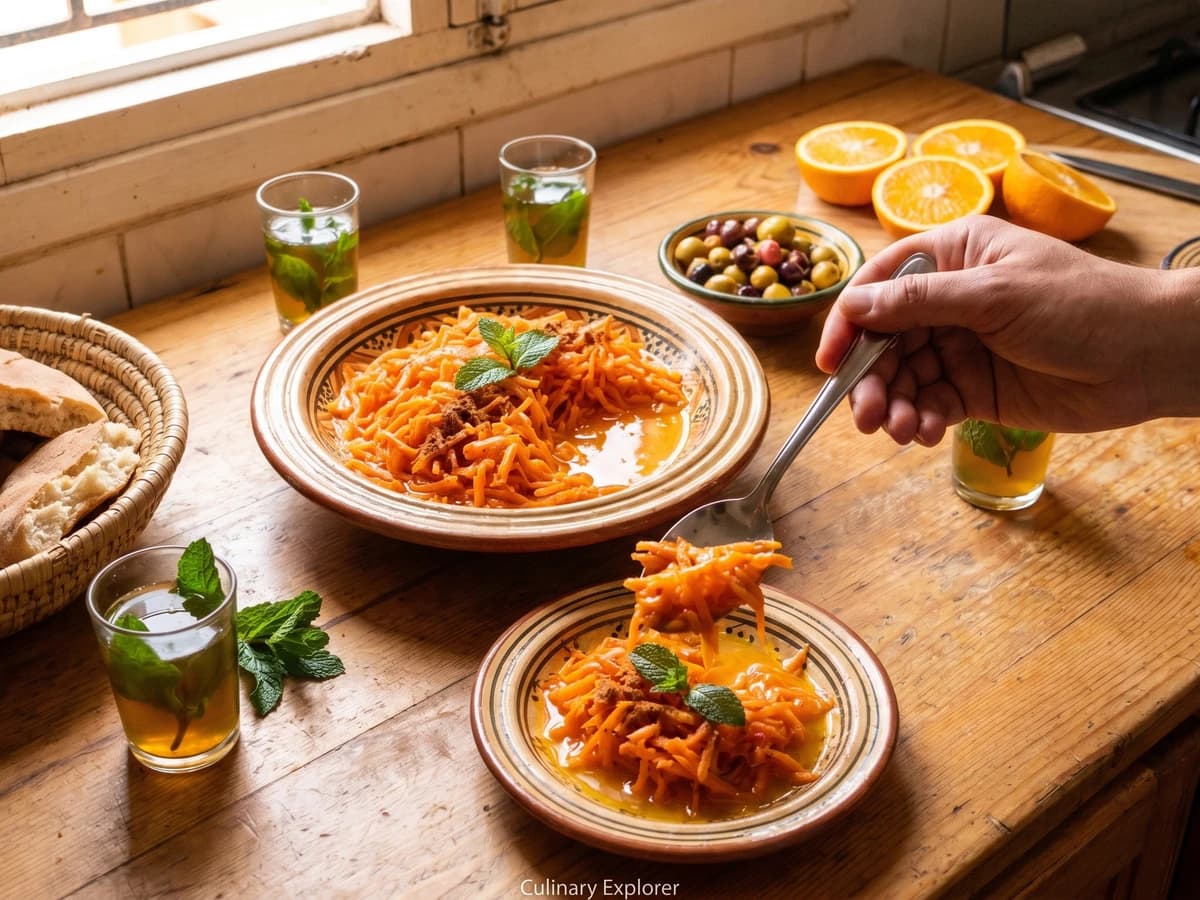
Fine-grated carrot dressed with orange juice, a little sugar, orange-flower water, and cinnamon. Khizou bel limoun is the fresh raw counterpoint that wakes up a Moroccan table.
Chef Zohra
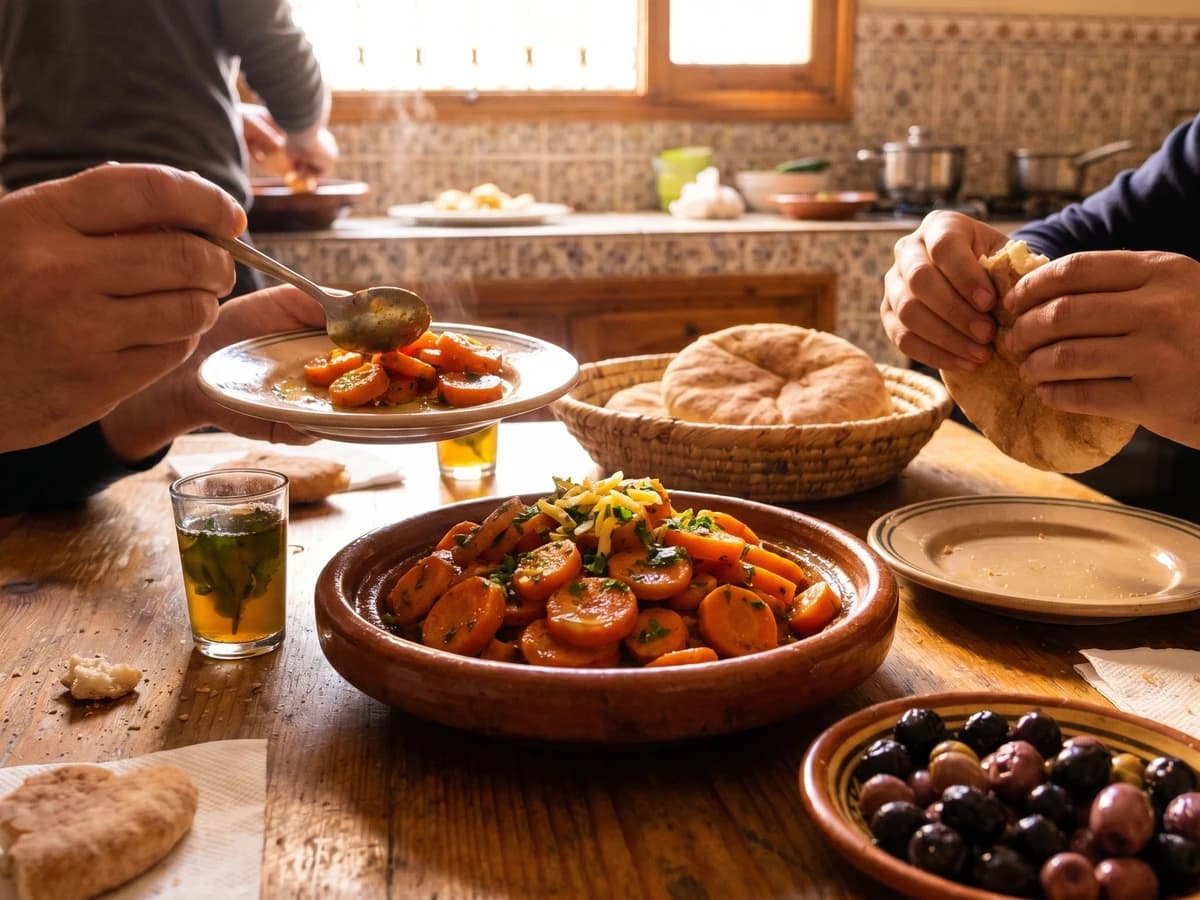
Carrot rounds simmered tender, then turned while warm through cumin, garlic, fresh coriander, olive oil, and preserved lemon. A cooked salata for bread, weeknights, and the table that widens.