
Chef Takumi
Autumn Mushroom Rice (きのこの炊き込みご飯, Kinoko Takikomi Gohan)
Autumn mushrooms do most of the work here. Rinse the rice well, season the liquid before cooking, and let the pot rest so every grain comes out separate and fragrant.
A cooking platform built around craft, culture, and the stories behind what we eat.
Created by
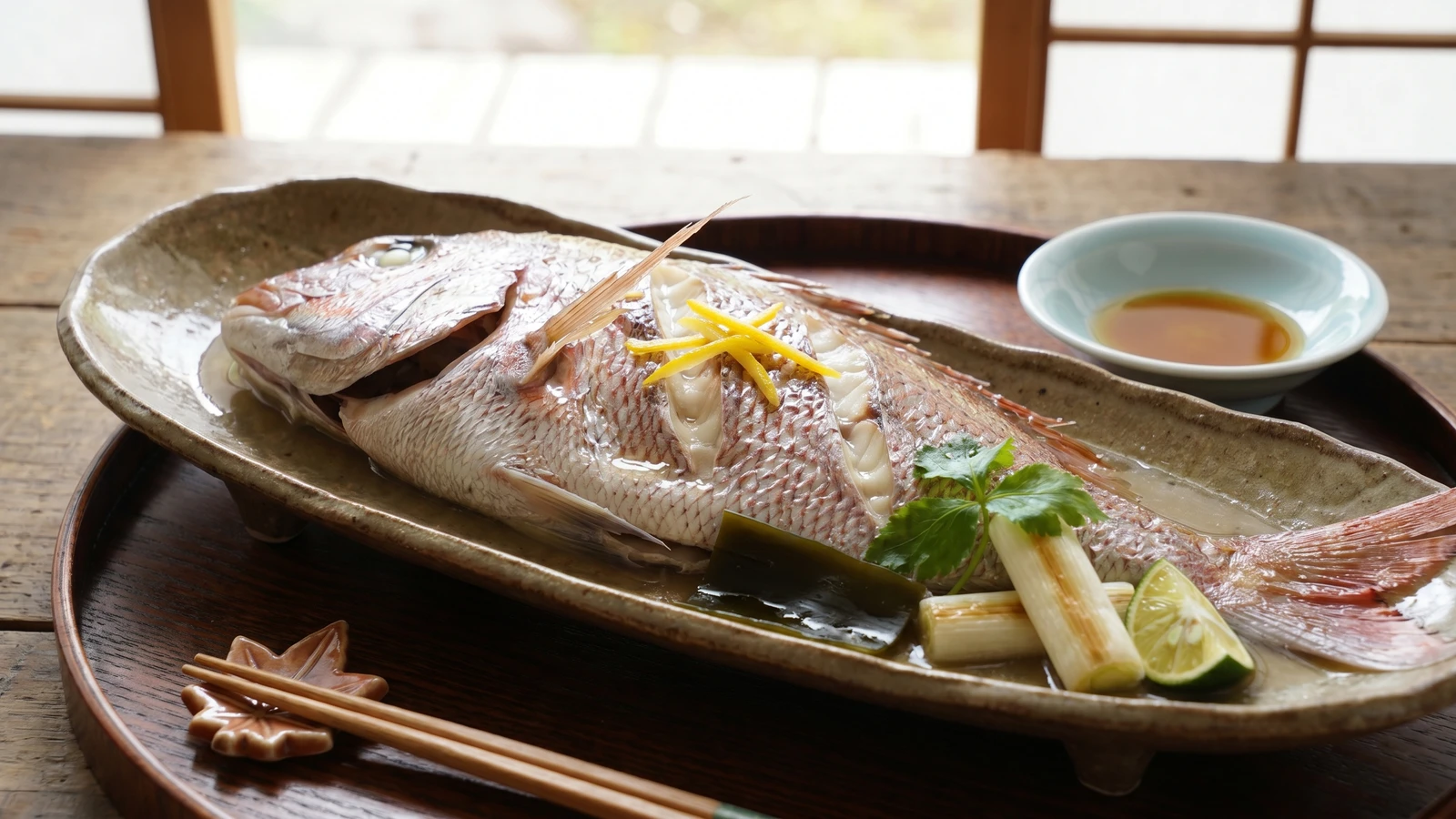
A whole sea bream looks ceremonial, but the work is gentle: salt it, rest it on konbu, add sake, and stop the cooking the moment the flesh turns opaque.
Spring tai carries ceremony without trying. The red-silver skin, the clean white flesh, the old happy wordplay with medetai, all of it makes a whole sea bream feel more difficult than it is. It isn't. Buy it glistening fresh, salt it plainly, set it on konbu, and let sake do its quiet work.
The one detail that decides the dish is the stopping point. Sake steaming is gentle, but fish is still fish: cook past opacity and the flesh tightens, turns cottony, and the sweetness you bought disappears. Salt the fish first because salt draws out surface moisture and firms the flesh; wipe that away and the sake meets clean fish, not a cloudy puddle. The konbu underneath keeps the skin from sticking and lends depth without announcing itself. Very civilized seaweed, if we must give it a title.
At the table, this belongs to celebration because tai is served whole, head and tail telling the eye the fish was respected. We serve it with citrus and a little soy at the side, not a heavy sauce. Nothing hidden. Leave the platter room, lift the flesh gently from the bone, and you have honmono made by restraint rather than effort.
Sea bream's place at celebrations rests partly on language: tai echoes medetai, meaning auspicious, so a whole red fish became a natural guest at weddings, New Year meals, and shrine offerings. The nickname sakura-dai, cherry-blossom sea bream, refers to madai caught in spring, when the fish takes on its celebrated color before spawning. Konbu reached Osaka and Kyoto in quantity along the kitamaebune sea routes during the Edo period, which helped make kelp a quiet partner in dishes like this.
Quantity
1 fish (700 to 900g)
scaled, gutted, and gills removed
Quantity
1 1/2 teaspoons
Quantity
1 piece (15 x 20cm, about 10g)
Quantity
1/2 cup
Quantity
1/4 cup, plus more for the steamer
Quantity
4 thin slices
Quantity
1 small naganegi or 2 scallions
cut into 5cm lengths
Quantity
2 tablespoons
Quantity
2 tablespoons
Quantity
1 teaspoon
use only if the citrus is mild
Quantity
4
Quantity
2 small sprigs
| Ingredient | Quantity |
|---|---|
| whole madai (red sea bream)scaled, gutted, and gills removed | 1 fish (700 to 900g) |
| fine sea salt | 1 1/2 teaspoons |
| konbu (dried kelp) | 1 piece (15 x 20cm, about 10g) |
| sake | 1/2 cup |
| cold water | 1/4 cup, plus more for the steamer |
| fresh ginger | 4 thin slices |
| naganegi or scallionscut into 5cm lengths | 1 small naganegi or 2 scallions |
| soy sauce | 2 tablespoons |
| fresh yuzu or sudachi juice | 2 tablespoons |
| rice vinegar (optional)use only if the citrus is mild | 1 teaspoon |
| yuzu or sudachi wedges (optional) | 4 |
| mitsuba or kinome (optional) | 2 small sprigs |
Ask for madai, true red sea bream, scaled, gutted, and with the gills removed. The eyes should be clear, the skin bright, and the smell clean, more like cold water than fish. If the fish smells sour or tired, don't hide it under sake. Change the dish. Sourcing is already half the cooking here.
Rinse the cavity quickly under cold water, then dry the fish thoroughly inside and out. Sprinkle the salt over both sides and inside the belly, then set the fish on a rack for 20 minutes in the refrigerator. Salt is not only seasoning here. It draws out surface moisture, firms the flesh, and removes the faint smell that would otherwise muddy the clean sake liquor.
Wipe the konbu with a damp cloth, but don't wash it. The pale bloom on the surface is not dirt, it's flavor. Soften the konbu in the 1/4 cup cold water for 10 minutes, then lay it on a heatproof oval platter that will fit inside your steamer.
Make two or three shallow diagonal cuts through the thickest part of each side of the fish. These cuts help the heat reach the backbone evenly, so the belly doesn't overcook while the shoulder waits. Lay the ginger and scallion on the konbu, set the fish on top, and pour the sake and the konbu soaking water around it. Use sake you would drink, not salted cooking sake. The dish is too plain to forgive bad liquor.
Bring water in a large steamer to a steady simmer before the platter goes in. If your lid drips heavily, wrap it in a clean kitchen cloth and tie the ends up away from the flame, or set the cloth under the lid on an electric or induction stove. The point is simple: falling water spots dilute the clear cooking liquor and mark the fish skin.
Set the platter in the steamer, cover, and cook for 12 to 18 minutes, depending on the size of the fish. Start checking at 12 minutes. The flesh should turn opaque at the deepest cut, pull cleanly from the backbone with a chopstick, and reach 63C or 145F at the thickest part. Stop there. Waiting for the fish to look dramatically done is how good tai becomes dry tai.
Lift a spoonful of the clear cooking liquor from the platter and mix it with the soy sauce and yuzu or sudachi juice. Taste it. It should be bright and salty, a small accent rather than a sauce bath. Add the rice vinegar only if your citrus is gentle and needs sharpening.
Spoon a little of the cooking liquor over the fish, then finish with yuzu or sudachi wedges and the mitsuba or kinome if using. Present the fish whole, head to the left and belly toward the diner, with the citrus soy in a small dish at the side. Leave the platter uncrowded. The empty space is not decoration; it lets the eye understand the fish before the chopsticks begin.
1 serving (about 155g)
Culinary guides, cultural storytelling, and the editorial depth that makes cooking meaningful.
Discover Culinary ExplorerChef Takumi
Autumn mushrooms do most of the work here. Rinse the rice well, season the liquid before cooking, and let the pot rest so every grain comes out separate and fragrant.

Chef Takumi
A whole salmon fillet laid on seasoned rice does nearly all the work. Cook it gently, flake it back through, and autumn has found its bowl.

Chef Takumi
Daigakuimo is simple student comfort: sweet potato cut stout, fried until the corners take color, then turned in a soy-sugar syrup that sets shiny instead of sticky.

Chef Takumi
Chawanmushi looks delicate, but the secret is plain: good dashi, strained egg, and quiet heat. Keep the steam soft and the custard sets smooth, tender, and calm.