
Chef Takumi
Autumn Mushroom Rice (きのこの炊き込みご飯, Kinoko Takikomi Gohan)
Autumn mushrooms do most of the work here. Rinse the rice well, season the liquid before cooking, and let the pot rest so every grain comes out separate and fragrant.
A cooking platform built around craft, culture, and the stories behind what we eat.
Created by
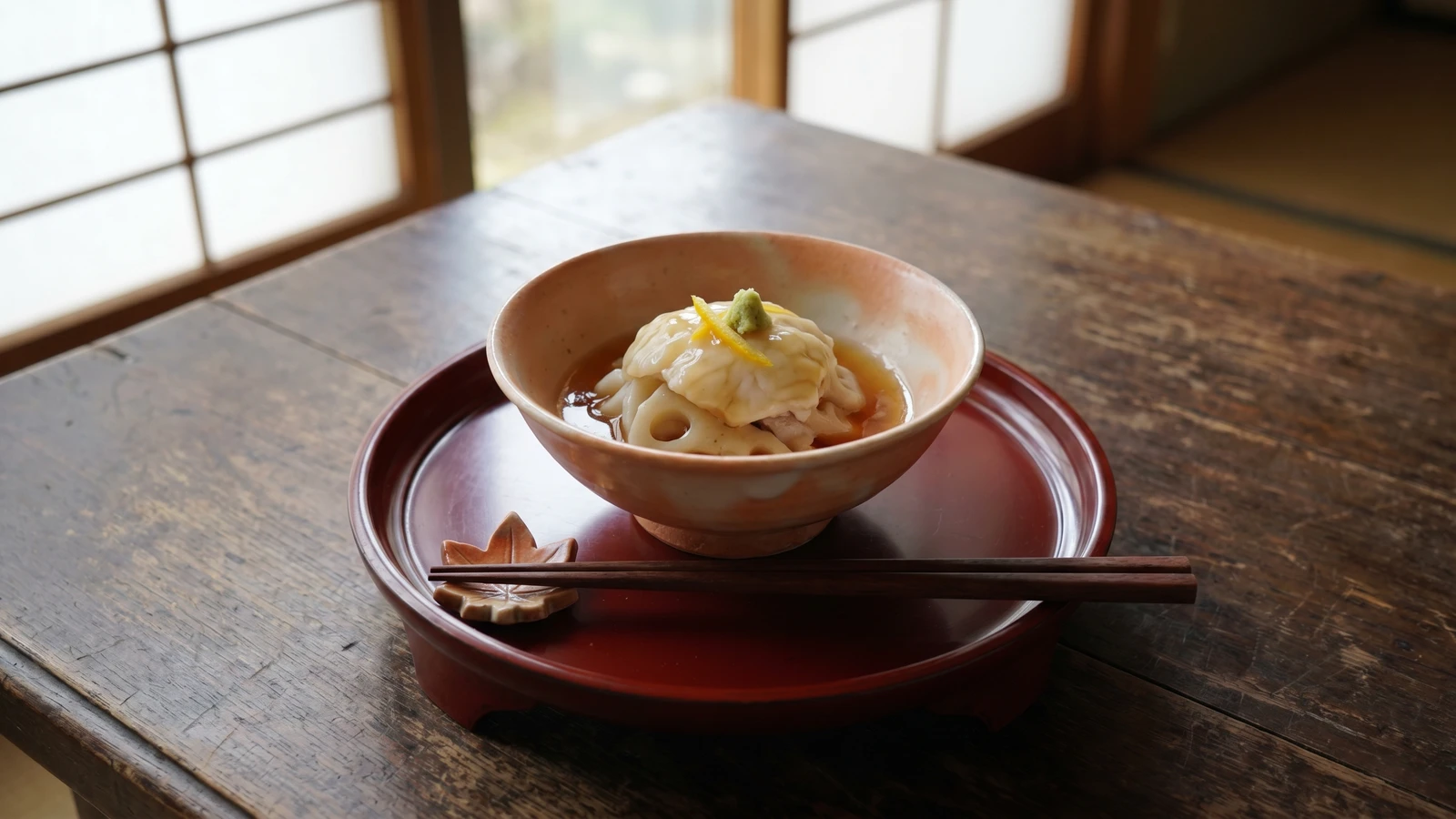
Grated lotus root looks plain in the bowl, then heat turns it soft, sticky, and almost cloudlike around fish, finished with a clear dashi glaze.
Lotus root is the quiet worker here. Raw, it looks crisp and stubborn. Grated and steamed, it changes completely, binding itself around eel or white fish in a pale, sticky cloud. This is autumn food from Kanazawa, where renkon reaches its shun, and the season does half the cooking before you begin.
The dish sounds delicate. It is, but not difficult. The one detail that decides it is the lotus root itself: it must be starchy enough to hold together when grated. Watery lotus root collapses into a sad little puddle, which is useful only if you wanted a lesson in disappointment. Choose a heavy, fresh section with tight holes and a wet, clean cut face.
We season gently because the lotus root and fish should remain visible in the mouth. A little salt, a thread of dashi, soft steam, then an ankake, a clear thickened glaze, spooned over at the end. The glaze is not there to hide anything. It carries warmth, shine, and the quiet savor of dashi, so the dish arrives at the table calm and complete.
Hasumushi is strongly associated with Kanazawa and Kaga ryōri, the refined regional cooking of the old Kaga domain in present-day Ishikawa Prefecture. The dish depends on Kaga renkon, a starchy local lotus root prized because it grates into a paste that sets softly when steamed. In ryōtei and home cooking alike, eel, white fish, or shrimp may be set under the grated lotus root, then finished with a clear dashi ankake.
Quantity
12 ounces
sea bream, cod, or flounder, cut into 4 pieces
Quantity
1 tablespoon
for the fish
Quantity
1/4 teaspoon
for the fish
Quantity
14 ounces
peeled
Quantity
1 large
lightly loosened
Quantity
1/2 teaspoon
for the lotus root
Quantity
1 teaspoon
for the lotus root
Quantity
1 piece (about 8g)
Quantity
4 cups
Quantity
18g
Quantity
1 tablespoon
Quantity
1 tablespoon
Quantity
1 tablespoon
Quantity
1 1/2 tablespoons
for the starch slurry
Quantity
4 small strips
Quantity
a little
| Ingredient | Quantity |
|---|---|
| white fish filletsea bream, cod, or flounder, cut into 4 pieces | 12 ounces |
| sakefor the fish | 1 tablespoon |
| sea saltfor the fish | 1/4 teaspoon |
| fresh lotus rootpeeled | 14 ounces |
| egg whitelightly loosened | 1 large |
| sea saltfor the lotus root | 1/2 teaspoon |
| sakefor the lotus root | 1 teaspoon |
| konbu (dried kelp) | 1 piece (about 8g) |
| cold water | 4 cups |
| katsuobushi (bonito flakes) | 18g |
| usukuchi (light soy sauce) | 1 tablespoon |
| mirin | 1 tablespoon |
| kuzu starch or potato starch | 1 tablespoon |
| cold waterfor the starch slurry | 1 1/2 tablespoons |
| yuzu peel | 4 small strips |
| grated wasabi (optional) | a little |
Sprinkle the fish with the sake and salt, then let it stand for 15 minutes. This firms the surface and draws out any sharp smell, so the finished dish tastes clean rather than fishy. Pat each piece dry before steaming.
Wipe the konbu with a damp cloth, but don't wash it. Put it in the cold water and bring it up slowly over low heat. Pull the konbu when the water trembles and small bubbles climb the sides, before it boils. Add the katsuobushi all at once, take the pot off the heat, and leave it alone for 3 minutes. Strain through cloth or a fine sieve and let it drip without squeezing.
Grate the lotus root on the fine teeth of an oroshigane, or use the finest holes of a box grater. Do this just before steaming so the paste stays pale. Gather it in your hand and squeeze lightly only if it is running with liquid. It should feel sticky and heavy, not dry.
Mix the grated lotus root with the egg white, salt, and sake until it looks even and slightly glossy. Don't beat it. Air makes the paste puffy at first and weak after steaming. You want quiet strength, not a little balloon.
Set one piece of fish in each small heatproof bowl. Spoon the lotus-root paste over the fish, mounding it gently so it covers the top but does not press down hard. The paste protects the fish from direct heat and sets into a soft cap around it.
Set the bowls in a steamer over gently simmering water and cover the lid with a cloth to catch drips. Steam for 12 to 15 minutes, until the lotus root is set and the fish flakes when touched with a chopstick. Keep the steam soft. Hard steam makes the surface coarse and pushes liquid out of the fish.
While the bowls steam, measure 1 1/2 cups of dashi into a small pan with the usukuchi and mirin. Bring it just to a simmer. Stir the kuzu or potato starch with the cold water, then whisk it into the dashi. Cook until the sauce turns clear and lightly thickened, just enough to coat a spoon.
Spoon the clear ankake over each steamed mound. Set a strip of yuzu peel on top, and add a little grated wasabi if you like its clean heat. Serve at once in the bowls, with space around the mound so the glaze can shine.
1 serving (about 400g)
Culinary guides, cultural storytelling, and the editorial depth that makes cooking meaningful.
Discover Culinary ExplorerChef Takumi
Autumn mushrooms do most of the work here. Rinse the rice well, season the liquid before cooking, and let the pot rest so every grain comes out separate and fragrant.

Chef Takumi
A whole salmon fillet laid on seasoned rice does nearly all the work. Cook it gently, flake it back through, and autumn has found its bowl.

Chef Takumi
Daigakuimo is simple student comfort: sweet potato cut stout, fried until the corners take color, then turned in a soy-sugar syrup that sets shiny instead of sticky.

Chef Takumi
Chawanmushi looks delicate, but the secret is plain: good dashi, strained egg, and quiet heat. Keep the steam soft and the custard sets smooth, tender, and calm.