
Chef Takumi
Autumn Mushroom Rice (きのこの炊き込みご飯, Kinoko Takikomi Gohan)
Autumn mushrooms do most of the work here. Rinse the rice well, season the liquid before cooking, and let the pot rest so every grain comes out separate and fragrant.
A cooking platform built around craft, culture, and the stories behind what we eat.
Created by
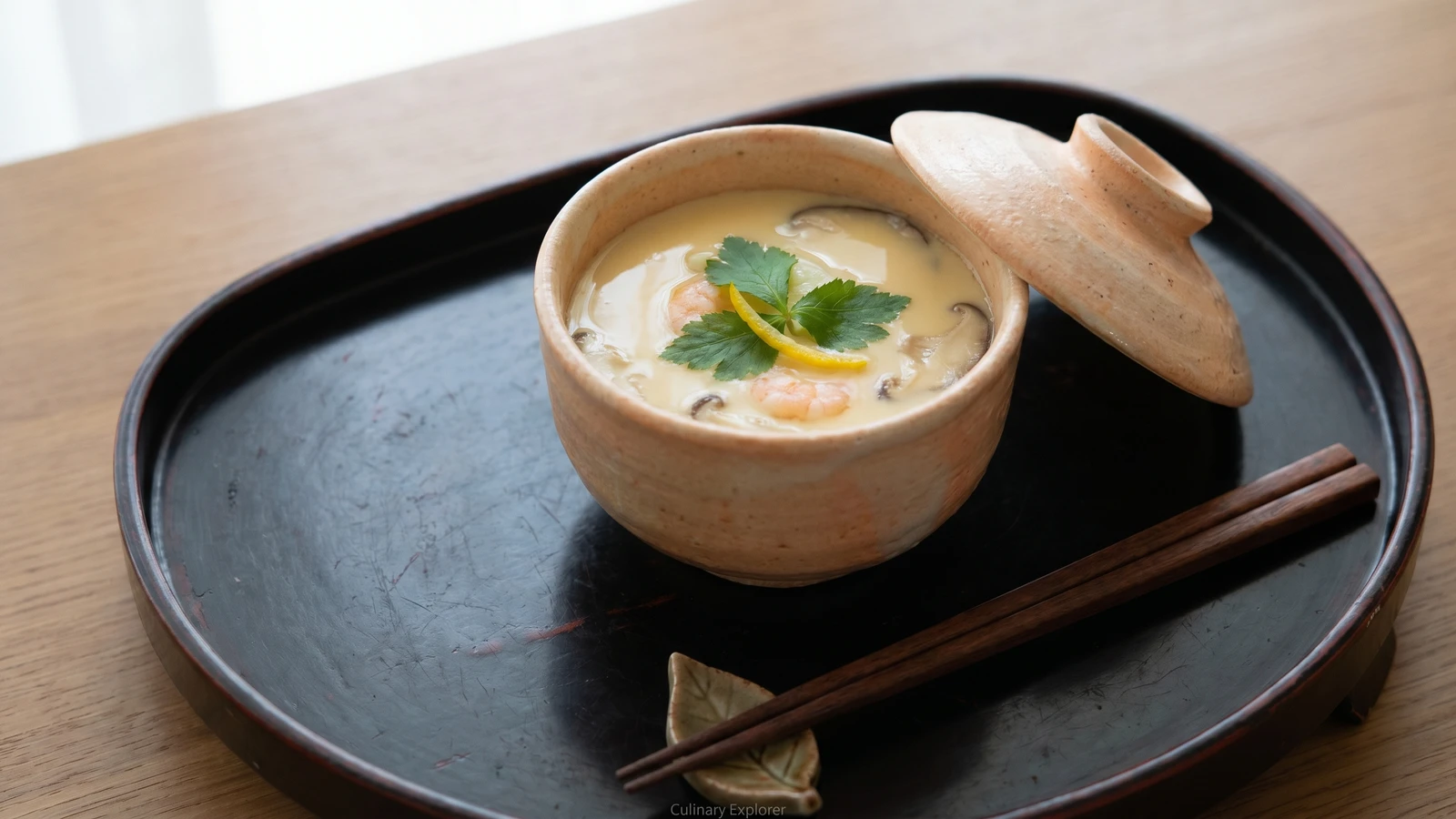
Chawanmushi looks delicate, but the secret is plain: good dashi, strained egg, and quiet heat. Keep the steam soft and the custard sets smooth, tender, and calm.
Chawanmushi is the dish that makes good cooks suddenly whisper. A custard, they think, must be fussy. This one is kinder than that. If you can stir egg into cooled dashi without making foam, and keep the heat gentle, you've already understood the heart of it.
The one detail that decides everything is the steam. Hard heat makes the egg tighten, weep, and fill with little holes, as if the custard had been frightened. Soft heat lets it set slowly, smooth as still water, trembling when you touch the cup. Straining the mixture is not ceremony. It removes the stringy egg white and any bubbles, so the surface can settle cleanly.
Inside the cup we hide small seasonal pieces: a shrimp, a bite of chicken, shiitake, ginkgo nut, a little mitsuba. This is how we do it here, not a bowl of abundance but a quiet finding. The custard carries the dashi, and the dashi carries everything else. Nothing heavy, nothing hidden.
Serve it as part of a special meal, often before stronger grilled or simmered dishes, while the palate is still listening. Honmono doesn't mean difficult. It means each small thing is treated properly, and in chawanmushi the proper treatment is restraint.
Chawanmushi is one of the few traditional Japanese dishes eaten with a spoon, and one of the few served as a savory custard, both signs of outside influence. It is generally traced to Nagasaki in the Edo period, where Chinese-influenced shippoku banquet cooking shaped dishes served in individual lidded cups. The name means simply "steamed in a tea bowl," after the vessel that gives the dish its form.
Quantity
1 piece (about 10g)
Quantity
20g
Quantity
2 1/2 cups
Quantity
3
Quantity
1 teaspoon
Quantity
1 teaspoon
Quantity
1/2 teaspoon
Quantity
80g
cut into 4 small pieces
Quantity
1 teaspoon
Quantity
1/2 teaspoon
for seasoning the chicken
Quantity
4
peeled and deveined
Quantity
4
stems removed and caps sliced or left whole if small
Quantity
8
Quantity
4 thin slices
Quantity
4 small sprigs
Quantity
4 narrow strips
| Ingredient | Quantity |
|---|---|
| konbu (dried kelp) | 1 piece (about 10g) |
| katsuobushi (bonito flakes) | 20g |
| cold water | 2 1/2 cups |
| large eggs | 3 |
| usukuchi shōyu (light soy sauce) | 1 teaspoon |
| mirin | 1 teaspoon |
| sea salt | 1/2 teaspoon |
| boneless chicken thighcut into 4 small pieces | 80g |
| sake | 1 teaspoon |
| soy saucefor seasoning the chicken | 1/2 teaspoon |
| small shrimppeeled and deveined | 4 |
| fresh shiitake mushroomsstems removed and caps sliced or left whole if small | 4 |
| cooked ginkgo nuts | 8 |
| kamaboko fish cake | 4 thin slices |
| mitsuba | 4 small sprigs |
| yuzu peel (optional) | 4 narrow strips |
Wipe the konbu with a damp cloth, but don't wash it. Put it in the cold water and bring it up slowly over low heat, about ten minutes. Pull the konbu just before the water boils, when small bubbles climb the sides. Boiling the kelp makes the stock faintly bitter and slippery, and chawanmushi has no sauce to hide that mistake.
Bring the water to a gentle boil, add the katsuobushi all at once, and take the pot off the heat. Let the flakes sink for two or three minutes, then strain through a cloth or fine-mesh strainer. Let it drip naturally. Don't squeeze, because squeezing presses stronger, oily flavors into the clear stock you need for a clean custard.
Toss the chicken with the sake and soy sauce and let it sit for ten minutes while the dashi cools. This seasons the meat at its center, so the custard can stay pale and delicate instead of being asked to carry all the salt. Keep the shrimp, shiitake, ginkgo nuts, and kamaboko separate and ready.
Beat the eggs gently in a bowl, cutting through the whites with chopsticks or a fork rather than whipping them. Measure 2 cups of cooled dashi and stir in the usukuchi shōyu, mirin, and salt. Add the seasoned dashi to the eggs and stir quietly. Foam is the enemy here, because bubbles become pockmarks on the finished surface.
Strain the egg mixture through a fine sieve into a pouring cup. This catches the thick strands of egg white and any bits that would set unevenly. Skim off surface bubbles with a spoon. The custard should look thin and calm, not frothy.
Divide the chicken, shrimp, shiitake, ginkgo nuts, and kamaboko among four chawanmushi cups or small heatproof teacups. Pour in the egg mixture to cover, filling each cup about three-quarters full. Leave space at the top so the custard has room to set cleanly and so the lid does not drip directly onto the surface.
Set the cups in a steamer over water that is already simmering, not roaring. Cover each cup with its lid, or cover tightly with foil. Put the steamer lid on slightly ajar, or wrap it in a cloth to catch drips. Steam over medium heat for 2 minutes, then lower the heat and steam very gently for 12 to 15 minutes more. A hard boil toughens the egg; soft heat lets it set without holes.
Touch the cup lightly or tilt it a little. The custard should tremble as one piece, with no loose liquid moving at the edge. If you insert a skewer near the center, the liquid that rises should be clear, not cloudy egg. If it still looks milky, steam another 2 minutes and check again.
Set a sprig of mitsuba and a strip of yuzu peel on each custard just before serving, then replace the lids. The herb and citrus should wake the surface, not bury it. Serve warm with a spoon, and let each guest find the small pieces underneath in their own time.
1 serving (about 230g)
Culinary guides, cultural storytelling, and the editorial depth that makes cooking meaningful.
Discover Culinary ExplorerChef Takumi
Autumn mushrooms do most of the work here. Rinse the rice well, season the liquid before cooking, and let the pot rest so every grain comes out separate and fragrant.

Chef Takumi
A whole salmon fillet laid on seasoned rice does nearly all the work. Cook it gently, flake it back through, and autumn has found its bowl.

Chef Takumi
Daigakuimo is simple student comfort: sweet potato cut stout, fried until the corners take color, then turned in a soy-sugar syrup that sets shiny instead of sticky.

Chef Takumi
Kuri gohan is autumn rice at its plainest and best: new chestnuts, cleanly peeled, cooked with rice until their sweetness perfumes every grain.