
Chef Ally
All-Butter Croissants
Shatteringly crisp, impossibly tender, and layered with the finest butter you can find. Two days of patience rewarded with the most honest croissant you will ever bake.
A cooking platform built around craft, culture, and the stories behind what we eat.
Created by
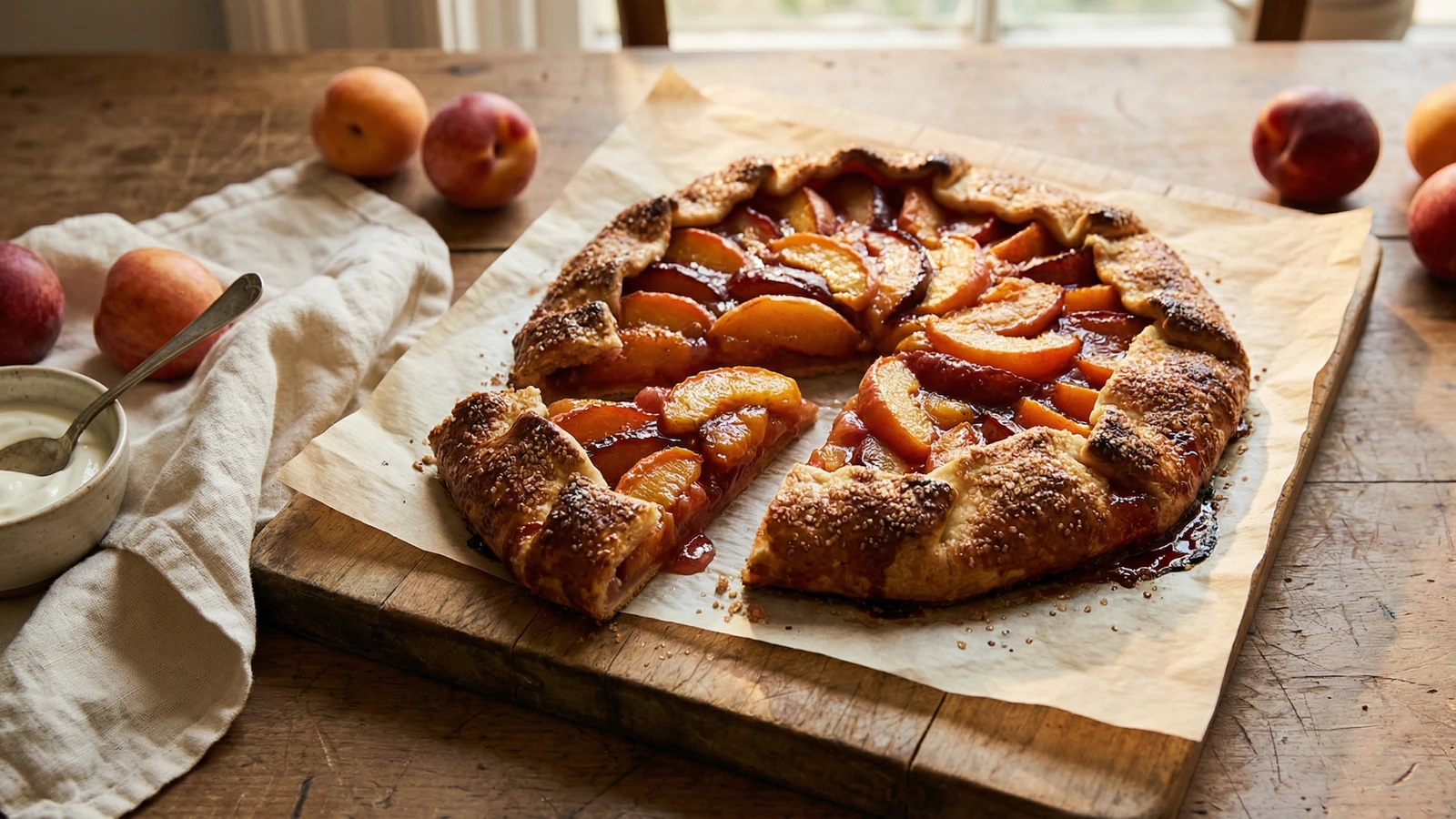
A free-form tart that celebrates whatever stone fruit the market offers at peak ripeness, wrapped in shatteringly flaky butter pastry with imperfect, hand-pleated edges that look like they belong on a farmhouse table.
Start at the market. Find the farmer whose stone fruit smells like summer before you even reach the stand. The peaches should give slightly when pressed, the nectarines should perfume the air, the plums should have that dusty bloom that means they were picked this morning. Perfect ripeness is the whole point here.
A galette is the most forgiving pastry you will ever make. No pie dish to fuss with, no crimped edges to master, no blind baking. You roll the dough, pile on the fruit, fold the edges toward the center, and let the oven do its work. The crust gets flaky and golden. The fruit slumps and caramelizes. The juices bubble at the seams.
This is French provincial baking at its most honest. The technique came from farmhouse kitchens where time was scarce and ovens were unreliable. What matters is the butter in your crust and the fruit in your filling. If those two things are right, you cannot fail.
Every meal is a meaningful choice. When you buy stone fruit from someone who grew it with care, you taste the difference. And you keep that farm alive for another season.
Quantity
1 1/4 cups (155g)
Quantity
1 tablespoon
Quantity
1/2 teaspoon
Quantity
1/2 cup (1 stick/113g)
cut into 1/2-inch cubes
Quantity
4-6 tablespoons
Quantity
2 pounds
peaches, nectarines, plums, or apricots
Quantity
3 tablespoons, divided
Quantity
1 tablespoon
Quantity
1/2 teaspoon
Quantity
pinch
Quantity
1
beaten with 1 tablespoon water
Quantity
1 tablespoon
for finishing
| Ingredient | Quantity |
|---|---|
| all-purpose flour | 1 1/4 cups (155g) |
| granulated sugar (for dough) | 1 tablespoon |
| fine sea salt | 1/2 teaspoon |
| cold unsalted buttercut into 1/2-inch cubes | 1/2 cup (1 stick/113g) |
| ice water | 4-6 tablespoons |
| ripe stone fruitpeaches, nectarines, plums, or apricots | 2 pounds |
| granulated sugar (for filling) | 3 tablespoons, divided |
| cornstarch | 1 tablespoon |
| pure vanilla extract | 1/2 teaspoon |
| fine sea salt (for filling) | pinch |
| eggbeaten with 1 tablespoon water | 1 |
| turbinado sugarfor finishing | 1 tablespoon |
Combine flour, one tablespoon sugar, and salt in a large bowl. Add the cold butter cubes and work them into the flour using your fingertips or a pastry blender. You want irregular pieces, some the size of peas, others like flattened oats. This unevenness creates flaky layers. Drizzle four tablespoons of ice water over the mixture and stir with a fork until the dough begins to clump. Add more water by the teaspoon if needed. The dough should hold together when you squeeze a handful but still look shaggy.
Turn the dough onto a lightly floured surface and gather it into a rough mound. Press it into a flat disk about one inch thick. Do not knead. Wrap tightly in plastic and refrigerate for at least one hour. The dough needs this rest. Gluten relaxes, butter firms, and the pastry becomes workable without tearing.
While the dough chills, halve your stone fruit and remove the pits. Slice each half into wedges about half an inch thick. Place in a bowl and toss gently with two tablespoons of sugar, the cornstarch, vanilla, and a pinch of salt. Let this sit for fifteen minutes. The sugar will draw out juices that mingle with the cornstarch, thickening naturally during baking.
On a lightly floured sheet of parchment paper, roll the chilled dough into a rough circle about twelve inches across and an eighth inch thick. Do not worry about perfection. The irregular edges are part of its beauty. Slide the parchment with the dough onto a baking sheet.
Arrange the fruit slices in the center of the dough, leaving a two-inch border. Overlap them slightly, working in loose concentric circles or whatever pattern pleases you. Sprinkle the remaining tablespoon of sugar over the fruit. Fold the dough border up and over the edges of the filling, pleating as you go. Each fold should overlap the last. Press gently to seal. The center stays open, the fruit visible and proud.
Brush the exposed dough with egg wash, then sprinkle the turbinado sugar over the crust. The coarse crystals will catch the light and shatter between your teeth. Transfer the baking sheet to the refrigerator for fifteen minutes. This second chill firms the butter and prevents the dough from slumping in the oven.
Preheat your oven to 400F. Bake the galette for forty to forty-five minutes, rotating halfway through. The crust should be deep golden brown, almost caramelized at the edges. The fruit will slump slightly and bubble at the seams. If the edges darken too quickly, tent loosely with foil.
Let the galette cool on the baking sheet for at least twenty minutes. The juices need time to settle and thicken. Serve warm or at room temperature, sliced into wedges. A spoonful of cold crème fraîche alongside is welcome but not required. The fruit, when it is right, needs nothing else.
1 serving (about 150g)
Culinary guides, cultural storytelling, and the editorial depth that makes cooking meaningful.
Discover Culinary ExplorerChef Ally
Shatteringly crisp, impossibly tender, and layered with the finest butter you can find. Two days of patience rewarded with the most honest croissant you will ever bake.

Chef Ally
Farmers' market apples sink into butter and caramel, then emerge beneath shatteringly crisp pastry, a French provincial classic that proves the best desserts are the simplest ones.

Chef Ally
Tender, buttery shells filled with jewel-toned curd made from blood oranges at their peak, the kind of winter dessert that reminds you the sun will return.

Chef Ally
A French butter cookie made extraordinary by one patient act: browning the butter until it smells of hazelnuts and caramel, then finishing each round with crystals of fleur de sel that spark against the sweetness.