Culinary Explorer

A cooking platform built around craft, culture, and the stories behind what we eat.
Discover Culinary Explorer
Romesco de Peix

Romesco de Peix

Created by

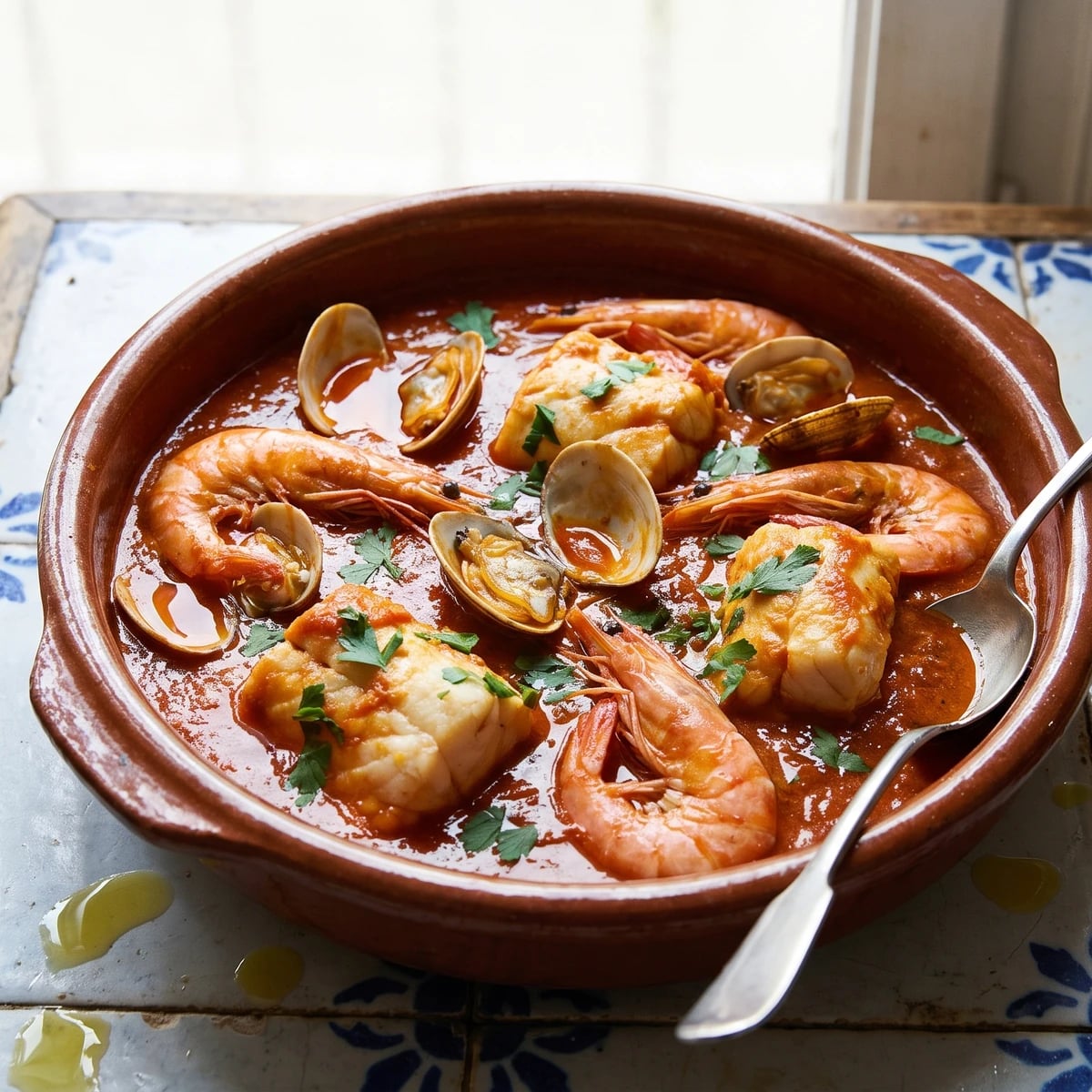
Romesco de Peix is Tarragona's fishermen's stew: firm fish and shellfish simmered in a romesco picada of ñora, nuts, garlic, tomato, and fried bread.

Soups & Stews
Spanish
Special Occasion
One Pot
Dinner Party
35 min
Active Time
40 min cook1 hr 15 min total
Yield4 servings

Romesco de Peix is Catalan, and more exactly Tarragona's, from the fishing quarter of El Serrallo. It is not the cold romesco sauce people spoon beside grilled vegetables. Here the romesco is the body of the stew: ñora pepper, fried bread, garlic, tomato, almonds, hazelnuts, and olive oil pounded into a picada, the Catalan thickener that gives the pot its depth.

The method that decides it is the picada. Fry the bread and garlic gently, toast the nuts, soak the ñoras until their flesh softens, then pound or blend everything to a rough paste before it ever meets the fish. If you rush that base, the stew tastes thin and separate. Get it right and the broth turns brick red, glossy, and thick enough to cling to a spoon.

Use firm white fish that will not collapse: monkfish, hake, sea bass, turbot, or cod loin. If ñoras are hard to find where you are, use dried ancho chile for body with a little sweet pimentón de la Vera for the Spanish smoke, and know it will be close but not the same. No hace falta haber pisado España. You need good fish, a proper picada, and the sense not to boil shellfish to rubber.

Once the sauce is made, the stew moves quickly. Fish in first, prawns and clams at the end, then rest it five minutes so the sauce settles around everything. Siempre sale, si lo sigues.

Romesco de Peix belongs to Tarragona's coast, especially El Serrallo, where fishermen made sturdy stews from the day's catch and the dry larder they could keep on hand: ñoras, nuts, bread, garlic, and olive oil. The name romesco in Tarragona points first to this cooked sauce for fish, not only to the table sauce now better known beside calçots. Its kinship with suquet de peix is close, but the romesco picada gives this stew its own surname and its Tarragona character.

The technique, the tradition, and the story behind every dish.

Discover Culinary Explorer

Ingredients

dried ñora peppers

Quantity

3

stems and seeds removed

firm white fish fillets or steaks

Quantity

600g

cut into 5cm pieces

large raw prawns

Quantity

8

shells on

clams

Quantity

300g

scrubbed and rinsed

fish stock

Quantity

1 litre

ripe tomato

Quantity

150g

grated

small onion

Quantity

1 (about 120g)

finely chopped

garlic

Quantity

5 cloves

3 left whole, 2 minced

blanched almonds

Quantity

40g

hazelnuts

Quantity

30g

day-old rustic bread

Quantity

40g

sliced

extra virgin olive oil

Quantity

120ml

sweet pimentón de la Vera

Quantity

1 teaspoon

dry white wine

Quantity

100ml

bay leaf

Quantity

1

flat-leaf parsley (optional)

Quantity

1 tablespoon

chopped

salt

Quantity

to taste

black pepper

Quantity

to taste

Equipment Needed

  • Wide cazuela de barro or heavy 30cm saute pan
  • Mortar and pestle or small food processor
  • Fine grater for tomato
  • Fish tweezers or clean pliers for pin bones

Instructions

  1. 1

    Soak the ñoras

    Put the cleaned ñoras in a bowl and cover them with boiling water. Leave them 25 minutes, until soft and leathery. Scrape the flesh from the skins with the back of a knife and keep the flesh; the skin is tough and has done its work.

  2. 2

    Purge the clams

    If the clams are not already purged, soak them in cold salted water for 30 minutes, then lift them out and rinse. Throw away any cracked shells and any that stay open when tapped. Sand in a stew is not rustic, it's sand.

  3. 3

    Fry the picada

    Warm 80ml of the olive oil in a wide cazuela or heavy pan over medium-low heat. Fry the bread until deep gold on both sides, then lift it out. Add the 3 whole garlic cloves and fry until lightly golden, not brown. Toast the almonds and hazelnuts in the same oil for 2 to 3 minutes, just until they smell sweet.

    Do not let the garlic go dark. Burnt garlic turns the whole romesco bitter, and no amount of good fish will hide it.
  4. 4

    Make the romesco

    Pound the fried bread, fried garlic, toasted nuts, ñora flesh, pimentón, 2 tablespoons of the oil from the pan, and a pinch of salt in a mortar until thick and rough. A blender is allowed, but stop before it turns perfectly smooth; romesco de peix wants body, not a cream.

  5. 5

    Cook the sofrito

    Add the remaining 40ml olive oil to the cazuela. Cook the onion with a pinch of salt over low heat for 12 to 15 minutes, until soft, dark gold, and sweet. Add the 2 minced garlic cloves for the last minute. Stir in the grated tomato and cook until it loses its raw smell and the oil begins to show at the edges.

  6. 6

    Build the broth

    Pour in the white wine and let it bubble for 2 minutes. Stir in the romesco paste, then add the fish stock and bay leaf. Whisk or stir until the paste loosens into the broth. Simmer gently for 10 minutes so the bread and nuts thicken the sauce and the ñora stains it brick red.

  7. 7

    Add the fish

    Season the fish pieces lightly with salt and black pepper. Slide them into the simmering sauce in one layer, spooning a little sauce over the top. Cook gently for 5 to 7 minutes, depending on thickness. Keep the heat low; a hard boil breaks good fish into flakes before it reaches the table.

  8. 8

    Finish the shellfish

    Add the prawns and clams, cover the cazuela, and cook 4 to 5 minutes, until the prawns turn pink and the clams open. Discard any clams that stay closed. Taste the sauce for salt only now, because clams and stock can bring plenty of their own.

  9. 9

    Rest and serve

    Take the cazuela off the heat and let it rest 5 minutes. The sauce will settle and cling properly to the fish. Scatter with parsley if using, then bring the cazuela to the table with bread for the sauce. Tal como se hace allí, the sauce is the reason everyone reaches back in.

Chef Tips

  • Buy the fish by texture, not by pride. Monkfish is excellent because it stays firm; hake is traditional and tender but needs gentler handling. Cod loin, sea bass, turbot, or red mullet can all work if they are fresh and cut thick.
  • Ñoras give the stew its round, sweet dried-pepper taste. If you cannot find them, use 1 dried ancho chile plus 1 teaspoon sweet pimentón de la Vera. It will be a little darker and less Catalan in flavor, but it is an honest way through.
  • Use fish stock that tastes clean, not strong. A stock made from white fish bones, prawn shells, onion, parsley, and a little fennel is right. Oily fish stock makes the romesco heavy.
  • Make the romesco paste ahead if you like; that costs the dish nothing. Skipping it, or replacing it with jarred table sauce, costs plenty. This stew is the picada.
  • Serve with plain boiled potatoes or good bread if you want more on the table. Do not crowd the cazuela with too many extras, or you lose the fish.

Advance Preparation

  • The romesco picada can be made up to 24 hours ahead and kept covered in the refrigerator; bring it to room temperature before stirring it into the stew.
  • The fish can be cut and lightly salted 30 minutes ahead, then kept chilled. Do not add it to the sauce until just before serving.
  • The sofrito and broth base can be made 4 hours ahead. Reheat gently, then add the fish, prawns, and clams at the end so they stay tender.

Frequently Asked Questions

Nutrition Information

1 serving (about 520g)

Calories
615 calories
Total Fat
39 g
Saturated Fat
5 g
Trans Fat
0 g
Unsaturated Fat
33 g
Cholesterol
140 mg
Sodium
1300 mg
Total Carbohydrates
18 g
Dietary Fiber
4 g
Sugars
4 g
Protein
46 g

Note: Chef personas and recipes are created with AI assistance. Cook with care: follow safe food-handling practices, check doneness with a thermometer when needed, and adapt for allergies and your kitchen.

Where cooking meets culture.

Culinary guides, cultural storytelling, and the editorial depth that makes cooking meaningful.

Discover Culinary Explorer

More from Fish & Seafood Soups & Pots

Browse the full collection